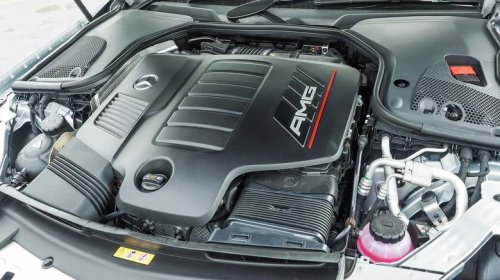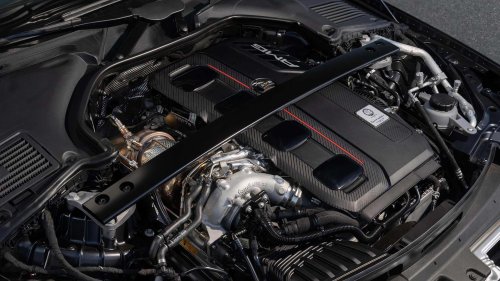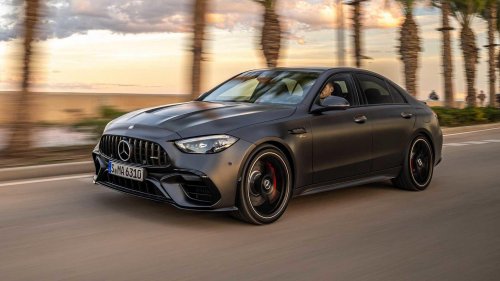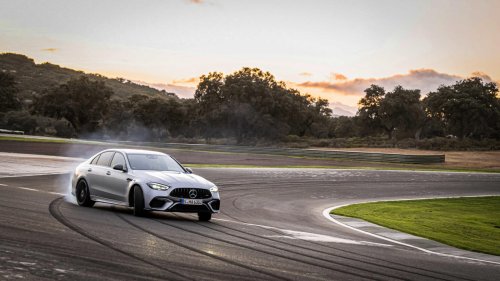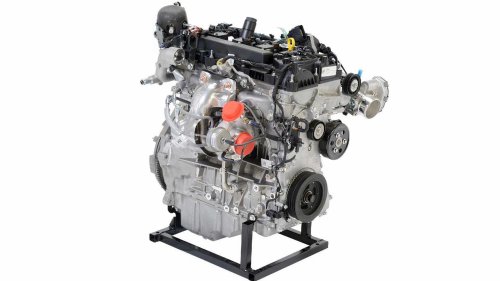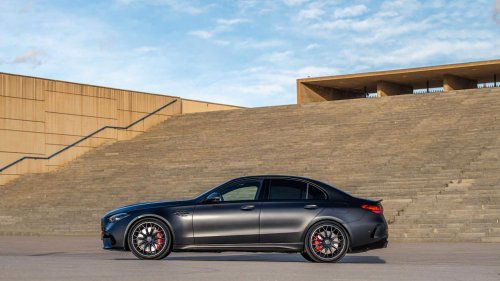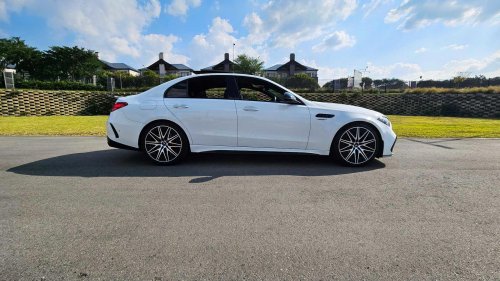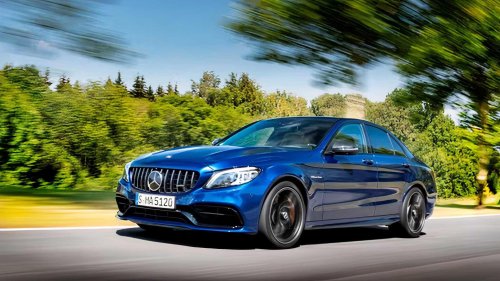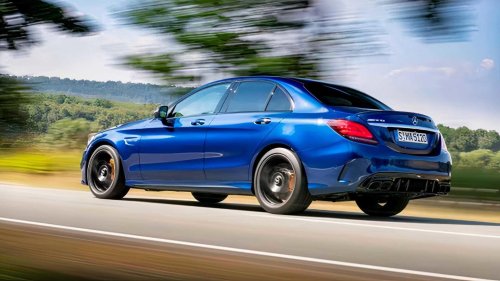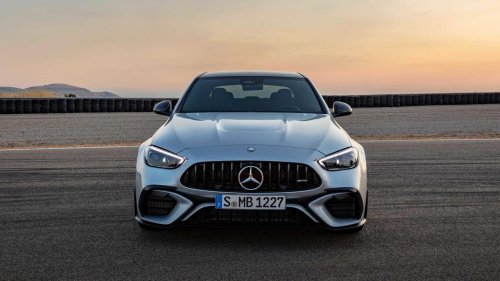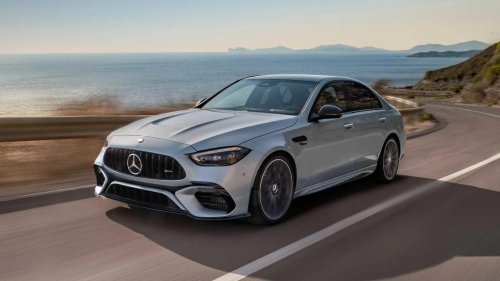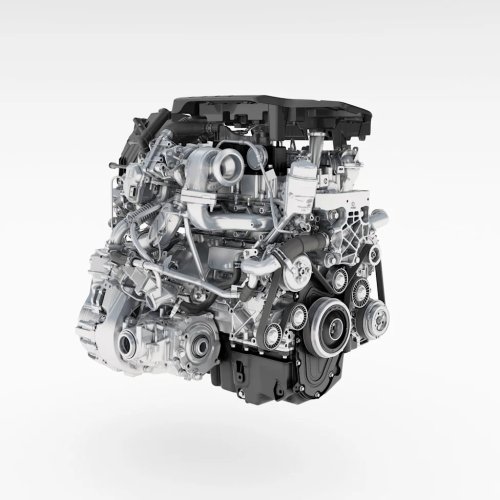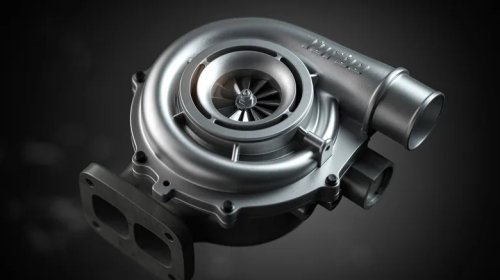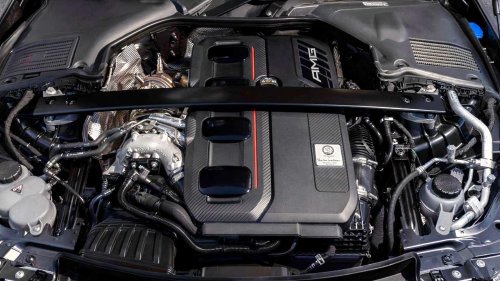
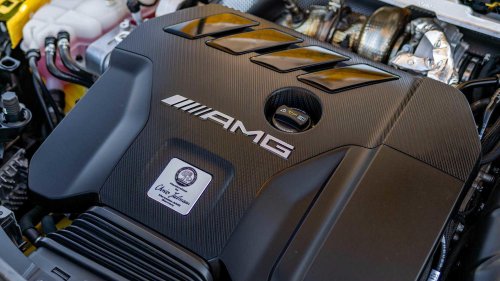
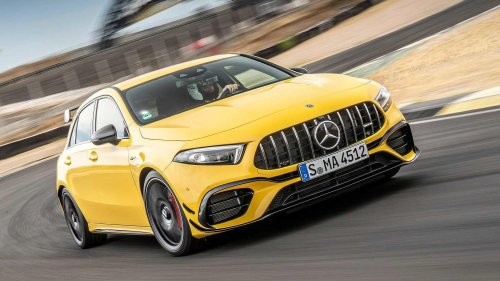
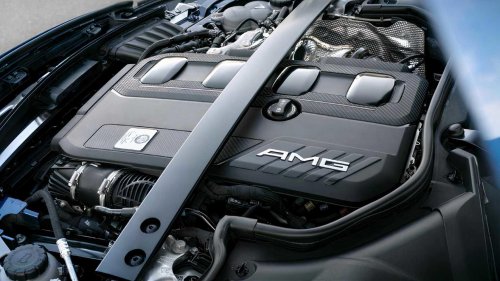
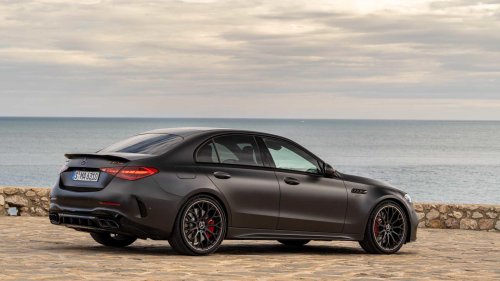
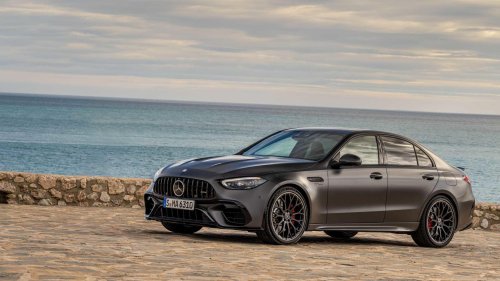
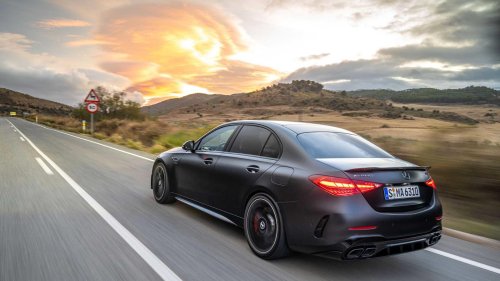
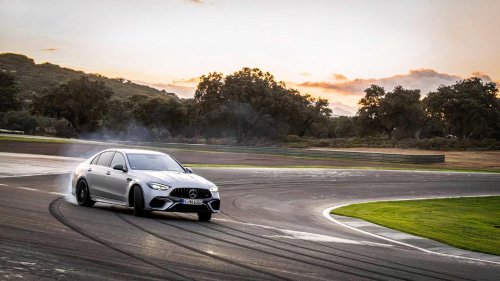
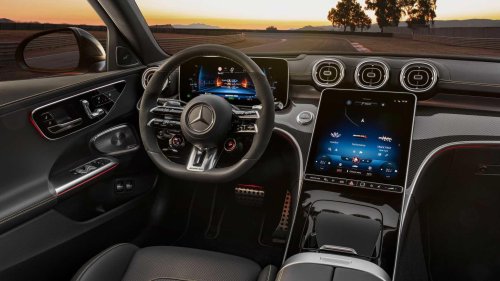
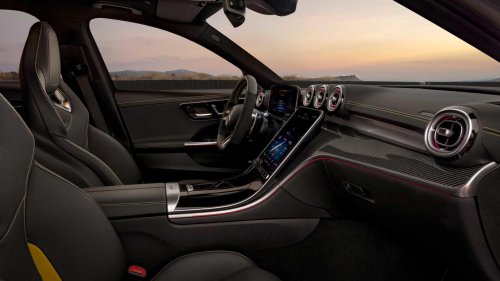
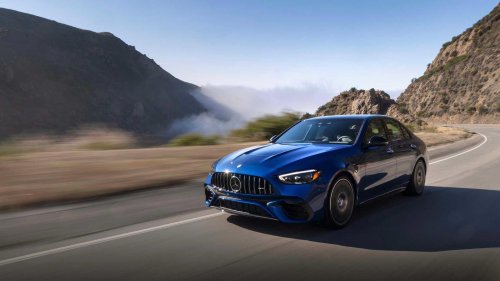
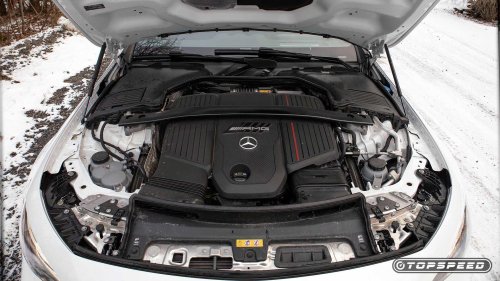
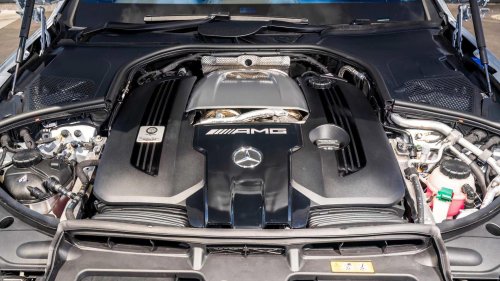



















The automotive world has been undergoing a trend of downsizing. Stricter emissions regulations have necessitated the use of various measures, such as turbocharging, electrification, or both, to make smaller engines match or exceed the performance of the bigger engines they’re replacing. As a result, small engines today are densely packed with so much power that they often exceed those of engines that are twice their size and have twice their cylinder count.One such engine is the most powerful four-cylinder that you can buy in a new car today. In fact, all on its own, this engine, in its most powerful version, produces 469 horsepower. That's more powerful than a lot of naturally-aspirated V-8 engines from the early to mid 2000s. The question now is, is there truly a replacement for displacement, and what model is this engine fitted to? Meet The M139 Mercedes-Benz So what's an M139? Well, that's the most powerful four-cylinder engine in the world, and it's an engine that was developed by Mercedes-AMG. With AMG being the performance sub-brand of Mercedes-Benz, this became the first four-cylinder to follow AMG's philosophy of being hand-assembled by just one man for one engine. A Feat Of Strength Bring A Trailer When the engine debuted in 2019 for the Mercedes-AMG A 45 and CLA 45, it produced 382 horsepower or 416 horsepower in their S versions. It is the latter that became the world's most powerful four-cylinder engine in production. To put that in perspective, a 2026 BMW M340i with a 3.0-liter turbo straight-six produces 386 horsepower, despite having a bigger displacement and two more cylinders. Versus the M133 it replaced, the M139 had its orientation completely flipped 180 degrees. As a result, the intake now faces the front, while the exhaust manifold and turbo are positioned just near the firewall. This flipped layout allows for a more free-flowing intake path, and it also shortens both the intake and exhaust paths.Mercedes-AMG Other measures to increase engine output and improve response include bigger exhaust valves in the cylinder heads, repositioned fuel injectors (featuring both direct and port injection for the first time in an AMG four-cylinder), roller-bearing turbos, a closed-deck engine block, and an aluminum crankcase, plus Nanoslide-coated cylinder bores. The 416-horsepower version of the M139 still featured traditional turbochargers, but when this was swapped out for an electric turbocharger, things just went wild from there. Peaking At 469 Horses Mercedes-Benz What is actually the most powerful four-cylinder engine you can buy today is the M139I—the engine fitted to the controversial C 63 S E Performance. Thanks to the aforementioned electric turbocharger, the turbos are not dependent on exhaust gases to create boost—hence the imperceptible turbo lag from the throttle pedal. The Garrett-supplied electric turbocharger is also quite massive, which is why you got a massive boost from 416 to 469 horsepower.Mercedes This engine replaced the M177 4.0-liter twin-turbo V-8 of the previous C 63, and it matched the 469 horsepower that the standard C 63 produces. The more powerful C 63 S at the time made 500 horsepower from the same twin-turbo V-8, which is impressive then and even now. When you combine the electric motor of the C 63 S E Performance, which is mounted at the rear axle, power output rises to a whopping 671 horsepower and 752 pound-feet of torque. Together with a 6.1 kWh battery pack, this is a plug-in hybrid with a very modest battery solely for performance and emissions, not pure electric driving. Yes, it could drive in pure electric mode, but only for three miles. At best, it drives like a normal hybrid, which isn't necessarily a bad thing. How The C 63 S E Performance Drives Mercedes-Benz Versus the V-8 model it replaced, the new C 63 S E Performance is ultra-complicated. The question now is, does all that complication spoil the driving experience? Thankfully, our friends from our sister site CarBuzz have already driven the new C 63 S E Performance, and here's what they had to say. Seamless Despite The Complications Mercedes Representing an engineering feat for Mercedes-AMG, the C 63 S E Performance manages the two powertrain sources seamlessly in whatever drive mode and scenario. No shuddering, lag, or confusion to speak of, which is a stark contrast to some plug-in hybrids (I’m looking at you, Mazda CX-90 and CX-70) that are mechanically simpler. Power is smooth when you want it, yet instant and relentless when you need it. The four-cylinder just never runs out of steam, and since the electric motors fill in the gaps of the four-cylinder engine, there’s linearity in the savage power delivery of this vehicle.Mercedes-Benz It also handles sharply, too, despite its 4,817-pound weight, which is more than 800 pounds more than the BMW M3. The steering, however, is a bit overassisted for the team’s liking, and the rear wheel steering felt a bit too intrusive. Ride quality is also on the firm side, but it’s perfectly adept to remain compliant. Besides, even the previous C 63 wasn’t known for its posh ride, since it was always a muscle car in a suit and tie. The Heavyweight Elephant In The Room Mercedes Unsurprisingly, its biggest con is its weight, and that’s pretty much the narrative for almost every other motoring journalist. In fairness to the C 63 S E Performance, every electromechanical system works flawlessly in masking its girth. Unfortunately, there is one problem. You see, that full 671 horsepower output is only available when the battery is at a high-enough state of charge. Outside a certain state of charge, the 201-horsepower electric motor only makes 94 horsepower.Mercedes As a result, perhaps 90 percent of the time, the C 63 S E Performance doesn’t actually produce the full 671 horsepower output. In fact, if it isn’t producing that power output, some publications recorded slower 0–60 mph times versus the slower and lighter BMW M3. And there’s the matter of whether all of this complication and weight gain is even worth it, since, for one, the four-cylinder will never sound as nice as the M3’s straight-six or the previous model’s V-8, not to mention that its 671-horsepower output should come with an asterisk after all. In the end, the M139 is an impressive engineering feat, but was it worth replacing the V-8? For a lot of people, probably not. The Future Of The C 63 Mercedes-AMG To say that the Mercedes-AMG C 63 S E Performance is controversial is an understatement, because even within the company’s quarters, the next chapter of the C 63 is still unknown at this point. It seems that the balancing act of satisfying regulators and car enthusiasts is a difficult task. It's Getting A Straight-Six Mercedes-AMG Thankfully, our friends from CarBuzz have confirmed that the next C 63 will get a straight-six, though in the process, it will no longer be called the C 63. With the expected drop in total power output, the C 63 will be called the C 53. The evolution is natural, since the 3.0-liter turbocharged straight-six with an electric compressor already exists in the similarly-sized two-door CLE 53, which, in this vehicle, produces 443 horsepower and 413 pound-feet of torque.William Clavey | TopSpeed This setup comes with a 48-volt EQ Boost mild-hybrid system and a nine-speed automatic. Because it is ditching the bulky plug-in hybrid of the C 63 S E Performance in favor of a simpler mild-hybrid system, the C 53 may be down on power, but it'll be easily offset by the weight loss program. The plug-in hybrid system weighs 780 pounds, and that could be enough to offset the power deficit. But A V-8 May Still Be Possible Mercedes-Benz Remember the newly-unveiled S-Class, which has a new M177 Evo 4.0-liter flat-plane crank V-8? Well, this engine is also being developed and tinkered with by AMG, and it's already confirmed in the upcoming CLE 63, as revealed by Autocar. In fact, there are already prototypes spotted that are accompanied by the sound of a flat-plane crank V-8. Considering the positioning of the CLE as a two-door C-Class, the possibility of a C 63 revival in the future is high. The reason for the future C 63's move towards a straight-six, or perhaps even a V-8, is due to the four-pot no longer meeting emissions regulations. Either way, ditching the plug-in hybrid system is a win in our book.