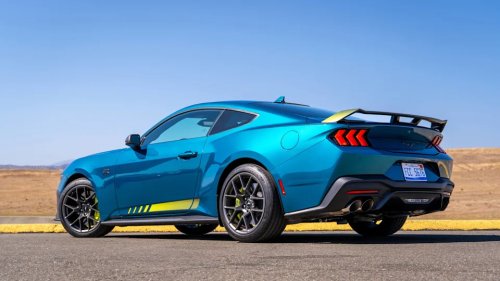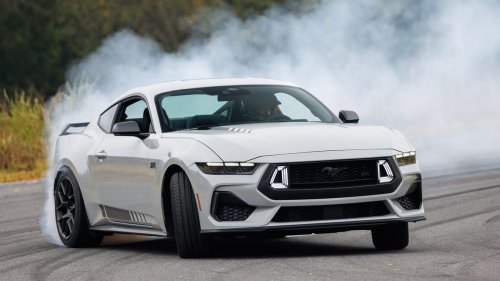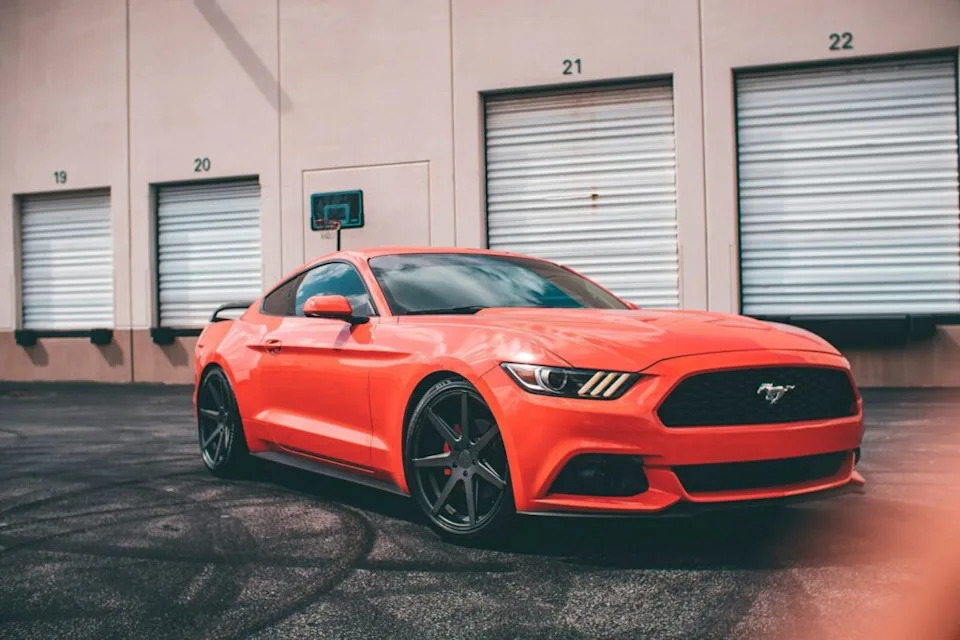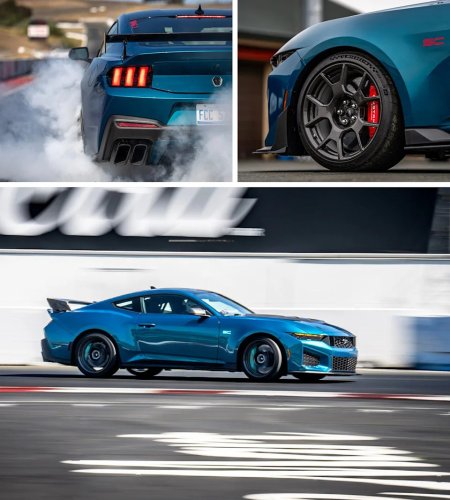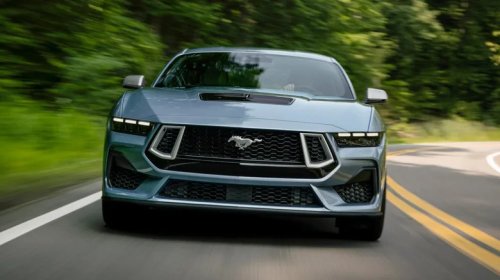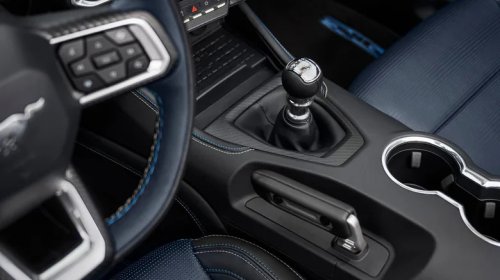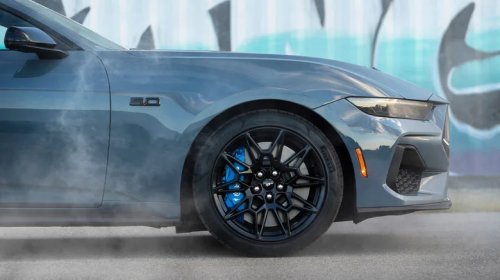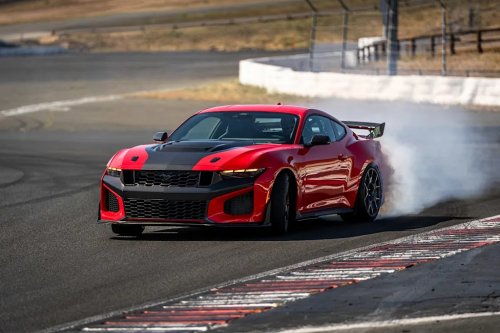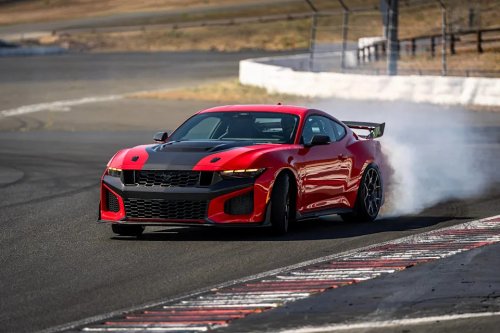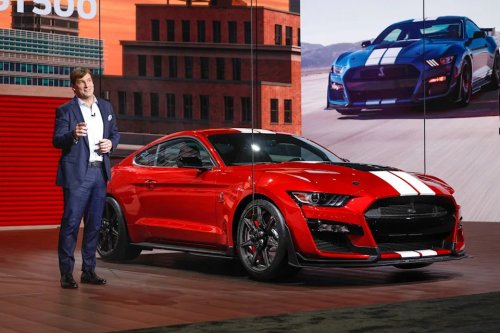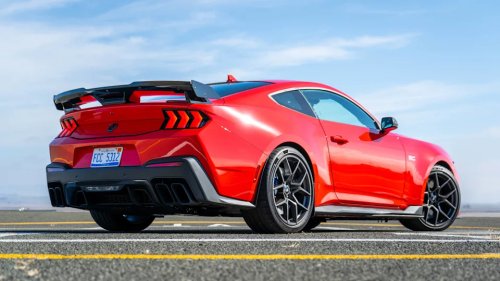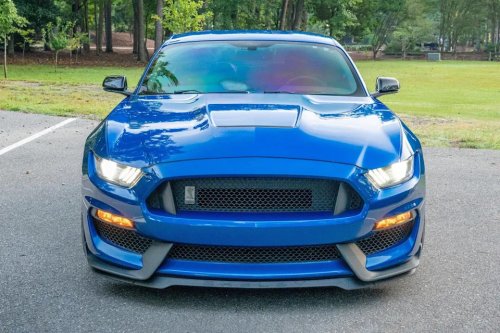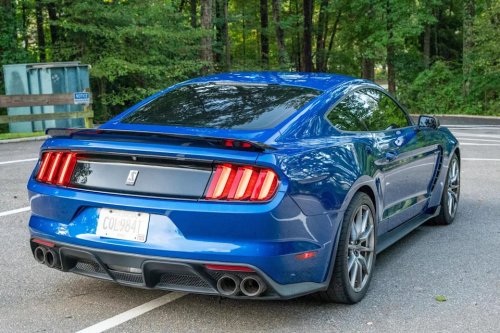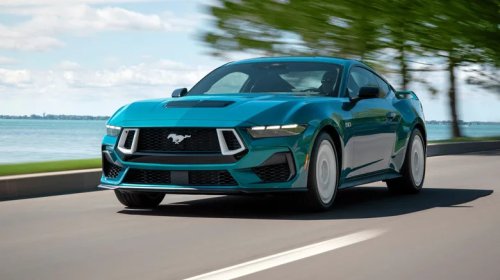
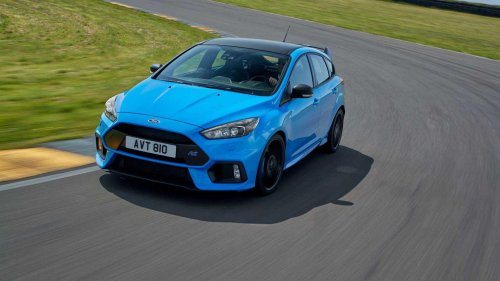
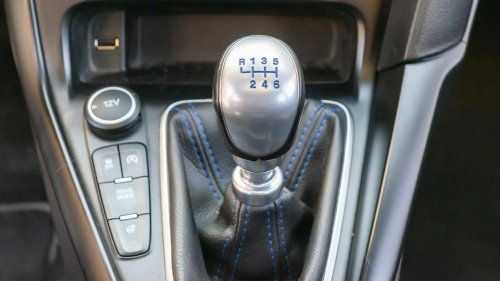
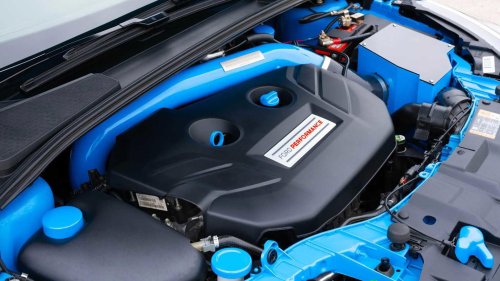
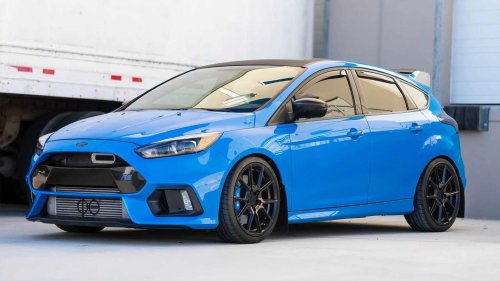
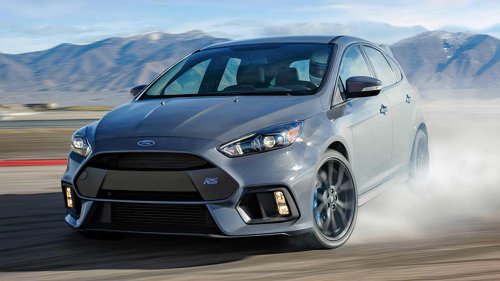
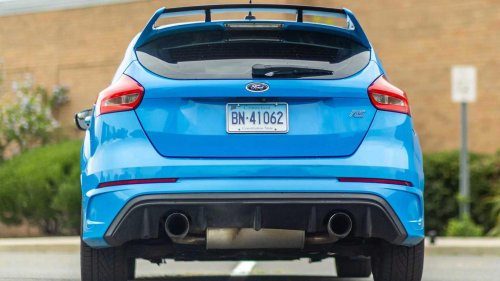
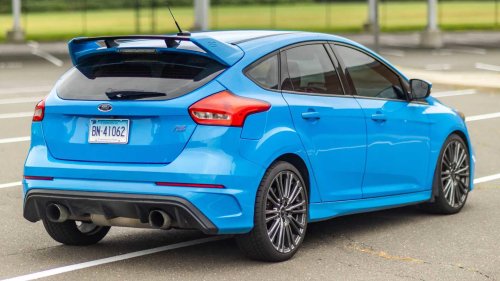
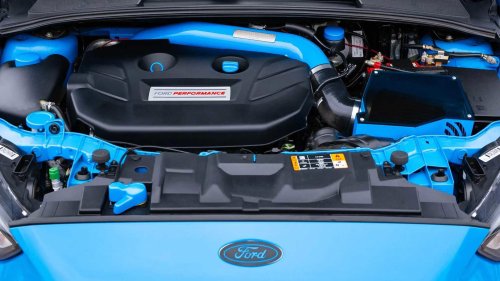
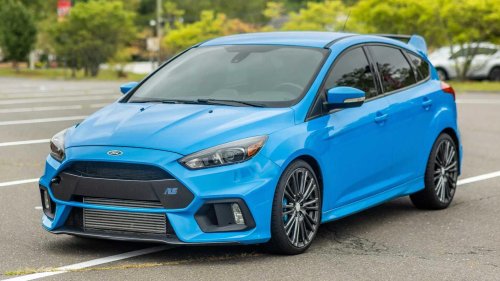
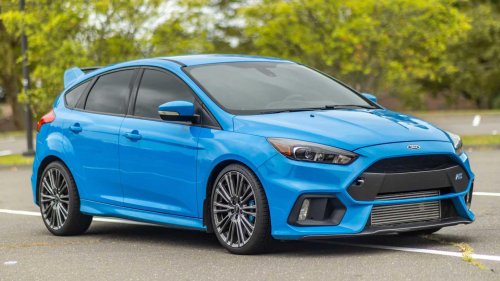



















The Mustang GT has a 5.0-liter V8, rear-wheel drive, and decades of American performance history behind it. It is exactly what people picture when they think of a fast Ford. So when a rival showed up at the same price point with four cylinders, a hatchback body, and no V8 rumble whatsoever, nobody expected much. They should have.Ford had quietly built the most powerful four-cylinder engine it had ever put in a production car for America, stuffed it into something totally unexpected, and tuned it to produce the same horsepower figure as some sports cars with twice the displacement. As a result, it would leave a Mustang in its dust. The Mustang GT Set The Bar For Affordable American Performance Ford The Mustang GT has always been the working definition of affordable American performance. A 5.0-liter V8, somewhere between 435 and 450 horsepower depending on the model year, and a starting price that hovered around $40,000 new. For that money, you got rear-wheel drive, a thundering exhaust note, and a car that had been winning stoplight arguments since 1964.The cultural weight behind the Mustang GT is not easy to overstate. This is the car that defined what performance means in America — big engine, rear-wheel drive, and the sound to match. For decades, if you wanted a fast Ford, the answer was a V8 in a long hood. That was the deal.At almost exactly the same price point, Ford released a car with four cylinders, a hatchback body, five doors, and enough trunk space to do a grocery run. It had no V8 or rear-wheel drive, not any history in the American market. But, importantly, it was faster off the line than the Mustang GT. The question worth asking is how exactly a four-cylinder hatchback pulls that off, and the answer starts under the hood. Ford Answered With The Most Powerful Four-Cylinder It Had Ever Built Ford The car was the 2016-2018 Ford Focus RS, the first RS-badged Ford ever sold in the United States. Europe had been getting RS models for years, but Americans had never seen one on a dealer lot until the Mk3 arrived. Ford brought roughly 5,000 examples per year to the US across its three-year run, which means the total American supply was somewhere around 15,000 cars. Ford Focus RS Specs Under the hood sat a 2.3-liter turbocharged four-cylinder EcoBoost producing 350 hp and 350 lb-ft of torque. A six-speed manual transmission was offered exclusively, and power went to all four wheels through a sophisticated AWD system with torque vectoring. There was no automatic option, or front-wheel drive variant. The Focus RS came one way: fully committed.Zero to 60 arrived in 4.5 seconds, top speed was 167 mph, and the car weighed around 3,440 lbs. Heavy for a compact, but the AWD hardware earned its place. The 2016 model started at $36,605, rising to $41,120 by the final 2018 model year, which put it squarely in Mustang GT territory on the showroom floor.Bring a TrailerWhat made the RS significant beyond its spec sheet was what it represented internally at Ford. The 350 hp output was the highest power output Ford had ever extracted from a four-cylinder production engine. That was not a marketing footnote. It was a genuine engineering milestone, achieved by taking the same 2.3-liter block that lived in the Mustang EcoBoost and reworking it so thoroughly that the two engines ended up in completely different performance categories. The same displacement, a very different result, and that gap is worth understanding in detail. Same Engine Block As The Mustang With 40 More Horsepower Bring a Trailer The Mustang EcoBoost uses the same 2.3-liter turbocharged four-cylinder block as the Focus RS. In the Mustang, that engine produces 310 hp. In the RS, the same displacement produces 350 hp. Ford and Ricardo, the engineering firm that co-developed the RS engine, closed that 40 hp gap without adding a single cubic centimeter of displacement.The changes were specific and substantial. The turbocharger compressor wheel grew from 60mm to 63mm, allowing higher boost pressure and better airflow. The cylinder head was recast in a new aluminum alloy with improved heat dissipation, and the head gasket was upgraded to handle the additional stress. The engine block itself was strengthened to cope with higher temperatures under sustained load.To handle the increased boost, Ford utilized a unique cylinder head cast by Cosworth from a higher-tensile alloy and fitted the block with high-strength cast-iron liners. These were fundamental structural changes designed to ensure the engine could survive the relentless pressure of a 350 hp output—performance levels the base Mustang block was never intended to reach.Bring a Trailer The valve springs were reinforced, and crankcase ventilation flow was nearly tripled, from 17 liters per minute to 45 liters per minute. None of these are simple tune changes. Ford was rebuilding the internals of a shared platform engine to extract performance that the base version was never designed to produce. The result was 40 hp and 30 lb-ft more torque than the Mustang EcoBoost, from the same 2.3-liter engine, ultimately it was barely the same engine.The RS engine won several best engines awards, sitting alongside entries from Ferrari and Porsche at the time. That is not the kind of award a retuned economy engine wins. Ford had genuinely built something different. A four-cylinder that could credibly sit in the same conversation as the best performance engines in the world. It was Ford's most powerful four-cylinder ever, and the Mustang's own engine family is what it was built from. Then Ford Gave It A Drift Button FordThe AWD system in the Focus RS was not the kind of all-wheel drive that exists to make a car feel more planted in the rain. Ford used a GKN Twinster system, a torque-vectoring setup with twin electronically controlled clutch packs at the rear axle, capable of sending power independently to each rear wheel. It monitors vehicle sensors 100 times per second and can divert up to 70% of the engine's total torque to the rear axle, and then up to 100% of that rear allocation to a single wheel.That hardware enabled something no production car at this price had offered before: a factory-calibrated Drift Mode. Press the button and the system overspeeds the outside rear wheel, softens the dampers to allow smoother weight transfer, and raises the stability control's intervention threshold to give the rear end room to step out. The car does not switch off its safety systems entirely, it relaxes them in a way that lets a competent driver sustain a controlled slide rather than snap into a spin.Bring a TrailerThe Mustang GT, for all its rear-wheel drive character, offers a more traditional mechanical limited-slip differential. That setup rewards drivers who know how to manage throttle and wheel input through a corner. The RS offered something architecturally different. A system that actively redistributes torque mid-corner in real time, using electronics to do what physics alone cannot. A drift button in a five-door hatchback sounds like a gimmick. The engineering underneath it was anything but. The Drag Test Where The Mustang Lost Bring a Trailer The performance case starts with a test that is harder to dispute. In a Car and Driver comparison, the Focus RS ran to 60 mph in 4.6 seconds and through the quarter mile in 13.2 seconds. Quicker than the Mustang EcoBoost in both measures (5.2 sec / 13.9 sec respectively), despite sharing the same basic engine block. That result alone makes the engineering point: Ford took the Mustang's own four-cylinder and built something faster out of it.The V8 story is more nuanced, and worth being honest about. Top Gear Magazine pitted the Focus RS against the European-spec Mustang GT, a model that produces less power than the American version, and the RS reportedly won the launch and reached 60 mph first. The quarter-mile times were close enough to call a draw. That is a credible result, but the caveat matters: the American-spec 5.0 GT is a meaningfully quicker car than its European counterpart.Bring a Trailer But the drag strip is not the whole story. The Focus RS exceeded 0.98-1g of lateral acceleration in cornering, a figure that puts it in sports car territory, and the torque vectoring system made it a more capable car on any road with actual corners. The honest verdict is that the RS beat the Mustang GT off the line, matched it in the quarter mile, and outperformed it everywhere the road stopped being straight. Here Is What A Used Focus RS Costs In 2026 — And Why It Holds Its Value Bring a Trailer When the Focus RS launched in 2016, it started at $36,605. That figure is worth roughly $50,500 in today's money when adjusted for inflation, which makes what you can actually buy one for right now genuinely surprising. The average asking price currently sits around $27,667 nationwide. Clean examples with reasonable mileage list from $25,000 upward.The market for the best examples tells a different story. Pristine low-mileage cars have listed as high as $53,000, and the highest recorded auction result for a 2018 model hit $82,125 in March 2026 for a limited Heritage Edition, according to Classic.com. The highest recorded sale in the US, however, lands at $57,000. Those numbers reflect the reality that only around 15,000 Focus RS models ever made it to the US across three model years, and the supply is not growing.Bring a Trailer For buyers at the $25,000–$30,000 level, the value case is straightforward. That budget buys the most powerful four-cylinder Ford ever built, in a car that beat a Mustang GT off the line, matched it in the quarter mile, and carried more cornering grip than most sports cars at twice the price.Sources: Ford, Car and Driver, Top Gear Magazine UK, Classic