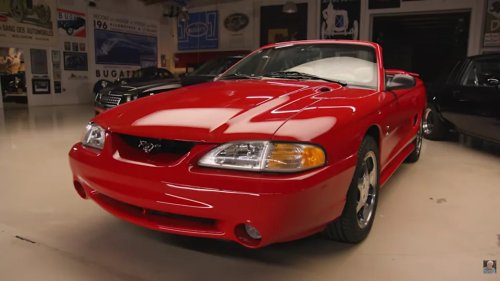
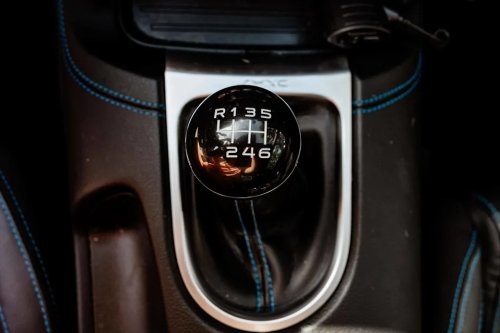
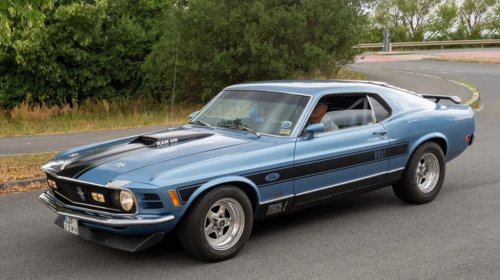
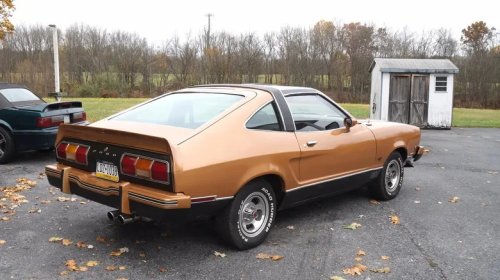
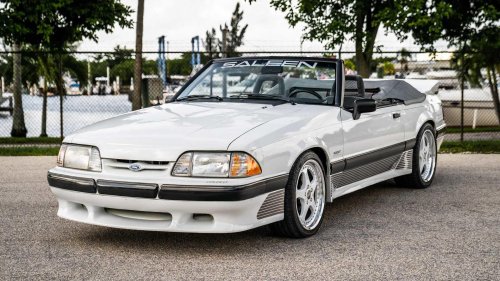
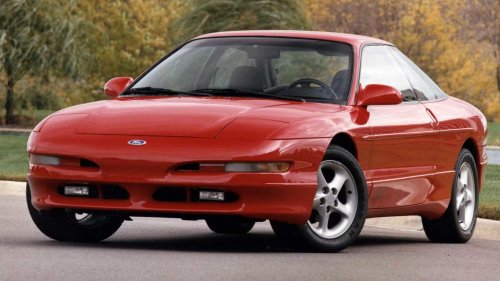
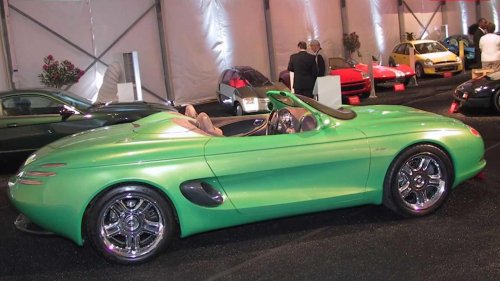
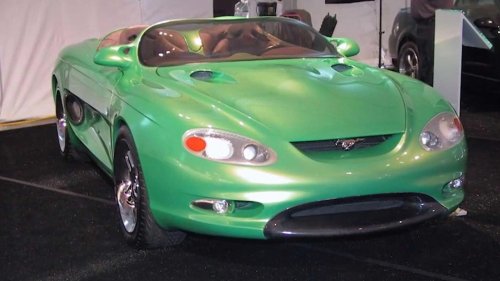
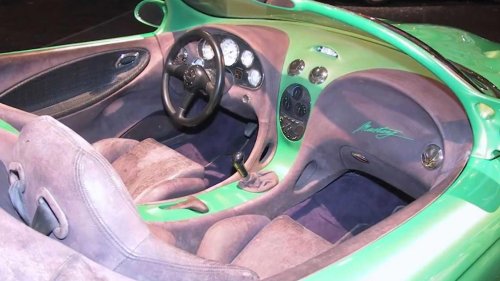
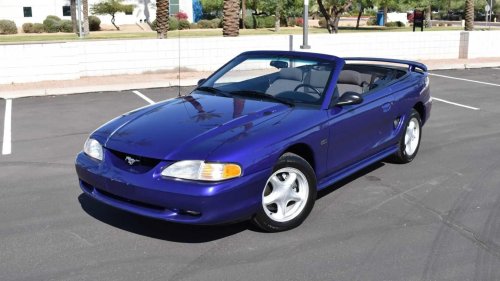
There have been plenty of "what if" moments with the Ford Mustang. Even before the evergreen sports car was launched in the '60s, Ford explored the idea of making it rear engined, with a 1.5-liter V4 drivetrain from the Euro Ford Taunus. The Mustang I Concept was shelved, but this didn't stop the Blue Oval from experimenting with other ideas, even creating a mid-engine Mustang that never was.In the early '90s, with muscle cars struggling to capture the zeitgeist like they once had, Ford looked at a different direction for its iconic pony car. A new concept imagined the Ford Mustang as a rakish, compromised speedster in the style of Porsche's most fanciful models. Now, perhaps, it is better off forgotten. The Mustang Was Facing Some Of Its Biggest Challenges Yet Bring A Trailer It's no secret that the early '70s oil crisis and new emissions regulations stopped muscle cars in their tracks. The rest of the decade saw these overpowered monsters being reduced to wheezing four-pots and illustrious badges that were nothing but a nod to the past. By the '80s, things weren't much better, with turbocharged foreign cars and four-wheel-drive showing that you could attain much of the output and speed of an old school muscle car with a handful of cylinders.While there was still a market for muscle cars, big V8s seemed a bit stuck in the past. Ford was one of the few companies to soldier on with the pony/ muscle car formula (thankfully), offering the Fox Body Mustang with muted V8s (and turbocharged fours) that were still worth buying. By 1992, sales were down to 79,280 units,says Cjponyparts.com, a far cry from even 1986 (224,410) and a fraction of the 607,568 sold in 1966. Ford was working on the upcoming SN95 but needed to drum up some interest. Ford Nearly Killed the Mustang for a Front-Wheel-Drive Probe Ford The story goes that Ford was thinking of replacing the Mustang with, shock horror, a front-wheel-drive coupe.Ford almost killed the Mustang, says Hagerty, and the Probe was the likely successor. Working in partnership with Mazda, the Probe would be based on the MX-6 and fit right in with the forward-thinking Japanese two-doors that were becoming increasingly popular. Thankfully, Ford changed its mind and decided to develop the fourth generation for a 1994 launch.Hiding the fact that it would use a heavily modified version of the Fox platform, Ford would create a retro-modern design language that looked to the future and to the past. But before that car was unveiled, Ford presented another what if moment, putting the idea out to the public that the Mustang could also be a wild roof-less speedster that had more in common with European sports cars than traditional muscle. The Mustang Mach III Was Designed To Get Attention Ford's hand was apparently forced when it came to the Mustang Mach III concept. John Coletti, chief engineer at Special Vehicle Team Engineering, found out in early 1992 that Chevrolet and Pontiac were going to introduce their new Camaro and Firebird during the January 1993 Los Angeles and Detroit Auto Shows, says experts Christie's. The new SN95 Mustang wasn't due for release until 1994, but Ford hatched a plan to steal some of the thunder from its arch rivals.The Mach III Was A Ford-Badged Viper RivalRetro Car/ YouTubeWith a nod to the wild Mach I and Mach II concepts of the '60s, the Mach III would be a similarly outlandish sports car version of the Mustang. The Mach III had more in common with a Dodge Viper than a Mustang. The speedster featured a low-cut windshield that dips in the middle, and a two-seat interior, with a clear taster of the styling to come in the fourth-gen SN95. The fiberglass composite body had no provision for a top, and the overall vibe was that of a no-nonsense sports car (a la Viper) with a focus purely on driving. The Mach III Had The Power To Back Up Its Looks Advance powertrain engineering chief Jim Gagliardi took the lead when it came to the engine. The 4.6-liter double overhead camshaft V8 was fitted with a Roots supercharger with liquid-air intercooler and dual exhausts. This was enough to achieve 450 horsepower, almost 100 horsepower per liter, and the unit was linked to a 6-speed manual transmission. Under the svelte body was an independent front suspension and solid rear axle with 4-wheel disc brakes. While the Mach III rode on five-spoke chromed 19-inch alloy wheels wrapped in P275/40R-19 front tires and P305/35R-19s at the rear, these were actually steel wheels with chromed fiberglass covers (says Christie's). The Public Loved The Mach III Concept Retro Car/ YouTubeThe Mustang Mach III caused a huge stir at the Los Angeles Auto Show in January 1993, the public loving the idea of Ford offering a rival to the Dodge Viper. Ford handbuilt two cars using the Mustang's launch budget, and they created plenty of hype by doing the rounds at shows. Magazines even got to try out the Mach IIIs, which were fully working. Finally, the concept was quietly shelved, making way for the production SN95 Mustang to fill the showrooms. The idea of a Ford rival to the Viper or the iconic and rare Porsche Speedster would never materialize. The Concept Was Canned, But Lived On In Other Ways Retro Car/ YouTube Of the two Mach III concepts built, just one is thought to have survived. The red car was reportedly destroyed in a 1994 transporter fire while heading back from a Canadian show, although a red example has popped up in photos since. A green car survives (although this was also said to be poppy red, then repainted in Jungle Green Pearl) and went on sale through Christie's in 2002. The car fetched a whopping $491,500 at the sale.Since then, the car seemed to disappear. It is likely sitting in a private collection somewhere. It could be argued that the Mach III concept, even though it had much the same design language (including the three-bar rear lights), overshadowed the production car slightly. The SN95 was far more conservative in comparison. That said, the SN95 did boost sales to 123,198 units for 1994, so perhaps the concept did help to build interest. The Production SN95 Is A Bargain These Days Bring A Trailer If you can live without a speedster windshield and don't mind having a roof, the SN95 Mustang is a steal these days. A 1994 Ford Mustang GT, which comes with a V8 (albeit with half the power of the Mach III at 215 hp) is probably one of the cheapest ways into eight-cylinder Mustang ownership. The drop-top version costs just $9,200 in good condition, says Hagerty's Valuation Tools.For a bit more power, you can get a 1995 Ford Mustang SVT Cobra convertible with 240 horsepower, which still only costs $11,700. A 305 horsepower 1998 Ford Mustang SVT Cobra convertible is still cheap, selling for $15,600. They may not quite have the style of the Mach III concept, but you can't really go wrong for those prices.Sources: Cjponyparts.com; Hagerty.com; Christies.com



















 +52 others