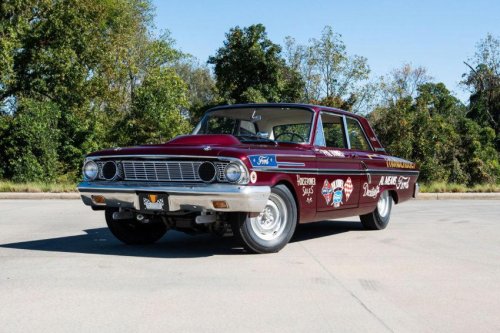
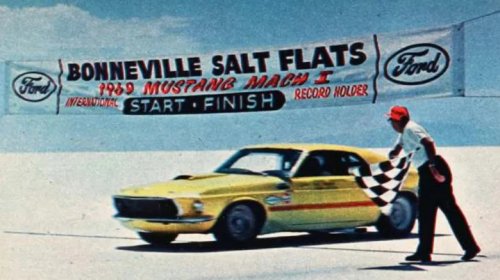
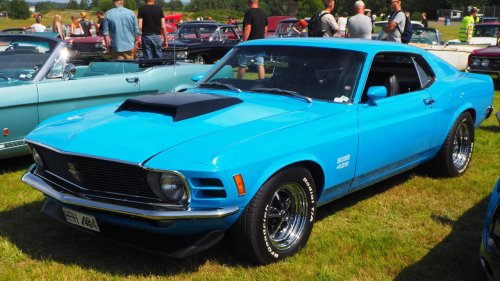
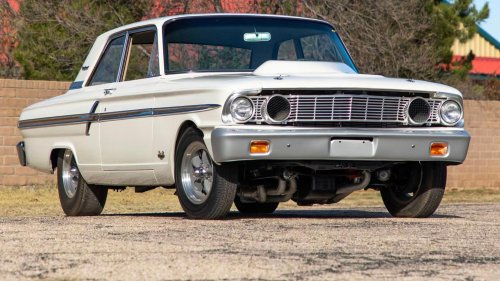
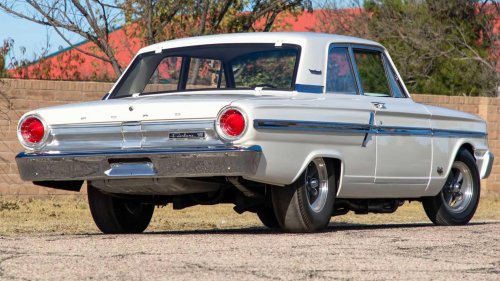
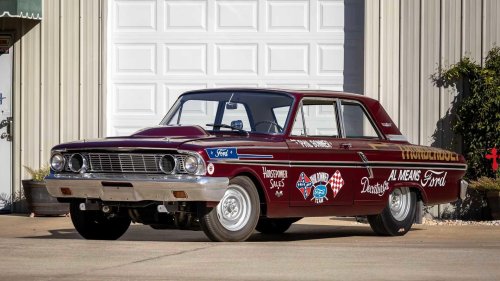
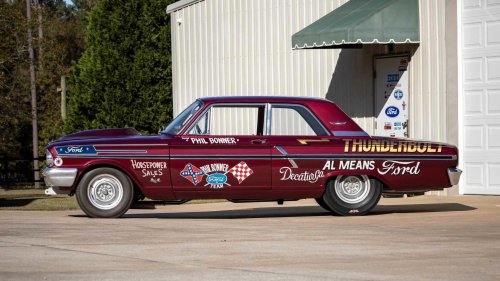
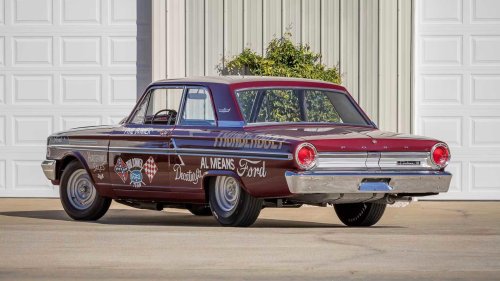
When people think of classic Ford muscle, the Mustang usually leads the conversation. The 1969 Boss 429 remains the most powerful street-legal Mustang of its time, packing a 375-horsepower NASCAR-derived V8 under the hood. Even rarer examples, like the one-off 1967 Shelby GT500 Super Snake, pushed boundaries, albeit a single prototype built for a specialized tire test, which remains the rarest and most valuable Mustang ever.But Ford’s most powerful factory-built muscle car of the era didn’t wear a pony badge. It wasn’t designed for wide appeal or showroom glamour. Instead, it was engineered for one purpose—dominate the drag strip. Built in extremely limited numbers and sold only to serious racers, this car came stripped down and reinforced to handle brutal quarter-mile launches.It used Ford’s most aggressive version of the 427 cubic-inch V8, and officially claimed an understated 425 hp; real-world output was substantially higher. This Ford was lightweight thanks to its stripped-down interior and body panels.This car’s mission was clear: a turn-key factory-built model which can win NHRA drag races on Sunday, while being road legal for everyday use... at least on paper. Today, it remains one of the most extreme series production muscle cars Ford ever built. The 1964 Fairlane Thunderbolt Was The Most Powerful Classic Ford Muscle Car Low angle of a 1964 Ford Thunderbolt 1964 Ford Fairlane Thunderbolt - Engine And Performance Specs (Source: Fastest Laps, Ford)Ford built the 1964 Fairlane Thunderbolt with a singular goal: win in NHRA Super Stock drag racing. While the Mustang Boss 429 is often considered the most powerful series production Mustang muscle car of the 1960s, the Thunderbolt pushed further. It used Ford’s 427 cubic-inch High-Riser V8—an engine derived from NASCAR and endurance racing programs—with a factory-rated output of 425 hp at 6,000 rpm and 480 lb-ft of torque at 3,700 rpm. In real-world drag racing trim, the engine could produce well over 600 hp.The High-Riser engine featured large intake ports, high-flow heads, and a twin-Holley four-barrel carburetor setup mounted on an inline intake manifold. It ran a fairly high 12.5:1 compression ratio, requiring high-octane race fuel, and came paired with either a 4-speed manual or a beefed-up 3-speed automatic transmission.Mecum What made the Thunderbolt stand out wasn’t just power—it was its lightweight nature. Ford engineers removed everything non-essential and replaced the front fenders, hood, and front bumper with fiberglass panels. Plexiglass windows helped shave valuable weight compared to conventional glass, and the interior featured lightweight bucket seats with no rear seat, heater, or sound deadening.Only 100 units were built to meet NHRA homologation rules, and Ford sold them through select dealerships. The Thunderbolt was technically street legal, but its sole purpose was quarter-mile dominance. In competition form, the car could run mid-11-second quarter-mile times straight from the factory.While the Boss 429 brought race tech to the street, the Thunderbolt brought the drag strip to the street—if only just barely. It remains the most powerful classic Ford muscle car ever built with direct factory involvement, and it set a high benchmark for what a production-based Ford could achieve in performance. The Fairlane Thunderbolt Dominated The Drag Strip In 1964 Mecum The 1964 Ford Fairlane Thunderbolt made an immediate impact in NHRA Super Stock competition. The purpose-built Thunderbolt offered a factory-built turn-key solution for serious racers. Ford delivered the car ready to race, and it proved itself quickly on the drag strip.In the NHRA Super Stock Eliminator, the Thunderbolt dominated the 1964 season. The car regularly posted quarter-mile times in the mid-11-second range at trap speeds over 120 mph, straight off the showroom floor with little more than tuning and slicks. Its performance gave Ford a strong advantage over competing models from Chrysler and GM, many of which struggled to match its power-to-weight ratio and consistency on the strip.Mecum Auctions Notable racers like Gas Ronda, Butch Leal, and Phil Bonner helped turn the Thunderbolt into a feared competitor. Ronda, in particular, became known for his wins in Southern California, helping build the Thunderbolt’s reputation as a race-ready muscle car. The car was so successful that NHRA officials reclassified it mid-season to prevent it from overwhelming the competition.Ford’s factory-backed drag racing program used the Thunderbolt as a high-performance drag strip weapon. It not only helped Ford win races, but also reinforced the brand’s commitment to performance in the eyes of muscle car fans and weekend racers. Fairlane Thunderbolt Racing Achievements Won the NHRA Super Stock Eliminator title in 1964 Posted factory quarter-mile times in the mid-11s Helped Ford win the 1964 NHRA Manufacturers' Cup Reclassified mid-season by NHRA due to dominance Campaigned successfully by top racers like Gas Ronda and Butch Leal Demonstrated consistent high-performance results with minimal modifications Fairlane Thunderbolt Imitations Can Sell For $80,000 Current Values (Source: Hagerty)Original 1964 Ford Fairlane Thunderbolts consistently command high prices in today’s collector market. According to Hagerty, a verified Thunderbolt in Concours condition carries an estimated value of $282,000. Those in Excellent and Good condition are valued at $240,000 and $201,000, respectively. Even a car in fair condition is worth around $165,000, showing the lasting appeal of this purpose-built drag racer.These values reflect both the rarity and racing heritage of the Thunderbolt. Ford produced just 100 units in 1964, all intended for the NHRA Super Stock competition. They featured factory-installed 427 High-Riser engines, fiberglass body panels, and minimal interior trim. These unique specifications distinguish them from regular Fairlanes and drive collector interest.Mecum Auctions Because of this limited production, many enthusiasts have built 'Tribute' or 'Clone' versions using standard 1964 Fairlane models as a base. These replicas often include visual and performance upgrades but do not match the value of a documented original. According to Classic.com, several tribute Thunderbolts have sold for between $30,000 and $80,000, depending on build quality and components used.Verified originals with factory documentation continue to bring top dollar, sometimes listing for over $220,000. Collectors place a premium on authenticity due to the car’s historical role in Ford’s factory racing program. With its track success and unmistakable character, the Thunderbolt remains one of the most valuable and respected models in Ford’s muscle car legacy.



















 +25 others