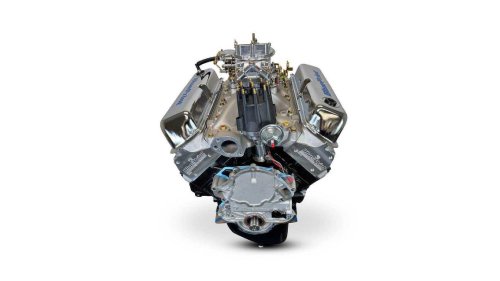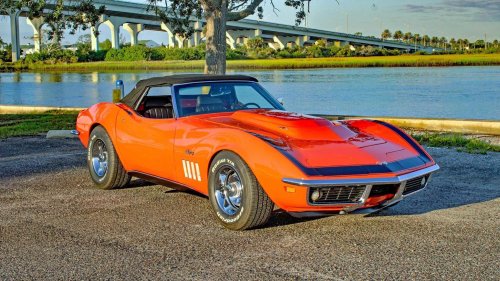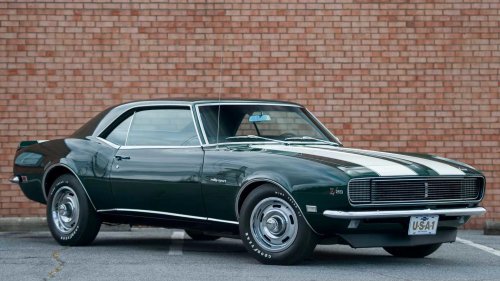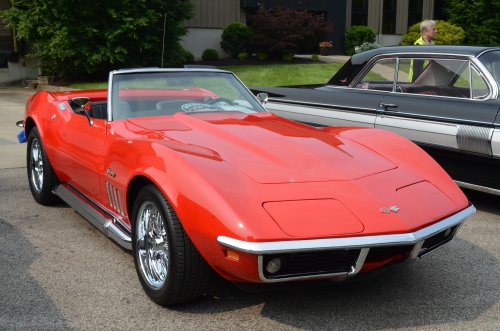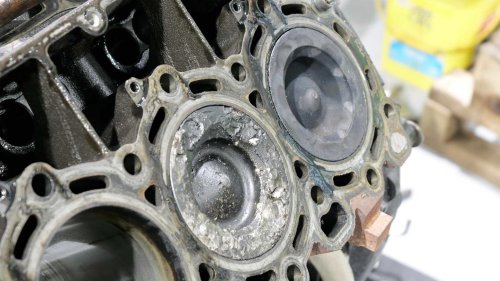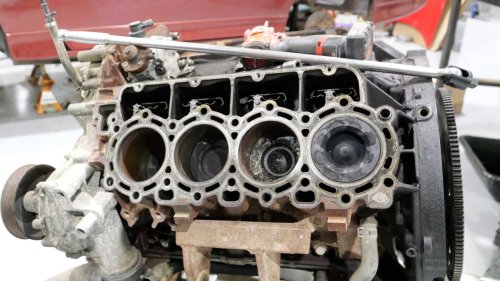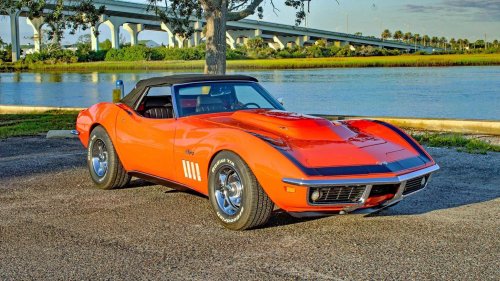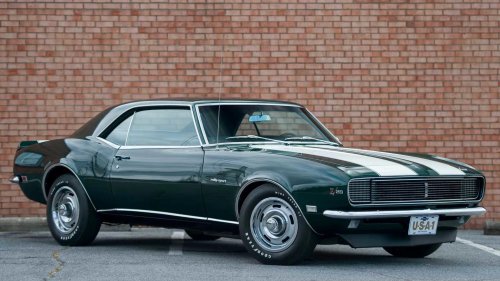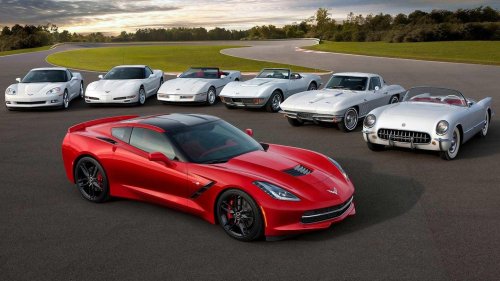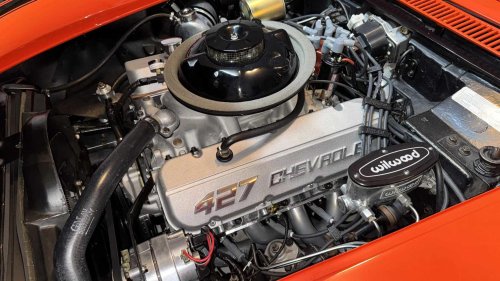
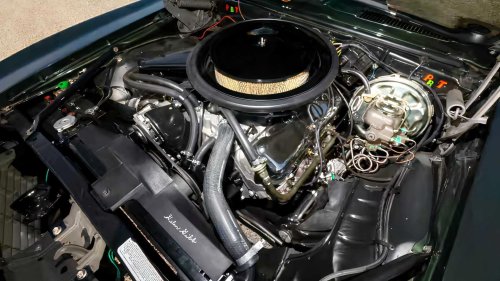
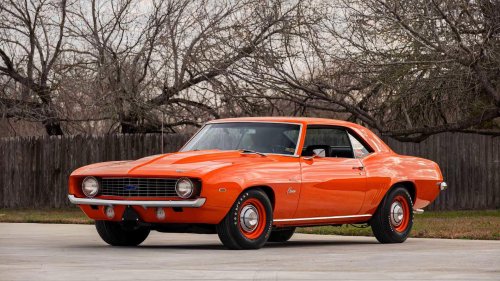
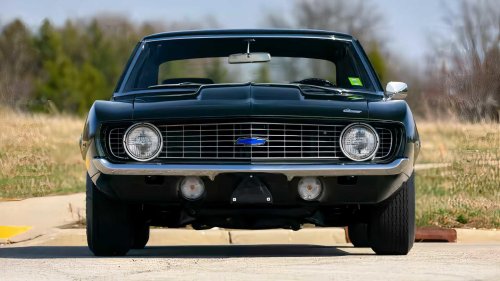
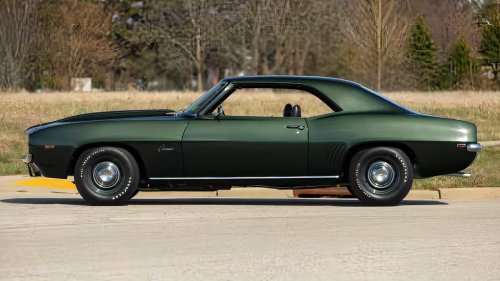
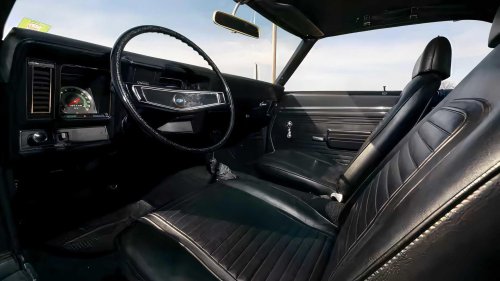
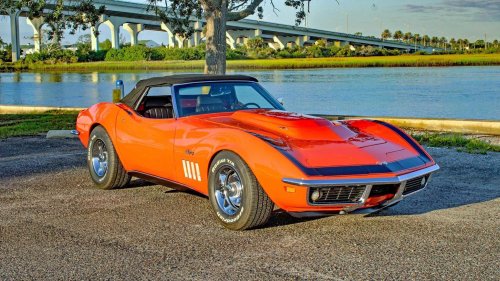
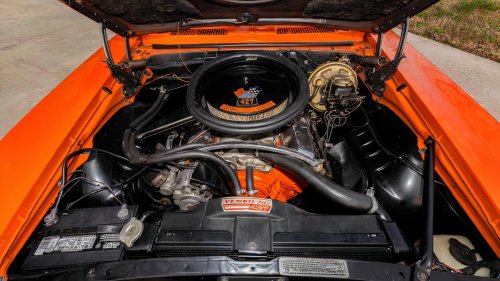
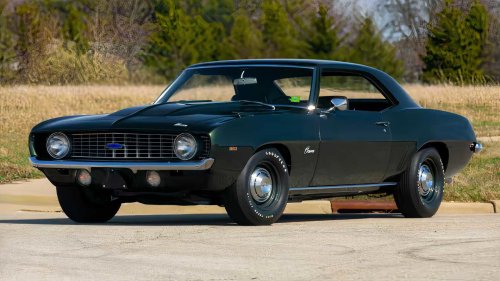
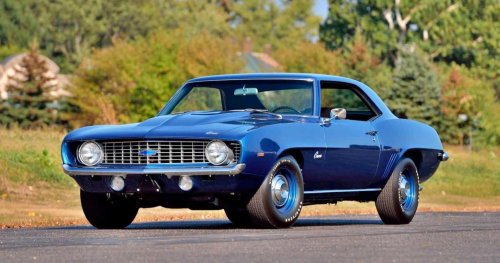



















Rarity is always relative. Today, we see limited-edition cars with production runs of perhaps a few hundred or even 1000 units all the time, but things were very different in the 1960s and early '70s. Back then, cars – and their engines – were built on a slightly more ad-hoc basis. The greatest engines of the era were almost exclusively sold to the public for homologation purposes, cementing the cars that had them as an option as bona fide legends. These include your average 426 Hemi V8 that found a home in the Plymouth Belvedere and the Boss 429 in the 1969-70 Mustang. Heck, it even happened in Europe, with the BMW M1's M88 straight-six and the Ferrari Dino's 2.0-liter V6 both forged in motorsport.But none of these is as rare as one race-bred Chevy big-block V8 that found its way into the 1969 Camaro. With fewer than 100 built for production cars, it's one of the rarest engines out ever produced. The ZL1 Is One Of Chevrolet's Rarest Engines Ever Bring A TrailerBuilt for motorsports, Chevrolet's massive ZL1 aluminum 427-cubic-inch V8 is now the stuff of legend. Figures from the 1960s aren't always that accurate, but the general consensus reckons 71 of these engines were built for production cars. Of those, 69 were fitted to Chevrolet Camaro ZL1s, and two more ended up in a pair of very special factory-built 1969 Corvettes. Perhaps a few hundred were built for racing, but the exact number is unknown, and we have no idea how many of those engines survive.But while the exact population of ZL1 engines is a bit of a mystery, there's no doubt this is one of the rarest V8 engines out there. The motor itself is a collector's item – let alone the cars it powers – and for that reason alone, it's worthy of recognition. And that's before we even consider the ZL1's impact on the Camaro, the Corvette and the world of motorsports. A Race Engine Based On The MkIV Big Block via MecumIn essence, the ZL1 engine was based on Chevrolet's MkIV big-block V8, but it came with quite a few fundamental differences. For one, this race-bred ZL1 V8 used an aluminum block, which helped make it some 100 lbs lighter than the "conventional" MkIV Chevy V8. Extensive strengthening work was needed to cope with the power output, with beefier bolts and bearings inside the engine, while changes were made to the exhaust ports and the exhaust valve lift and timing. Chevrolet also fitted a Holley 850-cubic-feet-per-minute "double-pumper" carburetor, giving the engine yet more potential.Officially, Chevrolet rated the ZL1 at 430 horsepower, but dyno tests suggest they were really pumping out well over 500 horsepower. That's a lot by modern standards, but in 1969, when our favorite British car of the 1960s, the legendary Jaguar E-Type (often known as the XKE in North America) had a straight-six engine with 250 horsepower, the V8 ZL1 powerplant was on a completely different level. It was the epitome of American muscle, and those muscles were bulging.It was born from Chevrolet’s Can-Am racing program, where all-aluminum big-block Chevrolets powered dominant McLaren race cars, but the promise of less weight over the front wheels and more power to the back meant the ZL1 (and derivatives thereof) became incredibly desirable on the drag strip and on the road. Some modified ZL1 engines reportedly produced as much as 800 horsepower, improving further on the Chevy motor's already impressive power-to-weight ratio.Sadly, the economics of building an aluminum-block engine in the 1960s and '70s didn't make that much sense, so Chevrolet built far more cast iron blocks. When a ZL1 engine alone set buyers back more than $4,000, takers were unsurprisingly limited. The Furious V8 Heartbeat Of The 1969 Chevrolet Camaro ZL1 Via Mecum AuctionsNevertheless, the ZL1 V8 was shoehorned into one of the greatest muscle cars of the era. Chevrolet's COPO (Central Office Production Order) program, responsible for building limited-run cars, was tasked with creating a batch of race-inspired Camaros designed for NHRA super-stock drag-racing purposes. Effectively, the cars started out in life as 396-cubic-inch Super Sports (SS) models with the SS badges and the engine removed, before getting a cowl-induction hood and front disc brakes, as well as a choice of heavy-duty "Muncie" four-speed manual transmissions or a three-speed automatic. A Drag-Racing Hero via Mecum The result was a car that covered the standing quarter in about 13 seconds. CARSMagazine recorded a best time of 13.16 seconds, however other period tests show 12.8-second ETs, too. This effectively puts the '69 Camaro ZL1 at the top of the food chain and makes it quicker than a Boss 429, which posted a 14.09-second quarter mile when tested by Car Life magazine. It's even faster than an LS6-powered Chevelle SS, which ran its fastest quarter at 13.44 seconds when tested by HotRod in 1970.via Mecum Yet despite the drag-racing intentions, the Camaro ZL1 was completely street-legal, and it even ended up with the same 50,000-mile warranty as other Camaros. It was Chevrolet's fastest production car, and it was a brave driver who would challenge one to an impromptu traffic-signal drag race.via Mecum The NHRA demanded that at least 50 ZL1s be produced, but Chevrolet ended up churning out 69. Each one came with an eye-watering $7,200 price tag, making it outrageously expensive by the standards of the time. Back then, a Camaro SS would have set you back around $3,000, so you had to be serious (and seriously rich) to get behind the wheel of a ZL1. The Two Corvette ZL1s Bring A Trailer But the real rarity is in the Chevrolet Corvette ZL1s. With just two ever produced for consumers – one coupe and one convertible – and only one of those getting any proper documentation, they aren't easy to find. They weren't easy to catch, either. Popular Hot Rodding and Road & Track magazines both managed to get hold of engineering cars, with remarkable results. Road & Track managed a 0-60 mph time of four seconds flat, while Popular Hot Rodding managed a quarter-mile time of 11 seconds at almost 130 mph. Those could be the figures for a modern sports sedan, not a 1960s coupe.If either ZL1 Corvette comes up for sale, it's always a momentous occasion, and one that's sure to draw in the wealthy enthusiasts. Back in 2023, the drop-top car (seen in the picture above) sold for $3,140,000 in Arizona, and we suspect it will only have appreciated in value since then. The sole coupe currently lives in a private collection in Florida and is occasionally seen in Orlando, and that could well fetch similar money if it were to go under the hammer. Not The Same As The L72 427 V8 via Mecum While the ZL1 was a featherweight aluminum powerhouse, its cast-iron sibling, the L72 427, was no slouch either. The L72 was the “street-friendly” version of Chevy’s big-block V8, built to handle brutal horsepower but with traditional iron blocks and heads, making it heavier by roughly 100 pounds.Officially rated at 425 horsepower, the L72 was reliable, more affordable, and plentiful – thousands were installed in Camaros, Chevelles, and Corvettes. But that’s exactly what makes the ZL1 special: it took everything the L72 could do and then turned the dial to 11. Lighter, stiffer, and with aluminum heads and block, the ZL1 could rev harder, respond faster, and dominate the drag strip with a finesse the iron 427 could only dream of. In short, the L72 was a strongman, but the ZL1 was a finely tuned racing surgeon – a rare jewel of engineering that turned a muscle car into a street-legal missile and cemented its place in American automotive legend. How Much 1969 ZL1 Camaros Are Worth Today via Mecum "Win on Sunday, sell on Monday." That's the motto by which manufacturer race teams live and die, but with such a short production run, it was never going to work that well for the ZL1. Even so, a combination of rarity and sporting success has made this engine – and the handful of cars that used it – incredibly desirable among enthusiasts.With such a tempting power-to-weight ratio, the ZL1 was the dream powerplant for racers everywhere, and it's thought at least a dozen engines were removed from Camaros and turned over to other race cars. That's a shame, really, given the 1969 Camaro ZL1 is one of the most desirable classic muscle cars out there today. The Classis Valuer puts the median price these cars fetch at an astounding $632,500.Classic.com data confirms this value, showing two 1969 ZL1s changed hands in 2023, with a highly original one fetching $700,000 and a modified example reaching $770,000 at auction. It's serious money that dwarfs even the crazy prices seen in the late '60s and early '70s, when the last examples were sold.Mecum AuctionsAnd the engine alone is worth a small fortune. The average price of a new car in the U.S. has now topped $50,000, but BringATrailer.com saw a rebuilt 427 ZL1 sell for that kind of money at auction in Canada in 2024. Given the engines are less rare than the Camaros, that's still a very hefty pile of cash. And that's before we consider the "Anniversary Edition" ZL1 engines. Some 427 of those were made, celebrating 50 years of the big-block V8, and though they come up for sale every now and then, they're still far from common sights.Sources: Motor Trend, Classic.com HowStuffWorks.com, Hagerty, The Classic Valuer.