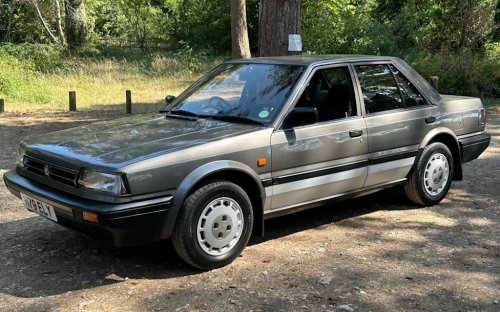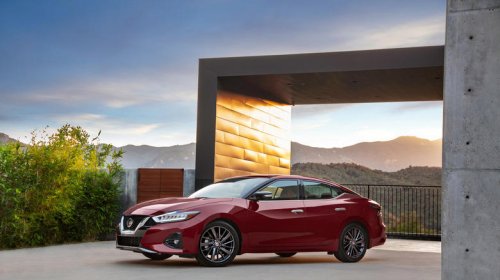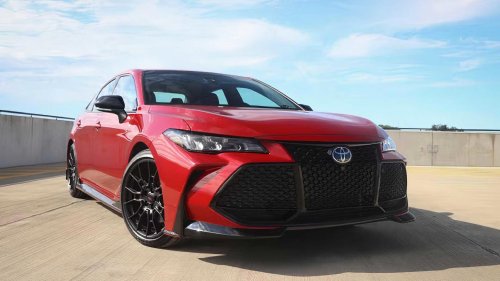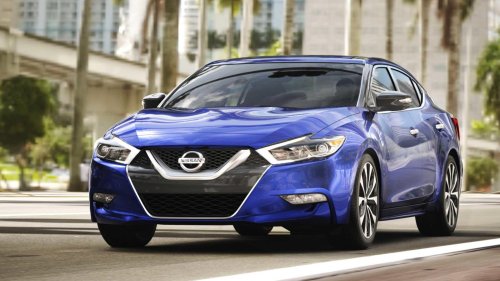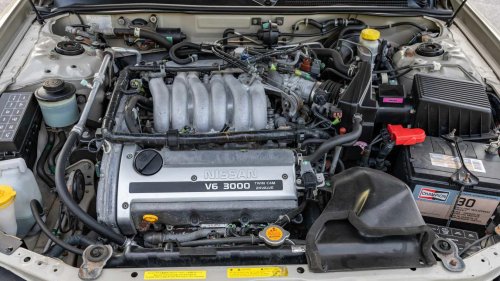
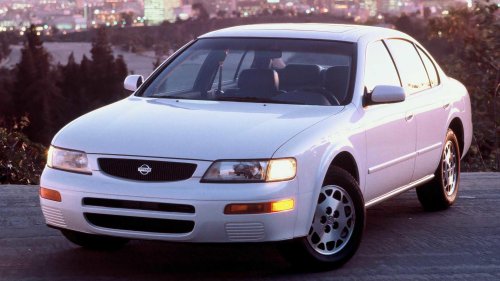
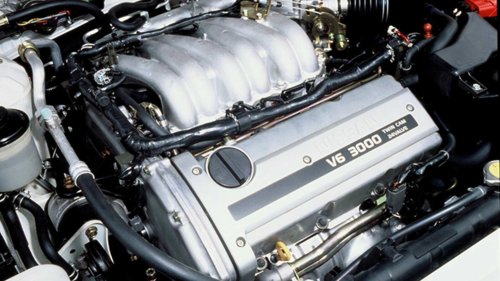
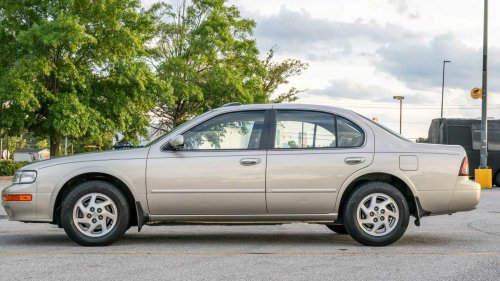
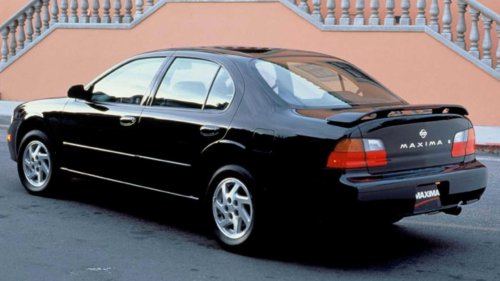
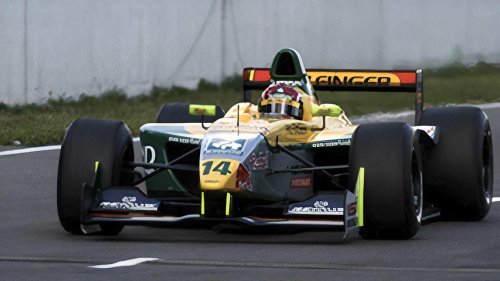



















For the most part, electing to choose a full-size Japanese sedan, such as a Nissan Maxima or Toyota Avalon, means you are prioritizing cabin and trunk space, as well as reliability, over anything else. Not every car has to be an enthusiast's dream, as that won't help you cover hundreds of miles a day when your job depends on it. Models such as these are the quintessential options should these factors be critical to your daily life, and one outstanding performer in this regard is the fourth-generation Nissan Maxima.Produced between 1995 and 2000, the Maxima came bundled with one of the most legendary V6 powerplants ever created. While it wasn't the most prolific from an outright performance standpoint, it stood out for being ultra-reliable and smooth, making it the perfect partner for a full-size sedan such as the Maxima. The VQ30DE Is The Main Reason The Fourth-Gen Maxima Is So Dependable Bring a Trailer The V6 in question goes by the name of the VQ30DE, and it is the primary reason why the fourth-generation Maxima is known to eclipse 400,000 miles with only the most basic maintenance. The powerplant was used in Nissan's road cars between 1994 and 2003, with it first finding favor in the Nissan Cefiro, a JDM-sold mid-size sedan. It first reached US shores in 1995 under the hood of the Maxima, though the Cefiro joined it stateside for the 1996 model year, when it was badged as the Infiniti I30. While mainly featured in the fourth-gen Maxima, the engine also made an appearance in the fifth-gen model for its first two model years.The unit has a total displacement of 3.0-liters, and was naturally aspirated under the hood of the Maxima. A turbocharged version of the engine, called the VQ30DET, was used in several JDM models such as the Cedric and Gloria, while the twin-turbocharged VQ30DETT was utilized in various Nissan JGTC race cars. The fact that it was used under the hood of some of Nissan's most potent racers points to just how dependable the unit was, as you can't throw any old unit into something designed to be pushed to its limit for hours at a time. The 1990s Maxima Used The V6 To Produce Adequate Performance Via: Nissan When placed in the engine bay of the Maxima, the VQ30DE's job was to produce smooth and solid performance that meant its driver didn't have to rev the nuts off it to maintain a decent highway speed. The 190 horsepower and 205 lb-ft of torque it channeled to the front wheels was more than enough for the job, with the engine connected to either a five-speed manual or five-speed automatic transmission. These units were as bulletproof as the VQ30DE, allowing the Maxima to cover six-digit mileages without breaking a sweat. The VQ30DE Was Produced To Keep Going Nissan Of course, the VQ30DE being such a strong unit was by no means an accident. Nissan's engineers worked hard in the design stages to ensure the powerplant would last for decades with minimal maintenance, with the work beginning with the engine block and cylinder heads. Both were produced from aluminum to help keep weight down, which, in theory, should reduce the longevity of the unit as opposed to using cast iron. The aluminum material was finely tuned to provide excellent strength though, and the fact that it can dissipate heat three times faster than iron ensured the powerplant could remain much cooler than if it were made primarily from cast iron. Heat is one of the biggest reasons for engine components degrading, making the use of aluminum a solid method to ensure a powerplant can last the distance.Alongside its base construction, the VQ30DE also uses tough forged steel connecting rods, as well as a forged crankshaft. Forging metal components affords them extra strength, meaning they can be run harder and at higher temperatures before they start to get damaged. The unit is also chain-driven, a method that affords plenty of extra longevity versus the rubber belts used by other engines. All of these combined parts culminated in an engine that was, on paper at least, ultra-durable. Nissan's Beefed-Up V6 Has Seen Its Potential Realized Bring a Trailer Given all that engineering, it shouldn't come as a surprise to learn that the VQ30DE has proved to be one of the most dependable V6s in all the automotive world. Many owners of fourth-gen Maximas have reported that their cars have lasted hundreds of miles without major problems, as illustrated by a thread from the Maxima.org forums. Several have recorded mileages of well over 250,000 miles, with one even revealing his car had managed 450,000 miles without major issue. Used Fourth-Gen Maximas Are Affordable These Days Nissan If you want to get your hands on a VQ30DE, either to use the engine in something else or utilize the Maxima as a budget highway cruiser, then you're in luck. The fourth-gen Maxima can be picked up for cheap on the used market. with high-mileage cars with around 150,000 miles on the clock going for tidily under $4,000. Given that the engine can easily cover double that when properly maintained, you can be confident that your money will go a long way. As long as you confirm that the vehicle in question has no other underlying problems, of course.Should you fancy buying one with considerably fewer miles on its odometer, expect to hand over closer to $10k. This will net you a car with 50,000 or fewer miles traveled, ensuring it'll be practically new in VQ30DE terms. This kind of low mileage on a 30-year-old car can be problematic though, as you'll need to make sure the vehicle hasn't been sitting around unused for extensive periods of time. Should this be the case, components such as fuel pumps, brake discs and calipers, tires and rubbers used throughout the engine could have perished, costing you a chunk of money in repairs down the road.Call it right, though, and you'll have a cheap, smooth and comfortable highway cruiser on your hands. As well as one of the greatest V6 engines ever produced. The Maxima's Trusty V6 Also Made The Dreams Of Formula 1 Heroes Come True Zele Racing While the VQ30DE wasn't treated to the most exciting surroundings in the Maxima, it did enjoy a more adrenaline-pumping second life as it was phased out of road use. The powerplant was utilized in the Dallara SN01 single-seater race car between 2002 and 2004, a vehicle that was used in the single-make World Series by Nissan series. It was essentially the equivalent of what the modern FIA Formula 2 series is to Formula 1 today, the last step on the ladder before reaching the pinnacle of racing.The engine was enhanced with racier internals for use in the SN01, with the final product kicking out around 420 hp. It was placed in the middle of the car to maximize weight distribution, and sent its power to the rear wheels through a six-speed sequential gearbox.It saw action in the hands of plenty of future stars during its three-year stint, with eventual F1 drivers Ricardo Zonta, Franck Montagny, and 2008 Hungarian Grand Prix winner Heikki Kovalainen claiming titles behind the wheel of the SN01. Other prolific pilots that used the Nissan VQ30DE to further their careers included Le Mans Series champion Stephane Sarrazin, F1 podium finisher Tiago Monteiro, and multi-time IndyCar race victor Justin Wilson.Nissan firmly met the brief with the VQ30DE, and it has enjoyed a fruitful life as a dependable and effective powerplant, not only on the public roads of the world, but also on the high-stakes racetracks. Comb through the used market, and you'll be able to have one for your own collection at a bargain price, too.