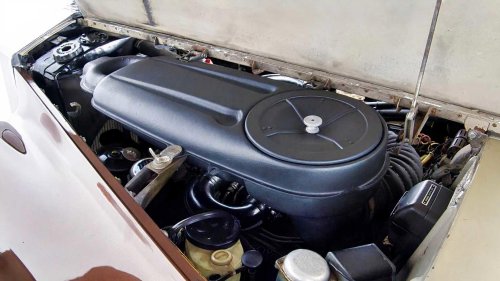
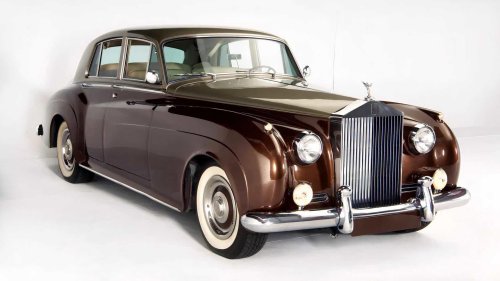
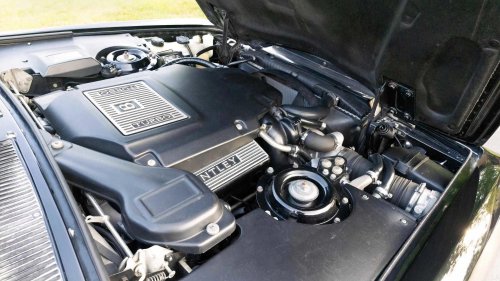
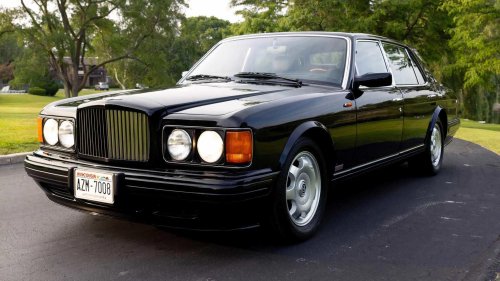
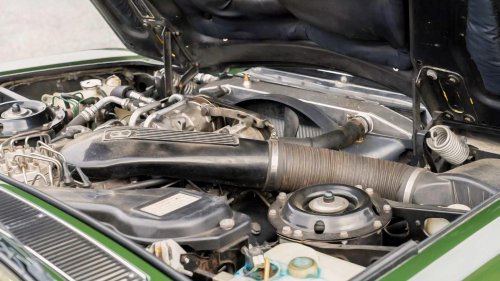
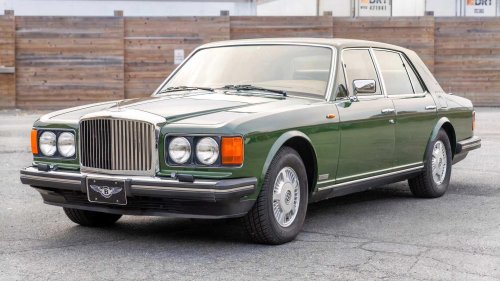
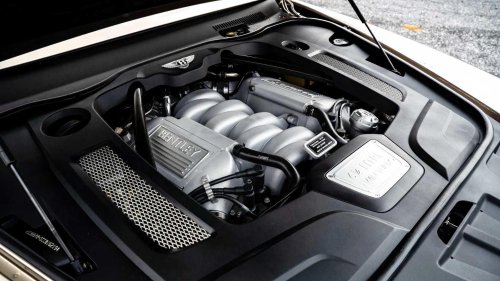
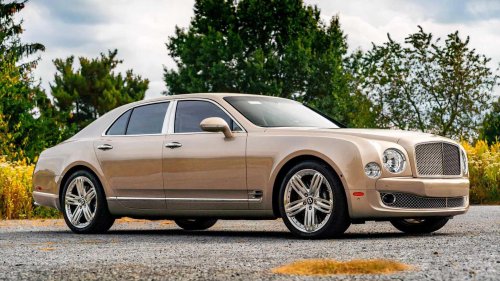



















Most enginesare lucky to survive a single decade without being replaced, redesigned, or quietly forgotten. Time is money, and technology simply moves on swiftly. And somewhere along the way, yesterday’s prized power plant gets pushed to the wayside. As every good gearhead knows, that is simply how the automotive world works.But, then again. Every good gearhead also knows that every once in a while, an engine comes along that simply refuses to follow that script. The one we’re talking about today was born in an era of tailfins and carburetors, when highways were new, and luxury meant craftsmanship, not screens. Somehow, it managed to outlast fuel crises, ownership changes, emissions crackdowns, and the digital revolution, all while staying fundamentally true to itself. It was never built to dominate spec sheets. No, this engine simply kept chugging along, year after year.And, yes, there’s a very real chance this engine remained in production longer than you’ve been alive. And its survival wasn’t accidental. It was the result of quiet engineering discipline, conservative design, and a philosophy that valued refinement over reinvention. Get ready to put that pedal to the metal, because you’re about to meet the engine that defined British luxury for decades. L-Series V8: The Engine That Defined British Luxury For Over 60 Years via Bring A TrailerWhen the Rolls-Royce/Bentley L-Series V8 debuted in 1959, it was never meant to chase horsepower wars or headline spec sheets. You see, at the time, Rolls-Royce needed a modern replacement for its aging straight-six, and what emerged was a compact, all-aluminum V8. Even more interesting, this replacement would actually become one of the longest-running engines in automotive history.Production began in 1959 and quietly continued until 2020. Yep, you read that right. That is 61 years of continuous use. And, no, there wasn’t any revival or some reboot. The same core engine architecture evolved steadily across six decades, surviving changing ownership, tightening emissions regulations, fuel crises, and ever-evolving tech in the automotive industry. Few engines of any kind can claim that kind of uninterrupted lifespan, especially in the ultra-luxury segment.The first car to receive the L-Series V8 was the 1959 Rolls-Royce Silver Cloud II. Today, the average auction price for a Silver Cloud II from this generation sits at $48,814. Just take a look at this 1961 Rolls-Royce Silver Cloud II, for example. One lucky gearhead got their hands on this L-Series-powered luxury machine for just $31,250 via Bring a Trailer. Now, that’s a pretty good deal for a luxury car powered by one of the longest-running engines of all time.via Bring A TrailerAt the end of the day, the L-Series never chased raw output. You see, its real strength came from how it was able to deliver smooth power in the most humble confidence imaginable. Early versions, like the Rolls-Royce Silver Cloud II, emphasized smoothness and silence. Luxury owners behind the wheel of the cars powered by the L-Series never heard this engine working hard. Instead, they simply felt it move thousands of pounds of handcrafted luxury in calm confidence.The L-Series V8 powered an extraordinary range of vehicles, from the Rolls-Royce Silver Cloud and Silver Shadow to Bentley models like the Mulsanne, Turbo R, Arnage, and Brooklands. Whether naturally aspirated or twin-turbocharged, it became the soul of Britain’s most prestigious cars.For more than 60 years, this engine defined what British luxury felt like behind the wheel of all sorts of luxury rigs, from the Silver Shadow to the Mulsanne. And, throughout those six decades, it was never aggressive nor flashy. But, just as you’d suspect from its status, it was just impossibly smooth, deeply confident, and built to last far longer than anyone ever expected. How Rolls-Royce And Bentley Kept The L-Series V8 Engine Relevant via Bring A TrailerAs any good gearhead knows, the longevity of an engine like this does not happen by accident. The reason the Rolls‑Royce/Bentley L‑Series V8 survived for more than six decades is that Rolls-Royce and Bentley treated it less like a finished engine and much more like an ever-evolving platform. Instead of scrapping the engine every time technology or regulations changed, as many of its competitors did, they refined it quietly, carefully, and, yes, almost stubbornly. What made this strategy so unusual is that it ran directly against how most automakers respond to regulation: by starting over. Or, in other words, taking the easy way out.In its earliest form, the L-Series was carbureted, naturally aspirated, and tuned for silence rather than speed. However, as emissions rules tightened and customer expectations shifted, the engine transformed. Plus, this engine did something the competition just couldn’t match. You see, instead of being retired, the engine was reworked piece by piece, often in ways most luxury buyers never noticed.via Bring A TrailerDuring this evolution, fuel injection replaced carburetors, and electronic engine management arrived. However, the engine’s character changed most dramatically with the move to turbocharging. Bentley, in particular, leaned into forced induction beginning in the late 1970s and early 1980s.Models like the Turbo R and later the Arnage turned the L-Series into a torque monster, delivering effortless acceleration that suited Bentley’s growing performance-luxury identity. Even then, outright horsepower was never the headline. It was always the way power arrived: seamlessly, silently, and always available. For most gearheads in the luxury segment, the appeal wasn’t speed. It was how little effort the engine ever seemed to require. The L-Series V8 By The Numbers: Performance, Size, And Output via Bring A TrailerOn paper, the Rolls-Royce/Bentley L-Series V8 never looked especially radical. That is part of what makes its six-decade run so impressive. The engine began life with a displacement of 6.2L and later grew to 6.75L, a size that remained unchanged in name even as internals and technology evolved. Rather than reinventing itself, it stayed rooted in a traditional pushrod V8 design, valuing smoothness over complexity.Early naturally aspirated versions produced modest output by modern standards, often well under 250 horsepower. Later turbocharged Bentley applications pushed output significantly higher, with some versions exceeding 500 horsepower. However, torque was always the real story. Even early engines delivered strong low-end pull, while twin-turbo models produced immense, effortless torque that suited vehicles weighing well over 5,000 pounds.via Bring A TrailerPhysically, the L-Series was compact for its displacement thanks to its aluminum construction. That lightweight design helped offset the mass of Rolls-Royce and Bentley’s famously overbuilt bodies and interiors. More importantly, it gave the engine the flexibility to keep working as platforms and chassis designs evolved over the decades. The L-Series didn’t earn its reputation by chasing big numbers. It earned it through conservative, deliberate tuning.At the end of the day, the ability to meet the changing needs of the automotive industry is why the L-Series kept chugging along for more than 60 years. It was never the boldest or fastest V8 in the room, but it was almost certainly one of the most enduring. The Final Roar: End of Production and Lasting Legacy via Bring A TrailerBy the time the Rolls-Royce/Bentley L-Series V8 reached the end of its production run in 2020, the engine had already outlived most automotive legends several times over. The last version of the L-Series was the 6.75L twin-turbocharged V8 used in the Bentley Mulsanne. It represented the ultimate evolution of an engine that first appeared when tailfins still ruled the road. It delivered massive torque with near-silence, serving as a mechanical farewell to an era of traditional British luxury.Today, six years after its last release, the 2020 Bentley Mulsanne still sits with a KBB Fair Purchase Price of $144,432. That’s still an incredible amount of money, yet it’s less than half of its original sticker price of $310,800. So, all in all, not a bad price at all. And, keep in mind, the end was not due to failure or irrelevance. Instead, tightening global emissions standards and the shift toward electrification finally made continued development impractical. Bentley transitioned to newer powerplants, including modern turbocharged V8s and hybrid systems, closing the book on an engine architecture that had already accomplished more than most ever will.via Bring A TrailerThe L-Series V8 engine was never about trophies or lap times. Its legacy was built on its ability to keep showing up year after year. For more than 60 years, it powered the world’s most prestigious sedans and grand tourers with the same core values it launched with in 1959: smoothness, durability, and effortless authority. The gearheads buying luxury rigs expect their cars to feel composed at any speed, in any situation, and this engine delivered that experience generation after generation.Few engines can claim to have shaped a brand’s entire legacy, let alone two. The L-Series V8 became inseparable from what Rolls-Royce and Bentley represented to the world. It defined British luxury as something calm, confident, and long-lasting. It served the luxury segment much better than anything that screamed for attention.Today, the L-Series stands as proof that real progress doesn’t always come from starting over. Sometimes it means refining something until it becomes timeless. After six decades of service, this engine did exactly that, leaving behind one of the most remarkable production runs in automotive history.Sources: Classic.com, Classic & Sports Cars, Kelley Blue Book