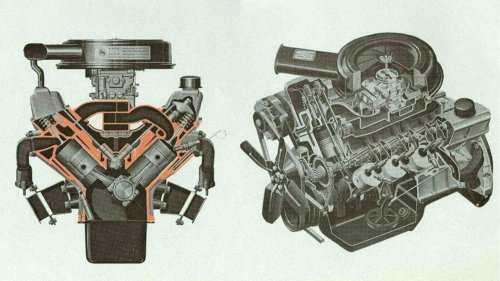
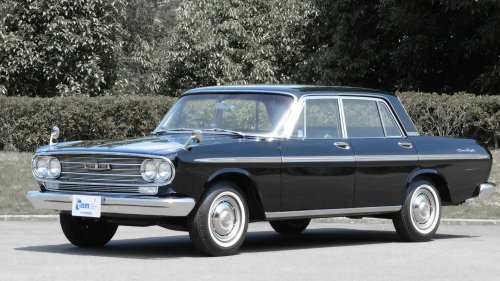
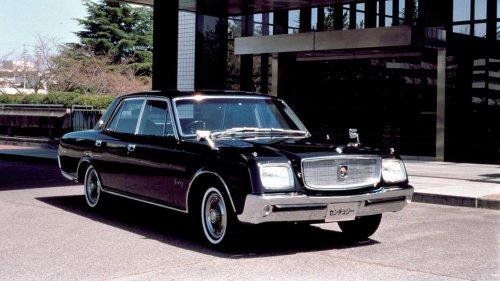
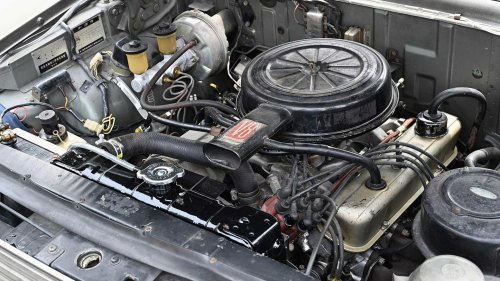
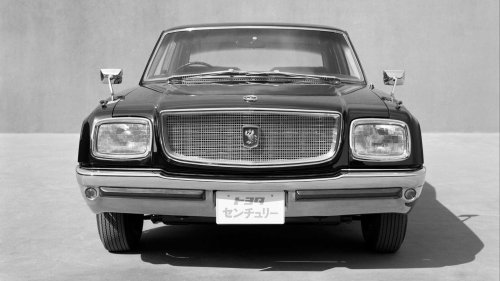
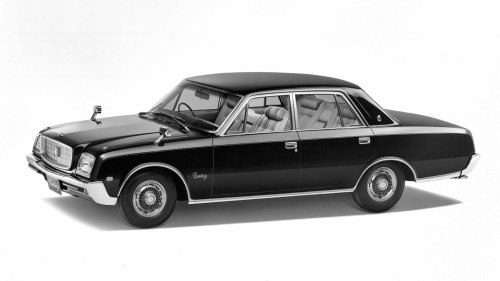
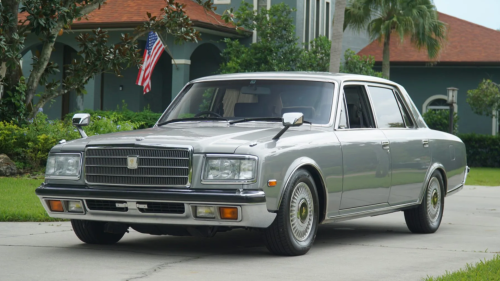
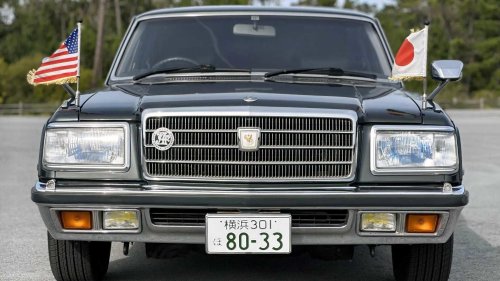
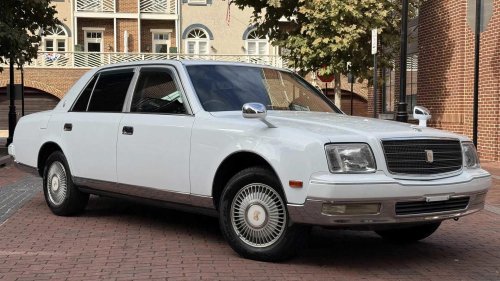
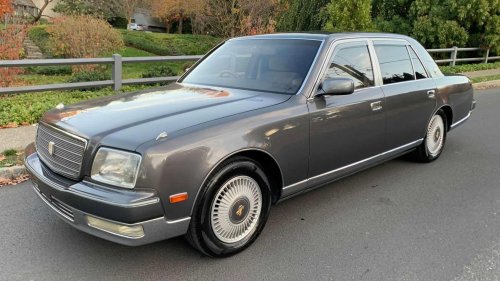
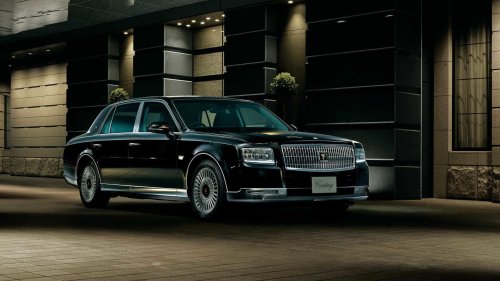
The Hemi engine. It's one of the most famous V8 nomenclatures ever introduced into the automotive world, and we have Chrysler to thank for pushing them into the mainstream. However, it wasn't Chrysler that pioneered the Hemi design, which stands for an engine that boasts hemispherical combustion chambers. In fact, the Hemi can trace its roots back to the turn of the 20th century, with numerous early automakers like Duesenberg utilizing the cylinder head design.However, while many of us credit Chrysler for being one of the sole producers of the Hemi engine in the modern era, Toyota also had a Hemi. It wasn't designed for performance or hard work, like Chrysler's Hemis. By contrast, Toyota's Hemi engine was built to live within the lap of luxury, and ferry dignitaries and others of high social status about on a cloud of comfort. That's because Toyota's Hemi lived underneath the hood of the Century, the Japanese automaker's most opulent model since 1967. The Engine With A Life Of Ease Toyota Key Points About Toyota's Hemi Engine Introduced as a V8 in 1964 First installed within a version of the Toyota Crown Produced for 34 years A total of four variations spanned its lifetime Axed following the 1997 model year Prior to Toyota's introduction of its Hemi V8, the Japanese automaker's largest civilian engine used in passenger cars was a 3.9-liter straight-six mill. The engine was based on a GMC engine design, and Toyota adopted it in order to offer its customers an engine that was familiar and easy to work on. As the automotive world continued to advance, and calls for an opulent and luxurious sedan to ferry important people about grew stronger, Toyota decided to branch out on its own and so built a proper eight-pot.Toyota The engine, which first entered production in 1963, was used exclusively by the Toyota Crown Eight, a variation of the normal Toyota Crown that was longer, wider, and meant to be more luxurious in its options and overall countenance than the standard model. Its new engine, called the "V Engine", was a clean-sheet design with Toyota taking sole credit. The Crown Eight's larger proportions and use of a proper V8 was meant to give folks of higher status in Japan an option to purchase a domestically-bred car, rather than buy an American model, as was popular at the time.Toyota Just a few years later, the Toyota V Engine received a new, much more important task. It was to be the sole engine offering found within the Toyota Century, the model meant to replace the Crown Eight. The then-new Century was designed to be as upmarket as a sedan could possibly be. It was hand-built by specially-trained workers, and featured one of the quietest rides available at the time, thanks in part to its V Series V8. The V-Series Through The Years Toyota Series V (1963–1967) With the beginning of the V-Series engine being spurred on by Toyota's need for a high-end sedan, the engine itself was built to specifications higher than was normal for Toyota engineers. This first-gen iteration was a carbureted engine, produced for the Toyota Crown Eight exclusively. It was a small V8, boasting only 2.6 liters of displacement, albeit with a slightly higher-than-normal compression ratio for the time of 9.0:1. Series 3V (1967–1973) ToyotaWith the introduction of the Toyota Century came a new iteration of Toyota's V Series Hemi V8. It was coined the 3V, and it debuted in 1967. This new version sported upgrades such as a larger displacement of 3.0 liters, along with a higher compression ratio of 9.8:1. The engine's new name was simply done in order to differentiate between the older one, along with providing the ability to denote how large its displacement size was. Series 4V (1973–1982) ToyotaIn order to move the V Series engine ahead with the times, Toyota brought it back to the drawing board in 1973 for another major update. This new iteration, coined the 4V, did not boast a 4.0-liter displacement like its predecessor might have you believe. Instead, it was a 3.4-liter engine. The increase in size was thanks to the 4V's cylinders receiving slightly larger bores, while the piston stroke remained the same. Two other variations of the 4V were produced, the 4V-U and the 4V-EU, the latter of which was the first to receive fuel injection in 1978 for the European market. Series 5V (1983–1997) Bring A TrailerThe final iteration of the V Series engine was introduced in 1983, and would run for a whopping 14 years virtually unchanged, apart from its emissions system, which would be continuously updated to meet ever-changing regulations. The 5V engine sported a 4.0-liter displacement, thanks to an increase in both the bore and stroke's size. It was also offered with fuel injection as standard. It would debut in the facelifted Toyota Century, and be the most desirable of all four V Series variations due to its reliability and smoothness of operation. This would be the final V8 to be offered within the Toyota Century until 2018. Buying And Owning A Hemi-Powered Toyota Today Bring A Trailer If you want to get behind the wheel of a so-powered Toyota model in 2026 and beyond, it's possible, but of course far from a mainstream choice. You'll be laughed out of showrooms, so heading to specialist corners of the used market is your only choice. Thankfully, it doesn't require an awful lot of capital — Bring A Trailer shows that a good number of the aforementioned Century models have changed hands in recent years, and despite luxurious amenities, a cool engine, and supercar-levels of exclusivity, it's rare these models even creep above $10,000.Getting hold of spare parts might prove tricky on this side of the globe, but there's certainly a smattering of enthusiasts out there who could help on this front. The Toyota Century Lives On ToyotaWith the discontinuation of the Toyota V Series V8 in 1997, the Century also underwent a major overhaul. This second generation model would debut the same year, sporting a V12 underneath its hood rather than another V8. However, the original V Series engine wasn't completely gone, at least not entirely. The new V12, coined the 1GZ-FE, was based on the original V Series engine, albeit with extensive tweaks and four added cylinders.This second-gen Century was miles above the outgoing first-gen in terms of tech and features. However, its styling remained largely the same due to Toyota's chief designers responsible for the project proclaiming that the first-gen model would be too hard to improve upon, so it was kept roughly the same. Of course, the Century's hand-built nature remained, and it was still the preferred car of Japanese dignitaries, heads-of-state, and even the Emperor.Cars & Bids The second-gen Century was with us for another 20 years, with its final model year occurring in 2017. A new, third-gen version was slated to replace it the following year. When the new Century debuted, it still had the same essence as the outgoing model, but with a much more modernized look. Whereas the second-gen looked like a copy-paste of the pre-facelifted first generation, this third generation iteration was obviously meant to look quite different, while also conveying the same sense of dignified, conservative wealth.Toyota The third-gen Century, which is still in production now, boasts a 5.0-liter hybrid V8 producing 425 horsepower. This motor is hooked up to a specially-made eCVT-type transmission. Inside the beast is a world of luxury most of us will never know outside an autoshow or a test drive, as it's adorned with real wool, hand-stitched materials, and even a 20-inch TV screen. Of course, all the wood trim is real, as well.While the Toyota V Series engine is no more, let it not be forgotten that Chrysler shouldn't get all the credit for a Hemi V8.



















 +55 others