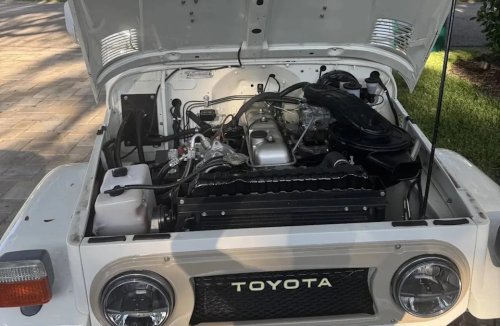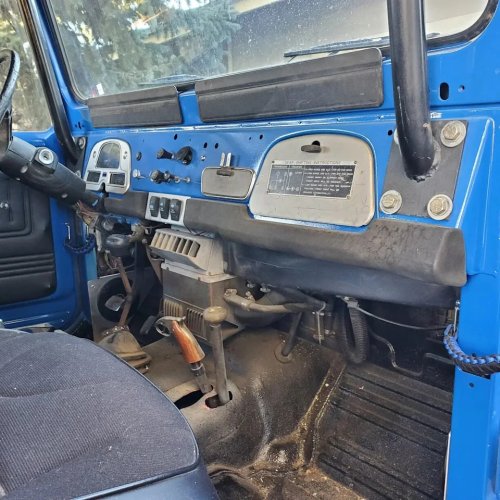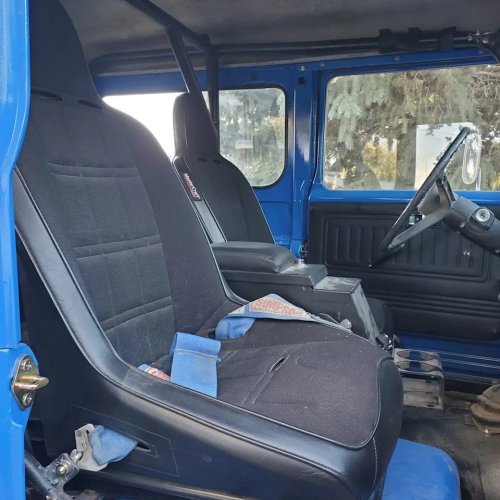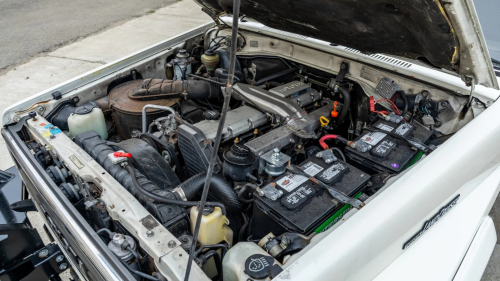
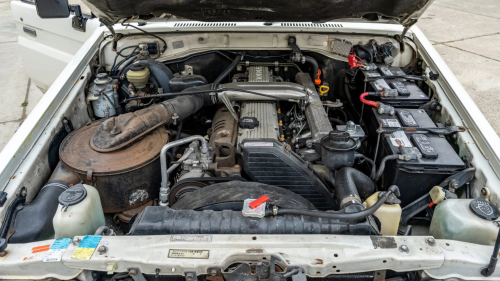
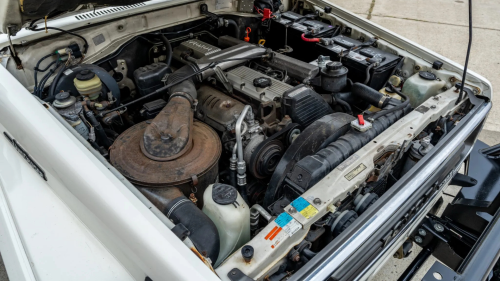
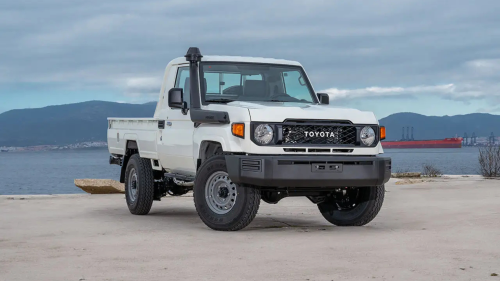
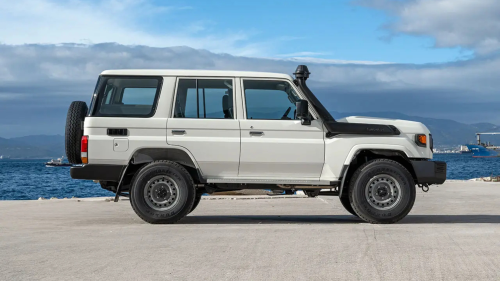
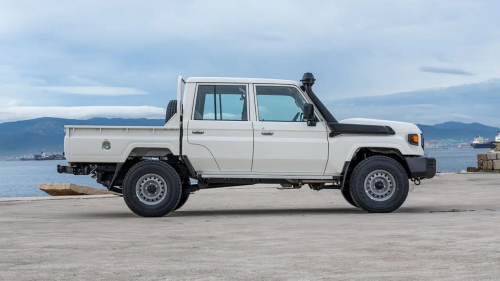

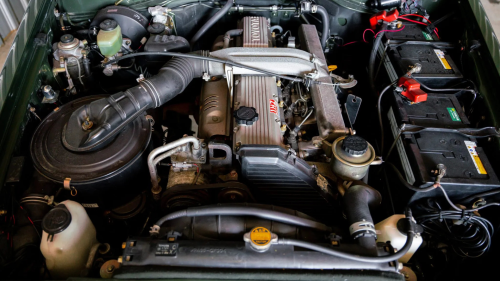
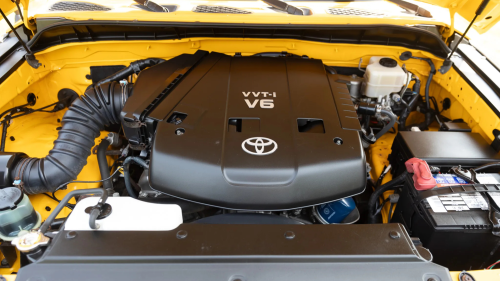
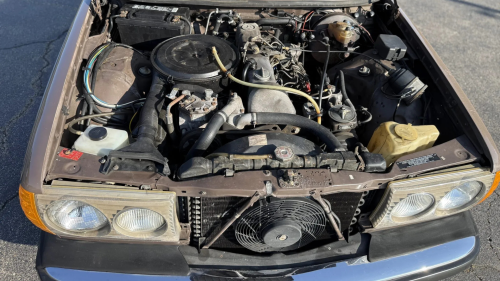



















The 21st century has brought innovation, sure. But it has also brought in the concept of fast and easy. Thus, very few things are made for the long haul, including engines. It seems every few years, a new generation of engines is already rolling out, with the old design quietly fading into the background. That's just how the industry works nowadays. If you don't want to get left behind, constant upgrades and tech innovation are simply a requirement.But every so often, something sticks. These are the kinds of engines that bring something unique to the table, the ones that simply can't be forgotten. And no, it's not because they're flashy, but because they work. These are the engines that just keep showing up and continually prove their reliability and predictability, without a lot of fuss.The engine we're talking about here doesn't grab headlines and probably won't impress anyone at a car meet, but this bulletproof Toyotastill powers new vehicles in 2025, just like it did in the early '90s when it first hit the market – practically unchanged. This engine is not cool because it brings a nostalgic vibe to collectors, but because it simply works. And when you're operating in the middle of nowhere, that's all that really matters. An Engine With Some Serious Staying Power: Meet The Diesel That Refused to Die 1991 Toyota Land Cruiser HZJ77 - Toyota HZ EngineBack in 1990, Toyota wasn't trying to chase any headlines with its latest engine design. No, this Japanese motor company was focused on something far more practical. Rather than trendsetting, Toyota was utilizing its resources to build an engine that could survive the world's harshest conditions mile after mile.That's where the Toyota 1HZ engine comes in. Born to power the legendary Land Cruiser 70 Series, this 4.2-liter inline-six diesel was designed with one thing in mind: reliability. It wasn't designed to thrill. It was built to last. Why The 1HZ Works There's no denying that the Toyota 1HZ has some serious staying power. And what makes it even sweeter is that the 1HZ is old-school in the best way. It's a naturally aspirated, overhead-cam diesel that makes around 129 horsepower and 210 lb-ft of torque. Plus, there's no turbo, no direct injection, and frankly, no gimmicks with this engine.The 1HZ is just a simple cast-iron block, a forged crank, and a mechanical fuel pump that's famously tolerant of bad diesel and bad decisions. Sure, it might not win any drag races, but it'll climb a mountain, conquer a river, and be willing to go when you ask for just a little more.Over the years, the 1HZ has seen only minor updates. These updates primarily focused on the inclusion of electronic fuel control and an EGR valve from around 2002 to meet tightening emissions standards. However, the core engine architecture has stayed the same for over three decades. And that's no accident. That's by design. When something works this well, you don't mess with it. This isn't just some niche motor, either.According to Hagerty, the 1HZ has powered Land Cruisers across the Australian outback, the African Savannah, the Middle East, and beyond. Humanitarian agencies, militaries, and remote farmers still trust it today for the same reason they did in the '90s: it doesn't quit.What makes the 1HZ even more impressive is that, as of 2025, it's still in production. In an era of turbochargers, hybrids, and overcomplicated electronics, this diesel dinosaur is still walking among us and doing just fine. From Troop Carriers To Farm Trucks: Where You’ll Find The Toyota 1HZ 2025 Toyota Land Cruiser 70 Series In 2025, the Toyota 1HZ isn't just still working. It's thriving. But keep in mind, you won't be finding this engine in luxury crossovers or flashy hybrids. No, the Toyota 1HZ can be found living its best life out in the Australian bush doing farm work, delivering aid supplies in the Middle East, or hauling water in sub-Saharan Africa. That's where this engine shines. So, yes, the 1HZ is still powering new vehicles today, most notably the rugged Land Cruiser 70 Series lineup.From the Australian outback to the Middle East and deep into sub-Saharan Africa, the 1HZ shows up in places where failure simply isn't an option. Per TGS, Toyota offers the engine in several 70 Series configurations, including the HZJ76 wagon, the HZJ78 Troop Carrier, and the HZJ79 pickup. These trucks aren't built for comfort. They're built to get the job done, day in and day out, whether you're a rancher, miner, or military mechanic.The Toyota 1HZ isn't just about capability. It's about global trust. Organizations like the United Nations, Médecins Sans Frontières, and Red Cross still spec 1HZ-powered Land Cruisers through Toyota Gibraltar Stockholdings because the engine's simplicity makes it ideal for remote deployment. There's no laptop diagnostics and no fragile electronics with the 1HZ. It's just a mechanical pump. That means efficiency in remote areas, and the ability to find parts in a roadside shed in Namibia or Western Australia.Even beyond aid work, the 1HZ, like the HZJ79 Dual Cab WorkMate, is still a favorite among rural tradespeople and farmers, especially in places like Australia where the 70 Series remains in active production. These trucks routinely rack up hundreds of thousands of miles on rough terrain without missing a beat. And because Toyota continues to support the platform with new models, parts availability, and service networks remain strong.While the rest of the world has moved on to turbo diesels and digital dashboards, the 1HZ keeps going strong in remote areas. It's doing what it's always done, proving that durability and simplicity still have a place in the modern world. This Is Why The Toyota 1HZ Is Still Kicking 35 Years Later 1997 Toyota Land Cruiser HZJ75 Pickup Diesel 5-SpeedSure, there have been some engines that have found a way to survive for a decade or two, but the 1HZ dominates endurance. It's not around because of luck, either. No, the 1HZ is still around because it was engineered to last, and every inch proves it. Building The Ultimate Diesel Engine Let's start with the foundations: a cast-iron block and head, forged crankshaft, and gear-driven timing with no belts to snap, and no chains to stretch. And fuel delivery? Well, it relies on a simple mechanical pump with no ECU or laptop required. The 1HZ runs in the middle of nowhere because it can. It's naturally aspirated, too. So, there's no turbo heat stress and no fancy sensors to fail. Mechanics love it.You can rebuild it with basic tools, run it on subpar diesel, let it idle for hours, and it'll still start. In underground mining fleets in Australia and deep savannah testing zones in Africa, these engines are still ticking long after most chassis rust out. High-Mileage 1HZs Are Everywhere When it comes to high-mileage 1HZ stories, they're everywhere. In one Reddit thread, owners gathered to share how far they've been able to take their 1HZ-powered Toyota rigs, and, well, the answers were pretty impressive. One Redditor shared their rig hit 360,000 kilometers. Another wrote that they reached 626,000 kilometers in their 1HZ 75 series.Today, Toyota keeps the 1HZ alive by supporting the 70 Series worldwide. That means parts and service are readily available, even in remote workshops. Thus, Toyota's preservation efforts prove that a 30-something engine can be kept alive and well through basic service schedules and minimal fuss. The 1HZ wasn't made to impress. It was made for work. And 35 years later? It's still out there, doing exactly that. Other Engines Known for Bulletproof Reliability 2007 Toyota FJ Cruiser - Toyota 1GR-FE EngineThe Toyota 1HZ isn't the only engine with an ironclad reputation. A few others have racked up decades of production and proven they can take a beating without blinking. Two other notable legends are the Toyota 1GR-FE and the Mercedes-Benz OM617.The Toyota 1GR-FE is a 4L V6 that debuted in 2002. Like the HZ, this Toyota engine is still going strong today, powering brand-new Toyota 4Runners, Land Cruisers, and Hilux models in various global markets. Per Drifted, it's a gasoline-based engine with an output range between 236 and 270 horsepower, depending on tuning. While more complex than the 1HZ, it's still incredibly reliable. Mechanics praise it for timing chain durability, strong cooling systems, and resistance to head gasket issues. You'll find it under the hood of everything from Tacomas to Prados.Moving away from the Toyota family, we have the Mercedes-Benz OM617. This Merc engine is a 3L inline-five turbo diesel. It was found in W123 and W126 Mercedes-Benz models that were produced from 1974 until 1991. This engine was known for its mechanical fuel injection, overbuilt internals, and nearly indestructible blocks. According to Dyler, OM617s have racked up millions of miles around the world, and some are still running strong out on the roadways today.Both engines, like the 1HZ, prove that simplicity, smart engineering, and a reputation for reliability never go out of style. Thus, in a world where most engines are built for planned obsolescence, the Toyota 1HZ is a refreshing outlier. It was never about squeezing out max horsepower or winning design awards. It was about showing up, every day, no matter where in the world it was dropped. And 35 years later, the Toyota 1HZ is still doing exactly that. Whether it's hauling gear through the outback or keeping a remote aid convoy moving, the 1HZ proves that good engineering never goes out of style. Sure, it's not the only bulletproof engine out there, but it's the oldest still in production. And that says everything. Because sometimes, the best thing an engine can do is just keep rolling.