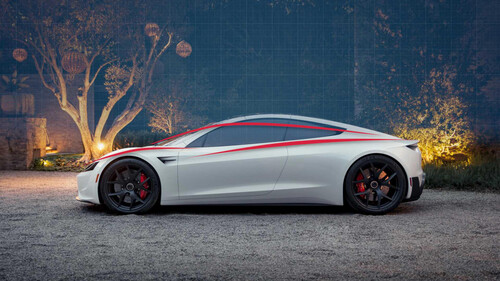
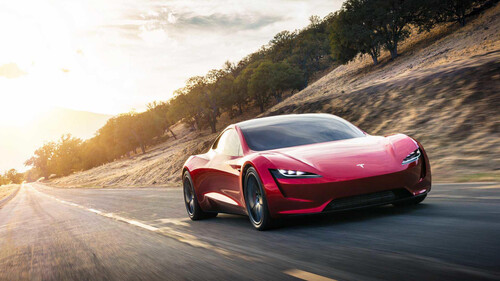
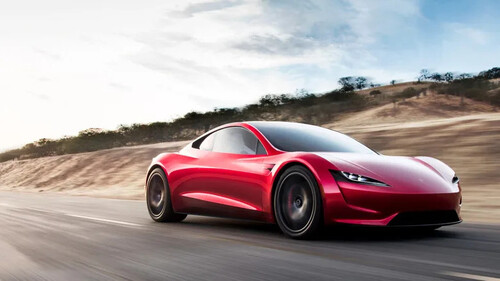
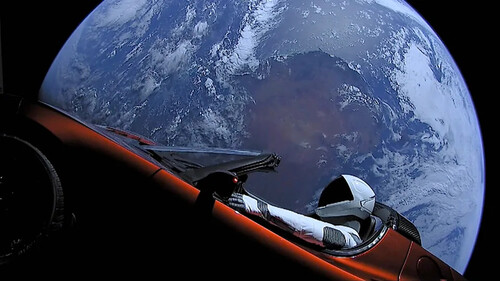
Jump LinksSome automotive enthusiasts may turn up their noses at the sight of an electric vehicle. They may view them as a necessary evil in these regulatory times, even as those vehicles slowly gain momentum and start to dominate headlines and showroom floors around the country. And part of that negative reaction may be down to novelty, as EVs are still relatively new, with not much more than a decade of full attention.This may make it hard to embrace these cars in the broader world of automotive culture and even more difficult to assign any true classic status to one of these EV pretenders. However, some enthusiasts and collectors are beginning to talk about one particular electric vehicle as a future classic: the original Tesla Roadster. The Original Tesla Roadster Is The Only EV With True Classic Credentials TeslaThere’s no textbook description of a genuine classic, but surely a candidate must capture something special in a way that later products cannot easily replicate. It’s not so much about the car’s age, level of performance, novelty, or even design, but something far more telling. And it’s why the Tesla Roadster certainly makes the grade, as it represented a technological inflection point and, in many ways, changed the path of an entire industry.When Tesla first came out with its first Roadster, electric cars weren’t really a credible alternative to internal combustion vehicles. Generally speaking, they were utilitarian, compromised, and still slow, until the Roadster shattered some of that perception and broke through the glass ceiling. After all, this newcomer could give you plenty of range on a single charge and, even better, it accelerated like a real sports car.The Roadster was the first production battery electric vehicle that could address that thorny subject of range anxiety, with a full estimated range of about 244 miles. While range anxiety may still be a talking point in the world of electric vehicles now, the driving distance is nowhere near as much of a barrier as it once was. Today, a used Roadster owner would likely use the car for fun trips, rather than long-distance daily use.Crucially, Tesla did not introduce the Roadster as simply a cost-driven experiment or a compliance-only vehicle. Instead, it suggested a new way forward, engineering the car around a high-density lithium-ion battery pack. The company’s battery architecture, thermal management, and redundancy initiatives were entirely central to the project and not afterthoughts, giving the Roadster even more significance in the long term.Today, plenty of modern EVs are quicker than the Roadster, as well as being more refined and more powerful. However, the Roadster showed everyone that pace and practicality were possible before people believed in it. Prior to the Roadster, you might not think that you could get to 60 mph in an electric car in less than five seconds, and the Roadster gave you that while also giving you usable real-world range. So, later EVs benefited from this groundwork, using evolutions of the Roadster’s original work and helping to give this car its future classic status. The Roadster Still Matters More Than Any EV That Came After It Tesla Tesla intended the Roadster to be proof of concept on a global stage, showing that electric vehicles could be aspirational, desirable, and technologically superior while still saving the planet. The company never intended it to be a volume seller, but instead, it wanted to reframe the entire EV conversation for the masses.Up until that time, people tended to view EVs only in terms of environmental responsibility. They might reluctantly consider such an option due to potential regulation, while worrying about the future direction of the industry itself. However, the Roadster showed EVs could also be performance cars while being practical from an everyday point of view. And so, investors, engineers, and rival manufacturers started to look at electrification under a different light going forward. Tesla was able to garner considerable success with the following vehicles, such as the Model S, built upon the credibility of the Roadster itself.If you look at the Roadster as a sports car that happens to be electric, that makes it far more than just a futuristic appliance or a green statement. And with such a distinction, a company like Tesla can then reach buyers who might never have considered an electric vehicle otherwise. So, the Roadster significantly expanded the potential audience for EV adoption, and this is why it has lasting relevance. Yes, vehicles like the Model S, the Model 3, and the Model Y fully refined and democratized the formula, but none of them may have been able to do that without the Roadster’s initial groundwork. Rarity, Production Limits, And Early Signs Of Collectability Tesla Many classics tend to be limited in number, and that’s certainly the case with the Roadster. After all, Tesla stopped making it in early 2012 and delivered only around 2450 examples worldwide. It also shipped those vehicles across more than 30 countries, so survival rates could be a defining factor. A first-gen Roadster today could be especially significant when you consider that early EVs faced a lot of challenges like battery degradation, obsolete components, and limited specialist support.Museums such as the Petersen Auto Museum in Los Angeles have started to recognize the Roadster, which is surely an early indicator of collectability. Typically, that kind of treatment comes decades later for most cars, but this early recognition surely underscores how the industry views the Roadster itself. And when you look at some auctions, you may also see signs of pending collectability. For example, some listings may state that a Roadster is undrivable due to battery issues, perhaps suggesting that its usability could be secondary to provenance and significance. Why No Other EV Is Likely To Join The Roadster Anytime Soon Tesla It’s reasonable to say that the Roadster has classic credentials, but for those on the lookout, don’t expect any other EVs to join that conversation anytime soon. The EV market evolves very quickly, as it shares common goals around scalability, rapid iteration, and software ecosystems. That’s worked very well for mass adoption, but it doesn’t necessarily bleed into any classic conversation. And many manufacturers turn out modern EVs in huge volumes and update them frequently, with plenty of interchangeability across segments. These vehicles tend to be very dependent on software, which places a question mark against long-term system support. So, all of that tends to introduce elements of uncertainty from a collector’s perspective, rather than desirability.The Roadster also benefited from its appearance during the EV’s “Wild West” era. This was a time when manufacturers could take big risks without worrying too much about compliance, associated costs, or global standardization. And that’s certainly not the case today, which makes modern and upcoming EVs more predictable, safer, faster, and more efficient. So, unlike the Roadster, they’re not likely to exhibit the same sense of defiance or disruption.The Tesla Roadster was the first modern fast electric car and represented the start of something big for its inventor. Still, it’s also the only EV so far to prompt a significant turning point in automotive history. After all, at the time of its arrival, the industry didn’t really believe in EV potential and hadn’t really written any definitive rules. And then, along came the Tesla Roadster, in limited numbers, and left a clear and lasting cultural impact. Yes, other electric vehicles may become more attractive as they age and generate some interesting footnotes too. At the same time, you may even find an EV or two that becomes a collectible curiosity. However, the Roadster, by existing exactly when it did and making those crucial headlines, should still be the only EV to claim true and foundational classic status.