

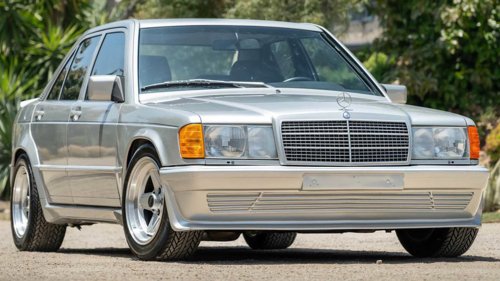
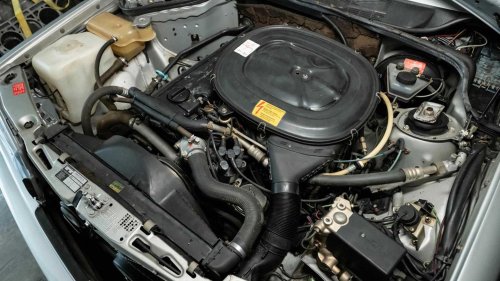
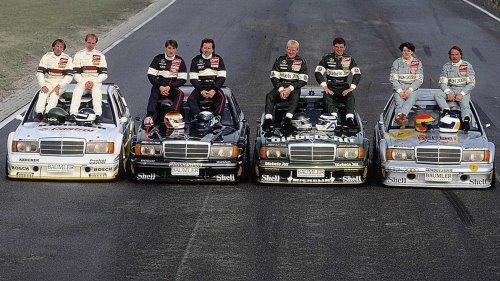



















Parked beside crossovers and modern sedans, the square-cut silhouette of a late-1980s four-door might not scream for attention, but more often than not earns a second glance. With its upright lines, flush glass, and unfussy proportions, it carries the kind of quiet confidence that doesn’t rely on shock and awe. On certain streets, it even feels like it never left.Over time, some cars age like fine wine into icons. Not because they were the loudest or fastest, but because they got everything right and waited patiently to be recognized. This particular sedan was built with a near-obsessive focus on engineering and balance. It offered something few rivals could match at the time: understated durability, precise handling, and a reputation that steadily grew without any marketing gimmicks.It never aimed to dominate supercar conversations or headline auction blocks. But now, decades later, it finds new relevance among enthusiasts who value mechanical honesty over digital complexity. Younger collectors, especially those raised on simulators and period-correct YouTube builds, are rediscovering it for what it always was—a sedan designed to outlast trends and out-drive expectations.Why has this boxy sports sedan, once overlooked by even loyal fans, suddenly started gaining ground in collector markets? Why are clean examples being hunted, restored, and shared in growing numbers across forums and auctions alike?This isn’t just nostalgia at work. The car’s motorsport roots, analog character, and rising value tell a different story of yesterday’s executive commuter, which is becoming today’s emerging classic. The Mercedes-Benz 190E Is Gaining Enthusiast Adoration For The Right Reasons Via: Collecting CarsProduced between 1982 and 1993, the Mercedes-Benz 190E served as the brand’s first attempt at a compact executive sedan, which evolved into what we today call the C-Class. The 190 range aimed to deliver Mercedes quality and engineering to a broader audience. At the time, it was praised for its build quality and ride comfort, but in the years that followed, the 190E quietly faded from enthusiast conversations. Flashier sports cars and turbocharged Japanese imports stole the spotlight, while the 190E’s conservative styling and modest performance flew under the radar.By the early 2000s, interest in the 190E was minimal. Its boxy silhouette felt outdated, especially as automotive design shifted toward curvier, more aggressive forms. However, that same styling is now working in its favor. In a market filled with over-designed crossovers and oversized grilles, the 190E’s clean proportions and understated lines appeal to enthusiasts looking for something more grounded. As interest in analog driving grows, so does admiration for this sedan’s hydraulic steering, rear-wheel-drive layout, and precise road manners. Rise In Demand And Values Of The Mercedes-Benz 190E Via: Collecting Cars The 190E is now gaining status across collector platforms and younger enthusiast forums. Many appreciate its mechanical simplicity, robust construction, and timeless Mercedes details. According to data from Classic.com, the average market price for the 190 range currently sits at $10,411. Looking more specifically at standard 190E models, Classic.com’s pricing page lists an average of $9,867, with higher values for well-maintained, low-mileage examples.Values of the 190E have steadily climbed, particularly since 2021. Clean, unmodified examples are becoming harder to source, as many were either heavily used or altered over the decades. Collector demand is strongest for original cars with a documented service history, which can command premiums well above the average market figure.The Mercedes-Benz 190E’s resurgence reflects a shift in enthusiast values. In an era that favors genuine craftsmanship and classic driving experiences, this boxy sedan is no longer overlooked. It’s quietly gaining recognition as a well-rounded classic that balances intelligent engineering with everyday usability, leveraging the modern desire for neo-retro styling. The 190E Was Built To Withstand The Test Of Time Via: Collecting CarsThe Mercedes-Benz 190E introduced a new segment for the brand, while it set a benchmark for German durability and engineering precision. Offered with both inline-4 and inline-6 engines ranging from 1.8 to 2.6 liters, the 190E featured a rear-wheel-drive layout and came with either a 4-speed or 5-speed manual transmission, along with optional automatic variants. These drivetrains prioritized refinement and long-term reliability over outright performance, making the 190E a dependable daily driver for decades.What truly set the 190E apart was its exceptional chassis balance, made possible by Mercedes’ five-link rear suspension that featured anti-squat technology. Up front, gas-filled struts and anti-dive geometry worked with the rear setup to deliver a ride and handling balance. The car’s structure felt solid and planted, with many owners reporting minimal chassis fatigue even after hundreds of thousands of miles. Paired with quality interior materials and thoughtful ergonomics, the 190E stood up well against time and continues to do so. The High-Performance AMG-Tuned 190E That Came Before The Merger Via: Bonhams At the high-performance end of the spectrum, the 190E 2.3-16 and later 2.5-16 AMG Cosworth models brought serious engineering upgrades. Both versions used dual overhead cam engines developed in collaboration with Cosworth, with the 2.5-liter variant producing up to 201 hp and 177 lb-ft of torque. These models could hit 0–60 mph in around 7.1 seconds, and their development included testing at the Nürburgring, where Mercedes fine-tuned handling and high-speed stability. Aerodynamic enhancements, stiffer suspension, and performance gearing gave these versions a motorsport edge.Via: Bonhams Compared to other '80s and '90s performance sedans like the E30 BMW M3 or Audi Quattro, the 190E 2.3-16 and 2.5-16 offer similar performance potential at a lower entry point, though that price gap is narrowing as collectors take notice. According to Classic.com, AMG and Cosworth models now command a market average of $37,216, with clean examples regularly surpassing $50,000. This represents a sharp contrast to base models, and signals a growing recognition of the 190E’s motorsport pedigree.Built with longevity in mind and engineered with race-tested precision, the 190E has more than earned its reputation for standing the test of time. The 190E Was Built For The Autobahn And Conquered The Racetrack Via: Mercedes-Benz The Mercedes-Benz 190E wasn’t just engineered for high-speed cruising on the autobahn. It earned its legacy by proving itself on some of the world’s most competitive racetracks. In the 1980s and early 1990s, the 190E 2.3-16 and 2.5-16 models became serious contenders in touring car racing, particularly in the Deutsche Tourenwagen Meisterschaft (DTM), where they faced off against the now-legendary BMW E30 M3.To qualify for Group A touring car rules, Mercedes had to homologate a performance version of the 190E. The brand turned to Cosworth to develop a twin-cam cylinder head for its inline-4 engine. The result was the 2.3-liter engine producing up to 185 hp in the early versions and 201 hp in the later 2.5-liter model. This development wasn't just for show. The 190E became a key player in European racing, known for its handling precision and rock-solid stability at speed.One of the 190E’s most defining motorsport moments came during the 1984 Nürburgring Race of Champions. Mercedes invited top drivers to a one-make race using identical 190E 2.3-16 sedans. A young Ayrton Senna, relatively unknown at the time, beat out world champions like Niki Lauda and Alain Prost, cementing both his and the car’s reputation.The 190E’s success on track laid the groundwork for Mercedes’ future performance models. Today’s AMG sedans trace their DNA back to this boxy sedan bred on the racetrack. Its blend of daily usability, high-speed composure, and racing heritage has helped the 190E shed its overlooked status and emerge as a respected, collectible classic that continues to earn enthusiast admiration.