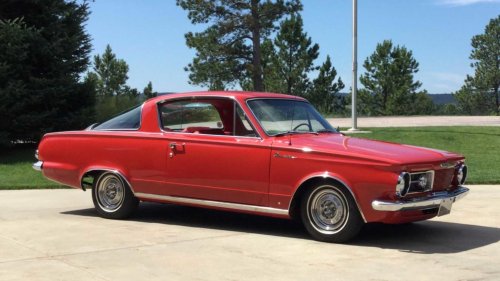
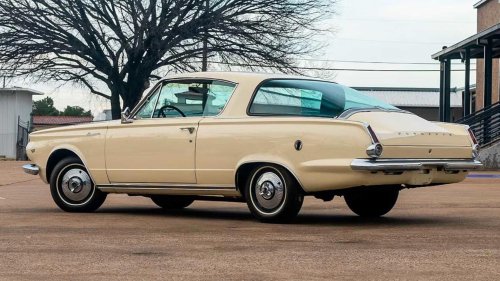
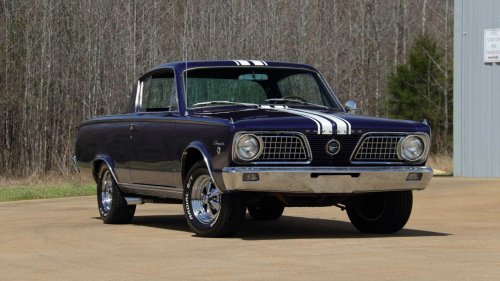
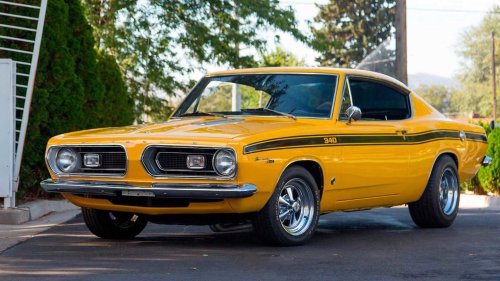
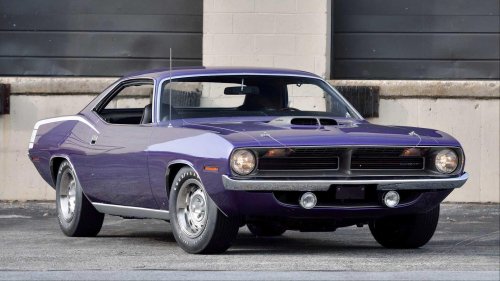
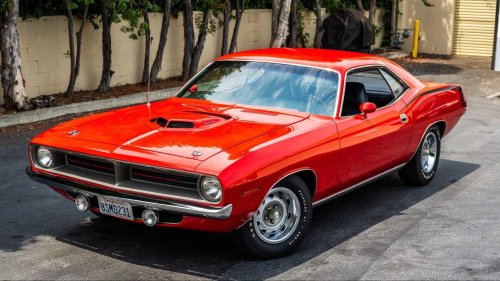



















Based on the sheer awesomeness of the original Star Wars film in 1977, audiences were sure The Empire Strikes Back was going to be great, and they weren't let down by the sequel, which is arguably the best of the franchise. The same can be said of The Godfather Part II, T2: Judgment Day, and Dawn of the Dead, all of which exceeded the original movies. Then, you have stuff like Police Academy and Children of the Corn, which sucked from the git-go, but for some reason kept cranking out more films that never came with high expectations. No, seriously, they made seven Police Academy and 11 Children of the Corn movies that nobody asked for.At this point you may be wondering what the hell this has to do with muscle cars, but there's a rhyme to our reason. When the second-gen Dodge Charger or Chevy Chevelle came out, people weren't shocked by how completely badass they were because the first-gens were legit street machines. If suddenly there were a 500-horsepower Toyota Yaris, it would blow people's minds, but an established ass-kicker continuing to kick ass isn't a front page headline. There was, however, a Golden Age ride that didn't make much of an impression at first, but was suddenly catapulted to the top of the heap and ended up being the greatest muscle car of the classic era. First Pony Car Out Of The Gate Bring a Trailer In the early 1960s, Ford was developing a sporty, inexpensive ride that would appeal to younger buyers, that we now know as the Mustang. It was the worst-kept secret in Detroit, and while other automakers dismissed this previously-ignored untapped market, Plymouth saw potential and rushed a fast-back Valiant-based compact to market. The team behind it originally wanted to call it the "Panda" but mercifully changed the name to "Barracuda," which is still, to this day, one of the coolest nameplates of all time. The quick turn-over time worked out, because the Plymouth Barrcuda, introduced mid-model year in 1964, beat the Ford Mustang to market by a couple of weeks, officially becoming the first pony car ever sold. Not Quite a Stallion Mecum While the Barracuda was first, it was definitely not the best, with some curiously odd styling. It had a fishbowl back window that went on for miles and was one of the least attractive cars ever conceived. The Mustang, on the other hand, had a great sporty design with both notch-back and fastback versions, which launched an icon that continues to this day. Neither the Mustang nor the Barracuda were barn-burners in the early days, as the Plymouth topped out with a 180-hp two-barrel carb 273 V8 that made it a 10-second car, but that was in 0-60, not the quarter-mile. The Mustang moved 126,500 units in its debut, while the Barracuda only sold 23,443 cars, proving being first isn't the same as being best. Out-Ponied at the Derby Mecum By 1966, the Barracuda got some stripes and wheels that made it look cooler, as long as it wasn't viewed from the side or back, as well as a boost to 234 hp for the top engine option. None of that mattered in the least because '67 is also the year that the Chevy Camaro and Pontiac Firebird pony cars were unleashed, which were the coolest-looking cars developed to that point. The Mustang had already made the Barracuda look like a dork and the sizzling GM F-body ponies turned it into the Poindexter of the classic era. The '67 Barracuda actually did alright with 63,534 sales, but compared to the 220,906 units moved by the Camaro, it still seemed like a failure. Second-Gen Barracuda Hits Its Stride Mecum When the second-gen Barracuda hit the scene in 1967, it came correct with a much-improved body style, in both notch-back and fastback modes. It also upped the performance with a rare 280-hp 383 V8. In 1968, the 383 was up to 300 ponies in the Formula S trim, which made it a mid-14s car with a four-speed manual transmission. Despite the greatly improved styling and performance of the second-gen Barracuda, it still wasn't a big hit with 63,534 units in '67, dropping to just 31,987 cars sold in '69. This wasn't the case of compacts selling less than intermediates during the Golden Age of American Muscle as the diminutive Chevy Nova sold 269,988 cars in 1969 alone. ’68 Hemi Barracuda Factory Drag Car Mecum In 1964, Chrysler revived the hemispherical combustion chambers of the iconic 392 FirePower V8 that made the 1957 300C the fastest car in the world for a race engine that powered Richard Petty to his first NASCAR Cup Championship. This engine, known as the 426 Hemi V8 was so dominant that Ford threw a temper tantrum and got it banned from competition until it could be homologated. Chrysler made the street version of this 425-hp, 490 pound-feet of torque wondermill available to all Dodge and Plymouth intermediate cars in 1966, but as a compact, the Barracuda was excluded. In 1968, Plymouth found a loophole and partnered with Hurst Performance, who would install the 426 Hemis themselves, creating the Hemi Barracuda factory drag car capable of 10-second ETs. M-Code 440 Super Commando Barracuda Bring a Trailer For 1969, the final year of the second-gen, the Barracuda had a rarely exercised 375-hp, 480 pound-feet of torque 440ci M-code engine option. Somewhere between 340–358 of these cars were ordered, making for the fastest Mopar you never heard of before. This massive big-block squeezed into the compact Barracuda engine bay meant sacrificing power steering, power brakes, and AC, but the trade-off was a 13.8-second quarter-mile, which required minal steering or braking. Despite the blistering speed of the '68 Hemi, '69 M-Code Super Commando, and even the high-profile Hemi Under Glass demonstration wheel-standing drag car, the Barracuda was never considered a serious muscle car or street contender, but all of that was about to change. Third-Gen Barracuda Bad Fish Mecum The second-gen Barracuda definitely got cooler-looking and ended up with some decent performance options, but it was still a second-tier ride that couldn't run with the big dogs and, while underappreciated, simply wasn't regarded as a major player on the streets. Nothing in the Barracuda's history ever suggested it would one day be the ultimate muscle car, so when the third generation was unleashed in 1970, it was a total mind-melt. Built on Chrysler's E-body platform, the next-gen Barracuda ditched the fastback, only offering coupes and convertibles, but it was its striking design that really made cuased jaws to drop.Similar to the Dodge Challenger, the Barracuda had sleeker sheet metal and a more aggressive stance, giving it an ominous presence that no car had before it. Under the hood, the full lineup of Mopar engines were available, including the big-blocks that the Barracuda had mostly been excluded from. The top performance trim was renamed simply 'Cuda and that's the one that could be equipped with a 390-hp 440 Six-Barrel V8 or preferably the 426 Street Hemi. The Hemi and 'Cuda were such a natural fit that the Hemi 'Cuda became a semi-official Plymouth nameplate. 1970 Hemi ‘Cuda Apex Predator Bring a Trailer The '70 Hemi 'Cuda had an evil aura and bore the number of the beast of the Anti-Chrysler, with 666 being produced. That wickedness extended to the streets as this car, straight from the factory, could blaze a 13.1-second quarter-mile, making it the fastest regular production Golden Age muscle car.Also in 1970, GM lifted its big engine ban and the Chevelle SS got a 450-hp 454 LS6 V8 that gave it 13.4-second ETs. That was good enough to hang with Charger Hemi R/T, and Bowtie fans thought they could finally compete with Mopar, but then the apocalyptic Hemi 'Cuda came along and sent them running for cover. This wasn't just a car, but rather a muscle car hunter that collected pink slips and souls. 1971 Hemi ‘Cuda Super-Predator MecumThe third-gen Barracuda was already the most killer ride of the classic era, but a few subtle changes for '71 added to its deadly reputation. Besides an optional decal on the rear quarters that celebrated the equipped engine, the 'Cuda got a jagged saw tooth grille and "gills" on the front fenders that were appropriate for an aquatic bad fish predator. The '71 Hemi 'Cuda maintained its position at the top of the food chain with a 13.1-second ET, but with a few easy mods like cutting off the mufflers and popping on some racing tires, made this a 12-second car. Even the 'Cuda 440+6 could hit the quarter-mile in 13.6 seconds, which was better than 99% of anything Ford or GM had to offer. Hemi ‘Cuda: King Of The Auction Block Mecum A loaded 1971 Plymouth Hemi Convertible was about $4,300 out the door, which is around $35,000 adjusted for inflation, or roughly the price of a base model 2026 Mustang. According to Hagerty, the value of the '71 drop-top is now $1.9 million for a clunker and 3.8-million for a Concours condition showpiece. That's no lie either, as one blew up the block at Mecum Seattle 2014, selling for a record $3.5 million. That was 12 years ago, so the price keeps going up with another '71 Hemi 'Cuda convertible reaching a bid of almost $5 million at a more recent auction, but failing to hit the reserve and didn't sell. Only 11 '71 Hemi drop-tops were built, so they are super-rare, and with someone willing to spend nearly $5 million on one, they are also the most valuable Golden Age muscle cars. Third-Gen 'Cuda 440+6 Cars Are Crushing It As Well Bring a Trailer The price difference between a Hemi-equipped classic Mopar and one with a lesser engine is pretty dramatic, but the third-gen 'Cudas with the triple two-barrel carb 440 Six-Barrel V8s are still crazy expensive. Third-gen 440+6 coupes have a top value between $146,000 and $163,000, while convertibles go from $502,000 to $956,000. These are prices that exceed Hemi-equipped Road Runners and even second-gen Dodge Charger R/Ts. Again, these values are not figurative, as a '71 440+6 sold for almost a million bucks in 2019, bringing the cheaper Hemi alternative that much closer to the Milliojn-Dollar Muscle Car Club. Even The 340s Ain't Cheap Mecum With Mopar collector cars, it's the big-blocks that dominate but the third-gen Barracuda is so awesome that even some 340 cars are six-figure auction kings. In 1970, Plymouth built the AAR (All-American Racer) 'Cuda to compete in the SCCA's Trans-Am racing series. Equipped with a 290-hp 340 Six-Barrel small-block V8, Plymouth sold 2,724 of these awesome variants to meet homologation requirements, making them semi-rare. They, however, are not semi-affordable with a Concours condition value of $141,000. Generally speaking, a 340 Mopar is more like a $20,000 car in top condition, so the AAR really proves the power and appeal of the third-gen Barracuda, which is a long way from those Goobermobiles of the first-gen.Sources: Chrysler, Hagerty, Mecum