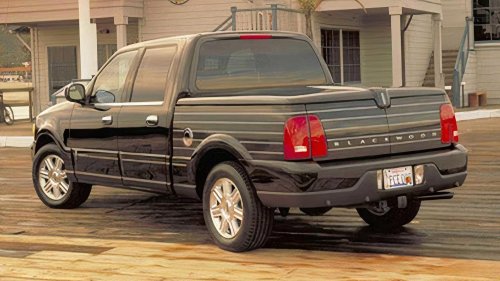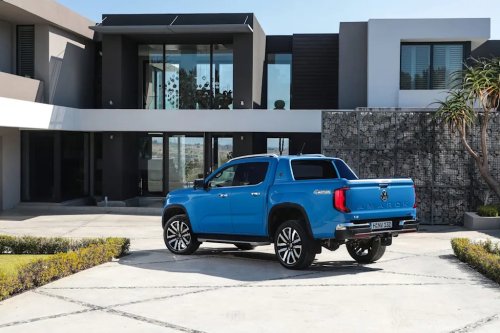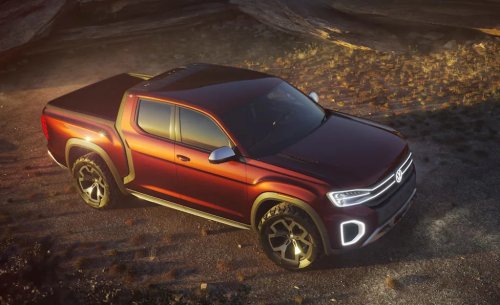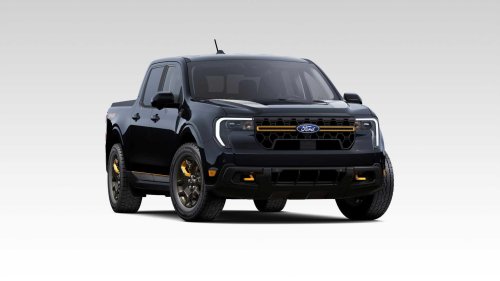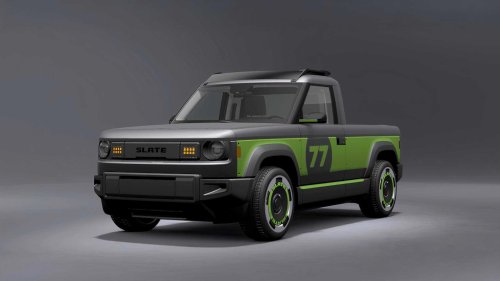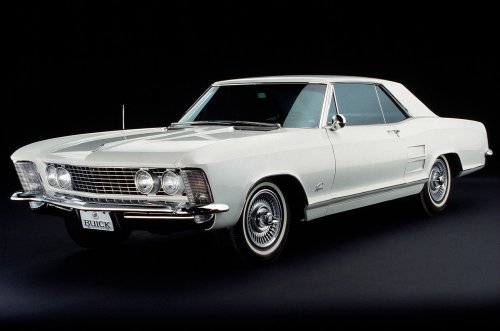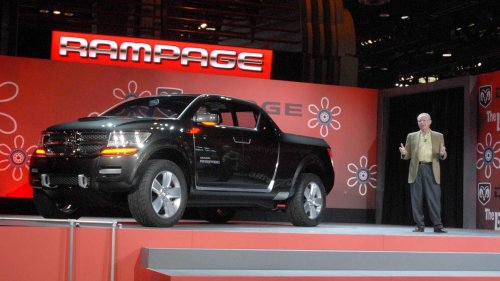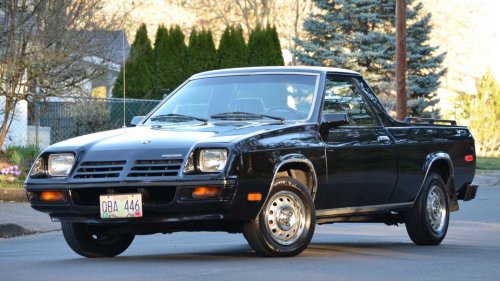
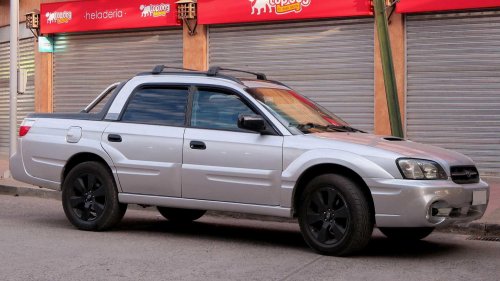
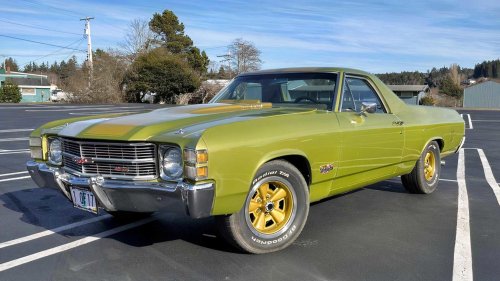
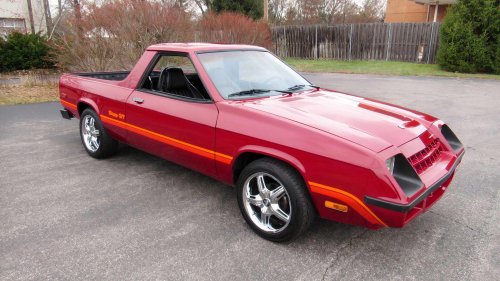
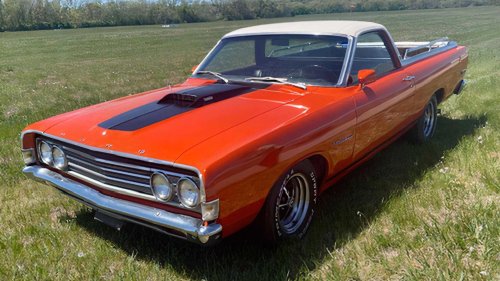
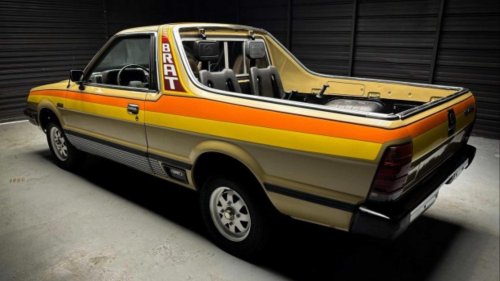




















Certain classes of cars defy rational thought or good taste, like the shooting brake, which is a high-performance, expensive, roadster with either a wagon back end or a hatchback. Another is the car-based pickup, also known as a coupé utility, that looks like a car, only with a truck bed, but isn't an optimal car or pickup. While both of these types of vehicles are kind of goofy-looking, they are surprisingly practical and have versions that can smoke just about anything, which is often embarrassing to the loser to get beaten by a dorkmobile.While the concept of a car/truck seems a little silly, the original pickups were just that. Ford, which invented the pickup, sold Model Ts without a rear half in which buyers could build their own truck beds. The same is true for both Chevy and Dodge, which modified their road cars with truck-esque back ends. Obviously, the pickup has evolved into the best-selling class of vehicle, while the coupé utility is a relatively obscure segment, but they have been just intriguing enough that automakers keep trying to make them happen. Here's every car that had pickup aspirations and managed to carve out cult followings.To give you the most up-to-date and accurate information possible, the data used to compile this article was sourced from various manufacturers and other authoritative sources, including J.D. Power. Coupé utility vehicles are ranked by coolness, using an algorithm that takes into account awesomeness and impact. Dodge Rampage Rampage Minus The Actual Rage Bring a Trailer There are deceptively named musical acts out there, like The Killers and Widespread Panic, that come off like they should be raging headbangers or anarchistic punkers, but in reality play wuss rock so timid, they make Air Supply seem like Metallica by comparison. The Dodge Rampage is that, but in vehicle form, because it has a furious nameplate, but a milquetoast demeanor. The Rampage was essentially a Dodge Omni with a truck bed, which is exactly as uncool as it sounds, and it came equipped with an underpowered 2.2-liter inline-four that couldn't crack 100 horsepower. Rampage Model Overview Production Years: 1982-1984 Total Production: 37,401 units Best Sales Year: 1982 (17,636 units) Worst Sales Year: 1983 (8,033 units) Coolest Model: 1982 Rampage The 1980s Omni had a "high-performance" variant that Dodge shamefully dubbed the Charger, which Carroll Shelby took and souped up to at least not embarrass the iconic muscle car nameplate. There was apparently a Shelby Rampage prototype built, but it never went into production, which could have saved the coupé utility from a very short life. A Rampage with 200ish ponies, sick rims, some sporty trim pieces and graphics, as well as a hood scoop, would have made the Rampage as badass as the Shelby Charger, but that never happened. Subaru Baja Soft Launch For A Hard Ride RL GNZLZ via Flickr The BRAT was a cult favorite that has grown into a legend, and there will be more about that coming up, but first, we have to cover the Baja, which was Subaru's attempt to recapture some of the magic of its earlier coupé utility. Because you've probably never actually seen one on the road, you already know that attempt was a complete failure, with Subaru moving less than 30,000 in four brutal sales years. The thing is, the Baja actually wasn't a bad ride, in terms of styling and performance, but Subaru totally botched the launch. Baja Model Overview Production Years: 2003-2006 Total Production: 29,490 units Best Sales Year: 2003 (10,694 units) Worst Sales Year: 2006 (5,241 units) Coolest Model: The 2006 Baja, which was the year Subaru pulled the plug on it, was a killer all-wheel-drive, with a 210-horsepower 2.5-liter flat-four, lift kit, and upscale leather interior, that was available in a variety of colors. Had that been the vehicle they released in 2003, it may have had a better fate, but instead, the Baja came out with no turbo engine, low ground clearance, cheap interior, and was only available in yellow with gaudy silver plastic trim. Underpowered and unattractive, the 2003 Baja poisoned the well for future models that were much better, and it just never caught on with the car-buying public. It also probably killed any real attempt to reboot the BRAT, which is the real tragedy here. GMC Sprint/Caballero A Hauler That Sprints Bring a TrailerGMC is known for its trucks, SUVs, and commercial vehicles, but definitely not passenger cars. In fact, the automaker has never produced a sedan, coupe, sports car, or convertible, but came real close in 1971 with the Sprint coupé utility. The Sprint was GMC's version of the Chevrolet El Camino, and the two vehicles were identical in every way except the name. Many times, the GMC version of a Chevy will have a different grille and maybe even some sheet metal variations, but the Sprint was an El Camino down to the lug nuts. Actually, the GMC high-performance trim was known as the "SP" as a counter to Chevy's "SS", but that's nothing physically different. Caballero Model Overview Production Years: 1971-1977 (Sprint), 1978-1987 (Caballero) Total Production: 74,255 units Best Sales Year: 1979 (7,000 units) Worst Sales Year: 1983 (2,126 units) Coolest Model: 1971 Sprint 454 Since the Sprint and the El Camino are the same, there may be some wondering why the GMC isn't ranked as high as the Chevy, and there's a very rational explanation for that. The Sprint was introduced in 1971, which also happened to be the year GM vehicles started detuning their engines to meet emissions standards and consumer demand for better fuel economy. So while the '71 Sprint could be ordered with a 454-cubic-inch V-8, it only produced 365 horsepower, versus the 450 ponies of the '70 454 LS6, of which the El Camino had access to. In 1978, the Sprint's name was changed to Caballero, and many people may be shocked to learn it was produced all the way up to 1987. Plymouth Scamp The Rampage's Petulant Cousin Bring a Trailer The Scamp, produced only in 1983, was Plymouth's version of the Dodge Rampage, which brings up another question of ranking that is easily answered. While the Scamp and Rampage were identical, the Scamp came with the GT appearance package that made it a hell of a lot cooler looking. With bigger wheels, ground effects, stripes, and other accents, the Scamp was simply more appealing to the eye. It's what the Rampage would have looked like if Carroll Shelby got a hold of it, and before anyone asks, Shelby had nothing to do with the Scamp. Additionally, the Scamp ranks higher than the Rampage because its name isn't a lie, as it was a bit mischievous. Scamp Model Overview Production Years: 1983 Total Production: 3,564 units Best Sales Year: 1983 (3,564 units) Worst Sales Year: 1983 (3,564 units) Coolest Model: 1983 Scamp GT Another important difference is that the 1983 Scamp came equipped with a five-speed manual that made driving it a little more fun. It still had the 94-horsepower 2.2‑liter inline-four, which is why it was a one-year wonder. The 175 ponies from the 1985 Shelby Omni GLH would have done wonders for the Scamp as well as the Rampage. Lastly, the Scamp beats out its big brother because it is exceedingly rare. Less than 4,000 Scamps were built in their only year of production, and just 1,380 were GTs. J.D. Power reports that the high retail value of a 1983 Dodge Rampage is $3,375, while Scamps can sell for over $10,000 at auction. Ford Ranchero A Ranch Hand With Some Muscle Mecum The Ford Ranchero is the Goldilocks of coupe utility, as it was introduced in 1957 as a full-size, became a compact in 1960, and then found the "just right" mid-size in 1966. Initially, it was a station wagon with everything behind the front seats gutted to make a truck bed, and it was the first real coupé utility on the market. There was the Hudson Terraplane Utility Coupe, which had a weird telescoping storage bin in the trunk, and the Studebaker Coupe Express that could be converted to a truck-like ride with a kit installed by the buyer, but the Ranchero was the first that came with a bed straight from the factory. Ranchero Model Overview Production Years: 1957-1979 Total Production: 508,355 units Best Sales Year: 1973 (45,741 units) Worst Sales Year: 1958 (9,950 units) Coolest Model: 1969 Ranchero Rio Grande The Ranchero, as its name would suggest, was primarily a ranch vehicle for hauling hay and feed for its early existence, but in the late 1960s, it became an unlikely muscle car. The brief 1968-1969 fourth-gen Ranchero has access to all of Ford's monster big-blocks, including the 428-cubic-inch Cobra Jet V-8. In 1969, Ford created a rare variant known as the Rio Grande, which was available in "Wimbledon White", "Poppy Red", or "Calypso Coral", known as the "Grabber" colors. It also had a partially blacked-out hood and was designated as a "Special Performance Vehicle" by Ford. This was the coupe utility version of the Fairlane 500 or Torino GT, and that's cool no matter how you look at it. Subaru BRAT The Clown Prince Of Car-Based Trucks Bring a Trailer The Subaru BRAT, introduced in 1978, was adorkable decades before that was even a thing. The rather peculiar-looking ride was also surprisingly functional, and, man, we can't get enough of those jump seats in the truck bed. The story behind those is enough to shoot the BRAT near the top of the coupé utility heap. It turns out that there's this thing called a "Chicken Tax" that puts a huge tariff on imported light trucks, so Subaru bolted a couple of plastic seats in the bed and shipped them as passenger vehicles with a much lower tax rate. Even the BRAT's name is goofy/cool, as it is an acronym for "Bi-drive Recreational All-terrain Transporter." BRAT Model Overview Production Years: 1978-1987 Total Production: (100,000 units est.) Best Sales Year: 1979 (23,441 units) Worst Sales Year: 1988 (12 units) Coolest Model: 1982 BRAT Another thing pushing the BRAT near the top is the fact that it's the only four-wheel-drive coupé utility on this list. Well, the Subaru Baja was AWD, but everything else is RWD, and, let's get real, having power at all four corners is incredibly useful for something with a truck bed. The BRAT was actually a competent all-terrain vehicle, with decent ground clearance, that found a home with off-roading enthusiasts in the 1980s. The one knock on this otherwise awesome set of wheels is that it never had enough power to be truly spectacular. With a 94-horsepower 1.8-liter turbo-four being the biggest engine available, the BRAT could have benefited from a little more oomph. Even so, this was an underground hit that has developed into a cult today, with scores of adoring fans. Chevrolet El Camino Nothing Out-Muscles Chevy's Coupé Utility MecumChevy introduced the El Camino in 1959 as an answer to the Ranchero, but dropped it after only two model years, even though it actually outsold the Ford. In the mid-1960s, someone at Chevy must have figured out they had canceled a successful vehicle, and the El Camino was brought back from the dead. In case of the sequel being better than the original, the resurrected El Camino was pretty smoking, most likely because it was based on the Chevelle. Actually, it was a Chevelle, as the iconic muscle car was a platform that had two-door coupes, convertibles, four-door sedans, wagons, and coupé utility versions. El Camino Model Overview Production Years: 1959-1960, 1964-1987 Total Production: 2 million units est. Best Sales Year: 1973 (70,015 units) Worst Sales Year: 1987 (14,770 units) Coolest Model: 1970 El Camino SS 454 LS6 The El Camino is by far the most successful coupé utility, selling more than two million units, and while that's partially why it ranks at the top, the main reason is the 1970 SS 454 LS6. The '70 Chevelle SS 454 LS6 is the ultimate muscle car, but the similarly equipped El Camino was just a little bit quicker in the quarter-mile, even with some sheets of drywall in the bed. The 450-horsepower 454 LS6 V-8 engine is a Golden Age legend that was at its height of awesomeness in 1970, as it was detuned the next year. The '70 El Camino SS isn't just the baddest coupé utility of all time; it's one of the better classic-era muscle cars. It's a guarantee that getting torched by something as unconventional-looking as the El Camino adds to the shame of losing a street race.