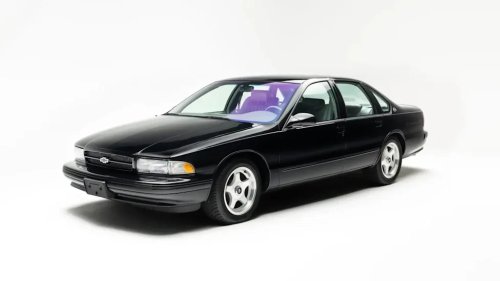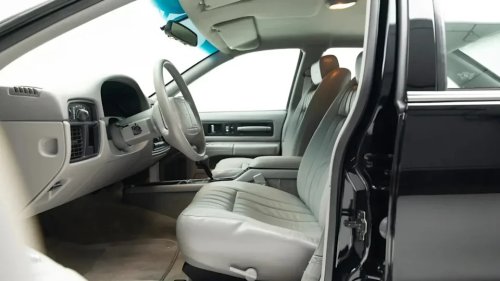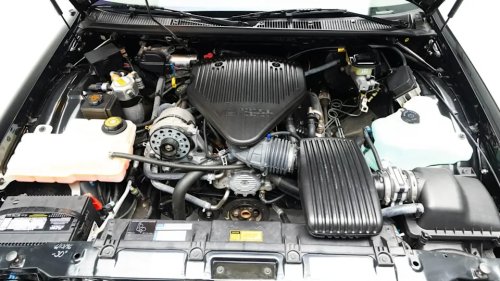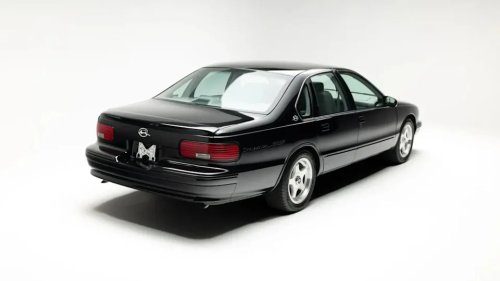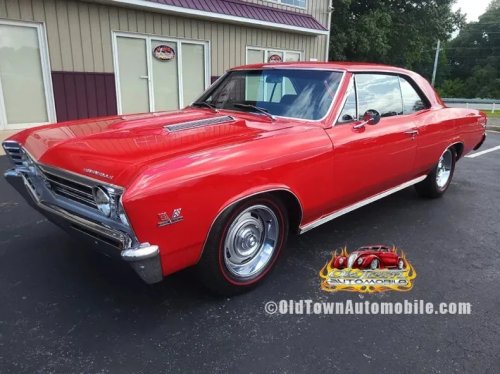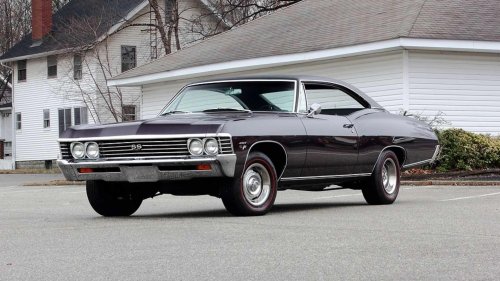
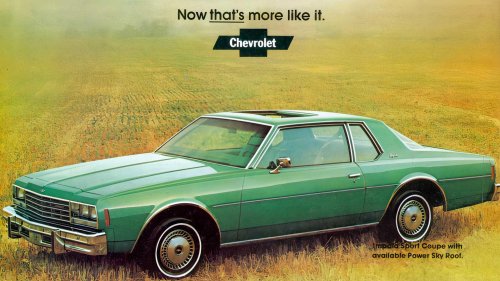
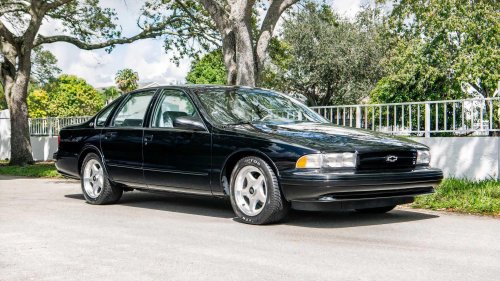
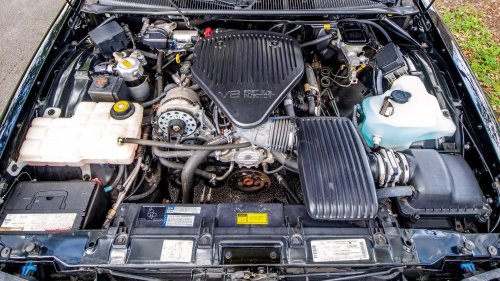
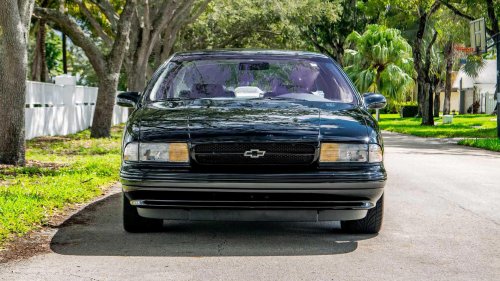



















Does 2026 have you feeling down? Let’s change that. How about we close our eyes for a second and imagine it’s roughly 1995. Your NBA champions are Hakeem Olajuwon’s Rockets, and Brazil has just settled down again after a historic World Cup win. Elsewhere, families weren’t riding around in crossovers like today. Instead, they used full-size sedans, like this one from GM that folks especially miss. The Chevrolet Impala: A Rising Star That Fell Hard Via Mecum AuctionsIf you parked a classic ‘67 Gen-IV Impala SS 427 next to a 1977 Gen-VI from just a decade later, they would hardly resemble each other in the slightest. How the Impala, and the American auto industry became nothing like it was one generation prior can’t be blamed on one item alone. It was a combination of geopolitical tomfoolery, environmental activism, and other factors completely outside the control of General Motors.This showedin relation to the Chevy Impala perhaps more than any other automobile. It was wimpier, slower, and lacked most of the bigger V8 engines that made generations prior a household name. Even if the downsized Impala was more practical than models prior, it simply didn’t have the same gravitas or long-term staying power of its predecessors. Simply put, and despite impressive sales data at the time, the Gen-VI Impala was utterly forgettable.The last Gen-VI Impala left the production floor in 1985. For nearly the next decade, the Impala nameplate sat in suspended animation, not applied to a production car while GM secretly started planning something to replace it. As it turned out, the answer came partially from looking to the past, almost as much as the future. Though, you’d never know it from looking at one. Redesigning the B-Body Platform, With Fabulous Results. General MotorsThe Impala had ridden on General Motor’s long-standing B-Body chassis platform for three decades by the turn of the '90s. In that time, updates to the chassis and suspension geometry came in small increments over the years. It was all in support of not just the Impala, but icons like the Pontiac Bonneville, Cadillac Fleetwood, Buick LeSabre, and Chevy’s own in-house counterpart to the Impala, the Caprice.The next big redesign wouldn’t come again until early 1990, when GM started the long, arduous task of reinventing the Caprice, and eventually reviving the Impala name back from the dead. For the 1994 model year, the same basic frame design from 1977 stuck around. But while the wheelbase stayed generally unchanged, the overall length was nearly two inches longer, and it was also as much as 1.6 inches wider.Future B-Body cars would be sharper-looking, more aerodynamic, and less stereotypically boxy than the malaise-era brutes that came before them. Effectively, it was the perfect platform to resurrect the Impala nameplate and make it modern for the period. Even then, the long-term staying power of the all-new Gen-VII Impala must have been surprising even by GM’s standards. Chevrolet Impala SS: An Icon Returns, and Better Than Ever. MecumThe Gen-VII Chevrolet Impala SS was nothing like the generation prior, save for portions of the chassis beneath the skin. Externally, it looked almost nothing at all like any of the Impala’s previous six generations. Its design was the brainchild of GM engineer and shot-caller for their Specialty Vehicle Group, a man named Jon Moss. Moss penned a concept car that debuted at the 1992 Detroit Auto Show, and overall, it looked pretty spot on to what the production spec would look like.The 1992 concept car used a prototype 500-cubic-inch (8.2-liter) V8, not something exactly viable for a production vehicle. Instead, GM’s engineers made the logical decision, and put a gosh-darn Corvette motor under the hood. Well, maybe that’s not exactly fair. The 350-cubic-inch (5.7-liter) LT1 V8 might’ve been the C4 Vette’s party piece, but it wasn’t equipped like one by the time it wound up in the Impala SS.It was de-tuned, sporting less aggressive camshaft profiles, a less free-flowing exhaust, and cast-iron heads instead of the aluminum ones on the Corvette. The compression ratio was also lower, and the timing advance curve was altogether different. All these small items added up to an engine that made 260 horsepower to the crank instead of the 300 of the Corvette. Then again, it wasn’t all negative, as the Impala SS’s LT1 made an impressive 330 lb-ft of torque way down low in the rev range. A Horsepower-Per-Dollar Heavyweight Mecum AuctionsCompared to purpose-built sports cars like the then-new SN95 Ford Mustangand the Camaro Z28, the Impala SS offered similar levels of power, with practicality no sports coupe can match. The 5.0-liter small-block V8 in that year’s SN95 made a pedestrian 215 horsepower to the crank, equating to a glacial zero-to-60 sprint of 6.8 seconds. Meanwhile, an Impala SS could do the same run in anywhere from 6.5 to 7.5 seconds, depending on road conditions. It did so carrying considerably more weight around. In truth, the Z/28 Camaro might be a better comparison, at 275 horses in 1995.The Camaro also used a Corvette-based LT1, but with a performance tuning profile all its own. At least in a straight line, the lighter, slightly more powerful Camaro was indeed faster. But in all aspects other than a drag race, the Impala SS was far beyond American conventions. It sported the same police-spec brake and suspension package that championed the Caprice 9C1. Heck, it even out-paced a Mercedes-Benz S500 when the two were pitted against each other by Popular Mechanics in the mid-1990sOne of the LT1’s key advantages came from the cooling system. It was a reverse-flow unit with dual electric fans and dedicated coolers for the engine, power steering fluid, and the 4L60E automatic transmission. It goes without saying, the four-speed gearbox was one of the Impala SS’s only true weaknesses, and six-speed manual swaps are fairly commonplace on the aftermarket. Even so, the Impala SS offered one of the most tantalizing powertrains that GM ever sold in the ‘90s Far More Than a Pretty Engine Mecum AuctionsJust under 70,000 Impala SS V8s were built between early 1994 and late 1996. From there, the Impala nameplate went dormant again for the next three model years. When it emerged, it was so far removed from the old SS that it now closer-resembled an Accord or Camry. GM corrected the record with the next update, offering an LS4 V8 in the ninth-generation Impala SS. By 2020, the Impala nameplate was dormant once again, making these Gen-VIIs among the most unique of the breed.On the used market, that means these Impalas have some real staying power and resale value. Even high-mileage examples with six figures on the odometer can sell for between $10,000 and $15,000. South of 30,000 miles, and sporting desirable colors like Dark Cherry Metallic or Onyx Black, these Impalas can touch the low $40,000 range. Sometimes, they'll sell for even more, given it's exquisitely preserved and numbers-matching. The 1996 edition is especially sought-after, featuring a console-mounted shifter like a true sports sedan, not a column shift like a minivan.For a short production run vehicle, the Impala SS managed to exceed the reputation of sports sedans far faster and more expensive than it was. It’s the kind of low-strung, laid-back sports sedan which, thanks to regulations and changing consumer habits, will likely never be replicated again.Source: GM, Hemmings