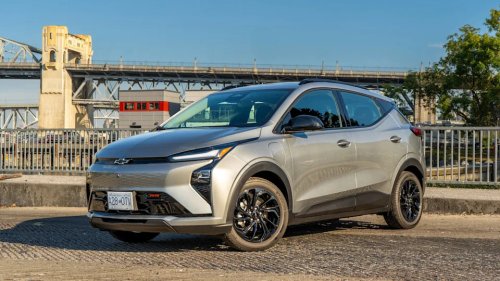
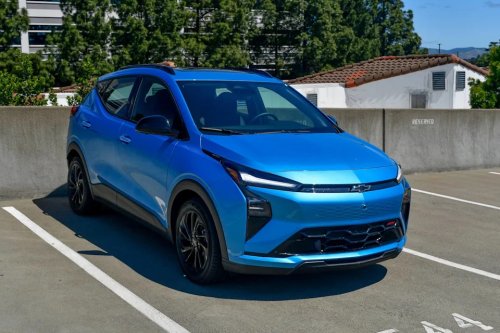
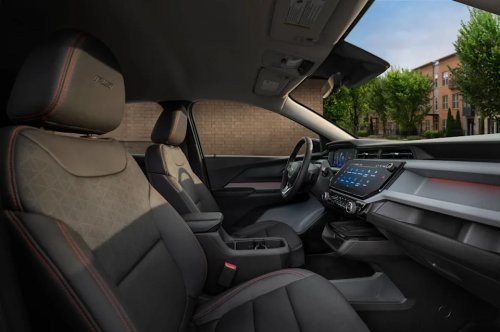
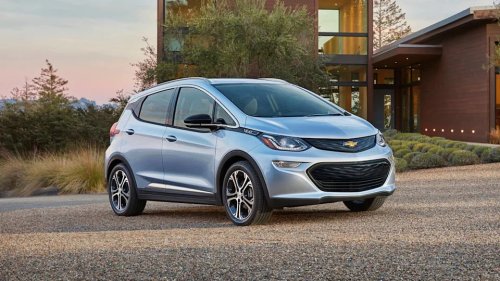
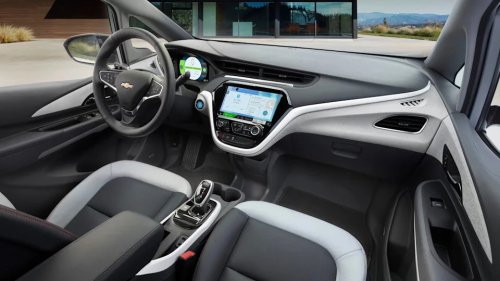
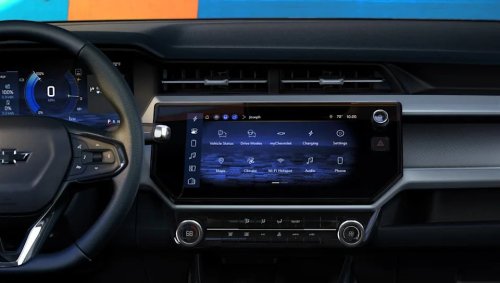
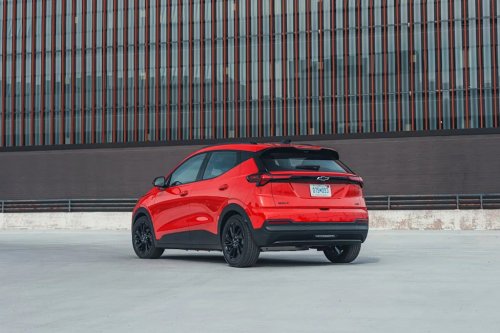
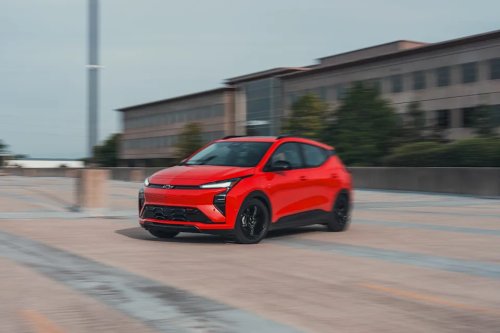
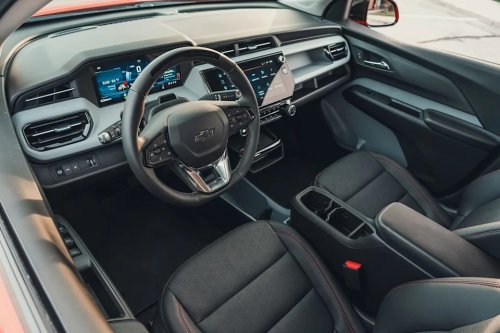
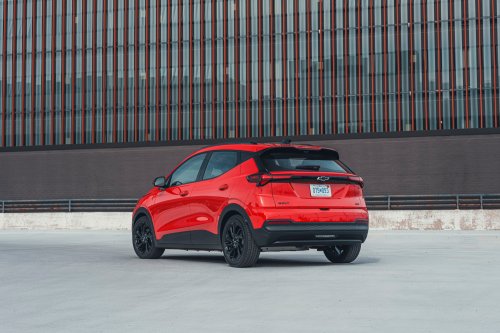
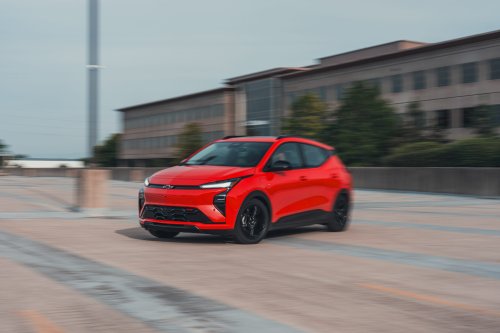
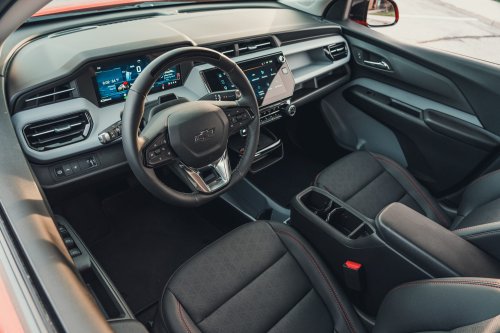
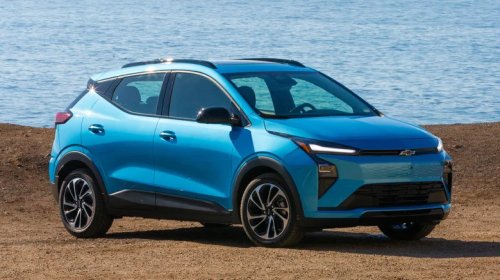
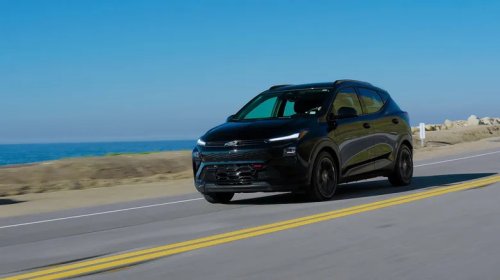
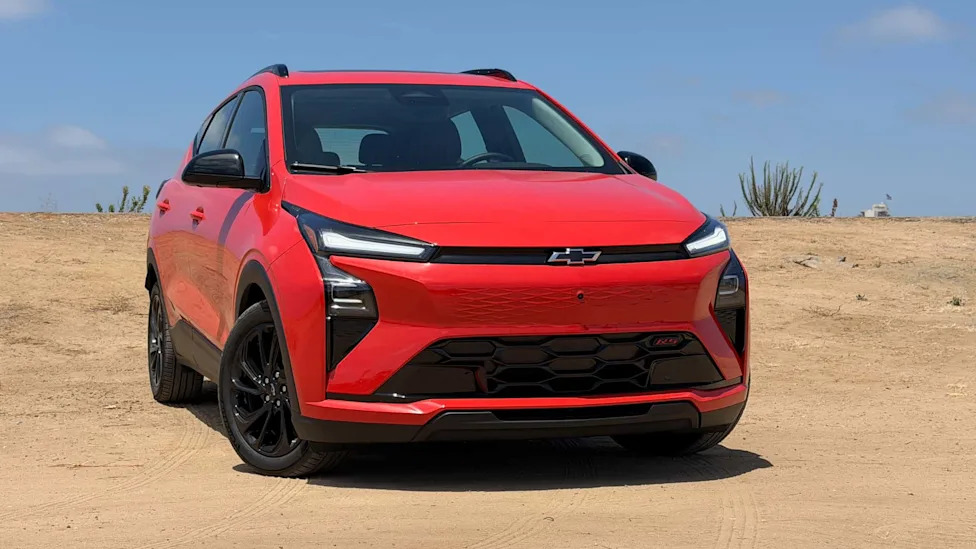
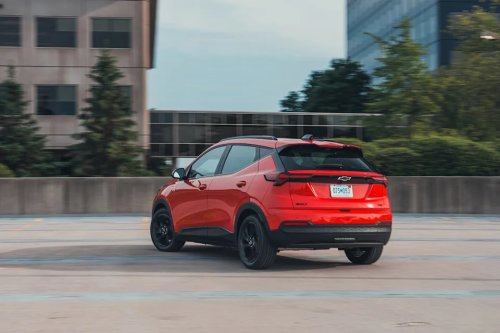
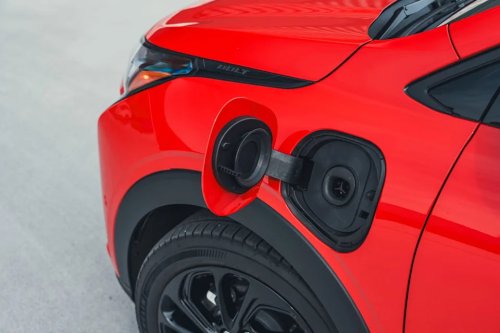
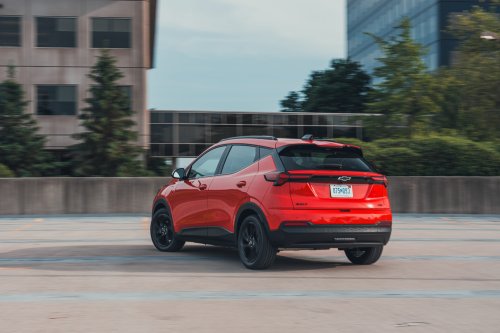
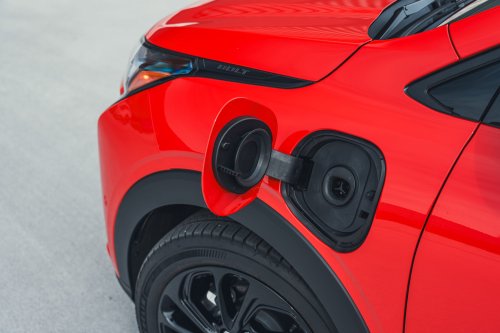
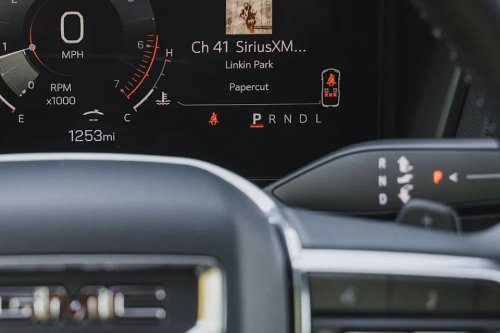
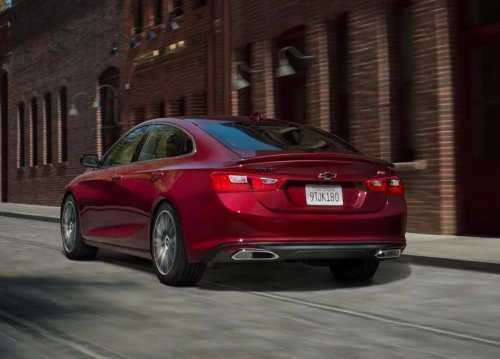
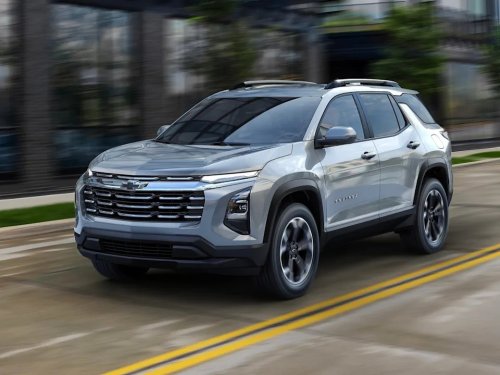
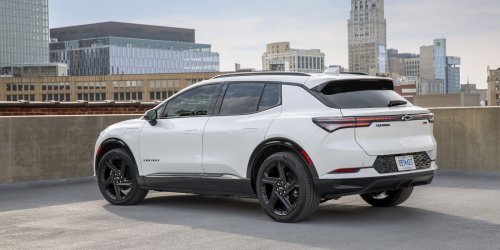
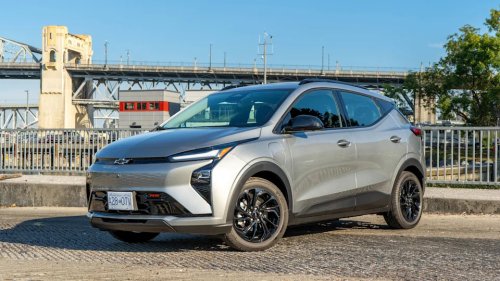
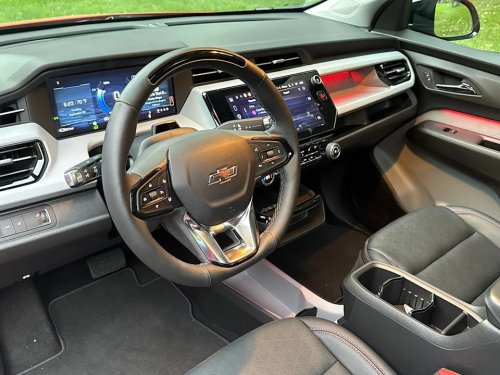
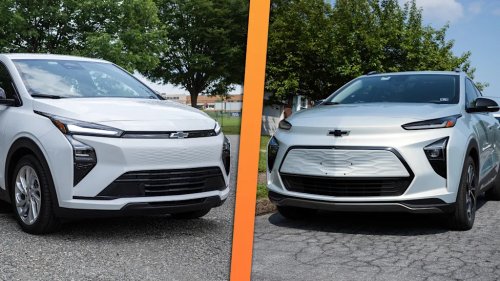
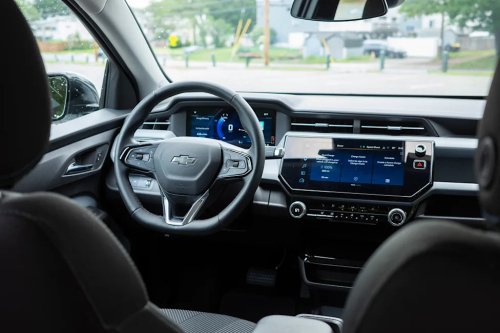
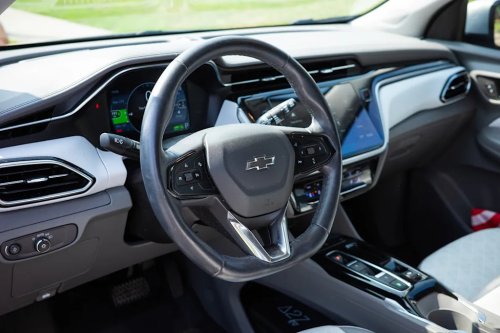
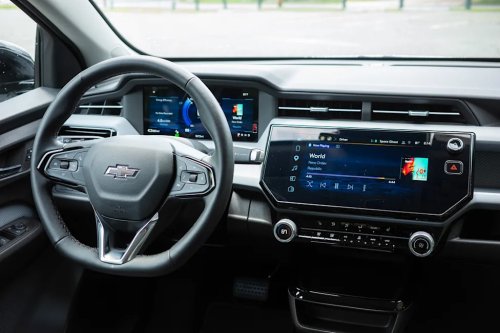
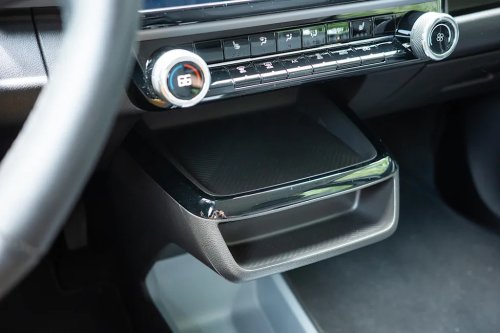
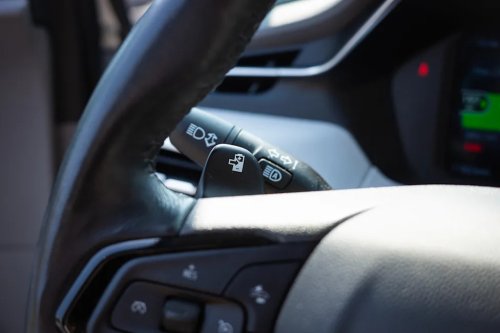
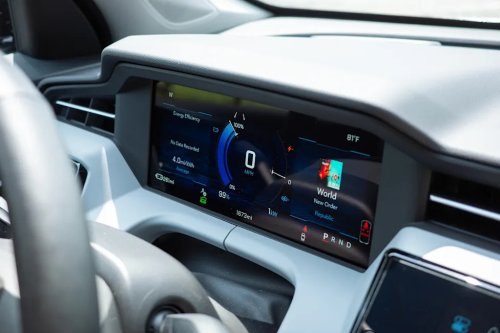
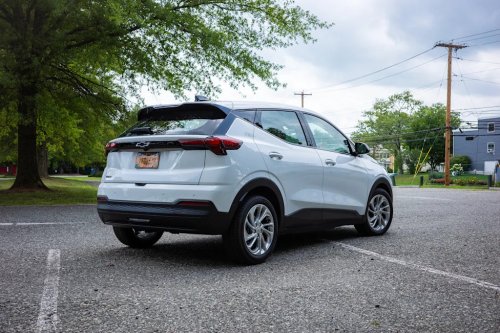
2027 Chevrolet Bolt, at left, next to a 2023 Bolt EUV.Key TakeawaysNew Bolt's battery chemistry shift. The 2027 Bolt uses a lithium-iron-phosphate battery, offering more charge cycles but worse cold-weather performance. Enhanced charging capabilities. The new model features a NACS port and supports 150-kW fast charging, a significant upgrade. Interior and tech changes. New storage options and tech updates, but lacks CarPlay and has awkward regen settings. Price and value comparison. Minimal price increase from 2023, but used models offer better value for money. Bottom line: The 2027 Chevy Bolt offers notable improvements but also several drawbacks, making it a mixed bag compared to the older model. ✦AI assisted, editor reviewedAdvertisementAdvertisementIn a perfect world, General Motors would have kept building the Chevrolet Bolt over the last two years, and into the future. But for a variety of boring, depressing, and cynical reasons we won't get into here, the compact, entry-level EV is guaranteed to only come back for a single model year, with production currently slated to end midway through 2027. This is not an all-new Bolt, but a heavily revamped version of the Bolt EUV that temporarily left us after 2023; the even smaller, non-EUV version is a thing of the past.Given the similarities between a lightly used Bolt and this brand-new one, I thought it useful to compare the two. To do this, my good friend Forrest handed me the keys to his 2023 Bolt EUV, which I drove back-to-back with this white, almost completely base example I was loaned for review a couple of weeks ago.What I found was that while the latest Bolt does have some advantages over its predecessor, it also makes a number of frustrating concessions that keep it from being the obvious choice. In fact, to potentially spoil the verdict here, I'd go so far as to say that if I already owned an older Bolt, I wouldn't automatically go out of my way to upgrade.The BasicsLet's start with what the new Bolt brings over its predecessor. While its battery is rated at the same 65 kWh as before, the new CATL-developed pack uses a lithium-iron-phosphate chemistry, unlike the nickel-cobalt construction of before. The upside is that the LFP battery should retain its charge for many more cycles. The downside is worse theoretical cold-weather performance, though the new Bolt also has a heat pump that the prior model didn't, which should give back some miles in such conditions. Additionally, the new battery material makes the pack heavier, but for a car like the Bolt, that doesn't bother me too much.The 2027 Chevrolet Bolt. Adam IsmailThe 2027 model also gets a NACS port, and can DC fast-charge at up to 150 kW, a three-fold increase over the old one. The combination of greatly increased throughput and the ubiquity of the charging port on this side of the Atlantic is, frankly, the biggest boost the revitalized Bolt has going for it.AdvertisementAdvertisementNone of this means a significant improvement in range, which is EPA-estimated at 262 miles on a full charge—about 15 miles more than before. Also, while the new Bolt is up 10 horsepower on its predecessor, to 210 hp, torque is weirdly way down, from 266 lb-ft to just 169 lb-ft. Fortunately, this isn't nearly as bad in practice as it sounds on paper, because GM engineers ratcheted up the final drive ratio to pair with the car's smaller, higher-RPM motor. The end result is that A/B testing foot-to-floor acceleration in both Bolts, the new one actually feels noticeably quicker, even though raw numbers might indicate the opposite.One more thing: The new Bolt supports bidirectional charging, meaning it can power your home, but only if you're a GM Energy customer; there's no 120-volt outlet in the trunk, for example.Driving Back-to-Back BoltsI should say that my friend Forrest really seems to like his Bolt, and I can understand why. Whether you spring for an older secondhand car or a new one, it is a great little short-trip runabout. Both have excellent visibility in the cabin, light and easy steering, and accelerator pedals tuned not to dump a ton of torque on initial press, which can be jarring in EVs.The gap between the two cars begins to manifest in the powertrain, as I alluded to earlier, as well as ride and braking. Neither of these cars is quick, but the 2027 model definitely feels sprightlier off the line and during passing, despite that significantly reduced torque figure. The gearing tweak makes a big difference.AdvertisementAdvertisementThe new Bolt also gets an updated rear twist beam, but I preferred the ride in Forrest's car, and for good reason: he swapped out the shocks. As a result, his Bolt is a little less crashy and jumpy over bad pavement, though I wouldn't call the stock experience with the new iteration terrible. We're talking about an economy vehicle, after all.Forrest's 2023 Chevrolet Bolt EUV. Adam IsmailBut the thing I missed most in the new Bolt was the old car's one-pedal driving calibration. The "normal" regen setting is horrendous in the new car, effectively slamming on the brakes anytime you're off throttle. Inexplicably, there's a "high" setting if you desire an even more awkward driving experience, but no milder option. Forrest's Bolt felt completely different; there, the regen was softer and frankly, just right, and I would happily drive that car in one-pedal mode with no complaints. The new calibration is simply a non-starter, and I had to turn it off immediately.Ironically, when The Drive's Kyle Cheromcha drove the 2027 Bolt for the first time earlier this year, GM engineers told him they hadn't yet figured out how to blend friction and regen braking through the pedal during the previous Bolt's development. That's why the old car had that Regen-on-Demand paddle behind the steering wheel, which is absent on the new one.Comparing Interiors and TechGM did a lot more to the Bolt's interior than you would've anticipated after just two years away, though I'm not entirely certain all of it was for the better. The first thing I noticed stepping inside the new car was all of its myriad cubbies and pockets, storage areas that were missing on the previous Bolt. They seem convenient and useful on the surface, until you realize that most of them are too odd a shape or lined with too slippery a material to actually retain items.At left, the 2027 Chevrolet Bolt's dashboard. At right, the dashboard in the 2023 model. Adam IsmailTake the tray just below the center stack, for example. If you pay extra, this can serve as a wireless charger for your smartphone. My car didn't have that equipment, but I still would've liked to leave my phone there. Unfortunately, GM didn't spend the pennies required to make the surface of this shelf grippy at all, so I decided against it. On the other hand, I do like the new Bolt's approach to front cupholders, which incorporate movable dividers for a custom fit.Storage details in the 2027 Bolt. Adam IsmailOverall, though, I much preferred the older Bolt's cabin. I liked its conventional shifter rather than the new car's stalk. I liked its hardware power button (imagine that!) right where you'd expect it. I liked its dedicated drive mode button and, overall, how much more built-up and cozier it felt, with fewer hard plastics and more soft-touch surfaces. Forrest's Bolt is a higher-spec model than the 2027 example I drove, to be sure, but when you get into a new base Bolt, it kinda feels like sitting inside a tiny utility van.AdvertisementAdvertisementAnd, at the risk of sounding like a broken record from past GM reviews, I very much missed CarPlay in the new Bolt. There's simply no excuse for not having it. Apologists argue that as more popular apps, like Spotify and Apple Music, make their way into the car, phone projection becomes less necessary. The problem with that is that cars will never have everything, and so if I want to switch between music streaming and, say, the podcast app I pay for and prefer to use, called Overcast, I need to pick up my phone mid-drive, which is unsafe and illegal. [Ed. note: and obnoxious.]Two details that distinguish the older Bolt from the newer one: the Regen-on-Demand paddle, and the physical power button. Neither of these is present on the 2027 car. Adam IsmailThe tech and auto industries solved this problem a long time ago, but some carmakers would rather you stay in their sandbox, with their awkwardly tiny software buttons and confusing icons that never seem to mean what you think they do. Enough is enough, and I wish GM would just be normal about this.Prices and VerdictWhen my old colleague Peter Holderith reviewed the Bolt EUV back in 2022, it started at $28,195 delivered. (Back then you could also benefit from a $7,500 tax credit, of course, but we won't hold that against the new car.) For 2027, the Bolt begins at $28,995. The only option my car had beyond that was a $995 Comfort Package that tacked on heated front seats, a heated steering wheel, and an auto-dimming rearview mirror.I respect the very minimal price increase, but, of course, you're not going to find any new 2023 Chevrolet Bolt EUVs at MSRP. So we turn to the used market, where a cursory search of my area returns one well-optioned example with 23,000 miles for $24,700, alongside a similarly used LT for $21,500. For reference, the MSRP on Forrest's car was $32,870.The 2027 Chevrolet Bolt has a larger digital instrument panel and also relocates the shifter from buttons mounted between the front seats to a right-mounted stalk, as seen on the older car at right. Adam IsmailAt the end of the day, there's exactly one quality of the newer Bolt that would make it somewhat difficult to choose against: its integrated NACS port and support for 150-kW fast charging. Even then, I think I'd save the coin and go used.AdvertisementAdvertisementThe Bolt is a vehicle people wanted back, so I'm glad it is. It's difficult to argue with as a very smartly packaged, inexpensive EV, and I hope buyers love this new one as much as existing owners have appreciated theirs. Unfortunately, every step of the car's resurrection has felt like something GM was dragged into doing, that it never really believed in. And I can't help but feel like part of that shines through in the final product.Adam IsmailChevy provided The Drive with a seven-day loan of this vehicle for the purpose of writing this review. Also, thank you to Forrest for giving me seat time in his Bolt!2027 Chevrolet Bolt SpecsBase Price (LT as tested)PowertrainHorsepowerTorqueSeating CapacityCurb WeightCargo Volume0–60 mphEPA-Estimated RangeScore$28,995 ($29,990)65-kWh lithium-iron-phosphate battery | single permanent-magnet motor | front-wheel drive | single-speed gearset210 hp169 lb-ft53,776 pounds16.2 cu-ft behind rear seat | 56.3 cu-ft with rear seat folded6.8 seconds262 miles7.5/10 Quick Take The briefly reborn Chevrolet Bolt has a lot going for it as a cheap entry-level EV, but it's not a total improvement over older models, leaving it feeling like somewhat of a missed opportunity.





















 +62 others