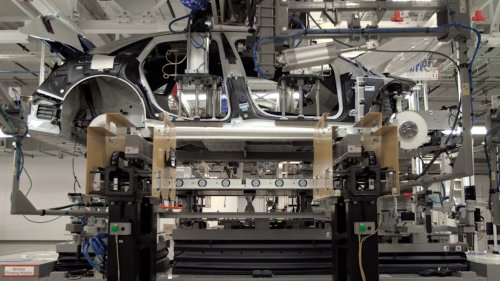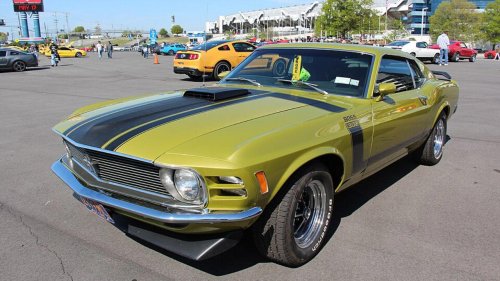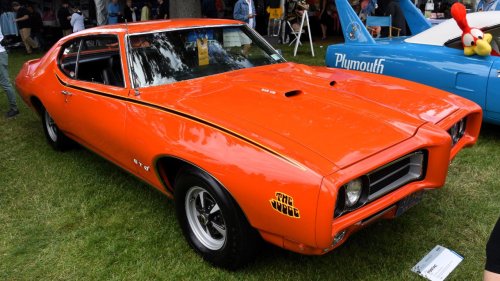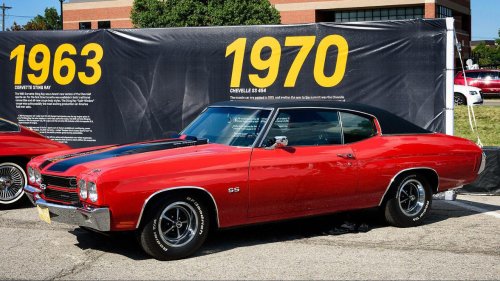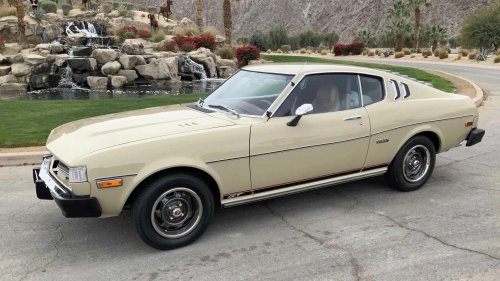
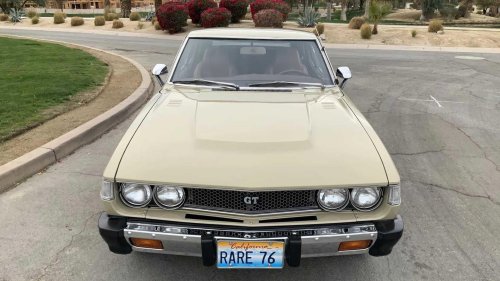
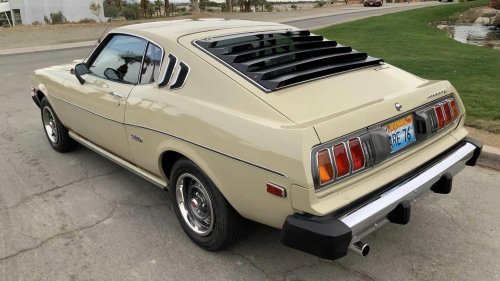
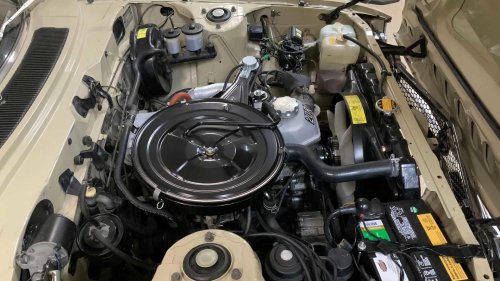
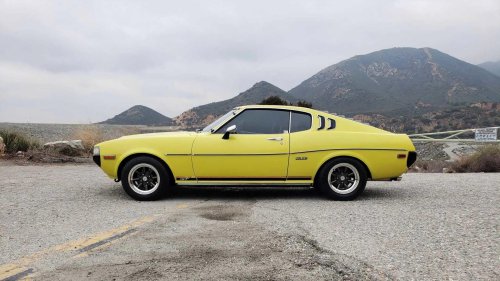
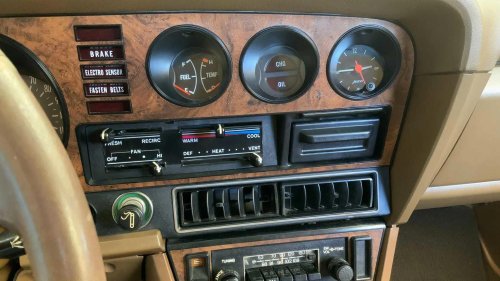
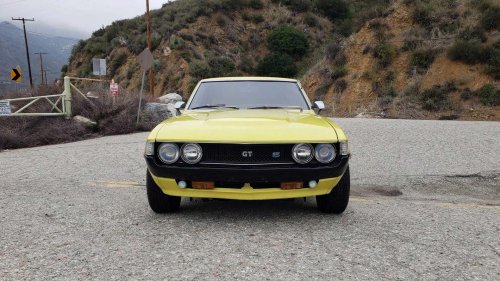
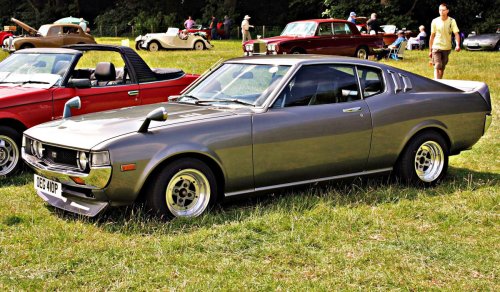



















It could have been seen as the worst timing ever. In the early '70s, government regulations, increased insurance costs, and a looming oil crisis all meant that the muscle car golden era was very quickly coming to an end. American manufacturers were suddenly struggling to keep the big displacement, big power dream alive, and many dropped out or just created underpowered caricatures of their former selves. This wasn't exactly the perfect environment for launching an all-new muscle-car-esque model from Japan, then.But thanks to a combination of fresh thinking, problem-solving, modern engineering, and maybe a bit of luck, Toyota managed to create a wannabe muscle car that was perfect for these turbulent times. This model looked great, and the fact that it had fairly puny power, even by '70s American muscle car standards, didn't matter at all – in fact, it helped make it an evergreen sports car that lived on for decades afterward. This is the story of the Toyota that desperately wanted to be a muscle car but ended up being an icon. The First-Generation Toyota Celica GT Always Wanted To Be A Muscle Car Bring A TrailerToyota first arrived in the USA in 1957, selling just a few hundred Toyopet Crown sedans in its first year. But if the 2000GT, Japan's first supercar developed with help from Yamaha, was anything to go by, this new-to-the-US company had big plans. One of these plans was to get into the muscle car business, which had gone through the roof in the swinging '60s. The only problem was, by the time Toyota launched its muscle car entry, it wasn't the '60s anymore, and the only things that would soon be swinging were the needles of petrol gauges to empty as oil dried up. The Celica Looked Fast... But It Wasn't Bring A Trailer Luckily, Japanese cars of that time weren't fitted with giant V8s. When the Toyota Celica arrived with its chiseled, muscle car looks, it had something much more humble under the hood in the shape of the Corona’s familiar 1.9-liter 8R engine. This mighty mill pumped out 108 horsepower, which would have been a joke in the '60s, but in the following decade, it wasn't that far off what many V8s were achieving.Add to this that the Celica only weighed 2,270 lbs – considerably less than most muscle cars – and you had a mini muscle car that could often keep up with the real thing. The free-revving engine was extremely reliable too, and the near 30 mpg fuel economy arrived in perfect time for the fuel crisis and rising gas prices. The GT Was Arguably The Coolest-Looking First-Gen Celica Bring A Trailer But Toyota wasn't finished. For the 1974 model year, Toyota introduced a GT model for the US with more aggressive styling. The stylish GT package cost just $220 over the standard ST, with a sticker price of $3,569, and included plenty of tasty goodies. There was a five-speed gearbox, wider steel wheels, a vinyl-wrapped steering wheel, rocker stripes, and even a slightly lower stance. How The Toyota Celica GT Took On The Muscle Car Establishment Bring A Trailer1975 Toyota Celica GT Specs Toyota quickly evolved the Celica to stay one step ahead of the competition. For its first year of production in the US, the Celica GT was fitted with a single-cam 2.0L inline-four (18R-C) engine. For 1975, the GT received the 95-horsepower 20R engine shared with the HiLux and Corona, an 18R stroked to 2.2 liters and fitted with an aluminum head. The first-gen Celica had independent front suspension and a four-link rear setup with separate dampers. There was even a GTV model with sports suspension, but that was a JDM special built only for the Japanese market.For 1975, the Celica Liftback was introduced too, which aped the looks of the Mustang Fastback, and came with fancy features such as fake woodgrain dash, and an 8,000 RPM tacho. But while some might argue the Ford muscle car had lost some of the purity in its design, Celicas seemed to unashamedly channel the Mustang's '60s cool in their styling. The Celica Liftback Looked Even More Like A Muscle Car Bring A Trailer The Liftbacks have a longer nose, which certainly helped to further mimic the looks of traditional muscle cars such as the Mustang. Look closely, and you can see similar 'vents' on the C-pillar, a nod to the Mustang Fastbacks of the '60s. The looks weren't the only thing that was inspired by classic muscle cars. Just like many muscle cars, which used parts from less exotic models, the Celica borrowed many mechanicals from the mass-produced Carina.To finish off the package, Toyota brought new levels of consistency and quality, due mainly to high-tech production techniques and ultra-modern factories. The Celica model was the first Japanese car to be built using state-of-the-art robotic assembly, with the result being excellent quality control. Here's How Much A Celica GT Is Worth Today Bring A Trailer Secondhand Prices Of The First Generation Toyota Celica GT 1975 Toyota Celica GT: $20,992 1976 Toyota Celica GT: $27,046 1977 Toyota Celica GT: $21,428 Source: Classic.comWhile some Japanese classics from the early '70s have skyrocketed in value – you'll likely need six figures for an original Nissan Skyline – the good news is that a first-generation Toyota Celica GT is relatively affordable in 2025. As you may have guessed, the Celica was a huge sales success, which also helped keep prices low. Toyota produced 17,572 for the ’71 model year, says Hemmings, which went up to 58,869 in ’73, then increased to 100,438 for ’76, and an impressive 163,714 units for its final year of production. Whereas most cars begin to peter out towards the end of the model cycle, Toyota bucked the trend with the Celica, but increased sales every year of its lifespan. First-Generation Celicas Are An Affordable Classic Bring A Trailer The cheapest model year, according to Classic.com, is 1975, whereas GT cars go for an average of $20,992. If you want to save money, go for the ST-spec first-generation Celica. A 1973 Toyota Celica ST goes for an average of $16,612, but the prices go steadily up from there. Just months after the millionth first-generation Celica rolled off the production line in June 1977, Toyota unveiled a new, second-generation model. Looking to the lucrative US market, Toyota increased the length and width to make the Celica a full five-seater and added more comfort and equipment. Second-Generation Celicas Are A Used Bargain Too Via: Pinterest The styling had moved on from the retro, pseudo-muscle car look, replaced by a more techy, squared-off aesthetic, but if that's not a problem, GT models of the second Celica are cheaper still. A 1978 Celica GT has an average price of just $10,175, according to Classic.com. The final, seventh generation of the Celica GT is also very affordable. Models from 2005 go for $11,600. But, that might not be the end of the story, with Toyota signaling that there may be another Celica in the works.