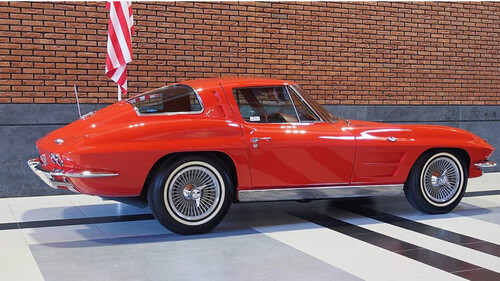
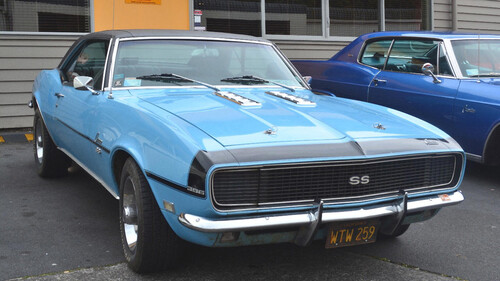
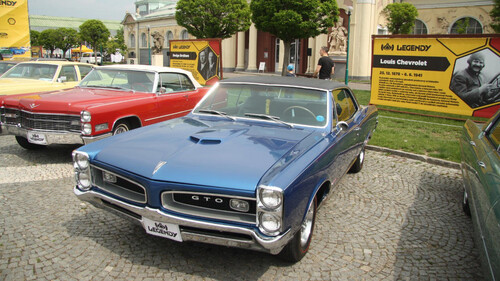
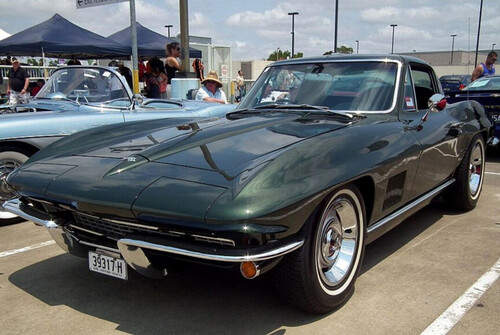
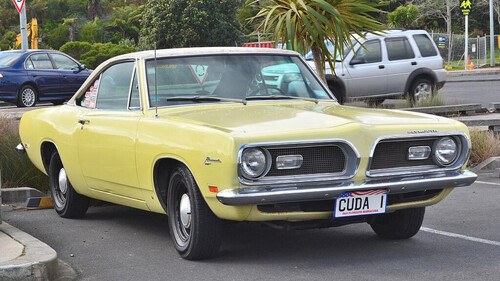
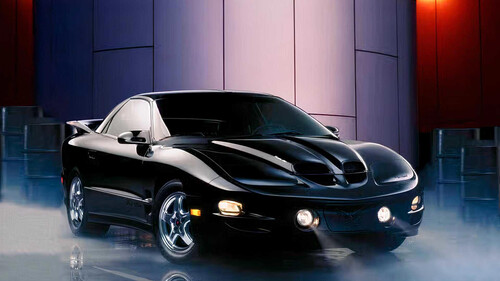
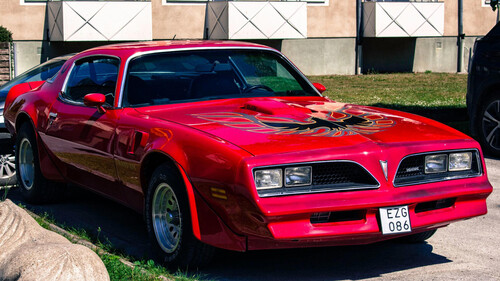
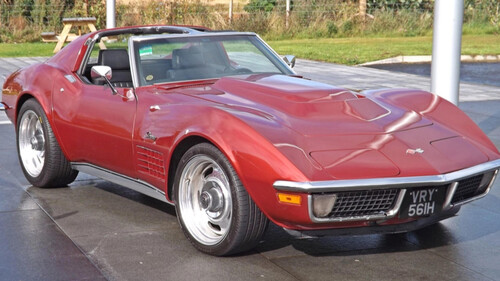
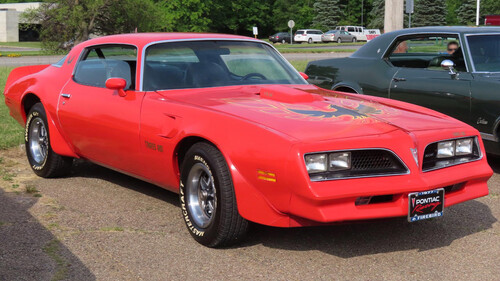
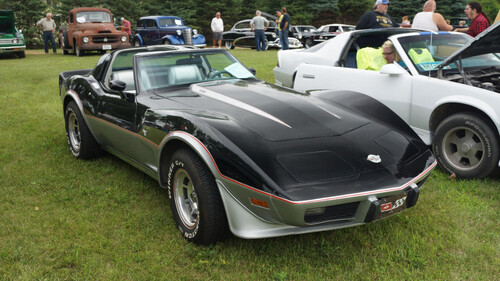
Enthusiasts in the 1970s racing scene were pretty surprised when their beloved muscle cars were outraced by a totally unexpected vehicle. But the Lil’ Red Express was smoking the competition at drag strips all across the nation. The success of this powerhouse actually led to the development of several iconic muscle trucks that collectors are eager to find.This street truck even outran the 1978 Chevrolet Corvette, making it a true underdog during the massive fuel crisis that caused regulatory crackdowns. Clever engineering made this race truck possible, as it skirted around mandates set by the EPA that had seriously limited muscle cars at the time. The Lil’ Red Express kept the racing spirit alive during the muscle car malaise era, from 1973 to 1983, which was sparked by the oil crisis. It also proved that pickup trucks could be built for athletic reasons that go beyond simply practical uses, such as towing and hauling, allowing them to attract different types of drivers. Regulations That Killed Muscle Cars Bring A TrailerArguably, the darkest period for American muscle cars was from 1973 to 1983 as increasing regulations and new mandates killed the raw power and V8 engine fun of the 1960s. The OPEC oil crisis is to blame as production was cut and prices skyrocketed. This led to fuel shortages as people lined up at gas stations for miles to fill up while facing inflation. This time period is known as the end of big blocks or as the giant high-compression big-block V8 engines were phased out or downsized. They were also replaced by much smaller engines that provided only a fraction of the power they once had. Engines were detuned to meet limits on pollutants, and manufacturers added primitive emissions equipment.This choked the engines to reduce power and led to severe drivability issues. Potent engines with over 400 hp were reduced to about 150. But this is partly due to a lack of sales. Buyers were turning away from high-performance muscle cars for more practical, fuel-efficient options. They were suddenly having to face new budgetary restrictions due to the cost of fuel. Plus, in 1975, the EPA mandated catalytic converters on all new cars. Early converters were incompatible with lead additives in standard gasoline, and all modern cars were required to run on unleaded fuel. How The Dodge Lil’ Red Express Got Around The Mandates MecumLuckily, clever engineers noticed a loophole that enabled them to build the Dodge Lil’ Red Express to keep muscle car dreams alive. Note that it's a Dodge truck, not a car, which is very important. The new emission standards requiring catalytic converters were written specifically for cars, not trucks! So the Dodge Lil’ Red Express was exempt! Technically, the rule stated that if the gross vehicle rating was 6,100 pounds or more, it didn't need a catalytic converter and wasn't subject to being certified with a full emissions cycle. You have Chrysler Engineer Tom Hoover, or the "Father of the Hemi," to thank for first noticing this loophole.This led to the first muscle truck being born with all of its raw power and glory. It’s pretty much a muscle car disguised as a truck with a convincing costume that was outracing the most impressive muscle cars left and right. It’s really a sight to see, with glossy red paint, two chrome functional exhaust stacks, wood paneling on the bed, and gold decals. Every model came with the Adventurer 150 package, which includes an Adventurer 150 badge on each front fender with the choice of a black or red interior. But the real magic is found under the hood with innovations that made it fast and efficient. For example, while slower trucks got about eight miles per gallon, this beast was getting 13 mpg! How The Dodge Lil’ Red Express Defeated Muscle Cars Bring A TrailerBefore 1978, the idea of a truck being faster than a Chevrolet Corvette or Pontiac Firebird Trans Am was unthinkable. But the Lil' Red Express brought the heat with its high-performance 360-cubic-inch 5.9-liter V8 engine with 225 horsepower and 295 pound-feet of torque. The police-interceptor-based engine features a Carter ThermoQuad four-barrel carburetor and borrows a hot camshaft from the 340-ci V8. Plus, it has a high aluminum intake manifold, a dual-snorkel cold-air induction system, specialized W-2 Cylinder heads, heavy-duty valve springs, heavy-duty main bearings, and a windage tray in the oil pan. The engine is paired with a heavy-duty A272 TorqueFlight three-speed automatic transmission with a modified 440 V8 valve body and high-stall torque converter.The Lil' Red Express can race from 0 to 60 mph in about 6.6 seconds with a quarter-mile time of roughly 15.7 seconds. It achieves a 0 to 100 mph time in 19.9 seconds, making it the fastest American-made production vehicle for the 1978 model year. Also, it has a top speed of 118.8 miles per hour.The 1978 Chevy Corvette delivers 220 horsepower and 260 pound-feet of torque with the optional L82 engine. It can accelerate from 0 to 60 mph in 6.9 seconds, reach a quarter mile in 15.8 seconds, and get to 100 mph in about 20.29 seconds with a top speed of around 126 mph.Then the 1978 Pontiac Firebird Trans Am cranks out 220 horsepower and 320 pound-feet of torque with the available W72 engine. It races from 0 to 60 mpg in about 6.6 seconds, covers a quarter mile in roughly 15.2 seconds, and can reach 100 mph in about 20.7 seconds with a top speed of 123 mph. Other Essential Dodge Lil’ Red Express Racing Components Bring A TrailerThe 1978 Dodge Lil' Red Express has a gross vehicle weight rating of 6,050 pounds, thanks to its short wheelbase D150 step-side design. It was intentionally built this way to get above the 6,000-pound threshold to avoid the catalytic converter mandate. It also rides on a 9 ¼-inch rear axle, Sure-Grip limited-slip differential, and features 3.55:1 rear gears. Up front, the suspension has heavy-duty coil springs and an anti-sway bar. These components, along with the rear stabilizer bar, keep the truck planted with responsive handling during acceleration. This truck also has an aggressive stance with 15x7-inch front wheels paired with GR60x15 tires and wider 15x8-inch rear wheels and LR60x15 tires to enhance rear-wheel traction. Standard power-assisted front disc brakes are paired with heavy-duty rear drum brakes. Plus, it uses standard Street Hemi oval mufflers and a H-pipe or crossover configuration to stabilize back pressure. The hood scoop or dip was designed to improve aerodynamics, but stands out for its reputation to collect rainwater.In 1979, the Dodge Lil’ Red Express faced stricter EPA regulations. It was required to have a catalytic converter and run on unleaded fuel. So, it features a milder camshaft that slightly reduces its legendary performance. Also, while the 1978 model has a speedometer that goes up to 100 mph, the 1979 model goes up to only 85 mph.The interior was available with bench or bucket seats. It also featured the Tuff or racing-oriented Dodge muscle car steering wheel with three spokes. The truck was a bit luxurious with power steering, a standard radio, available air conditioning, cruise control, and available sliding rear cab glass. Why Collectors Jump On The Dodge Lil’ Red Express Bring A TrailerUnfortunately, the Dodge Lil Red Express is an extremely rare truck. It was only in production from 1978 to 1979. During this time, only 7,309 models were produced. Sales of the hot rod truck were low due to high gas prices. Plus, the truck itself was seen as an expensive novelty option instead of a practical pickup truck. Strict emissions laws also prevented it from being sold in certain states. But it remains popular among collectors due to its unique heritage as the world’s first muscle truck with the appearance of an over-the-top big rig with iconic, bright “Red Canyon” paint that’s paired with white wheels. Because it got around emissions regulations, it has a sense of nostalgia and rebellion that befits the muscle car era.The value of a Dodge Lil Red Express in fair condition ranges from $15,000 to $20,000. If the condition is good and the truck is running, it could be worth between $25,000 to $300,000. But if it’s considered to be in excellent or show-ready condition, then it’s worth between $35,000 to $45,000. Then pristine or models in mint condition are worth over $50,000. Value for the Dodge Lil Red Express has remained steady over the past few years, making it an accessible piece of classic Mopar heritage. But it’s pretty difficult to find a model in top-quality condition. Also, incomplete or project trucks can be stressful to take on due to the truck’s rarity. Specific parts like the vertical exhaust stacks, oak wood bed planks, and original gold decals are rare and expensive. But mechanical parts like the 360 cubic-inch LA V8 engine and 727 LoadFlite transmission are still abundant. However, they still require specialized maintenance, while preventative maintenance, such as fluid changes and replacing spark plugs, can be done at home.Source: HotCars, Hagarty, Classic