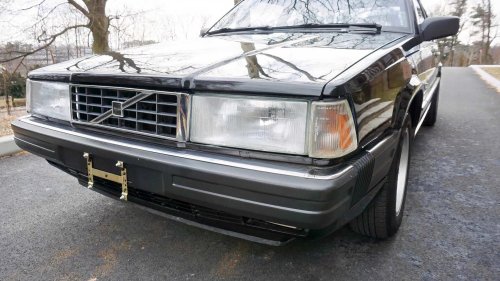
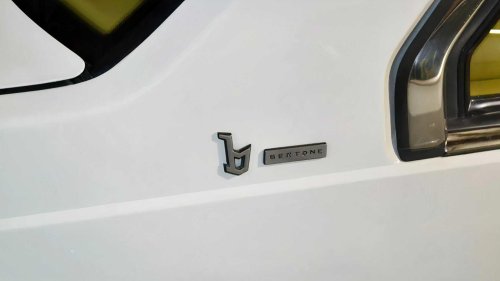
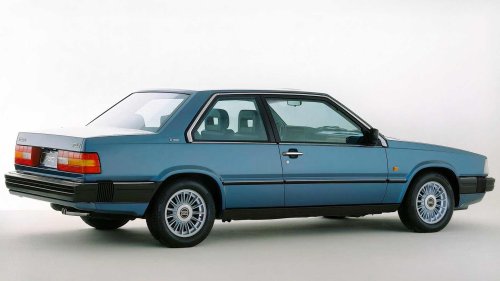
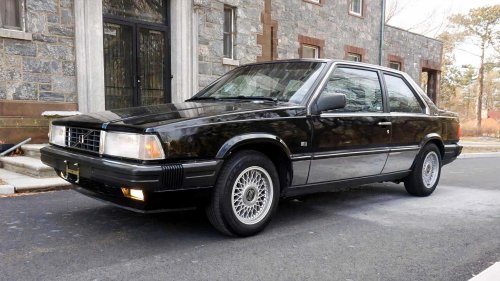
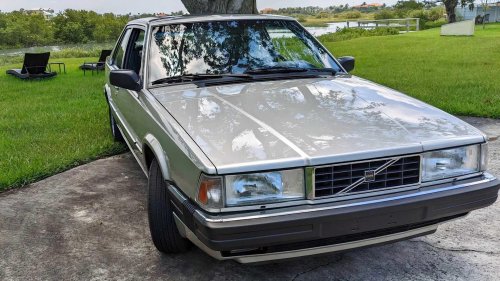



















In a world where automakers chase performance credentials the same way kids chase fun, Volvo is a sort of composed grown-up better known for safety and comfort. It certainly isn’t the sort of brand whose reputation screams sports car pedigree, but we must give credit where credit is due and point out its extensive involvement in the British Touring Car Championship during the nineties. Although Volvo’s racing efforts back then were actually quite successful, that’s still not quite enough to make it a serious contender for anyone’s list of performance-focused names in the auto industry. In fact, its reputation (albeit solid) was built on something else entirely. Not Exactly A Sports Car Brand Bring a TrailerSafety has been at the core of Volvo’s business philosophy ever since day one, and innovations such as the three-point seat belt, side airbags or side impact protection systems can all be attributed to the Swedish firm. These things saved countless lives and ought to be appreciated, for sure, but they don’t exactly inspire very much in terms of sportiness. And with Volvo capping top speeds on all its new cars at 180 kph (112 mph) from 2020, it seems like the brand has absolutely no interest in being associated with performance anytime soon. That’s not to say it didn’t build some rad sleepers in the past, though. The Volvo Sleeper With Italian DNA Bring a TrailerOne such specimen is what we’re here to talk about today, lesser-known among enthusiasts but still incredibly cool for a number of reasons. For starters, it was developed in collaboration with Bertone, the famous Italian styling firm credited with designing automotive beauties such as the Lamborghini Miura and Lancia Stratos. Volvo was looking to replace the aging 262C (another Bertone design) by the mid-eighties, so it reached out to the stylistic geniuses down in Turin, Italy once again and tasked them with creating a sleek two-door coupe. The result looked tame on the outside, but it could turn into a real treat with the right engine option under the hood. Volvo 780: Performance In Disguise VolvoVolvo released the 780 in 1985, leaning heavily toward elegance in a way that was understated rather than flashy. Nothing gives away the car’s performance potential at first glance, so you’d be forgiven for thinking it’s just another luxury-oriented coupe without much to offer in the way of sporty driving. And, admittedly, that’s precisely what the 780 was during the first few years of its production run, commonly powered by a 2.8-liter V6 with around 145 horses on tap. A 2.4-liter turbodiesel inline-six was also available on some European markets, but it only offered 127 ponies to play with and was thus equally uninspiring. Things would change from 1989 onward, though.That’s when Volvo introduced a fresh engine option for the 780, much more exciting than the standard 2.8-liter available since launch. We’re talking about the B230FT, a turbocharged inline-four that gave the unassuming coupe a much sportier edge. Combine its capability with the 780’s rear-wheel-drive platform, and you’ve got yourself a pretty interesting sleeper to enjoy without drawing much attention. Although the manufacturer offered an even better two-liter turbo (B200FT) with 200 horsepower later on, it was only available in Europe for a short time before the model was discontinued. So let us focus on the B230FT launched in ‘89 and see what it brought to the table. A Sports Car In Behavior, Not In Branding Bring a TrailerAt first, the intercooled 2.3-liter motor came with 175 hp and 187 pound-feet of torque, made possible by either a Garrett T3 or Mitsubishi TD05 turbocharger. But Volvo went a step further in 1990, raising the engine’s output to 188 ponies and 206 pound-feet of twist with upgraded turbo hardware and various other tweaks. A smaller turbine reduced spool-up time and turbo lag, while the redesigned B230FT’s output figures made it the most powerful engine produced by Volvo up to that point. It was no undercover Ferrari killer, of course, but it did pack enough of a punch to surprise those who underestimated the 780 based on its looks. Sadly, though, the model was only sold with an automatic gearbox in the States, even if some European markets also got a four-speed manual.Its sporty genetics didn’t come from the powertrain alone, mind you, because a significant chassis upgrade took place in 1988. Before then, the 780 used a rigid live axle at the rear. Nothing out of the ordinary for a luxury coupe that didn’t openly chase performance. But the car’s handling became far more engaging with the introduction of independent multi-link rear suspension, which made it feel stable and firmly planted in conjunction with its long wheelbase. It was surprisingly fun to drive, all while offering the premium feel typical of a vehicle designed and assembled by Bertone. The interior featured extensive use of leather and genuine wood trim, emphasizing comfort and elegance without any real hint at the 780’s performance. Why It Still Doesn't Get The Credit It Deserves Bring a TrailerEven though the model has a small but dedicated cult following, it generally flew under the radar and remained woefully underappreciated to this day. That has to do with a few different factors, one of them being the car’s rarity and short production run, which ended following the model-year 1991. Only around 8,500 units have been produced during this time, and way fewer had the 2.3-liter turbo that really spiced things up in terms of performance. Additionally, there was a clear discrepancy between Volvo’s reputation and sporty coupes, so the 780 wasn’t backed up by brand image in any meaningful way.Pricing didn’t make it that accessible, either, so the Bertone-designed sleeper was easily overshadowed by the competition. But one can hardly deny its appeal, with that sweet Volvo build quality, Italian genes and stealthy mechanical brilliance all mixed together in the most cohesive way. Clean 780s aren’t all that common on the second-hand market today, but you might still be able to snatch one for less than $10,000 if you do come across it. That comes to show just how underrated this thing really is, while also meaning you can enjoy all its sleeper charm on a budget when you find one for sale. And we really can’t complain about that last part, can we?