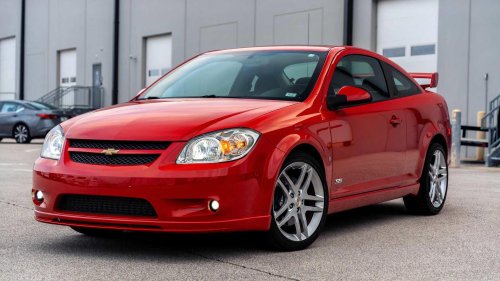
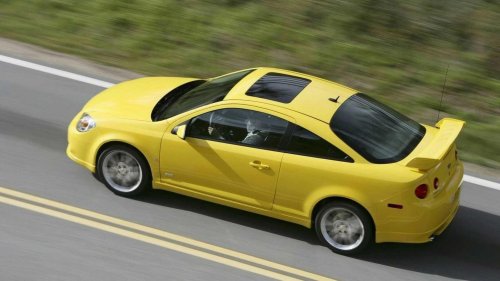
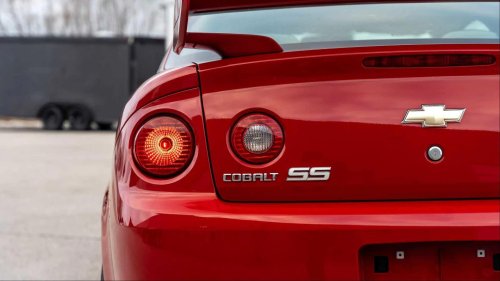
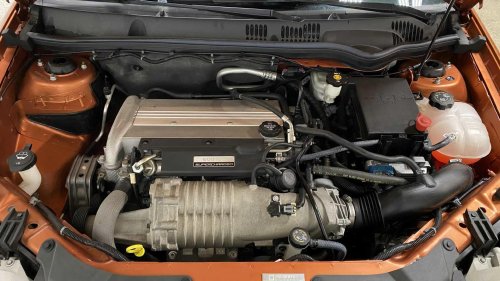
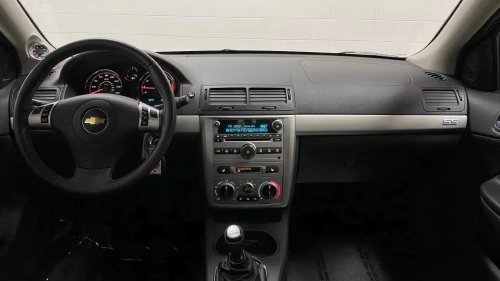
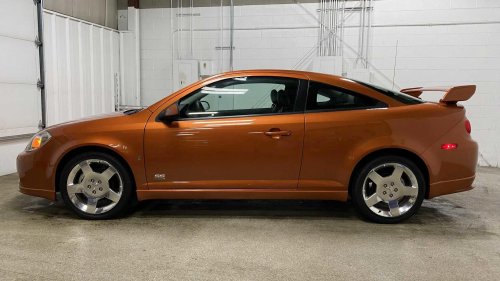
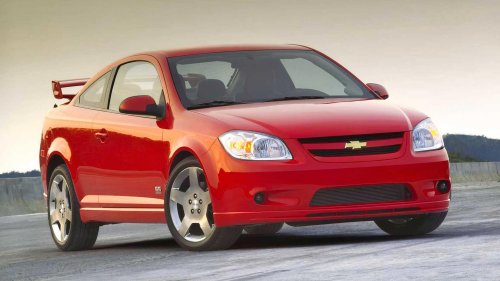
American auto manufacturers have made some of the most incredible performance cars of all time. Even in recent years, Chevrolet has made purebred supercars in the form of the C8 Corvette Z06 and ZR1; Ford has given us the GT350, GT500, GT, and, most recently, the Mustang GTD. Dodge is in the middle of an identity crisis, but it still gave us the Hellcat, Demon, and the legendary Viper. These nameplates are iconic and have been incredibly successful, to the point that even non-car people are likely to recognize them.That said, there have been a few forgotten performance cars in the last 25 years. The Pontiac G8 GXP, the Chevrolet SS, Neon SRT-4, and even the Chrysler Crossfire were all excellent offerings that lived exceptionally short lives for one reason or another—they all have a story. This particular American performance car is most likely to be remembered by those of us who played Need for Speed: Most Wanted back in 2005. Despite its presence in such a beloved game and its incredible speed and performance credentials, this car hasn't really remained in the enthusiast conversation. The Cobalt SS Was Perfected Right Before It Disappeared Bring a TrailerInexplicably, it feels as though the Cobalt has been erased from the collective consciousness. Perhaps it's because the Cobalt only existed for 6 model years (2005-2010), or perhaps because its predecessor, the Cavalier, was around for nearly 25 years, and whose name carries more recognition. Either way, it's still more noteworthy than its milquetoast and generally unreliable successor, the Cruze, which was around for only a decade before Chevrolet abandoned that segment entirely. As I mentioned, many of us millennial enthusiasts probably remember the Cobalt SS from Need for Speed: Most Wanted, in particular, as it was arguably the best starter car in the game. That original Cobalt SS in Need For Speed was supercharged, but there was also a naturally aspirated version and later the insane turbocharged model that is still fast by today’s standards.ChevroletThe turbocharged version was only sold from 2008 to 2010, but it’s really the one to have. Its 2.0L turbocharged engine shoved an astonishing 260 horsepower and 260 pound-feet of torque down your throat (that's 4 horsepower more than the MK6 Golf R!) and was genuinely competent around a track. It’s up 55 horsepower and 60 lb-ft from the supercharged version that came before it, and it even briefly held the Nürburgring lap record for FWD cars with a time of 8:22.85. It also held Car and Driver’s FWD lightning lap record for a decade, not beaten until 2018, when the FK8 Civic Type R beat it by 9.1 seconds. Regardless, holding a lap record at the Nurburgring for any amount of time should lend more than enough credibility to the Cobalt SS, but Chevy still let it walk off into the sunset in 2010 and never ventured down that path again. From Supercharged And Swift To Turbocharged Terror Bring a TrailerBefore we discuss the whining and whooshing of the true SS models, let’s talk about this naturally aspirated version. Is it a true SS? Well, Chevy struggled with that question, but landed on no in the end. It wasn’t offered until 2006 and used a larger-displacement engine to compensate for the lack of forced induction. The 2.4L I4 produced 171 horsepower and 163 pound-feet of torque, which isn't nearly as much as the forced induction versions, but given the base 2.2L in the non-SS Cobalt never made more than 155 horsepower, it was a solid upgrade. It had the same 5-speed manual as the base cars, and while it did have upgraded suspension, it wasn’t as performance-oriented as that offered on the “true” SS models. In the end, Chevy dropped the SS moniker for 2008 and called it the “Cobalt Sport”.Bring A TrailerThe original supercharged model was sold from 2005 to 2007 and featured a supercharged 2.0L engine that produced 205 horsepower and 200 pound-feet of torque. Despite not being as much of a brute as the turbocharged version, 200 horsepower was quite a healthy figure for a car weighing just over 2,900 lbs. It’s quoted 0-60 MPH time was 5.9 seconds, but Car and Driver managed a 5.7 during their testing. You could even option a limited-slip differential if you opted for the G85 package, which also added Recaro seats. The turbocharged version, sold only from 2008 to 2010, made 260 horsepower and 260 pound-feet. This means it could accelerate to 60 MPH in just 5.5 seconds and, with the Brembo brakes available only on this version, could stop well enough to put down that record-breaking Nurburgring lap time. Chevy’s Final Attempt At A Small Performance Car Bring A TrailerAs you may have come to expect when talking about American sedans, the Cobalt SS was Chevy’s final attempt at a small performance car. Other larger, V8-powered, and more traditionally American performance options have come and gone since the Cobalt, but General Motors has yet to revisit this market segment. After the Cobalt was replaced by the Cruze, Chevy never again offered a performance trim. The most interesting versions of the Cruze were either the first-generation manual diesel or the second-generation manual hatchback, neither of which had any performance credentials. The only thing that came close from General Motors (besides the Saturn Ion Redline) was the Buick Regal GS, which offered a manual with a 270-horsepower (detuned to 259-horsepower from 2014-2017) turbocharged four-cylinder, though it did not come with an LSD and was a much larger midsize sedan. It’s a shame, too, because the Cobalt SS is proof that GM knows how to make a competitive compact performance car, but they likely never will again. A Segment Abandoned By American Automakers Bring A TrailerGM isn’t exactly alone in its abandonment of small performance cars. Chrysler was done trying after it stuck the 3.6L Pentastar V6 into the Dodge Dart and Chrysler 200, though they weren’t performance-oriented beyond some extra cylinders. It seems like Chrysler is kind of done trying in general, but that’s a different conversation. As an owner of a 2016 Focus ST and someone who’s spent hours behind the wheel of a Fiesta ST, Ford absolutely crushed it in this segment, but they left that behind in 2018. Well, they made another generation of the ST hot-hatches in Europe, but we never had the privilege of spending our money on them here in North America.ChevroletIt’s depressing because American car companies can create fizzy little cars with good power, good dynamics, and decent reliability, but consumers just didn’t buy enough of them. It’s actually more the case that American companies dropped sedans and hatchbacks faster than the White Sox eliminated themselves from playoff contention in 2024. And at the end of the day, you can’t make a performance version of a car you don’t sell. That’s why today you see so many performance variants of crossovers and trucks, because that’s just what consumers buy now. Thus, the Cobalt SS Turbo only existed for three model years. It certainly deserved more, but because nobody gives it much attention, you can pick one up for less than $10k all day long. And at least that's a win for enthusiasts.Sources: Car and Driver, Cars and Bids















!['What the [Expletive] Is That?:' Customer Complains Car is 'Shaking Like Crazy.' Then His Mechanic Takes a Closer Look At The Tire](https://cdn.topcarnews.net/thumb/id/aHR0cHM6Ly9jZG4ubW90b3IxLmNvbS9p-bWFnZXMvbWdsLzQwRTk0cS9zMS9tYXpk-YS1taWF0YS1vbi1zdHVkZGVkLXdpbnRl-ci10aXJlcy10ZXN0LmpwZw/79e14514a276098b50ad4c871b42cc60.jpg?t=20261005&post_id=3458)
!['What the [Expletive] Is That?:' Customer Complains Car is 'Shaking Like Crazy.' Then His Mechanic Takes a Closer Look At The Tire](https://cdn.topcarnews.net/thumb/id/aHR0cHM6Ly9jZG4ubW90b3IxLmNvbS9p-bWFnZXMvbWdsL01rWVFNNC9zMS9pbWdf-ODY0Mi5qcGc/6f1ec4b4318a8b257cc3e8a877ffe35f.jpg?t=20261005&post_id=3458)
!['What the [Expletive] Is That?:' Customer Complains Car is 'Shaking Like Crazy.' Then His Mechanic Takes a Closer Look At The Tire](https://cdn.topcarnews.net/thumb/id/aHR0cHM6Ly9jZG4ubW90b3IxLmNvbS9p-bWFnZXMvbWdsL2xFM3dsVy9zMS9pbWdf-ODY0OC1jb3B5LmpwZw/347bc674f00c1700fd29d2c57e842287.jpg?t=20261005&post_id=3458)
!['What the [Expletive] Is That?:' Customer Complains Car is 'Shaking Like Crazy.' Then His Mechanic Takes a Closer Look At The Tire](https://cdn.topcarnews.net/thumb/id/aHR0cHM6Ly9jZG4ubW90b3IxLmNvbS9p-bWFnZXMvbWdsL2JnMTJHdi9zMS9tYXpk-YS1taWF0YS1vbi1zdHVkZGVkLXdpbnRl-ci10aXJlcy10ZXN0LTAxLmpwZw/93bb67d2c8cc97fba8d2ff15175061ca.jpg?t=20261005&post_id=3458)
!['What the [Expletive] Is That?:' Customer Complains Car is 'Shaking Like Crazy.' Then His Mechanic Takes a Closer Look At The Tire](https://cdn.topcarnews.net/thumb/id/aHR0cHM6Ly9jZG4ubW90b3IxLmNvbS9p-bWFnZXMvbWdsL3BiM3E5by9zMS9tYXpk-YS1taWF0YS1vbi1zdHVkZGVkLXdpbnRl-ci10aXJlcy10ZXN0LTAyLmpwZw/99624eda68d3f45fcbd7939f0443e37f.jpg?t=20261005&post_id=3458)
!['What the [Expletive] Is That?:' Customer Complains Car is 'Shaking Like Crazy.' Then His Mechanic Takes a Closer Look At The Tire](https://cdn.topcarnews.net/thumb/id/aHR0cHM6Ly9jZG4ubW90b3IxLmNvbS9p-bWFnZXMvbWdsL1hCNlBYVi9zMS9tYXpk-YS1taWF0YS1vbi1zdHVkZGVkLXdpbnRl-ci10aXJlcy10ZXN0LTAzLmpwZw/544d73fd805018640d3a35252e9dbb76.jpg?t=20261005&post_id=3458)