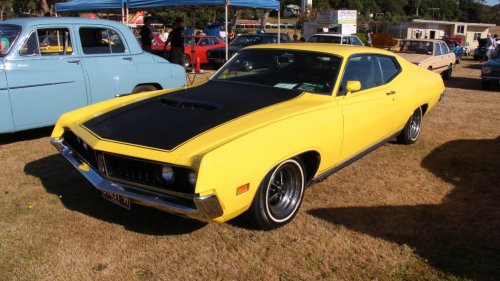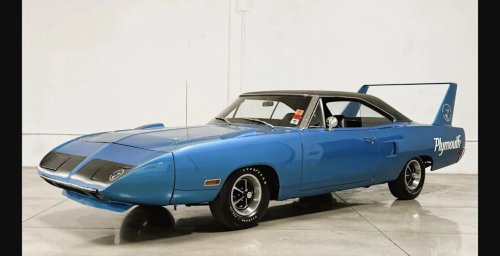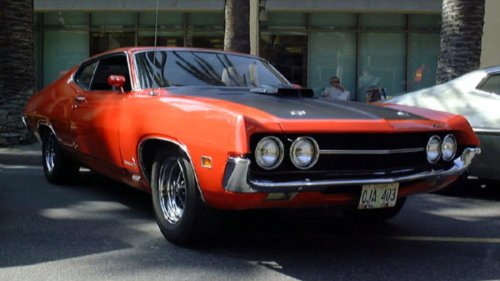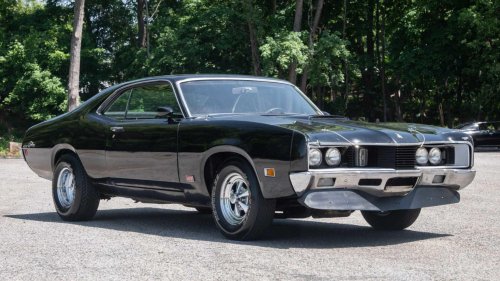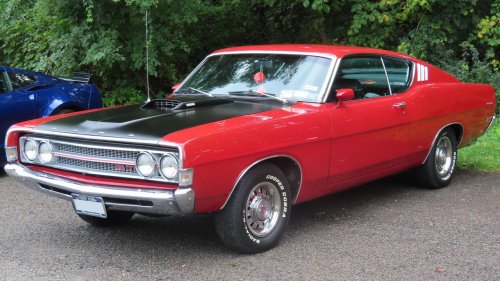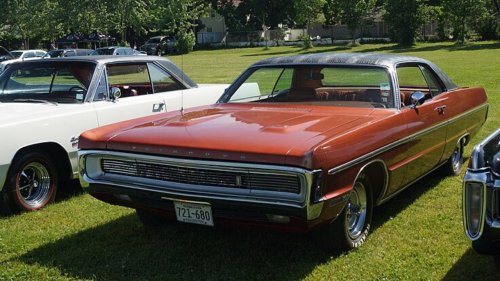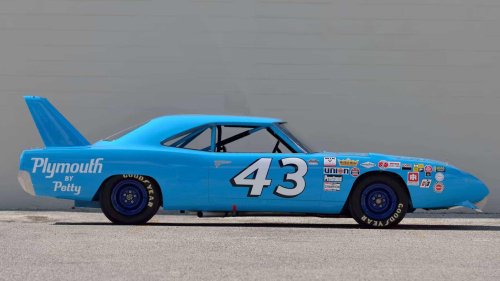
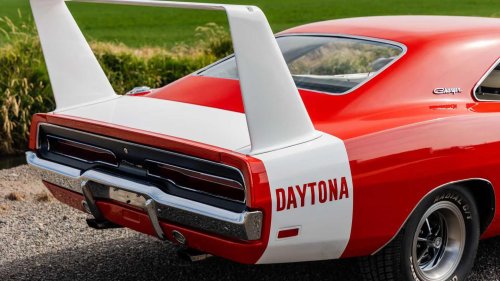
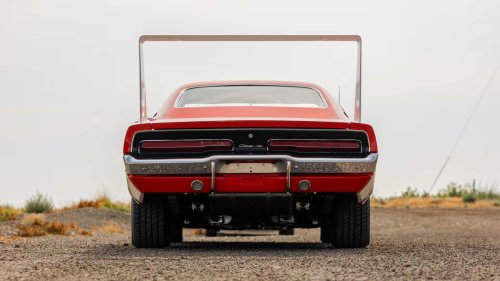
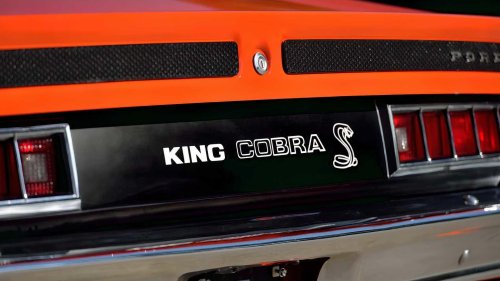
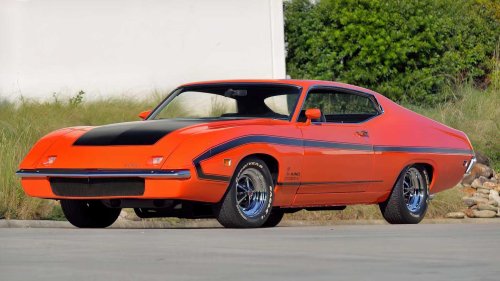
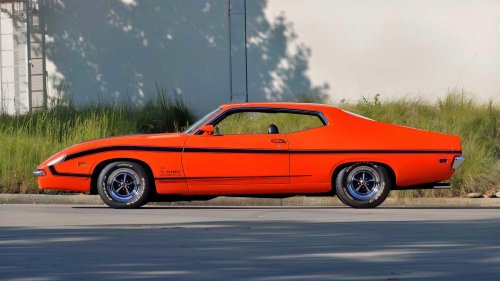
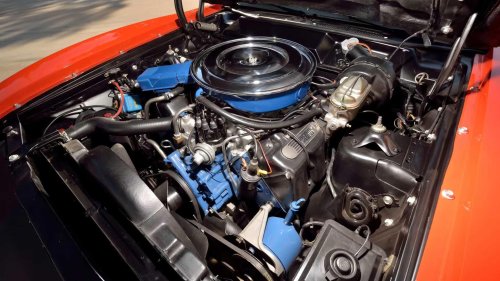
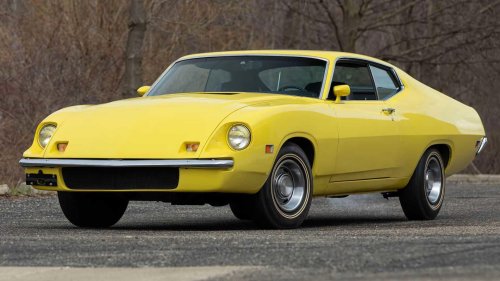
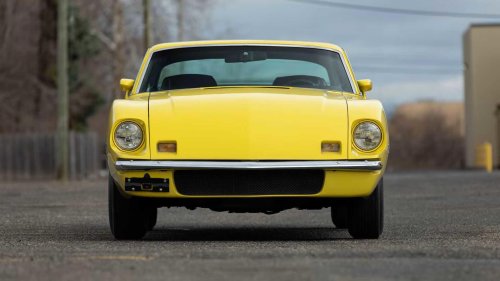
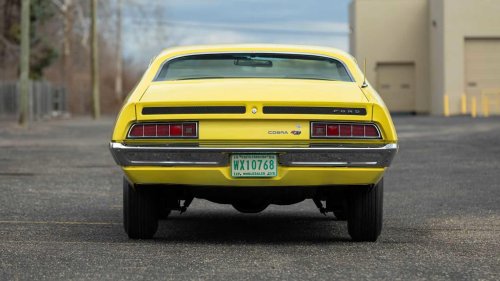
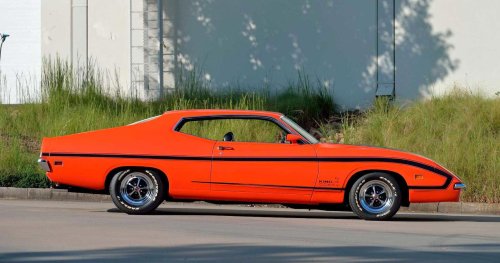



















History usually remembers the winners. The iconic muscle cars that dominated, the machines that defined eras, and the legends that still headline auctions decades after they emerged. However, for every muscle car legend, there's another story hiding in the background. A car that showed promise, pushed boundaries, but sadly disappeared before it ever got its shot.In the '60s, manufacturers understood that muscle cars earned their stripes on the drag strip or the high banks of NASCAR, and the relentless pressure to win led to the creation of some truly extraordinary machines. However, while many of these cars became heroes that we still celebrate today, some slipped through the cracks and never made it to the spotlight, even though they had all the necessary ingredients to dominate. The Ford at the center of this story is one of those creations as it had the potential to change everything, but it only lasted for a year and barely made it past the prototype form. Today, it stands tall as one of the American auto industry's greatest what-might-have-beens. NASCAR Was The Ultimate Proving Ground MecumNASCAR's origins were humble, but by the '60s, it was already formalized as a sport and had attracted the full attention of Detroit's biggest players, who knew that success in the oval translated into more showroom traffic. For most automakers, NASCAR was a brutal laboratory where they established their performance credentials in front of millions.When a car won, it was seen as a reflection of what buyers could own. Homologation rules reinforced that connection by ensuring that what worked on track eventually made its way into production models, leading to some of the most powerful production cars ever built. But by the late '60s, teams realized airflow mattered just as much as horsepower. The Aero Wars That Changed EverythingMecumIn NASCAR's early days, muscle cars relied heavily on brute force to win. The phrase "there's no replacement for displacement" reigned supreme, and the most powerful cars typically flew past the checkered flags first. However, towards the end of the 1960s, engineers realized that the answer wasn't just more power, as traditional designs were clearly holding cars back at high speeds. With engines pushed to their absolute limits, the battle moved from the cylinder heads to the wind tunnel, making sleek aerodynamics the new currency of speed.Ford's 1969 Torino Talladega was an early breakthrough, using subtle reshaping, a flush grille and a long, sloped nose to gain an advantage. These changes worked. Speeds increased, lap times dropped, and the Talladega absolutely dominated, winning multiple races in the 1969 season and helping Ford secure the 1969 manufacturer's title. The Talladega's dominance pushed Chrysler to go even further, setting the stage for a radical escalation that eventually birthed the "Winged Warriors." Chrysler's Aero Revolution Left Everyone Behind MecumFord's dominance with the Talladega left Chrysler scrambling for answers. To claw back control, Chrysler responded with a car that looked like nothing else on the grid: the vaunted 1969 Charger Daytona. The Charger Daytona's extended nose and massive rear wing were engineered to dominate at high speeds, and the payoff was pure, unadulterated velocity.In March 1970, Buddy Baker became the first driver to eclipse 200 mph in a closed-course test at Talladega while driving a winged Dodge Daytona Charger, and with the similarly equipped Plymouth Superbird taking over as Mopar's NASCAR weapon for that season, Ford's racing legacy faced an existential threat. The Blue Oval brand knew it had to respond appropriately.Mecum Ford knew it needed a radical, nuclear-grade response that would make the winged Mopars look like yesterday's news, and engineers quickly began working on a car that prioritized aerodynamics from the ground up. The plan was to take the upcoming 1970 Torino body style and transform it into an aerodynamic predator, and the result was unlike anything the racing world had ever seen. 1970 Ford Torino King Cobra: Ford's Secret Weapon That Almost Rewrote NASCAR History MecumEnter the 1970 Ford Torino King Cobra, Ford's answer to Mopar's winged warriors and the star of the show today. While the world was staring at the towering wings of the 1969 Charger Daytona and 1970 Plymouth Superbird, Ford was perfecting the curve.The King Cobra was a radical departure from the standard 1970 Torino. Ford chose to integrate aerodynamic improvements into the body itself rather than relying on bolt-on solutions, as was the case with the Charger DaytonaMecum The most significant change was the sloped, convex nose that extended the car by roughly five inches, designed to slice through the air and pin the front end to the track. To keep the profile slippery, Ford ditched the standard Torino grille for a bottom-breather intake tucked under the bumper, feeding air into the radiator without catching the wind. Even the headlights were recessed into deep scoops to kill turbulence.Unlike the Chrysler winged warriors, which relied on large rear wings for stability, the King Cobra relied more on shaping airflow across the entire body. This approach was more subtle than Chrysler's, but no less ambitious. The Big-Block Power That Was Supposed To Back It Up MecumAerodynamic efficiency was key to the Torino King Cobra's speed-tuned setup, but it was only a single gear in the performance machinery. Ford planned to pair its streamlined body with some of the largest and most powerful engines in its lineup, including the 429 Cobra Jet (CJ), the Super Cobra Jet (SCJ), and the Boss 429. Given that the 429 Cobra Jet and Super Cobra Jet were already production engines, they were the most likely candidates for any street-bound King Cobra. The Cobra Jet offered a more balanced setup while the Super Cobra Jet pushed things further with reinforced components built for sustained high-speed use.The crown jewel was the legendary Boss 429, the intended heart of the race-spec models. First appearing in the flagship Ford Mustang in 1969, the Boss 429 engine was developed specifically for NASCAR and featured a hemispherical design that allowed for high airflow and strong high-rpm performance. Paired with the King Cobra's slippery design, all three engine options could have created a formidable package on NASCAR's fastest tracks. Why Almost Nobody Ever Saw One MecumThe King Cobra was a victim of timing, politics, and a brutal change in the NASCAR rulebook. For all its promise, the King Cobra never made it past the prototype stage, and only a handful were built, most commonly cited as three. Part of the problem was technical. The aggressive aerodynamic design created cooling challenges, with airflow restrictions making it harder to keep the engine at optimal temperatures. Stability was another concern. During secret testing, drivers reported terrifying rear-end lift, and without extensive testing, it was difficult to predict how the car would behave at sustained high speeds.The bigger issue and what became the King Cobra's final nail in the coffin was a lethal rule change. For 1971, NASCAR raised the homologation minimum to 3,000 units and limited the aero cars to 305-cubic-inch engines. Faced with a neutered racing future and a massive new production quota, Ford executive Lee Iacocca axed the King Cobra program before a single customer car left the factory, leaving only a trio of survivors to tell the tale. From Forgotten One-Year Prototype To Collector Legend MecumNormally, canceled prototypes were destined for the scrap heap, but the Torino King Cobras escaped the crusher. Today, it is a holy grail muscle car for Blue Oval fanatics. It never raced, never reached production, and never built a legacy in the traditional sense, but it holds a unique place in the collector world.Because so few exist, auction appearances are rare, and when they happen, they draw attention from serious collectors who understand the car's place in history. The highest recorded sale of a Torino King Cobra was about a decade ago in 2016, when an unrestored yellow example with just 831 original miles hammered away for a whopping $577,500. This particular unit was powered by a 370-hp 429 Cobra Jet engine and is the only King Cobra with a production Torino VIN. The Boss-429-powered King Cobra also went up for auction in 2019 and sold for $192,500, which many enthusiasts might consider to be a bargain for such a unique story.MecumThe Torino King Cobra isn't remembered for wins or records. It's remembered for its potential. It represents a moment when innovation pushed too far, too fast, and regulations stepped in, and in some ways, that makes it even more compelling than the cars that actually made it to victory lane.Sources: Hemmings, Mecum Auctions