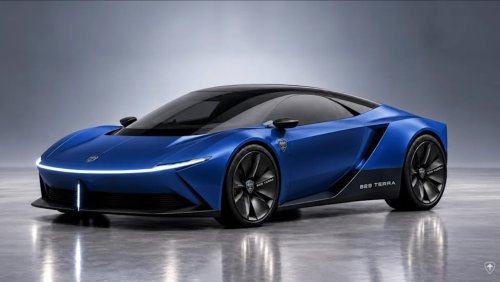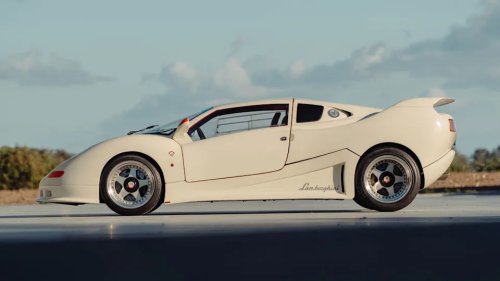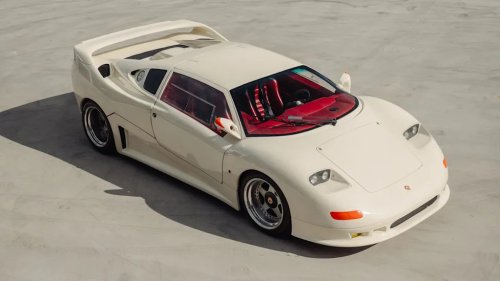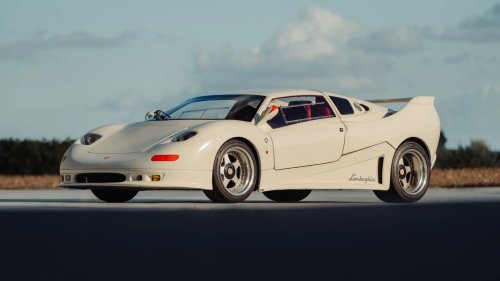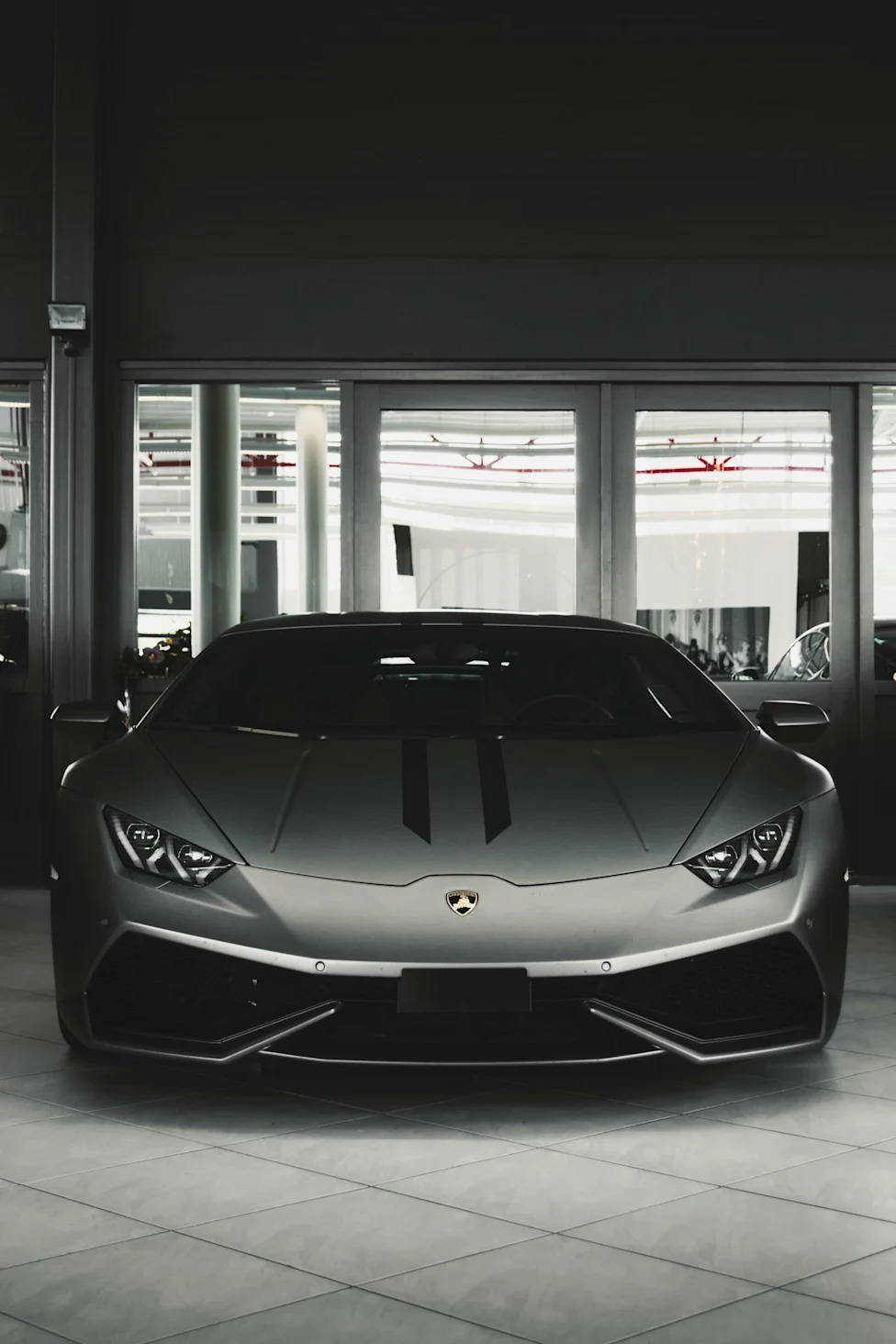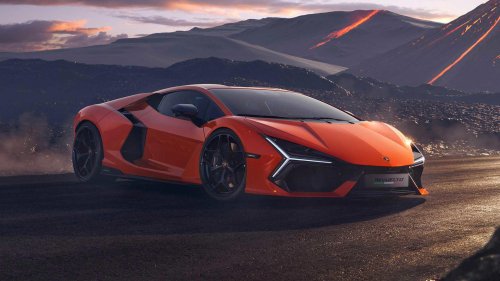
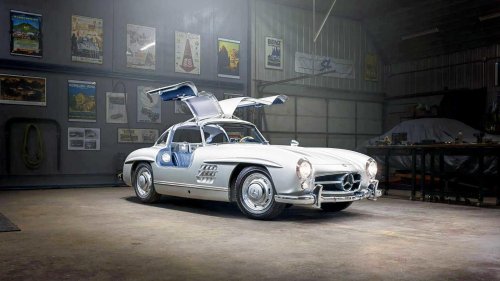
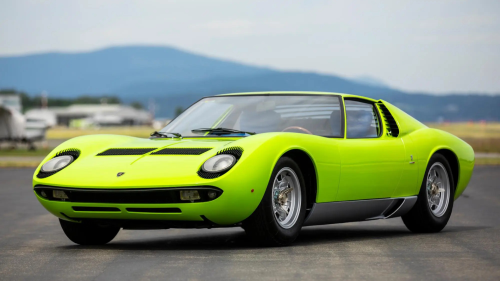
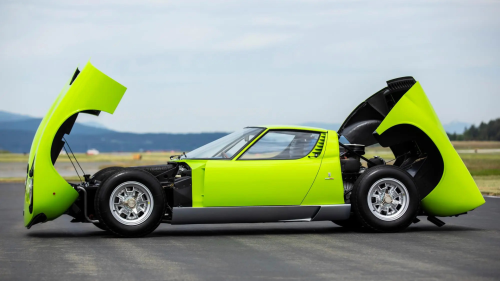
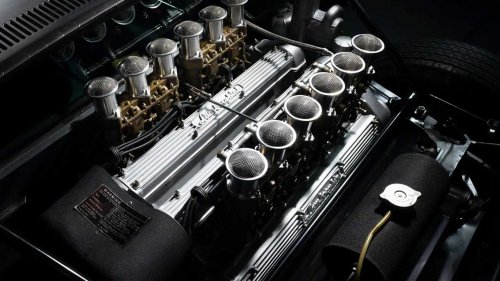
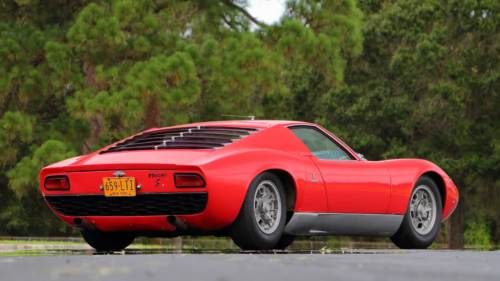
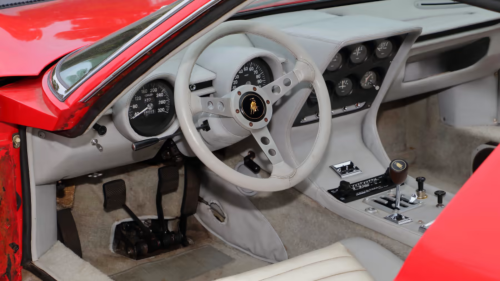
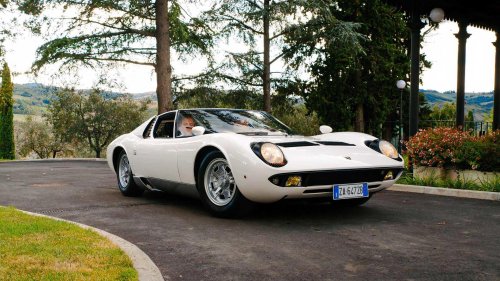



















Supercars may mainly function as a prop for a music video or Instagram post these days, but they actually have a real purpose. A supercar (and later hypercar) has always been the pinnacle of motoring, often taking tech straight from motorsport and then helping it to filter down into more affordable cars.The fact that these outrageous creations have traditionally been snapped up by movie stars and internet personalities often clouds the fact that they were normally designed by a cadre of geeks, honing every part to make it as fast and efficient as possible. But while supercars are bought by anyone with a few bucks these days, there was one model that really was too fast for its time. This was a spaceship on wheels when a lot of people could probably remember horses and carts roaming the streets. Few cars have ever made such an impact... Supercars Are On Another Planet Lamborghini These days, supercars and hypercars are insanely fast. In the '90s, the McLaren F1 blew everyone's mind with its 241 mph top speed. This was a fairly analogue machine, but times have changed quickly, and the hypercars of the 2000s and onwards became computers on wheels. The Koenigsegg Jesko Absolut has a projected top speed of 330 mph, but this is a car that uses lightweight materials, precise engineering, advanced aerodynamics, and state-of-the-art technology.A Lamborghini Revuelto, Sant'Agata's topflight model, has a hybrid V12 powertrain and the very sensible-sounding ADAS (Advanced Driver Assistance Systems). This means that this 6.5-liter V12 supercar produces 1,001 horsepower and features twenty-three sensors to keep the driver safe, with Active Lane Departure Warning, cruise control, Optical Parking System, and much more. No longer do supercar owners need to rely on sheer skill, big kahunas, and the quality of their driving gloves — the car takes a lot of risk out of the equation for you. The Supercar Arrived When Many People Still Moved Very Slowly Bring a TrailerWhen ultra-exotic sports cars started to roll out of factories in Italy and Germany, things were very different. A pioneer of the supercar genre was the Mercedes 300 SL Gullwing (W 198). Arriving in 1954, the Gullwing was like nothing else on the road. Powered by Mercedes' M198 engine, a 3.0-liter inline six with up to 240 horsepower, the Gullwing was capable of 155 mph — making it the fastest production car in the world.Then there was the 1962 Ferrari 250 GTO, powered by a 3.0-liter V12 engine, and capable of 174 mph. This was a time when the Volkswagen Beetle was the best-selling car in Europe. That model had 36 horsepower and a top speed of 68 mph. But there is one car that is credited with inventing the term "supercar". A model that arrived not long after the 250 GTO, but with a very different way of thinking. It was also way too fast for its time... The Lamborghini Miura Was The First Modern Supercar via Bring A TrailerFirst shown at the Geneva Motor Show in March 1966, the Lamborghini P400 Miura was shocking. Not just because it was fast and unique, but because it was so beautiful too. The eyelashes around the headlights gave it the look of a Disney princess and the low-slung Carrozzeria Bertone design couldn't have been more different to the boxy Chryslers, Fiats, and Fords that filled most roads on the planet.Legend has it that Bertone took one look at the bare chassis that was on display at the Turin Motor Show in 1965 and confidently said to Ferruccio Lamborghini that his studio would design “the perfect shoe for this wonderful foot.” The P in the Miura's name related to the positioning of the V12 engine behind the driver (Posteriore, or rear) and the 400 the 4-liter displacement. The Miura Was Outrageously Fast via Bring A Trailer The launch model of the Miura had 350 horsepower and 262 pound-feet of torque. The Miura P400 was capable of hitting 60 mph in 6.5 seconds and could hit speeds up to 174 mph, making it the world's fastest car at the time. This was outrageously quick for the mid '60s, but Lamborghini set to work to make its new supercar, as the motoring press had labeled it, even faster.The Lamborghini Miura P400 SV (Superveloce) was officially launched in March 1971 at the Geneva Motor Show, powered by a 385 horsepower version of the V12, with 286 pound-feet of torque. The sprint to 60 mph was down to 5.8 seconds and the top speed was an astonishing 180 mph. This sounded great in the press, but the truth is, the Miura was probably just a bit too much of a handful for '70s motoring. The Miura Was Too Fast For Its Time Via: RM Sotheby'sOne alarming quirk that came to light with the Miura was its tendency to try to take off at a certain speed. At over 100 mph, the nose reportedly starts to generate significant lift, which made reaching the top speed nerve-racking to say the least. This was exacerbated by the fact that as the fuel tank, which was located at the front, started to empty, there was even less weight to hold the nose down. There was no limited slip differential in the Miura either, due to the common low-friction oil supply between the engine and gearbox. The SV had a number of upgrades to help rectify the situation, including a lowering of the nose. The later car also had wider 15-inch low-profile tires. The Miura Hit Headlines For All The Wrong Reasons via Mecum But the Miura's intimidating presence wasn't helped by one significant crash. The car attracted celeb owners such as Eddie Van Halen and Peter Sellers, but one owner put the car into the headlines for all the wrong reasons. Jazz legend Miles Davis crashed his Miura SV and was lucky to get away with just two broken legs. Davis tried to make a sudden right-hand exit off the West Side Highway in Manhattan from the left lane, and totaled the Miura, with two bags of cocaine reportedly in the car at the time. It goes without saying that the 180 mph Lamborghini Miura had no driver aids, what with this being the late '60s and early '70s, and was produced at a time when most cars would struggle to hit 100 mph. Oh, and there were no speed cameras either... The Miura Spawned The Modern Supercar via MecumThis didn't stop the Miura leading the way for modern supercars. Virtually every supercar and hypercar on the planet uses the Miura's mid-engine layout, and until recently a V12 was the most common powerplant. The aforementioned flagship Lamborghini Revuelto still uses a V12, albeit with hybrid assistance. While supercars have ridiculous top speeds in 2026, with many gunning for 300 mph, it is worth remembering that the Miura's 180 mph top speed was still pretty shocking right up to the '90s. The 1984 to 1991 Ferrari Testarossa had the same top speed, and a V10 Dodge Viper from 1992 would only hit 163 mph. The Miura's Reputation Never Put Anyone Off Lamborghini The Miura was never made in huge numbers and remains highly sought-after today. Between 1966 and 1968, 265 P400 Miuras were produced. The P400 Miura S sold a little better, with 338 sold between 1969 and 1971. The Miura SV went on sale between 1971 and 1973, with 150 cars built. A 1966 Lamborghini Miura P400 will cost you $1,750,000 in good condition, says Hagerty, and a 1972 Lamborghini Miura P400 SV comes in at $3,700,000. It may have been a bit scary, but these days the Miura couldn't be more attractive in 2026.Sources: Hagerty.com, Lamborghini