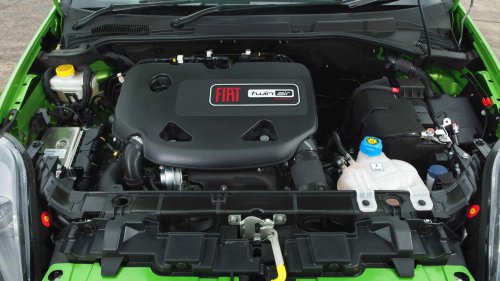
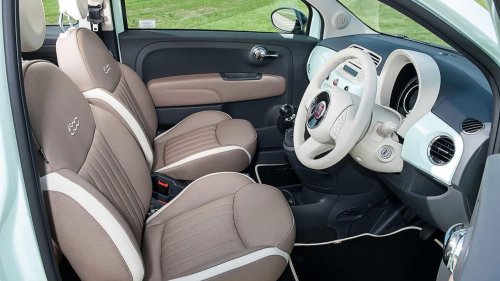
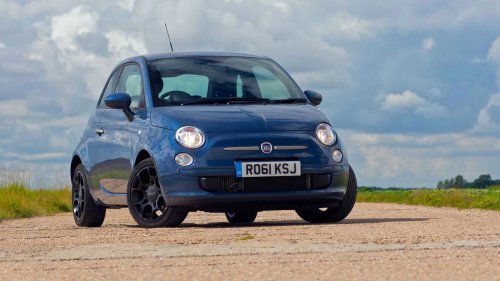
Jump LinksOwnership, Reliability, Longevity, and Practical RealitiesEnvironmental Impact And The Sustainability EdgeThe TwinAir and Special UsesAs the world in general worries even more about sustainability, automotive critics pile criticism on OEMs who seem obsessed with chasing more power and more technology to keep ahead of their competition. Surely, those critics claim, car companies need to be going in the opposite direction to reduce the size of their footprint and chase efficiencies for their products instead.In answer to those calls, at least one manufacturer dared to do the opposite of its contemporaries in the late 2000s, as Fiat made headlines of its own with a tiny two-cylinder TwinAir engine. It was more than just a technical curiosity, and even though it was a simple 875 cc turbocharged engine, it was still able to do its job admirably in cars like the 500, earning plenty of awards along the way. Somehow, and against the odds, Fiat’s Italian ingenuity was able to make two cylinders quite enough for 21st-century needs. Fiat Re-Engineers The Two-Cylinder StellantisWay back, Fiat had already tinkered with two-pot technology in the shape of the classic Nuova 500. But as the new century gathered pace, designers and engineers decided to create the ultimate downsizing solution of the two-cylinder for urban cars. While other OEMs were moving toward electrification and sometimes three-cylinder designs, Fiat went even further in the shape of its Small Gasoline Engine (SGE) project, with an inline twin that relied heavily on Fiat’s new MultiAir technology.This patented electro-hydraulic variable valve timing and lift system did away with the traditional throttle in normal operation. Instead, it used oil-filled solenoids that could open the intake valves above the cylinder head independently and precisely for each combustion cycle.With the solution in place, the engine optimized power and torque where needed or favored maximum economy in urban settings. It was able to vary valve lift and timing in real time, producing between 85 and 105 hp along the way from only 875 cc. This was certainly a good result for that level of displacement and could rival larger engines featuring four-cylinder designs and much more displacement. Also, this engine was really lightweight at only 190 lbs, making its host vehicle agile and lowering both fuel usage and emissions. The TwinAir in Real-World Conditions Stellantis Remarkably, the TwinAir was able to propel a Fiat 500 variant to 60 mph in around 11 seconds and claim a top speed just past 105 mph. It delivered peak torque at only 1,900 rpm, which was great for overtaking or merging onto a busy highway. Reviewers seemed to love it, with some claiming it was unexpectedly fun. And the engine also emitted an unmistakable sound with a kind of thrumming or burbling note that sounded more like a classic motorcycle. Other road testers found the engine to be remarkably refined at cruising speeds when fitted to the humble 500 or Fiat Panda.For all its fun, the diminutive 500 fitted with the TwinAir became a useful tool for modern living. For example, it had a City Mode steering setting to make parking a breeze and an advanced stop-start solution to stretch that fuel even further. You could get as much as 57 MPG (US) in controlled conditions and useful economy in real-world situations, which turned out to be a crucial advantage in markets worrying about fuel price swings. Some regulators even waived road taxes or congestion charges due to the car’s highly efficient emissions control. The TwinAir Compared Well To Others Stellantis The TwinAir performed well against its competitors, including Fiat’s own 1.2-liter inline-four. In many comparisons, it turned out to be faster and more powerful, standing up strongly against rivals like the Ford EcoBoost or the three-cylinder Kappa engine from Hyundai. In power terms, the TwinAir sat somewhere in between Fiat’s 1.2-liter four-pot and Ford’s 1.0-liter three-cylinder EcoBoost, but it was very strong at up to 60 mph as well as in the fuel-efficiency stakes. Many felt that it delivered more driving excitement than those other competitors, with plenty of character and an unmistakable Italian flair. Ownership, Reliability, Longevity, and Practical Realities Many owners looking at small engines typically want to see longevity first and foremost, so they may have wondered whether the TwinAir could take real-world punishment and keep going regardless. Feedback from some long-term owners suggests that these vehicles can indeed log more than 100,000 miles so long as their owners keep up with maintenance.A few have reported issues with the turbocharger and flywheels, but later updates by the manufacturer did address some of those quirks. It’s crucial to keep up with routine oil changes and use high-quality oils, but affordable running parts tend to keep costs low and the engine, in any case, is very accessible to work on.Still, other owners have complained about some pronounced engine vibration and higher levels of noise when compared to an inline-four, for example. However, some enterprising individuals fitted improved engine mounts to address some of these challenges. Environmental Impact And The Sustainability Edge From the outset, Fiat focused on leading the way in the quest for sustainability. In fact, the company claimed that the TwinAir was the world’s cleanest regular-production gasoline engine and provided figures to back that up. It claimed record-low CO₂ emissions as well as beating many rivals on hydrocarbons and NOx. Some engines could use bi-fuel in CNG or gas form, and this enabled the motor to cut carbon still further. Some fleet data suggests that Fiat could top pan-European rankings for lowest average emissions per manufacturer. The TwinAir’s legacy: Awards, Influence, and Cultural Footprint Stellantis It didn’t take long for the TwinAir to become a global phenomenon, and it won the International Engine of the Year award in 2011, as well as the Green Engine of the Year and the prize for the sub-one-liter class. Crucially, it showed that downsized engines do not have to be dull and may have led to an increase in both two- and three-cylinder turbos across the industry. Fiat produced some special editions like the 500 S or Lounge, and high-spec Pandas to really hone in on the theme of city-focused mobility with genuine driver appeal. Today, you can find MultiAir influence in many modern powertrains for Fiats, Jeeps, and Alfas. The TwinAir and Special Uses While the TwinAir did not write any headlines in the world of motorsport by any means, it did appear in limited applications in some eco rallies. Other developers used the engine to experiment with lightweight projects, which once again proved how effective it was in low-weight, torque-focused settings. Overall, the engine certainly proved its flexibility and stands as a blueprint for how manufacturers can evolve high-tech but minimalistic gasoline powertrains. The Small Engine That Could Stellantis You don’t always have to measure great engines in terms of displacement or cylinder count. The Fiat TwinAir proves that with some advanced tech and ingenuity, you can create a very usable real-world car not just for city streets but also on highways and even the occasional cross-country bash.And for audiences watching the steady march toward electrification, the TwinAir offers hope. After all, it can provide a blend of fun, efficiency, and longevity while also delivering plenty of spirit. And it shows that Italy’s two-pot wonder can be more than enough for the modern world, in an environment where automotive critics are always trying to restrict.



















 +26 others