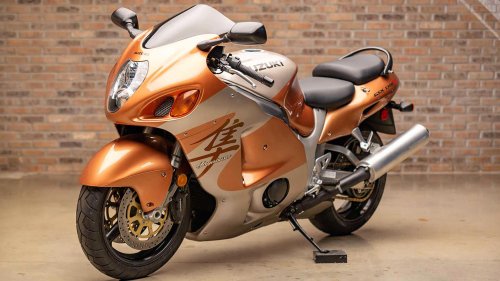
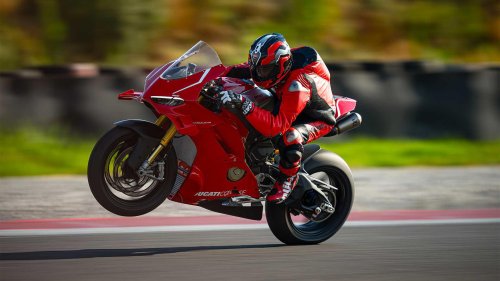
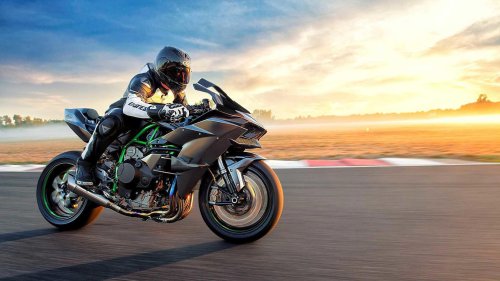
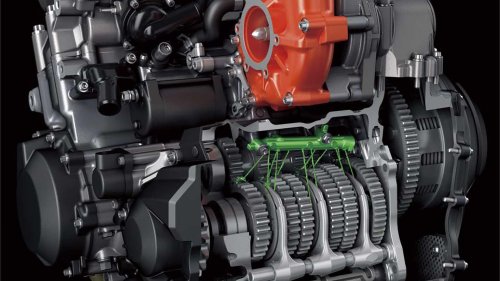
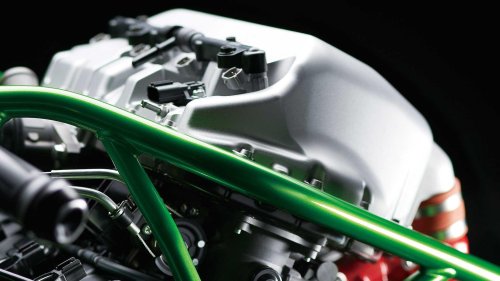
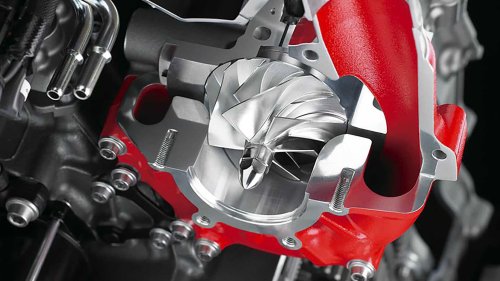
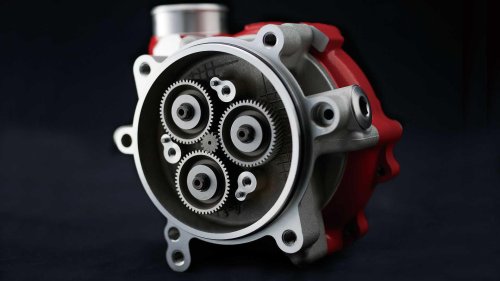
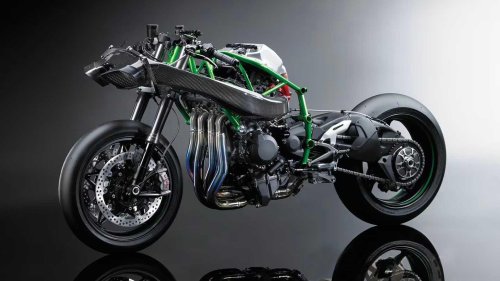
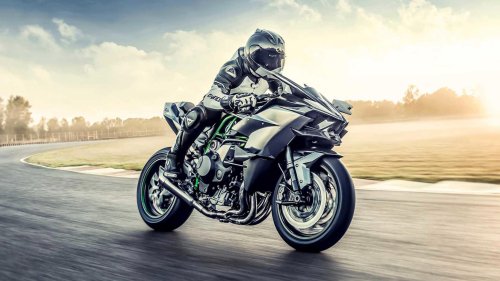
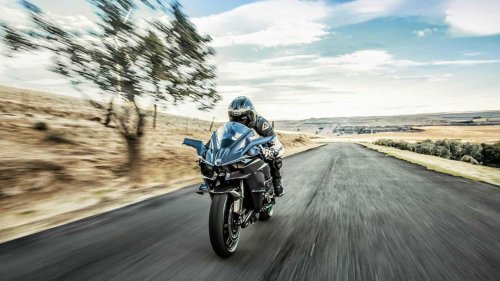
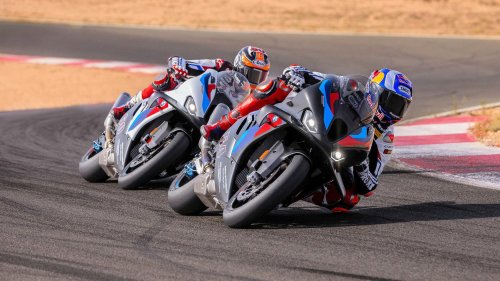
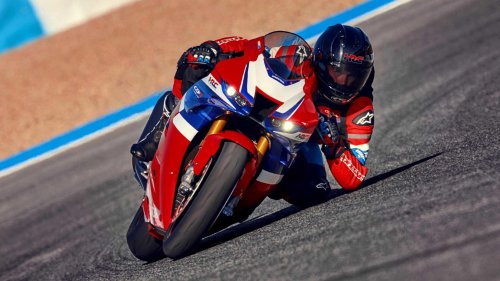
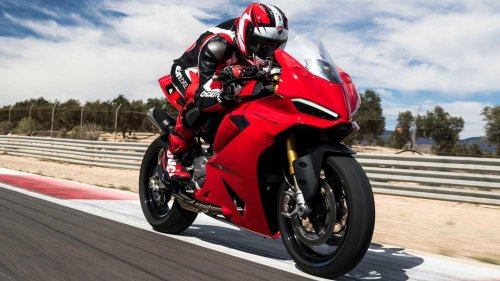
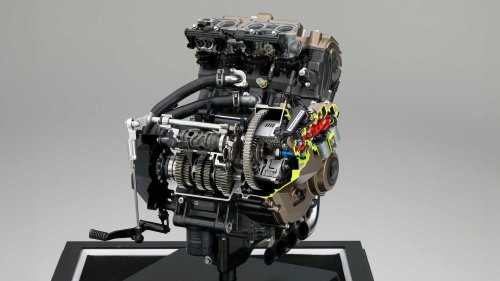
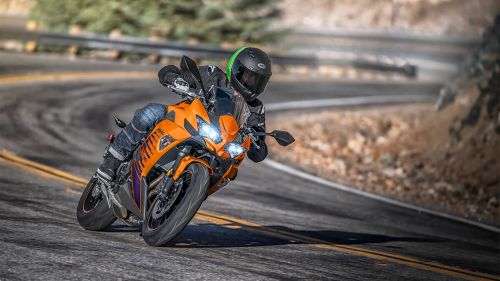
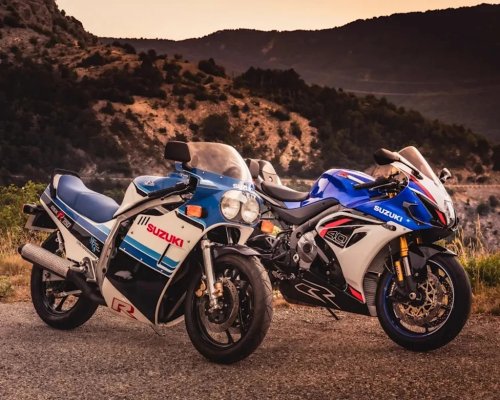
A long time ago in a galaxy not so far from here, motorcycle manufacturers were at it to build the fastest motorcycle in the world. Then came the 1999 Suzuki Hayabusa, which put an end to the speed wars and led to the Gentlemen’s Agreement that limited sports bikes to 186 miles per hour. It wasn't until the 2007 MV Agusta F4 R312 broke the agreement. Still, the speed war was long gone, and manufacturers had already shifted their focus from all-out top speed to circuit performance.But one manufacturer, Kawasaki, felt the need to disrupt what it saw as a sleeping motorcycle market, exactly how it did back in 1972 with the Kawasaki H2 Mach IV. But instead of going the old-school hyperbike route of focusing on just top speed and acceleration, the goal was to create something that delivered ultimate sports bike performance, complete with supersport-like agility and lightness. The result is a bike that’s hands down the most over-engineered sports bike ever made. The Current Hierarchy Of Sports Bikes Today A Left Hand-Side Perspective View Of A Suzuki HayabusaSports bikes have gone through a metamorphosis in the last couple of decades. There was once a clear distinction between hyperbikes and liter-class superbikes; the former focused on top speed and the latter on speed plus circuit performance. That changed when liter-class sports bikes got even better, surpassing the standards set by the usual hyperbikes of yesteryears, like the Suzuki Hayabusa and the Kawasaki Ninja ZX-14R.DucatiLiter-class sports bikes have gotten faster than the Busa and the ZX-14R, so it’s safe to say that the hyperbike tag holds little weight in 2026. Today, the sports bikes that dominate the performance game include the likes of the Ducati Panigale V4 R, Honda CBR1000RR-R Fireblade SP, Aprilia RSV4 Factory, and BMW M 1000 RR. Still, as these bikes continue to push the boundaries of performance with each update, there's one bike that revives and redefines the hyperbike class.This is a motorcycle that once beat a Formula 1 car and an F-16 fighter jet during takeoff on a drag strip. And those who have ridden it often claim they have never experienced anything like it ever before. With its spaceship-like design, a supercharged engine, and cutting-edge components, it has moved the goalposts so far ahead that it stands alone in the world of modern superbikes. It’s the fastest motorcycle ever built: the Kawasaki Ninja H2R. The Kawasaki Ninja H2R Is The Ultimate Expression Of Sports Bikes The Kawasaki H2R and its road-legal twin, the H2, were designed to offer motorcyclists something they’ve never experienced before: ultimate performance. Only this time, this ultimate performance needed to come with intense acceleration, a high top speed, and supersport-level circuit performance. To get there, Kawasaki had to design and develop everything from the ground up, including the engine, and it had to take the help of Kawasaki Heavy Industries (KHI) Group. You know, the group that produces everything from submarines to missiles and space systems.The biggest part of the ultimate performance puzzle was the engine. The conventional way of producing more power on motorcycles is to increase the displacement, but that would add heft, which can impact the bike’s handling. So, Kawasaki took the unconventional route, using KHI Group’s expertise to develop a supercharged inline-four engine that remained almost as compact as a liter-class engine while delivering much more power. The partnership also helped the manufacturer develop other bits on the bike, including the aerodynamic bodywork, intake, and even the paint. Kawasaki Ninja H2R Starts At $62,100 Starting at $62,100, the Ninja H2R occupies a class of its own, standing as the world’s fastest production motorcycle with an extraordinary power-to-weight ratio. And it remains the only supercharged production bike ever built. It's so loud that it's banned on some circuits around the world, too! It distills everything Kawasaki knows about performance engineering, blurring the line between engineering and insanity. But for those looking for ultimate performance, there’s no other sports bike that even comes close. A Healthy Dose Of Insane Engine Engineering The Kawasaki Ninja H2R’s insane performance is thanks to its 998cc supercharged engine, but don’t mistake it for the same mill used on the Ninja ZX-10R. This engine was built from the ground up, featuring liquid-cooling, DOHC, a supercharger, and an 8.3:1 compression ratio. It produces a mind-boggling 326 horsepower at 14,000 RPM and 121.5 pound-feet of torque at 12,500 RPM, sending the bike to 248.548 miles per hour in under 20 seconds. How does it do that? Well, apart from the supercharger (we'll get to that in a bit), a healthy dose of insane engineering went into this engine. Designed To Withstand 2x The Stress Of An N/A Engine KawasakiThanks to the supercharger and the ridiculously high power output, engineers had to make the engine much stronger, so it could withstand high compression without constantly blowing up. The engine is built to withstand 2x the stress of an N/A liter-class engine, thanks to various high-strength components like cast pistons. On the H2R, where it runs its hottest state of tune, the engine still requires a tolerance check every 15 hours and a full service at 30 hours. Other road-going versions of the H2 have much longer service intervals, though. Beefed Up Cooling To Keep Temperatures In Check KawasakiApart from strength, cooling is another hurdle when producing so much power. To get over this, Kawasaki had to beef up cooling in all ways it could, which led to a highly complex design of the engine. For example, the cylinders use larger coolant passageways to keep the combustion chamber temperatures in check. Plus, the engine holds 1.32 gallons of oil, which is 35 percent more than a conventional liter-class engine, since it has to lubricate and cool the engine, transmission, and supercharger. Newly Developed Intake Chamber KawasakiTo help the supercharger breathe better, the H2R uses a RAM air intake that directs the air in as straight a line as possible. The intake chamber then uses a newly developed system, where the top injectors spray fuel onto stainless steel nets that sit over the intake funnels. This creates a more uniform fuel-air mixture for insane yet consistent performance. On the other side, the exhaust ports are also designed to extract exhaust air quickly from the combustion chamber. The Supercharger Is The Real Party Trick Here Then we come to what makes the Ninja H2R truly special: the supercharger. Unlike those bulky, bolt-on superchargers you'd see on custom Hayabusas and Harley-Davidsons, the H2R uses a mechanical centrifugal-type supercharger. It is designed using tech from KHI Group’s Gas, Turbine, and Machinery Company, Aerospace Company, and Corporate Technology Division. Since it’s a completely in-house unit, it also matches perfectly with the bike’s inline-four engine. Can Spool Up To 130,000 RPM KawasakiTo achieve intense acceleration and performance, the supercharger has to be efficient, too. This unit is mated to a planetary gear train that's driven by the crankshaft, using tech from Aerospace Company. This gear can spool the supercharger’s impeller shaft to almost 130,000 RPM, pumping close to 200 liters of air into the engine per second. At this rate, the air flows at the rate of 100 meters per second at the inlet, raising the internal pressure up to 2.4 atmospheric pressure. Designed To Be Efficient For Long Use KawasakiTypically, so much air passes through, and the impeller spins up so fast that it heats up the supercharger, which can lead to it losing its efficiency. To deal with that, Kawasaki has designed the supercharger to stay cool without losing efficiency or needing an intercooler, which could’ve added weight to the package. This is what makes the supercharger so unique; unlike most aftermarket superchargers, this unit can handle a wide range of pressure ratios and flow rates for long durations. It’s what allows the supercharger to be present on the Kawasaki Ninja H2 SX, a sports tourer. The Other Bits Are Exceptionally Engineered, Too KawasakiThe H2R does not let go of handling in favor of speed, either. It is underpinned by a MAG-welded steel trellis frame that does not produce high-frequency behavior due to high-speed road undulations, which is a common issue with twin-spar frames. This frame sits on a 43mm Kayaba AOS-II fork and Öhlins TTX36 monoshock, both fully adjustable, and braking comes from powerful Brembo M50 monobloc calipers at the front. The entire package is designed to offer exceptional supersport-like handling while keeping the bike compact and lightweight. Aerodynamic Bodywork With Mirror-Like Paintwork KawasakiThen we come to the H2R’s aerodynamic fairing, which is designed to slice through air while keeping the bike grounded. The bike uses fighter-jet-inspired carbon fiber wings designed by the Aerospace Division of the KHI Group. For instance, the upper front cowl wings have dog teeth and strakes, and the side fairing flap wings are slotted, just like on some fighter jets. The fairing is covered in a unique mirror-like paintwork with a black undercoat, followed by a silver film, and a self-healing and resilient top layer. The Kawasaki H2R Is Not For The Faint Of Heart KawasakiThe Kawasaki H2R is too much of everything, and what extravagant excess looks like on a sports bike. It’s less of a sensible approach to motorcycling and more of a tech showcase for a Japanese manufacturer that has pushed the boundaries of performance since its inception. Usually, the rivals have caught up quickly to Kawasaki’s former fastest bikes in the world. But the H2R is in a league of its own, and though it’s been around for over a decade, no other bike has even come close to it. The Kawasaki Ninja H2R is the ultimate sports bike ever made, and something has to be truly groundbreaking to surpass it.