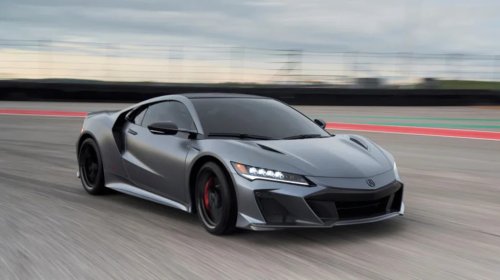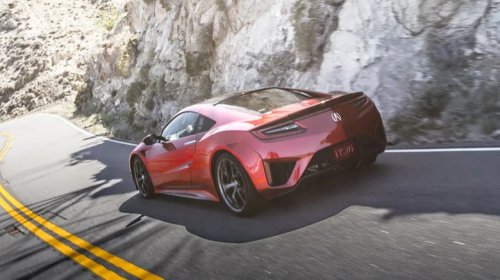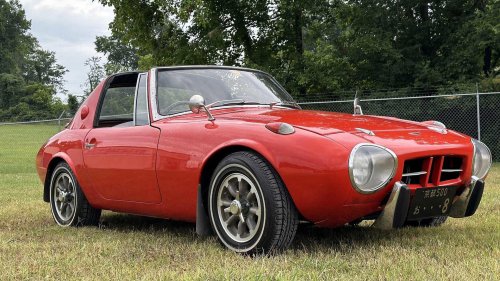
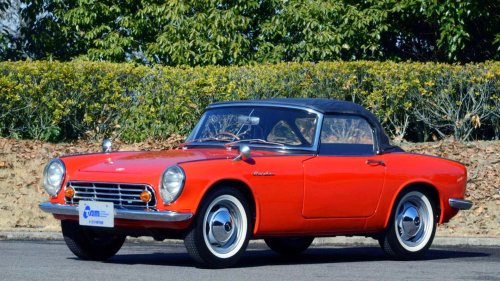
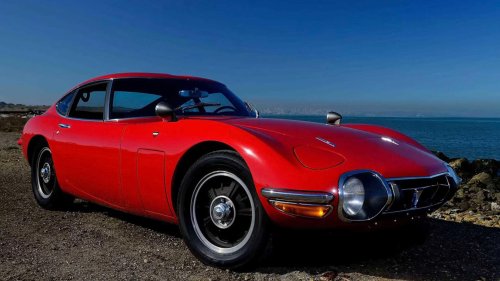
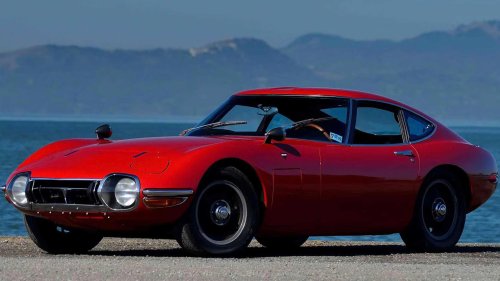
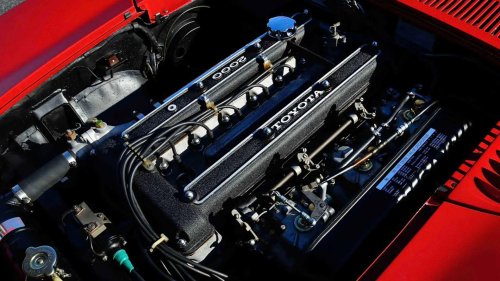
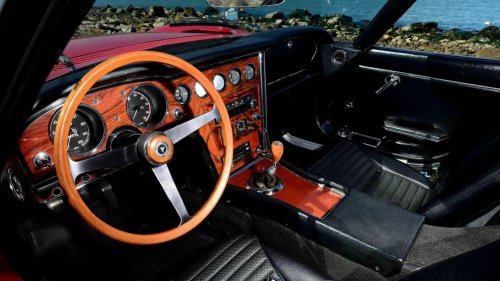
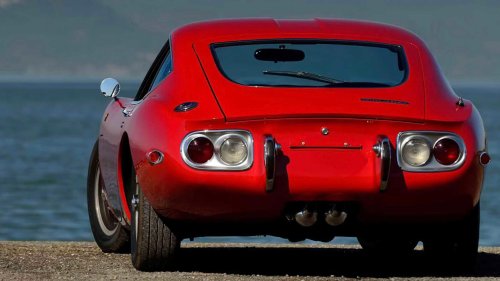
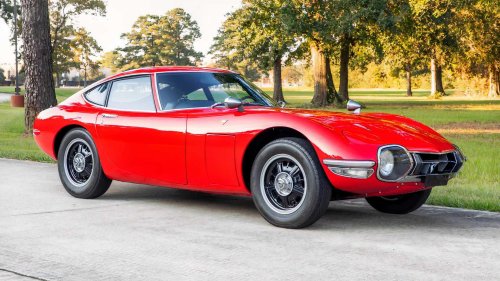
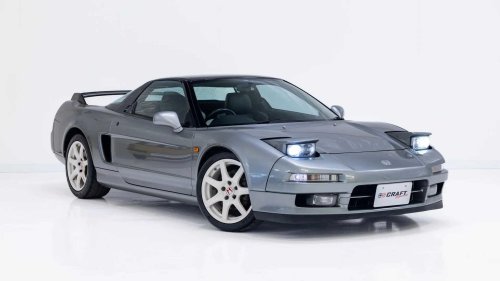
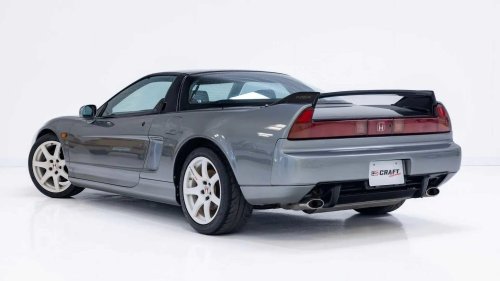



















In the mid-1960s, the global car world had Japan filed away in a neat little drawer. Its automakers built practical sedans, tiny compacts, and sturdy workhorses that earned trust the slow way. Nobody in Europe or America lost sleep over a Japanese grand tourer showing up in the next lane. If Japan built a sports car, most outsiders expected something light, clever, and a little homemade, more eager than intimidating.Then one low, long-nosed coupe changed the mood in a hurry. It looked expensive, felt serious, and carried the kind of hardware that usually came with Italian swagger or German confidence. More importantly, it proved that Japan could do more than build sensible machines for sensible people. Japan’s Sports Cars Were Good, But They Weren’t Feared BaT Japan’s early efforts in the sports car segment were… well, mostly cute. Nissan had already put real effort into the formula with the Datsun Fairlady line. The early Fairlady 1500 mixed Bluebird roots with a Cedric engine, then backed up the showroom pitch by winning its class at the first Japan Grand Prix in 1963. This showed Japan could make an authentic sports car.Honda came at the idea from the opposite direction, which felt very Honda. Soichiro Honda wanted a sports car because he believed racing and engineering ambition could raise Japan’s whole industry, not just his company. The S500 arrived in 1963, and the later S-series kept the motorcycle flavor strong – compact size, rev-happy attitude, double-wishbone front suspension, and that odd but wonderful chain-drive rear setup. It was tiny, high-strung, and cheerful in the best way.Toyota Automobile Museum Toyota had skin in the game, too. The Sports 800 hit the road in 1965 with a light body, a detachable roof, and a focus on aerodynamics and efficiency instead of brute force. It could reach about 96 mph, and it earned fans in long-distance racing because it sipped fuel and refused to quit. But it still sat in the “small and smart” box, the same box that kept the world from imagining Japan as a source of true exotic machinery.By the middle of the decade, Japan had a proper enthusiast scene. Fairlady roadsters had grown faster, with the 1967 Fairlady 2000 pushing 143 horsepower, 127 mph, and becoming the first Japanese car to crack the 124-mph wall. The problem was image – Europe built machines that looked dangerous even while parked, while Japan still looked clever, disciplined, and a bit polite. But one car changed everything. Then Came The Toyota 2000GT, And Everything Changed Via: Mecum Auctions That car was the Toyota 2000GT, and it landed like a flare in a dark room. Toyota showed a prototype at the 1965 Tokyo Motor Show, then launched the production car on May 16, 1967. Toyota handled the overall concept and design direction, while Yamaha helped engineer the details, sharpen the engine, and build the car. Inside Toyota, the project carried the codename 280A. The name itself suggests speed.The specs told the same story as the shape. Toyota and Yamaha gave the 2000GT a 2.0-liter DOHC straight-six, four-wheel independent suspension with double wishbones, four-wheel disc brakes, magnesium wheels, retractable headlamps, and a claimed 137-mph top speed. The automaker says it ran from 0 to 62 mph in 8.6 seconds. Just as important, Toyota did not make many – the company ended production in 1970 after 337 cars, which placed the 2000GT closer to hand-built exotic territory than to normal showroom volume.Via: Mecum Auctions Toyota also made sure the car earned its reputation before customers even got one. A specially prepared 2000GT set three world records and 13 international records in 1966, even through ugly weather at Yatabe. On track, the model took third in its first Japanese Grand Prix outing, then scored major domestic wins, including the Suzuka 1000km and the 1967 Fuji 1000km. Then came the movie-star bonus – Toyota built two open-top versions for You Only Live Twice, turning the car into a Bond machine and a global curiosity at the same time. That was not bad for a country most outsiders still associated with practical sedans and sumo. More Than Just A Pretty Face Via: Mecum AuctionsThe 2000GT backed up its beauty with real engineering. Toyota and Yamaha started with Toyota's M-family inline-six from the Crown, then transformed it into a proper sports-car engine with a DOHC layout and triple carbs. Output landed at 150 horsepower at 6,600 rpm, which does not sound wild now, but in late-1960s Japan, it looked serious.The chassis deserves just as much credit. Toyota used an X-shaped backbone frame, rack-and-pinion steering, four-wheel double wishbone suspension, and four-wheel disc brakes – many of those parts were firsts for a Japanese production car.Via: Mecum Auctions Then there was the craftsmanship. Yamaha used mahogany and piano-finishing techniques for the dash, plus wood for the steering wheel and shift knob. Workers hand-built the cars in tiny numbers, and production moved at roughly one finished car every three days in the early run. That gave the 2000GT a rare mix of precision and warmth. It felt expensive because it actually was expensive, and it looked like somebody cared about every panel gap, because somebody did. In an era before giant screens and fake carbon fiber stickers, that counted for a lot. Toyota Treated The Big Names Via: Mecum Auctions The boldest thing about the 2000GT may have been Toyota’s attitude. The company aimed directly at the heavy lifters of the era. In period testing, Road & Track called the car “one of the most exciting and enjoyable cars we’ve driven” and said it was a worthy competitor to the Porsche 911. Toyota priced it that way, too – the U.S. price was around $7,230, making it more expensive than both the Jaguar E-Type and the Porsche 911, while sitting far above a Corvette as well.That pricing looked almost reckless, but it also told the truth about the car. Sure, the 2000GT was not the fastest machine in every comparison. Road & Track noted that the 911 still had the edge on outright speed, but the magazine also praised the Toyota’s luxury and its front-engine handling character. Toyota basically built a grand tourer that could run with serious company and still make a long drive feel like a pleasure instead of a dental procedure.via Bring A Trailer Sales stayed small, and Yamaha later admitted the project arrived early and ignored profitability. Still, the car had already done the important work – it changed the way journalists, racers, and buyers thought about Japan. From that point forward, nobody could honestly say Japanese automakers only built practical machines. They had seen one build a halo car with race results, world records, handcrafted details, and movie-star presence. The Honda NSX Rewrote The Rules Again Via: Bring a TrailerMore than two decades later, Honda picked up that same thread and pulled it tight with the NSX. The original NSX became the first mid-engined exotic without European pedigree, and it packed the kind of tech that made old guard brands sweat a little – an all-aluminum monocoque, titanium connecting rods, VTEC, and a layout built for serious performance. The 2000GT had proven Japan could enter the room, and the NSX proved Japan could start rearranging the furniture.What links the two cars goes deeper than nationality. The NSX team used what it called the “Milky Way” diagram to target a point as close as possible to an F1 machine, yet still preserve driver comfort and control. That feels very close to the 2000GT’s mission – both cars treated engineering as the main event, both aimed above the easy compromises, and both rejected the idea that a Japanese performance flagship had to apologize for existing, undercut on price, or settle for being a charming outsider.Bring a Trailer The NSX changed the supercar rulebook because it added something many exotics of the era lacked – sanity. It offered speed and glamour without punishing the owner for wanting to use the thing. Acura later claimed it delivered levels of comfort and everyday drivability that sports cars of the time simply did not offer. That gave enthusiasts a new benchmark – a supercar could thrill on a back road, then start the next morning without a ritual, a prayer, and a relationship with an Italian electrician.