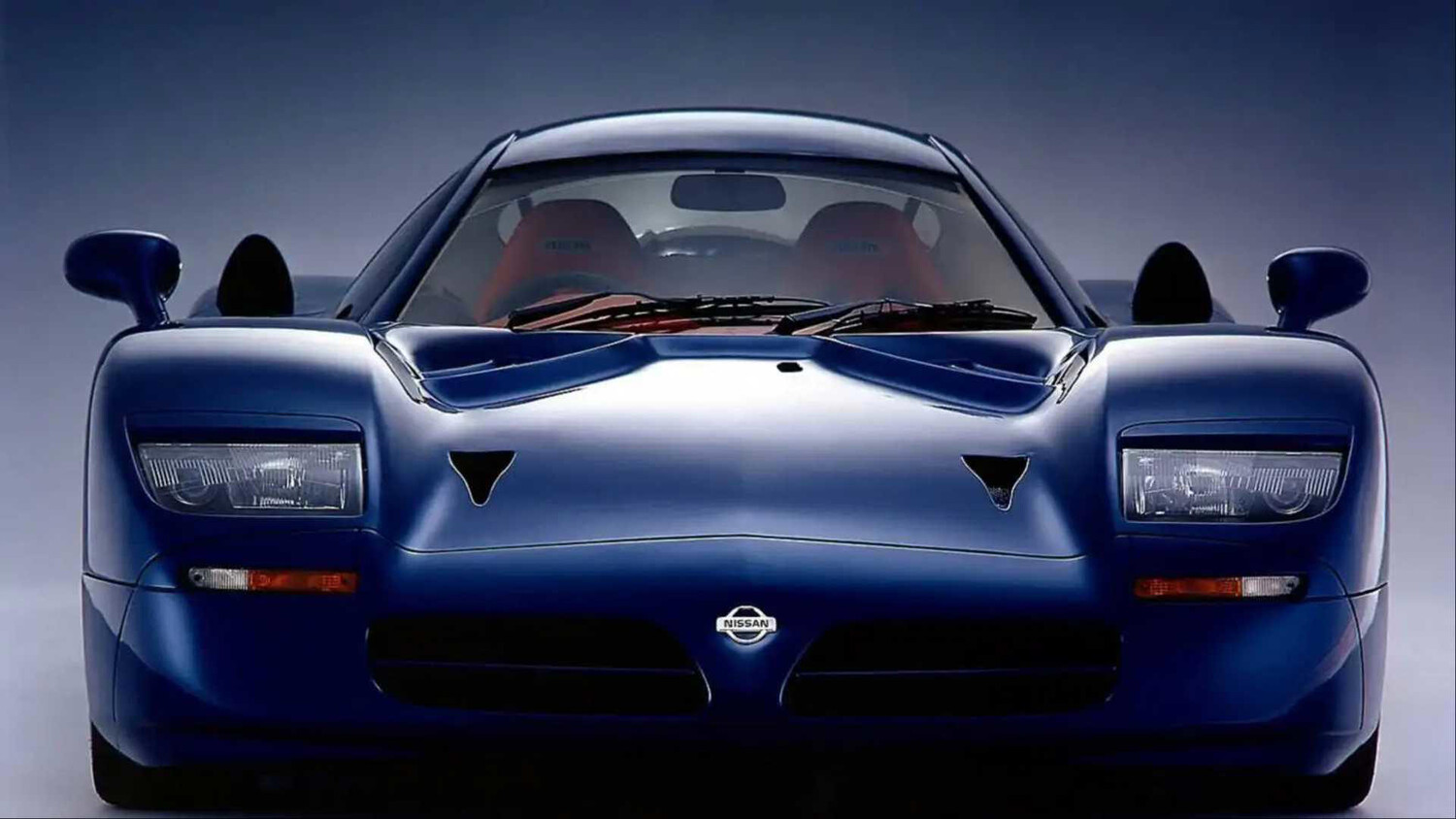
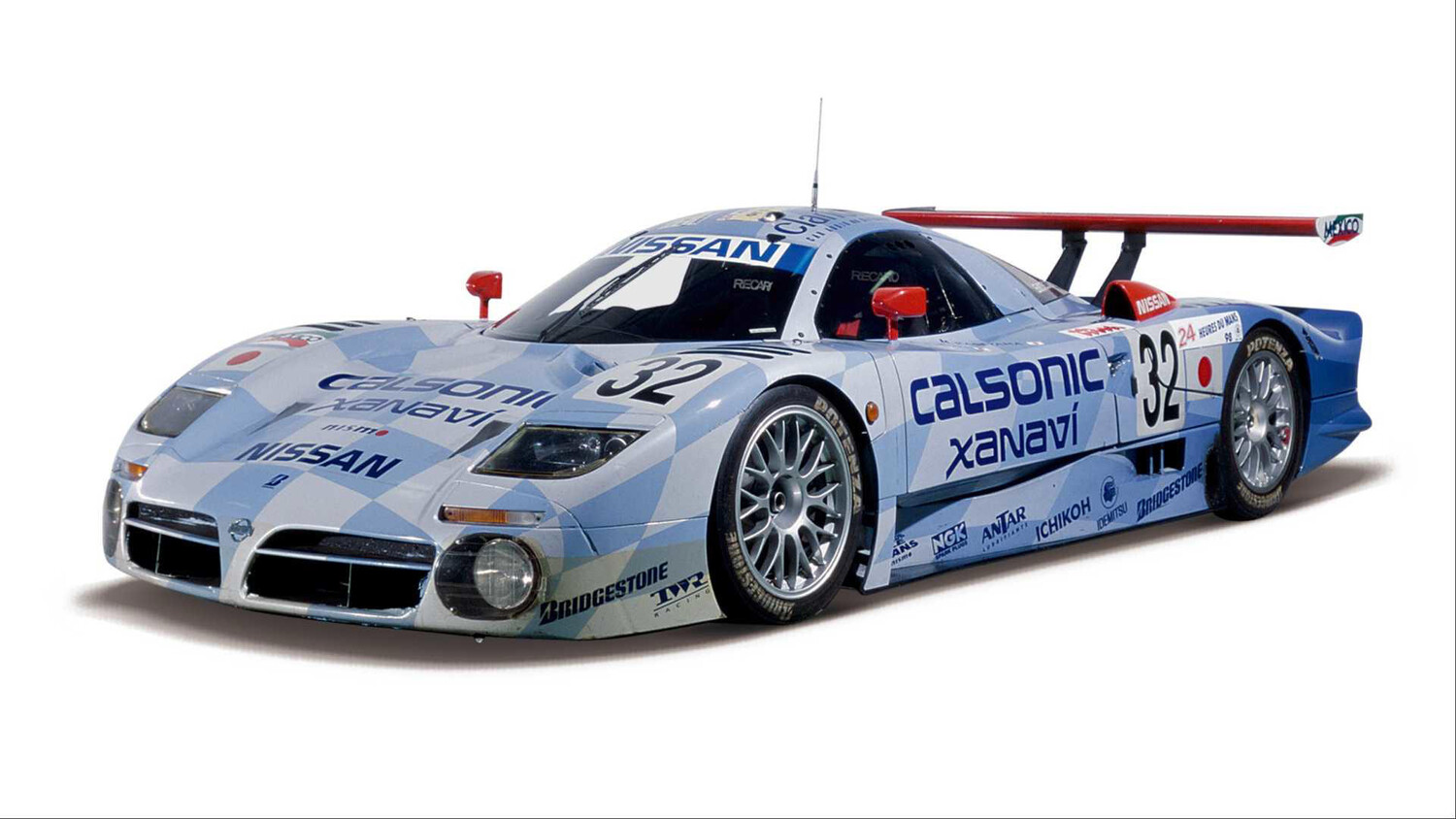
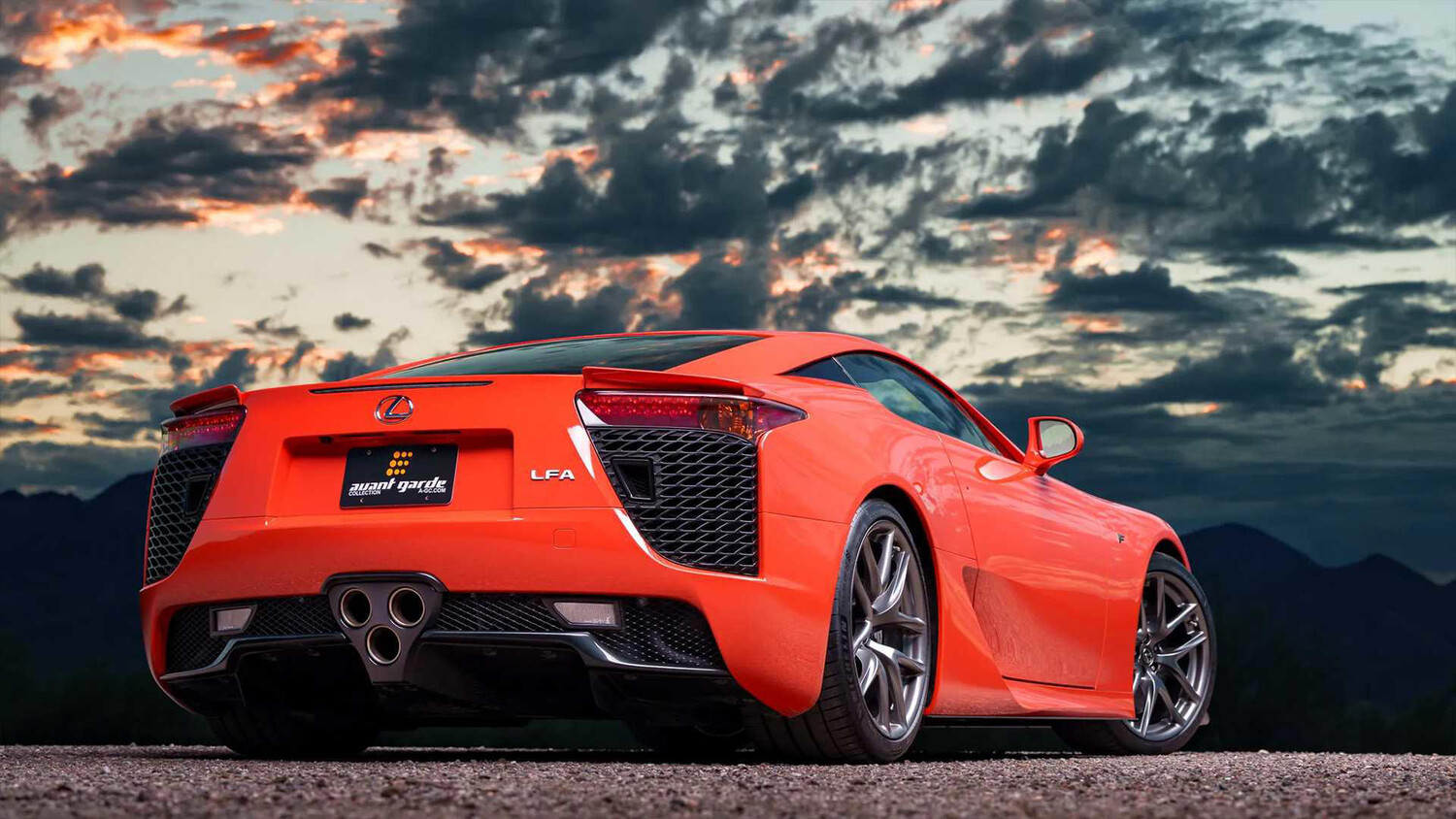
Japanese performance cars usually win with finesse. They turn in sharply, stay flat, and feel glued to the road without acting scary. The big heroes from the 1990s built their legends on balance with light weight, quick steering, and engines that loved to rev. A twisty back road was all the drivers needed to have fun.Still, not every Japanese machine chased the perfect line – a few chased the horizon. One late-’90s rocket aimed straight at top speed and treated corners like brief intermissions. On paper, it cleared 200 mph, wore a license plate, and then slipped out of public sight. Most fans never spotted it in traffic because it rarely lived in traffic. It’s safe to say that it is one of the rarest JDM machines ever built. The Nissan R390 GT1 Road Car Is Japan’s First 200+ MPH Supercar Nissan Global The car in question came from Le Mans, not from a showroom. The Nissan R390 GT1 Road Car grew out of a late-1990s sprint to enter the 24 Hours of Le Mans in the GT1 class, when “GT” started to mean “prototype, but please don’t ask questions.” It’s the time when Nissan moved on from running Skyline-based efforts and developed the R390 as a true race car for 1997. It entered three cars that year – two retired and one crossed the line in 12th overall.Here comes the number that turns the R390 Road Car into a myth – a claimed 220-mph top speed. Plenty of sources repeat it while also admitting that nobody seems to have recorded a clean, widely documented top-speed run in road trim. That makes the claim feel like a story told at a car meet at 11 p.m., right before someone says, “My uncle totally raced one.” Still, Japan built a road-legal supercar that spoke in 200 mph sentences when most of the country’s icons focused on corner speed and everyday usability. A Le Mans Car With A Licence Plate Nissan GlobalThe R390’s hardware reads like a race team’s shopping list. Nissan lists a 3,495cc VRH35L V8 for the road car, paired with a six-speed sequential transmission. Nissan also lists “over 350 PS” and “over 490 Nm” for the road model, which corresponds to about 345 horsepower and 361 lb-ft of torque. Those numbers sound almost polite, but Nissan likely chose them for approvals and practicality.The race car, in turn, had over 650 hp with a curb weight of just around 2,200 lbs. The engine under the hood is linked with Nissan’s Group C history, tracing roots to earlier VRH engines used in cars like the R89C.Nissan’s road-car spec sheet shows how close it stayed to the racer. It measures 4,720 mm long, 2,000 mm wide, and 1,140 mm tall, with a 2,720 mm wheelbase and a curb weight of “over 1,000 kg.” It rides on 245/40ZR18 front tires and huge 295/35ZR19 rears, with AP 14-inch ventilated discs. Nissan even stuck with a sequential gearbox, which sounds cool until someone asks the driver to creep through a drive-thru.Ayesh Seneviratne / HotCars Now comes the weirdest part. GT1 rules added the strangest detail – luggage space. The ACO required a 100-liter luggage compartment, and inspectors checked the race version against the road car. Nissan and TWR then reshaped the rear to satisfy the rule, and the side-exit exhaust became the easiest spot-the-difference clue. Later, the long-tail bodywork helped even more by improving stability and gearbox ventilation. In other words, the car gained speed and reliability partly because officials wanted “trunk space.” It’s the most expensive suitcase story Nissan ever told. How The R390 Road Car Was Born Nissan Global The Le Mans rulebook at the time forced one awkward step – Nissan needed a road-legal version of its race monster. The company created the road car to obtain official type approval for the R390 GT1 as a “GT car,” and it even labels it a Le Mans ’98 approved road car on its heritage page. That line says the quiet part out loud – the road car existed to satisfy inspectors, not to tempt weekend buyers. It served as a legal anchor for a program that wanted to fight on the same stage as Porsche, Mercedes, and Toyota in the wildest era of GT racing.To move fast, Nissan leaned on Tom Walkinshaw Racing (TWR) in the U.K. Ian Callum was leading the design team, and the carbon monocoque work is linked to TWR’s earlier experience tied to Jaguar projects like the XJR-15. Nissan basically hired a crew that already knew the shortcuts, the traps, and the “don’t do that, the rule makers will notice” moments. The result looked less like a Japanese tuner special and more like a global GT1 weapon – low roof, wide body, and a shape built for long, fast straights. Not The Start Everyone Hoped For The program brought drama right away. Martin Brundle and Jörg Müller set the fastest time at the 1997 Le Mans pre-qualifying, which put the R390 under a bright spotlight. The ACO then investigated, compared the race car to the road-going version, and found a key mismatch – the race version didn’t satisfy the luggage-space requirement. Nissan and TWR rushed a redesign, rerouted the exhaust to the side, and lost time they badly needed for testing. Then the race itself added more pain, with gearbox cooling and durability issues hurting the effort.Nissan responded with wind-tunnel work and a long-tail update for 1998. The long tail improved high-speed stability and, just as important, helped the gearbox breathe. Nissan didn’t suddenly become the fastest car on the grid, but it became the car that stayed alive. In 1998, all four R390s finished, landing 3rd, 5th, 6th, and 10th overall, and only Porsche finished ahead of Nissan. That’s a statement result, especially in an era stacked with factory budgets and big names. Ultra-Rare Homolagation Special Ayesh Seneviratne / HotCars The R390 GT1 Road Car never had a normal life. Nissan built it for approval, not for buyers, and it never reached the market. The automaker even notes a rumor that it could have cost 100 million yen if it had gone on sale, which is more than $600,000. That number feels like Nissan’s way of saying, “Sure, you can have one… if you also own a small island.” It also hints at why production never happened – a road car that exists only to unlock a race entry doesn’t need a customer list, crash testing, or a dealership plan.Most credible accounts point to a single official factory road car, and Nissan kept it. The Japanese firm reportedly built only one street version and stored it in its own museum. Some older write-ups float “two road cars” stories, and the rumor hangs around because it’s more fun than the truth. But the strongest reporting and Nissan’s own presentation lean toward one factory road example, plus later one-off conversions.That one car also carries little details that make it feel almost theatrical. Accounts describe an early red phase and a later blue long-tail look used for photos. They also mention publicity plates, including “R390 NIS,” described as a non-genuine plate used for press images. In that sense, it’s one of the purest homologation specials ever, because it doesn’t even pretend it wanted a sales brochure. Very Rare Public Appearances Nissan For the reasons above, the R390 Road Car rarely steps into public view, which feeds the legend. In 2018, it was reported that the one-of-one road car arrived on U.S. soil for the first time, appearing during Monterey Car Week. This is the moment when people were reminded that the car isn’t just a Gran Turismo memory. It has real paint, real carbon, and real presence.Then Érik Comas made the story even stranger. Comas once had a deal where Nissan would pay him with a road-legal R390, but the manufacturer canceled any such plan after it shut down the program. Comas later bought a 1998 race chassis, VIN780009, and worked with Andrea Chiavenuto on a two-year restoration and street conversion.The car had about 5,000 km, nearly all from Le Mans, and the conversion kept about 95% of the original race parts. The team added pieces that road laws demanded, like a glass windshield, a revised cooling system, and minimal upholstery. The conversion also added door panels, steel brake discs, and other road-friendly pieces without stripping the car’s Le Mans identity. Lexus Built Japan's First Actual 200 MPH Production Supercar Via: Bring A TrailerThe R390 Road Car feels like a locked file in a cabinet. The Lexus LFA, in turn, feels like a finished chapter in a book people still recommend. Toyota announced the production LFA in October 2009 and said it would build only 500 units worldwide. Five hundred cars still count as rare, but they also count as something the public can actually buy, drive, service, and argue about without needing a museum badge.Via: Bring A Trailer Lexus also hit the speed benchmark with official backing. A Lexus release about the states the car maintained a 202 mph top speed for a period of time. That number doesn’t chase the R390’s 220 mph claim, but it clears 200 mph in a way the R390 never proved publicly. More importantly, the LFA didn’t exist to satisfy a race rule, because Lexus built it to prove a point about engineering, materials, and performance.In the end, it’s probably fair to say Japan never lacked the ability to build a 200 mph supercar. It just didn’t always have a reason to build one in numbers. Nissan proved the point with a road-legal Le Mans weapon that most people never got to see. Later, Lexus proved it again with 500 machines that owners could actually park, panic over door dings, and drive until the fuel light came on.Source: Nissan, Lexus, Petrolicious