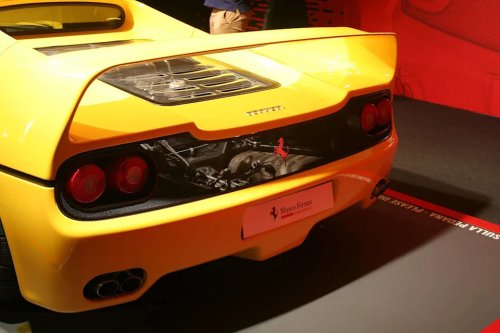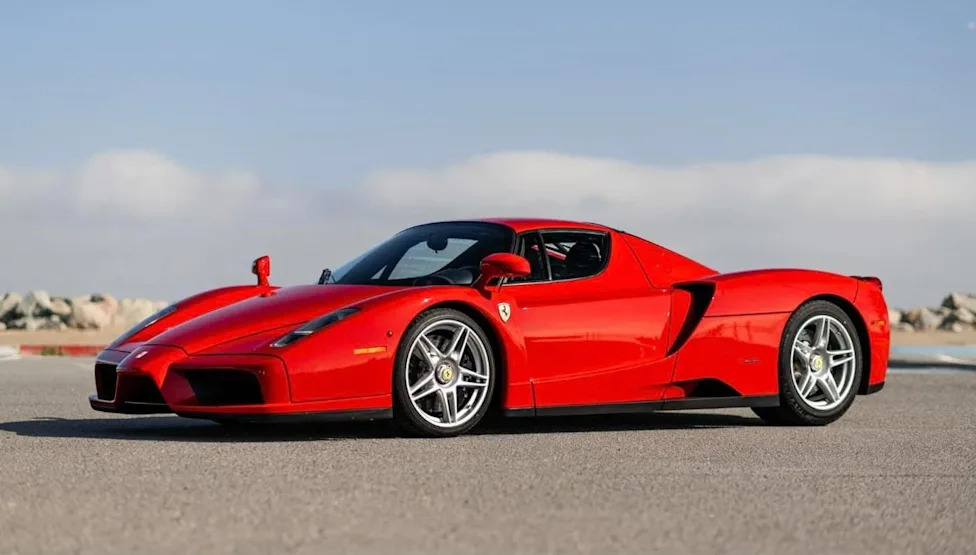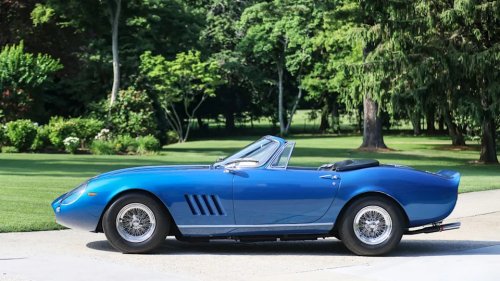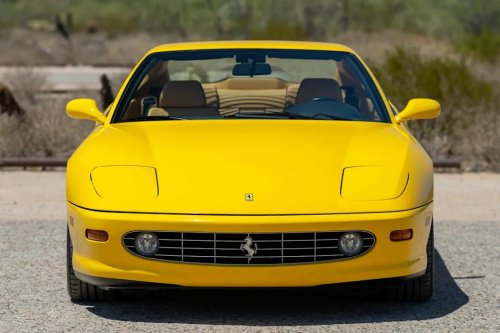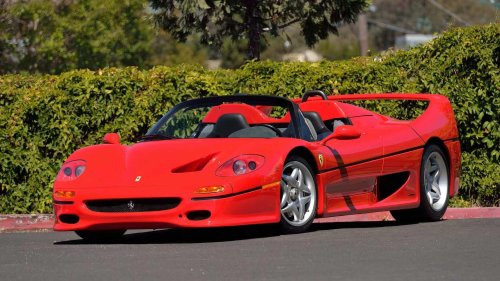
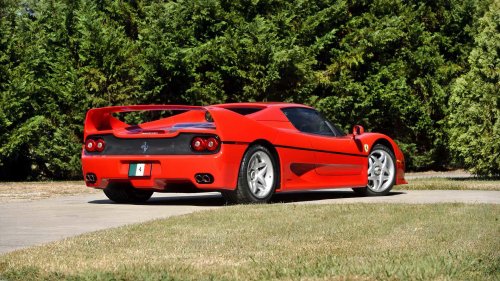
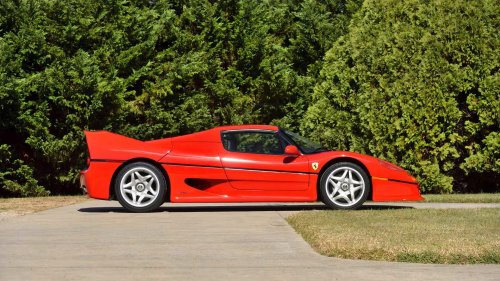
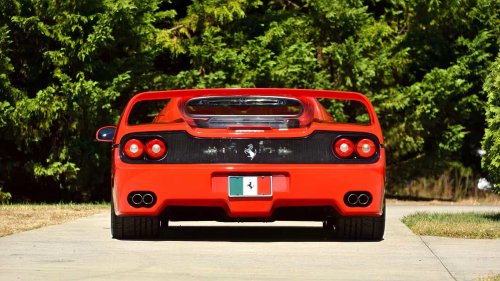
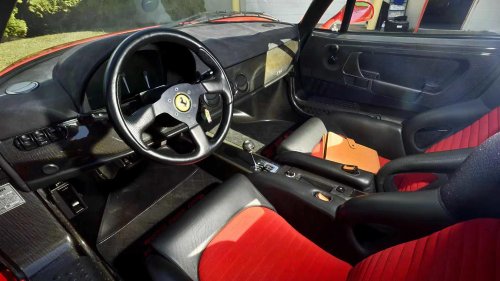
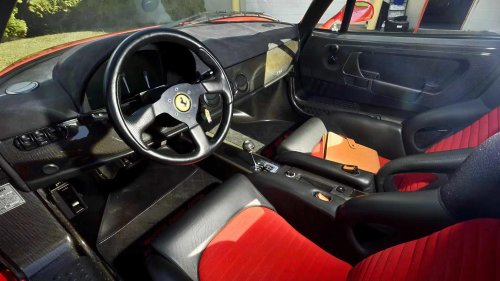
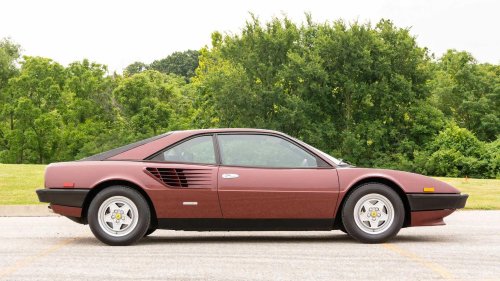
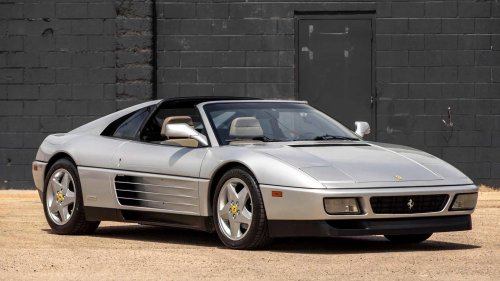



















Fun fact: more than 90% of Ferraris ever built are still on the road. You don't have to be part of the tifosi to admire the cars that come out of Maranello, and the fact that nine out of ten are still running shows how much they are loved both when new and secondhand. But not every model is universally adored when new, with one particular flagship Prancing Horse coming in for a drubbing when it was box-fresh. This electrifying hypercar has had the last laugh, however, with used prices now almost 15 times greater than the cost of a brand-new Ferrari. The Ferrari F50 Wasn't Exactly A Smash Hit When Launched Mecum In the mid '90s, Ferrari had the problem of that difficult second album. Its predecessor, the F40, was launched in '87 and became an almost instant classic, helped no doubt by the fact it was the first road car to hit 200 mph. The F40 and its sparring partner, the influential Porsche 959, invented the modern supercar genre, and the importance of neither can be understated. So how do you follow up a car like the F40? As the F40 had celebrated Ferrari's 40th anniversary, the company's 50th shindig would be celebrated (a little early) in 1995 with another supercar, the F50. This F1 car for the road (quite literally) was $519,245 when new (in '97) and uses a 60-valve, 4.7-liter, 520-horsepower V12 that was a direct descendant of the engine used in Scuderia Ferrari’s 641 Formula One cars of the early '90s. Why The F50 Wasn't Universally Loved At First Mecum On paper (and with a touch of hindsight), the F50 sounds like an irresistible prospect. But it didn't take long before the negative comments started coming in. Some said the Pininfarina design was uglier than the F40, with one review saying that it is "not a beautiful car" and the "F50's proportions look awkward." It didn't break much new ground with performance either, with the sprint to 60 mph in 3.7 seconds not bettering the F40's 3.8 seconds by much, and the F50's top speed being a couple more mph at 202. It's not exactly what you would call a decade's worth of progress, and then there was the 240 mph McLaren F1, which would hit 60 mph in nearer 3.0 seconds (even if it cost almost double the price).Even Jeremy Clarkson on Top Gear said, "The engine in an F50 felt like it was bolted directly to your spine," with a popular car website naming it "The World's Ugliest Car" and another labeling it "the most hated supercar." The F50 was fighting a losing battle against the F40, said to be the last car personally signed off by Enzo himself, but it turns out the younger car wasn't that bad after all. The F50 Styling Is There For A Reason MecumThat bodywork, which looks like it had been designed by a Miami-based arcade machine company, was actually there for a reason. The massive scoops in the hood pull hot air through the radiators and increase downforce. The massive rear wing is there to provide downforce, whether the roof is open or closed. The relatively long wheelbase exists because the longitudinally mounted engine is positioned between the seats and the rear axle line, just like an F1 car, with the cabin pushed forward. The reason Clarkson could feel the engine in his back is that the V12 is bolted directly to the chassis and works as a load-bearing member for the rear suspension and transaxle. The F50 Is Now Rarer And More Expensive Than An F40 Mecum The F50 was every bit as serious as the F40. With just 349 F50s from 1995 to 1997 (compared to 1,311), the car is also more exclusive and today commands a higher price than its illustrious forebear. A Ferrari F50 in good condition is worth a staggering $3,650,000, according to Hagerty, against $2,550,000 for an F40 in 2026. As a side note, a 2027 Amalfi, the cheapest new Ferrari at $266,810, would blitz both cars with a sprint to 60 mph in 3.0 seconds. A Closer Look At The Ferrari F50 MecumThe F50 may have looked more like a comic book creation than the sharply businesslike F40, but the reality was that it was arguably even more hardcore. Clarkson joked that the only standout feature in the spartan cabin was the window winder. It was only the third car ever, after the McLaren F1 and the very loosely road-spec model Jaguar XJR-15, to have a carbon tub.The naturally aspirated V12 (something many people consider the pinnacle of supercars), rather than a turbocharged V8 like in the F40, was mounted onto this tub. That detuned F1 engine delivers 513 horsepower at a dizzying 8,500 rpm (against the F40's less rampant 478 hp at 7000 rpm), along with a decent slug of 347 lb-ft of torque. The F50 Is Both Hardcore And Easy To Drive Mecum At 3018 lbs, you wouldn't exactly call the F40 portly, but Ferrari managed to get the weight of the F50, with its 12-pot engine, down to 2950 lb. With no power steering, no power brakes, and ABS, the F50 makes no apologies — it is raw and relentless, despite what its showy, flamboyant appearance may suggest, and the lap times proved it: one mag reported that the F50 can lap Fiorano an incredible 3.5 seconds quicker than an F40.The final piece of the puzzle is the fact that road testers said that, unlike many other supercars, the F50 wasn't intimidating, even going so far as to call it "chuckable", meaning you could actually have fun in it. Take all this into account, and if you are ever offered an empty track and the keys to either an F40 or an F50, the decision might seem that little bit harder to make. The Other Controversial Ferraris — But These Cost Peanuts Bring A Trailer It's hard to say a bad word against Ferrari, such is its back catalog of beautiful and jaw-dropping cars. But that doesn't mean that some didn't fall through the net. The Mondial is the first car from Maranello that springs to mind, with its slightly ungainly four-seat design, leaving it relatively unloved in the world of Ferraris. You do get a 2.9-, 3.2- or 3.4-liter V8 (depending on year) and up to 296 horsepower. Prices reflect the lack of adoration for this Ferrari, but it is worthy first step on the Prancing Horse ladder — expect to pay from $22,100 for a good condition 1981 Ferrari Mondial 8, says Hagerty. Even Unloved Ferraris Are Getting Expensive via Bring A Trailer Then there is the '80s Ferrari 400i, a four-seater GT that remains relatively affordable, despite the fact that it has a legit V12 engine with upwards of 310 horsepower. Expect to pay from $44,000 for one of these. The final bargain Ferrari is the 348, which received mixed reviews until it was updated with the wonderful 355. Prices still start from around $78,000 for a V8 1991 Ferrari 348 tb, but for that price you might be better off seeking out a newer 360 Modena. As the F50 has proven, any unloved Ferrari can go up in value. Just maybe don't expect to have one worth seven figures if you stump for one of the above.Sources: Hagerty.com