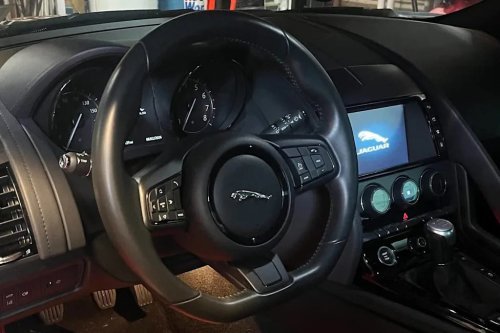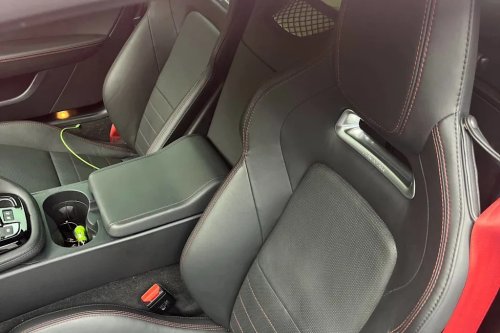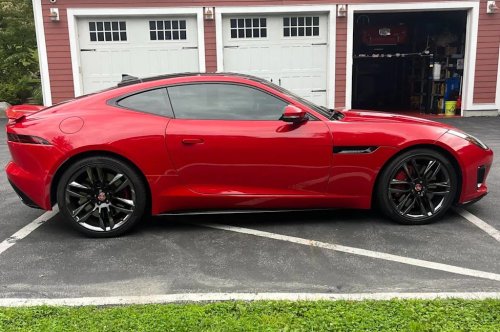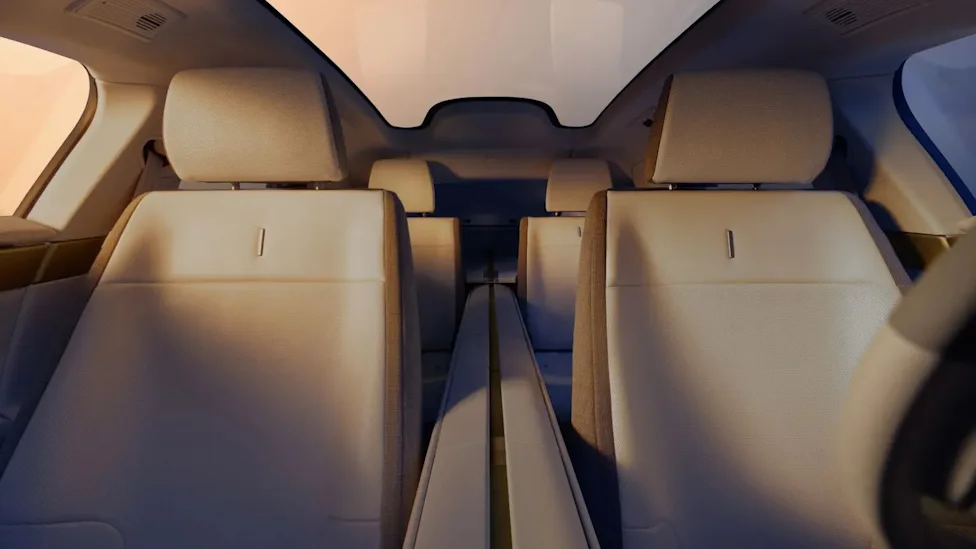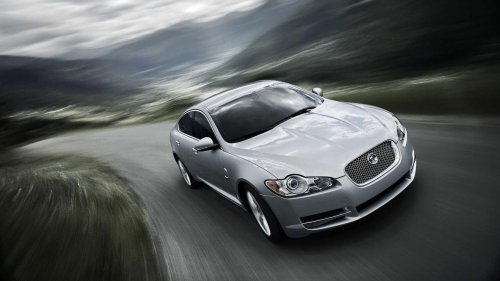
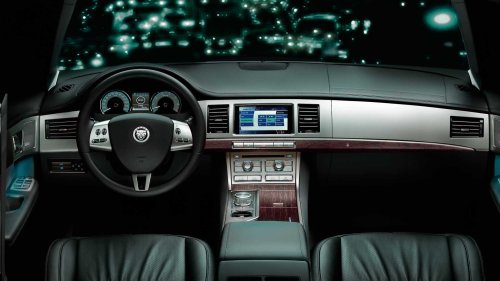
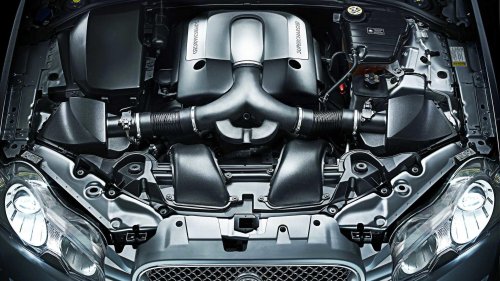
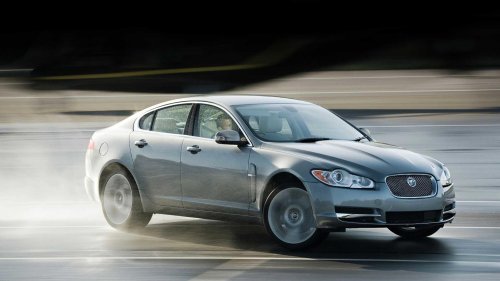
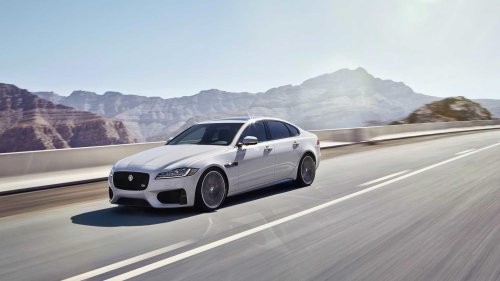
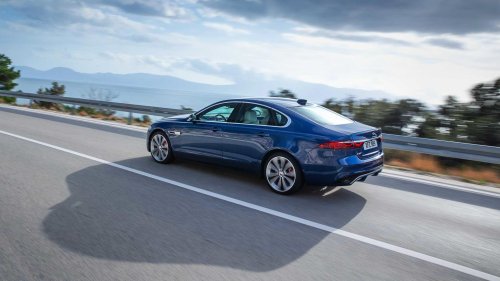
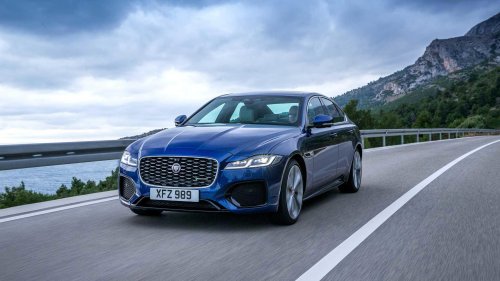
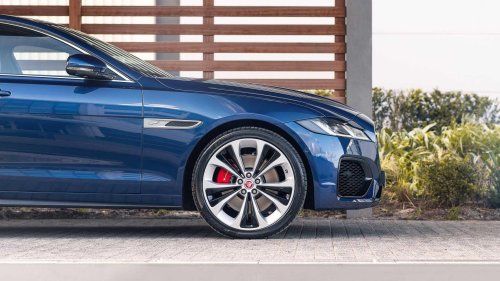



















Before the British brand canned its entire lineup ahead of its all-electric reinvention, Jaguar sold just 64,241 vehicles worldwide in 2023. By contrast, 395,741 BMWs and MINIs were sold in the United States alone that year. Much of this humiliating figure, granted, can be put down to Jaguar significantly reducing its production and model lines as its main German rivals are expanding their line-ups. There is, however, a certain reputation that’s followed the Big Cat for more than four decades, particularly in North America.Indeed, it’s not uncommon to hear Jaguars described as “too slow,” “too expensive”, “too unreliable,” and, honestly, just a bad idea in general to own. There is one second-hand Jaguar though that could change all that… The Sedan That Gave The Big Cat New Claws JaguarAfter its 1950s/60s heydays with the Mark X sedan, the XK 120, and, of course, the legendary E-Type, Jaguar soldiered on under British Leyland with the admittedly handsome XJ-S coupe and the tenured XJ6 sedan. Attempts to capture its mid-century allure failed, however, as Jaguars with steaming engine bays and ill-fitting upholstery, sadly, became the norm. Two decades under Ford’s umbrella didn’t help either. Yes, reliability improved, at first, and the V8-engined XK8 was a superb flag bearer. But an over-reliance on Ford spare parts robbed Jaguar of not only its sporting rep – Jaguar’s Formula 1 program was famously farcical – but also its luxury rep too. Peel back the bodywork on a 1999 S-Type, for example, and you’d find the chassis of a 10-year-old Ford Thunderbird.The Jaguar XF sedan, however, the first Jaguar launched after Tata Motors took the helm in 2008, very much put Jaguar back on the map. Underneath, for example, was not a reused Mondeo platform and exhausted suspension, but a customized chassis and overhauled suspension mountings from the XK, both of which prioritized precision handling and supple ride quality. Gone also was the drab, lifeless interior, which was replaced with a trendy touchscreen infotainment system, refined leather seats and upholstery, and a modern ‘British’ look more in-keeping with The Leaper. Thumb the starter button, and even the gear-shifter rose theatrically out of the center console.JaguarThe biggest upscale, however, was that new design. It was sleeker and graceful, yet somehow chiseled and muscular at the same time. Here was a Jaguar that looked as a Jaguar should, and a huge improvement over the inflated S-Type it replaced. A Jaguar that, for the first time in nearly four decades, could stand shoulder-to-shoulder with a BMW, an Audi, or even a Mercedes-Benz, on merit. It Drove As A Jaguar Should A Strong Engine Range JaguarAnd then there was the XF’s party piece: the full-throated, V8 growl emanating from those newly elliptical exhausts. Well, on some trims, anyway. At launch, the mid-sized sedan was available with four engine options, including a turbodiesel, a workhorse 3.0-liter V6, and a 4.2-liter V8. Notably, the latter was available with either a naturally-aspirated 296-horsepower and 310-pound feet of torque, or, when supercharged for the range-topping XF SV8, 416 hp and 408 lb ft. And even these hefty figures were kicked up to 380 hp and 464 hp, respectively, when Jaguar bored the 4.2-liter V8 to 5.0 liters for 2010.Fittingly, in this sleeker, more dynamic Jaguar, power was sent to the rear wheels only via a six-speed automatic transmission. Top speed was limited to 155 mph, but, in the supercharged XF 5.0, zero to 60 mph was completed in 4.9 seconds. Admittedly, that was more than a tenth down on BMW’s older, less powerful E60 550i, but it was also nearly a full second quicker than even the S-Type R could manage. Precision Handling Mixed With Practicality JaguarJaguar wasn’t just prioritizing performance for its new halo model, of course. During the second generation, for example, the supercharged V8 was jettisoned altogether in favor of Jaguar’s fuel-efficient, and mostly more reliable Ingenium family of turbocharged four-cylinders. Power peaked at 296 hp in the 2.0-liter turbo four-cylinder-powered P300, and the only six-speed manual transmission ever offered on the XF was only available on the entry-level 161 hp and 177 hp turbodiesels. Jaguar did relent, and briefly offered the XF 35t R-Sport in the US with a 340 hp, 3.0-liter supercharged V6, though even this was ditched with the midlife refresh for 2021.Handling in both generations surpassed any Ford-era Jaguar too. The electric power steering was, critics argued, a little too vague to truly match the BMW 5 Series or Mercedes’ E-Class. Even so, direction changes were smooth and precise, and, despite the leather-clad XF weighing 4,000-plus pounds, body roll was well-temped thanks to the stiffened chassis, wider rear track, and taut suspension. None of which, incidentally, impacted the cushioned ride quality, bags of rear legroom (even in the slightly shorter 2015 model), and the surprisingly roomy cargo area. Comprehensive use of aluminum in the second-gen’s new body panels meant later models were lighter too, aiding handling and fuel economy in the process. Almost 203,000 first-gen XFs alone were sold between 2009 and 2016, and, when the sedan was retired in 2024, Jaguar had shifted almost half a million of them. The Best Of The Breed Jaguar Ironically, Jaguar managed this feat, mostly, without its greatest ace in the hole: the XFR-S. Based on the XFR sedan, which arrived as a supercharged, 503 hp rebranding of the SV8 in 2009, the XFR-S was only available between 2012 and 2015. It was also, at the time, the quickest super-sedan Jaguar had ever built. Grunt from the 5.0-liter supercharged V8, for example, was upped to 542 hp and 502 lb ft, and zero to 60 mph was done in just 4.4 seconds. Brutal acceleration was aided by the Quickshift eight-speed transmission borrowed from Jaguar’s F-Type sports coupe, and more aggressively-tuned traction control meant the Big Cat could drift comfortably too.The XFR’s already stiffened suspension was made 30% more rigid, meaning the XFR-S sat so much lower than before, while a new rear subframe and firmer dampers all-but eliminated body roll. Throw in enormous air intakes, lightweight 20-inch wheels, and a new rear spoiler, and the XFR-S was more than a match for the BMW M5, Audi’s RS7, and Mercedes’ E63 AMG. Prices You Could Pay For A Pre-Owned Model JaguarSupercharged V8 fans, admittedly, are restricted to pre-owned first-generation models. But even then, examples of the 503 hp XFR, albeit high mileage ones, can be found from between $6,900 and $18,150. Or, at most, only $800 more than you’d pay for a brand-new, bog-standard Nissan Versa. Even prices for the more performance-focused, 542 hp XFR-S are decent. Options we found range from $19,250 to a lower-mileage, $49,500 model. Slightly stiff compared with the entry-level V6 models, true – some ‘original’ examples of which can be sourced from as low as $3,700 – but, even at the top end, only slightly more than an entry-level BMW 330i.The updated, more fuel efficient, and, according to customer satisfaction reports, more dependable second-generation XF may be the shrewder way to go, however. Fair warning, that does hike your pre-owned budget – slightly – to between $5,500 and $23,250, and limit your selection. On the plus side, quite a few of them have the optional Premium Pack equipped, meaning keyless entry, a reversing camera, and a higher-end stereo system for 2015–2016 models, plus parking sensors, larger alloys, and a sunroof, among other add-ons, for 2020 and younger XFs. Fun fact, if you’re willing to splash out up to $40,000, you have a number of well-maintained Sportback wagons to choose from too. Why This May Still Be A ‘Bad Idea’ Reliability Issues Still Linger JaguarTempting as the above sounds, Jaguar’s reputation for poor reliability and occasionally questionable build quality have, sadly, followed the British brand into the 21st century. The fastback design, for example, absolutely looks the part, but cuts into rear headroom. On the first-generation XF, meanwhile, brake pads proved particularly fragile, with customers, perhaps staggered that they could hustle a Jaguar for the first time since the early 1970s, tearing through them rapidly. Tire pressure monitors were among a series of electrical glitches to strike the XF too (the infotainment system in the second-gen sedan tended to glitch), while, in a bizarre occurrence, customers of early ‘08 models found that even the fuel cap was prone to seizing. The Running Costs Involved JaguarServicing and maintaining a British premium sedan with limited North American dealerships can rack up, as indeed can fuel prices. The XF 2.2 turbocharged diesels proved an underdog hit in the UK with an impressive 55 mpg average. Since few of those models made it to North America though, the Ingenium, inline-four-engined P250/25t or P300/35t, which returned a decent 30–31 mpg on average, is the next best choice for fuel-conscious owners. XFR-S aspirants? Good luck getting anything beyond 24 mpg.In terms of the money required then, plus the potential pitfalls and the brand’s questionable future, buying a late 2000s Jaguar sedan over, say, a more established BMW, Mercedes or Cadillac, could still be considered a poor idea. Still, look at the XF for a second. Really look at it. This is the sedan, with an overhauled design, impressive handling, sublime ride quality, and all-encompassing engine range, that helped put Jaguar back on the map. Myriad examples of which you could still buy for less than a bog-standard Nissan. There are certainly worse ideas...Source: Jaguar.