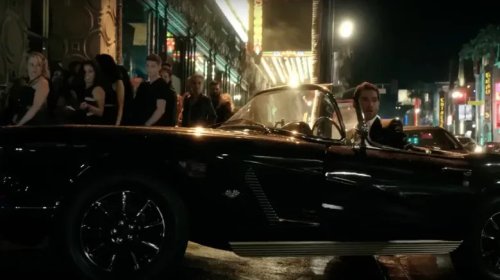
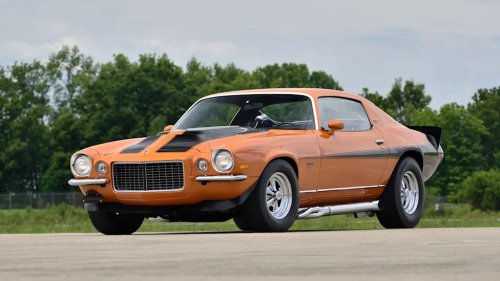
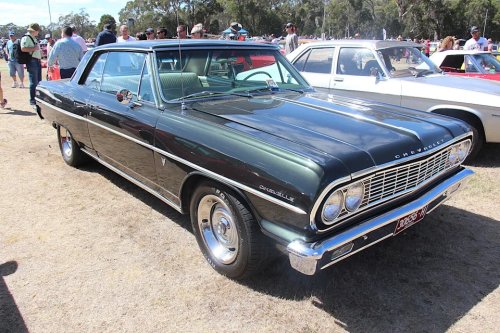
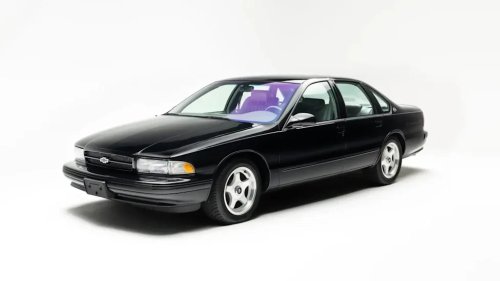
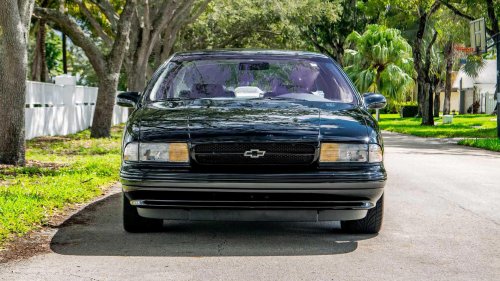
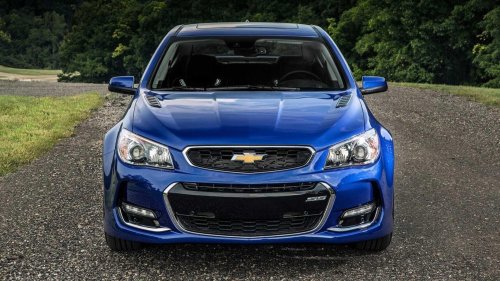
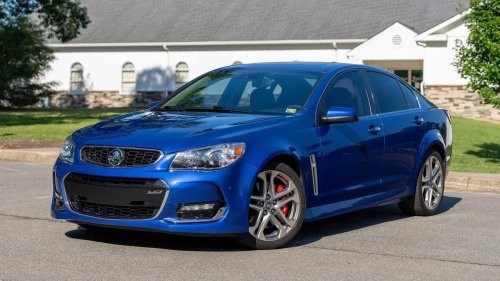
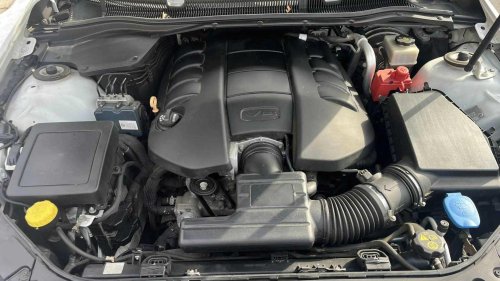
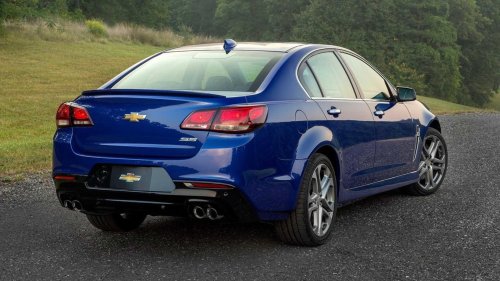
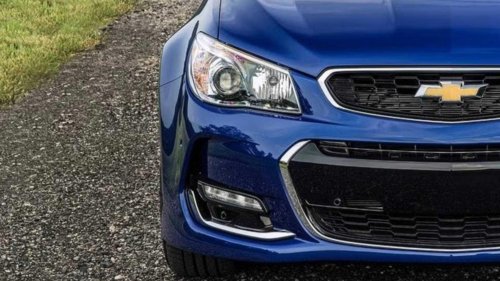
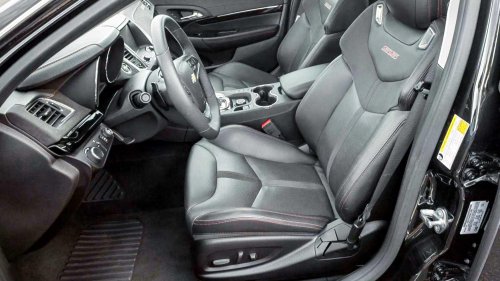
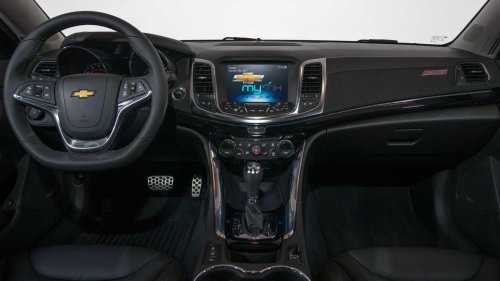
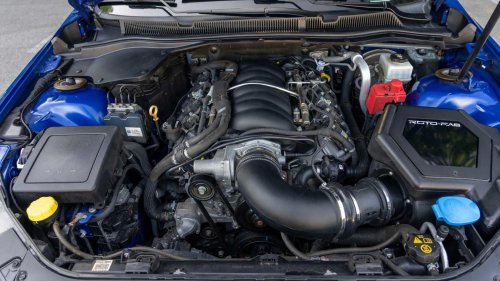
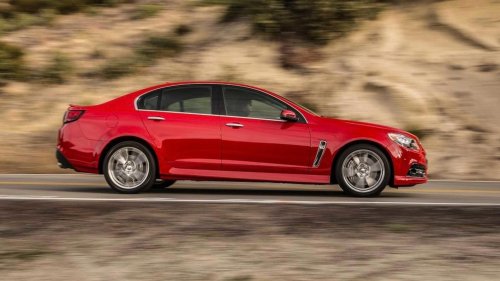
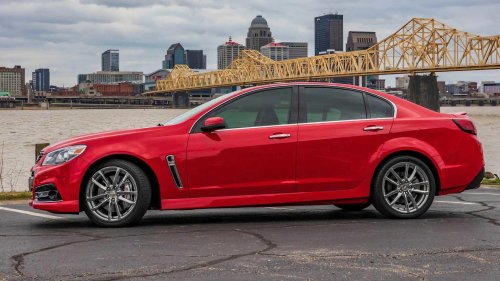
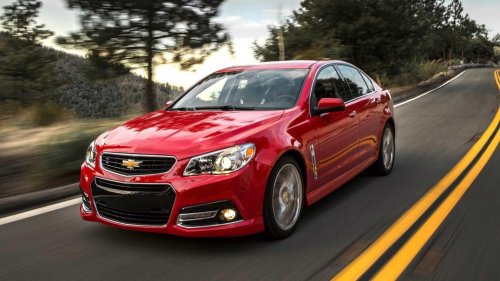
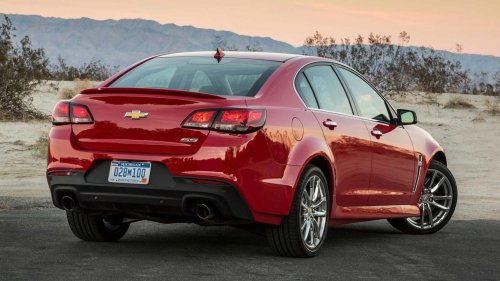
The only thing cooler than a fast sports sedan is a sleeper car. If you're scratching your head right now, a sleeper car is a regular-looking car that seamlessly blends into everyday traffic but hides huge power and performance credentials under its plain-looking exterior. That "gotcha" factor makes them irresistible to many gearheads, and manufacturers are well aware of it. You've definitely seen them before (even if you didn't know you did), both on the street and on the big screen – think Jason Statham and his black W12-powered Audi A8 in Transporter 2.Even Chevrolet – famous for producing muscle cars and America's favorite sports car – built its fair share of sleepers over the years. And while the brand is now focused mostly on building family SUVs and trucks (and the occasional Corvette), Chevy gave us what can easily be considered America's last great sleeper sedan in the 2010s.Powered by a now-legendary V8, this monster slid under everyone's radar when it was new, but thanks to its performance credentials, gearheads in the know are now turning around and buying it used while it's still cheap. The best part? If you didn't already know this car packed massive power, you wouldn't be able to tell until you heard it speed off. Chevy Usually Reserves Its Best Engines For The Corvette And Camaro Mecum To understand what makes this car so unique, we have to zoom out a bit and look at Chevy's performance strategy after the end of the muscle car era in the mid-'70s. Before the malaise era, Chevrolet experimented by offering its race-bred 425-hp big-block street cars in everything from Biscaynes to Impalas, Camaros, Chevelles, Novas, and even El Caminos, as long as you knew which boxes to tick. That's because GM's corporate policy in the '60s didn't allow Chevy to offer engines over 400 cubic inches in intermediate cars and pony cars like the Camaro to protect the Corvette’s image and keep insurance rates in check. Consequently, the wildest big-block builds usually came through special COPO orders, such as the legendary Yenko Camaros.As luck would have it, right after that restriction was lifted in 1970 and unleashed monsters like the 450-hp LS6 454 Chevelle and El Camino, new emissions regulations and insurance costs were already spoiling all the fun, before the oil crisis delivered the final blow in '73. If this big-block party continued for only five more years, who knows what insane vehicles Detroit would churn out next? Chevy's Forgotten Sleeper Sedan Of The '90s That Started It All Mecum AuctionsIn the early '70s, Chevy gradually started locking its best performance hardware into the Corvette and later the Camaro to protect its image and sales. The Corvette would get the most powerful V8, and the Camaro would end up with a slightly less powerful, detuned version.By the mid-'90s, there were no more big-block Corvettes either, but Chevy did put a big block in a performance vehicle one last time, and it was actually a pickup truck: the 1990-'93 Chevy SS 454. As it turns out, this was the granddaddy of modern muscle trucks like the Dodge Ram SRT-10 and even the Ford F-150 Raptor.There were no fast sedans either. However, in 1994, Chevrolet made an exception and gave enthusiasts one proper sleeper sedan by stuffing a detuned LT1 in an Impala. The car sent 260 horsepower and 330 pound-feet and could launch to 60 in 6.5 seconds – shockingly quick for a 4,000-lb sedan, but nowhere near as fast as the Camaro or Corvette. The Impala SS was sold only in black in 1994, cementing its image as a cop-car-looking sleeper with more power than you'd expect. We didn't know it at the time, but that was the last V8-powered RWD sedan Chevy would make until 20 years later.It wasn't until 2014 that corporate cost-cutting and clever platform sharing between GM's sister brands allowed Chevrolet to finally give the Impala SS a true successor that looked like a rental but packed a V8 straight out of the Corvette, but this time with much more power. Unfortunately, its sales figures were nothing short of a disappointment. The Chevrolet SS Is A Corvette-Powered Sleeper Sedan Chevrolet The 2017 Chevrolet SS's biggest strength has also always been its biggest weakness: it's simply too under-the-radar in every sense. It didn't flop because it was bad (far from it). Instead, no one bought one because no one even knew it existed. And many of those who did know about it vastly underestimated what it offered.Based on Holden’s VF Commodore Zeta platform – just like the Pontiac G8 before it – the SS was the only model Chevy had to import from Australia to sell in America. It was essentially a way GM could offer the Pontiac G8 to buyers after the brand went defunct in 2009. Except, everything from its badging to its origins and its design was so vague, you couldn't blame people for simply getting a Hemi Charger instead – even if it was slower and less equipped.Via: Bring a TrailerThe highlight of the Chevy SS is definitely the naturally aspirated LS3 V8 engine. It's a down-tuned version of the same engine that powered the C6 Corvette, with a more restrictive exhaust, pushing 415 horsepower and 415 pound-feet to the rear wheels. This was the only option in this car, and it's still brawny even by today's standards.Bring a Trailer In 2014, you could only have it with a 6-speed automatic, which helped the SS to 60 mph in a road test of 4.1 seconds under ideal conditions. However, the 2015-2017 models also offered a 6-speed manual, which would become the more desirable option. With the manual, the SS can reach 60 mph in just 4.5 seconds and cover the 1/4 mile in 12.9 seconds.To put that into some perspective, it means the $46,000 (new) Chevy SS sedan was just as quick as a Mustang GT or a Camaro SS was in 2015. If not quicker. In fact, it was more capable than many other sedans of its era too, including the Charger R/T with its 370-horsepower 5.7-liter Hemi V8 (14-second 1/4 mile) and the 365-horsepower Ford Taurus SHO (13.7-second 1/4 mile). Heck, pit it against a more expensive German sports sedan like the 2016 BMW 340i (BMW 340i xDrive review), and it's still much faster.The Chevrolet SS is a car that even a highway trooper would ignore until it was too late, leaving them no chance of catching up.Chevrolet Still, a near-perfect 50-50 weight distribution, magnetic ride control suspension with adaptive damping, and a limited-slip rear differential make the SS extremely rewarding to drive and give it BMW-like balance on the road. Reviewers routinely praise the SS's handling, highlighting how it beats many other sedans in tight corners, recording up to 0.96 g on the skidpad. It was essentially a boring-looking, four-door Corvette.If Chevy simply plastered any of these specs on billboards nationwide with the SS's image, I imagine that alone would have helped it sell out. But alas, nothing about the car really communicates its insane level of competence. It's a type of car you wouldn't have blamed your girlfriend for mistaking it for a Malibu or an Impala. Only true Chevy enthusiasts who are familiar with the "SS" moniker would have suspected this car is special.Otherwise, there are no crazy curves, splitters, or wings. No massive grille or flared fenders. In fact, the only hints toward some performance credentials are the red Brembos on all four corners and the fake vents on the hood and behind the front fenders, and a ridiculously tiny rear spoiler (why, Chevy?). If the aim was to make the ultimate sleeper sedan, I'd argue the SS would have been even cooler without any of these.Sure, it has big exhaust tips, but they peek out from below the most boring-looking rear bumper you can imagine – as opposed to being integrated into it. The SS has a lot going for it, but it ended up being an "if you know, you know" kind of performance car. For the average buyer, it's almost as if it didn't even exist, and as a result, Chevy moved just under 13,000 units in the three years this car was on the market before the manufacturing plant where it was being built was shut down in 2017. For comparison, the brand sold a staggering 86,297 Camaros in 2014 alone. The SS Is Way More Than Just An Engine Chevrolet The Chevy SS isn't just a sleeper in the performance sense; most people are also completely oblivious to how well-equipped these cars were when it came to tech and luxury.Bring a Trailer When it hit the market in 2014, the Chevy SS came standard with pretty much all the luxury bells and whistles you'd expect to see in an average German luxury sedan. Aluminum door sills welcome the owner into a fully leather-wrapped interior with well-bolstered heated and ventilated seats. Standard features included a head-up display, automatic parking, lane-keep assist, blind spot monitoring, lane departure warning, navigation, and more. The cabin is roomy and comfortably seats five.Chevrolet The driver can choose between tour, sport, and performance modes, and there's also a "secret" competitive mode designed for track use. The Chevy's Magnetic Ride Control system with adaptive dampers is still a fan-favorite, which instantly adjusts damping force based on road conditions. Keep in mind, these features were pretty much all standard, and made the $46k Chevy SS a value bomb when it was new. The LS3 V8 Combines Reliability And Muscle Car Performance Via: Bring a Trailer The LS3 V8 under the hood is still considered to be one of the most reliable modern GM engines. It first hit the market under the hood of the 2008 Corvette (C6) to replace the outgoing LS2. It utilizes a robust deep-skirt aluminum block with a strong bottom end alongside proven pushrod architecture.In Corvettes, it pushes up to 436 horsepower, but in the Chevy SS, it's been downtuned to 415 horsepower for a balance of daily drivability and performance. What this means is, it's even less stressed and more reliable. There are no forced induction headaches, either. This is an engine built to last.Over the years, the aftermarket for these has grown massively, and tuners have discovered they can reliably push them to over 600 horsepower with mostly stock internals. The most popular mods include Texas Speed cam kits and Kooks headers. It's also the go-to reliable engine swap for older cars.Chevrolet As for reliability, extensive research proved that owners generally have no issues with these engines. In the Chevy SS, in particular, it has been known to last hundreds of thousands of miles with just basic maintenance, as confirmed by many owners on Reddit. One of them mentioned their Chevy SS reaching 170k miles so far with just basic maintenance, with other commenters reinforcing the sentiment with their own six-figure-mileage stories.RepairPal quotes a very reasonable $833 in average annual maintenance costs (roughly on par with a Mustang, Camaro, or Corvette) and J.D. Power gives these cars an impressive J.D. Power quality rating of 83/100, but as much as 91/100 in the "driving experience" portion of the rating. One of the only problems with owning these cars is that some parts, like body panels, can be expensive and hard to source, given that they were all produced in Australia. But that's about it. The Chevrolet SS Is Still An Enthusiast Secret via Bring a Trailer A couple of years ago, all Chevy SS models were massive bargains and traded in the low $30,000 on the used market. Today, collectors are slowly waking up to these cars, and their values have risen to $39,000, on average. It's still easy to find a solid low-mile 6-speed manual in good condition for around $35,000-$40,000, but right now, the biggest bargains are actually the automatics (go figure). And the gap is massive.Chevrolet Clean 6-speed automatic Chevy SS examples still trade hands in the $20,000-$25,000 range, such as this beautiful white one that sold for $22,500 earlier this month. Meanwhile, low-mile 2017 manuals have sold near the original $50k MSRP or even for more. Phantom Black examples with the six-speed manual are considered the holy grail among buyers and are harder to find.Still, if you take just how well-equipped, luxurious, reliable, and capable these cars are, I'm willing to argue that paying anything under $40,000 for these cars is still considered a bargain. The Chevy SS also fits what many experts consider the best predictors of future value: enthusiast-focused, extremely rare and unique, undesirable when new, and very well-built. The Chevy SS ticks all those boxes and then some. Why The Chevy SS Is Quietly Becoming A Modern Classic ChevroletThe Chevrolet SS is starting to follow a very familiar pattern seen with past underappreciated performance cars—it’s transitioning from an overlooked used car to full-blown modern classic.Several factors are driving this shift. First is rarity, with fewer than 13,000 units sold in the U.S., the SS is significantly rarer than most of its rivals, including V8-powered versions of the Dodge Charger. Limited production numbers alone will probably make it more desirable as time goes on.Then there’s what it represents. The SS is one of the last naturally aspirated, V8-powered, rear-wheel-drive sedans ever sold with a manual transmission. As the industry shifts toward turbocharging, electrification, and automatic gearboxes, cars like this simply aren’t being made anymore.There’s also the driving experience. Unlike many modern performance sedans that rely heavily on electronics, the SS delivers a more analog, connected feel—something enthusiasts are increasingly seeking as newer cars become more digital and isolated.Put all that together, and it’s easy to see why values are rising. The secret is getting out, and the days of this car being a hidden bargain may not last much longer.Sources: Classic.com, Caredge, RepairPal, J.D. Power, Car and Driver, Motor Week, GM Authority, Goodcarbadcar.



















 +22 others