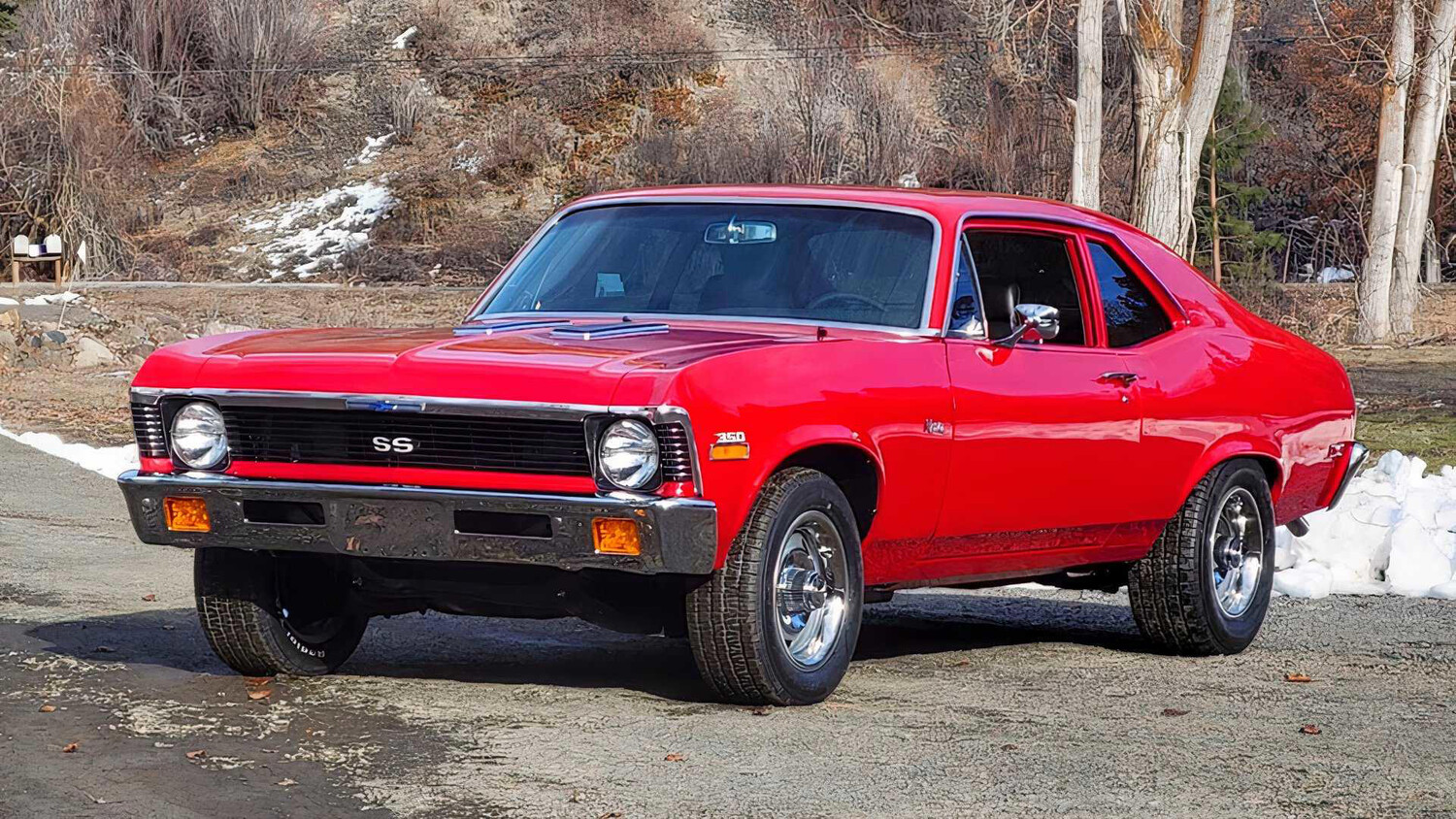
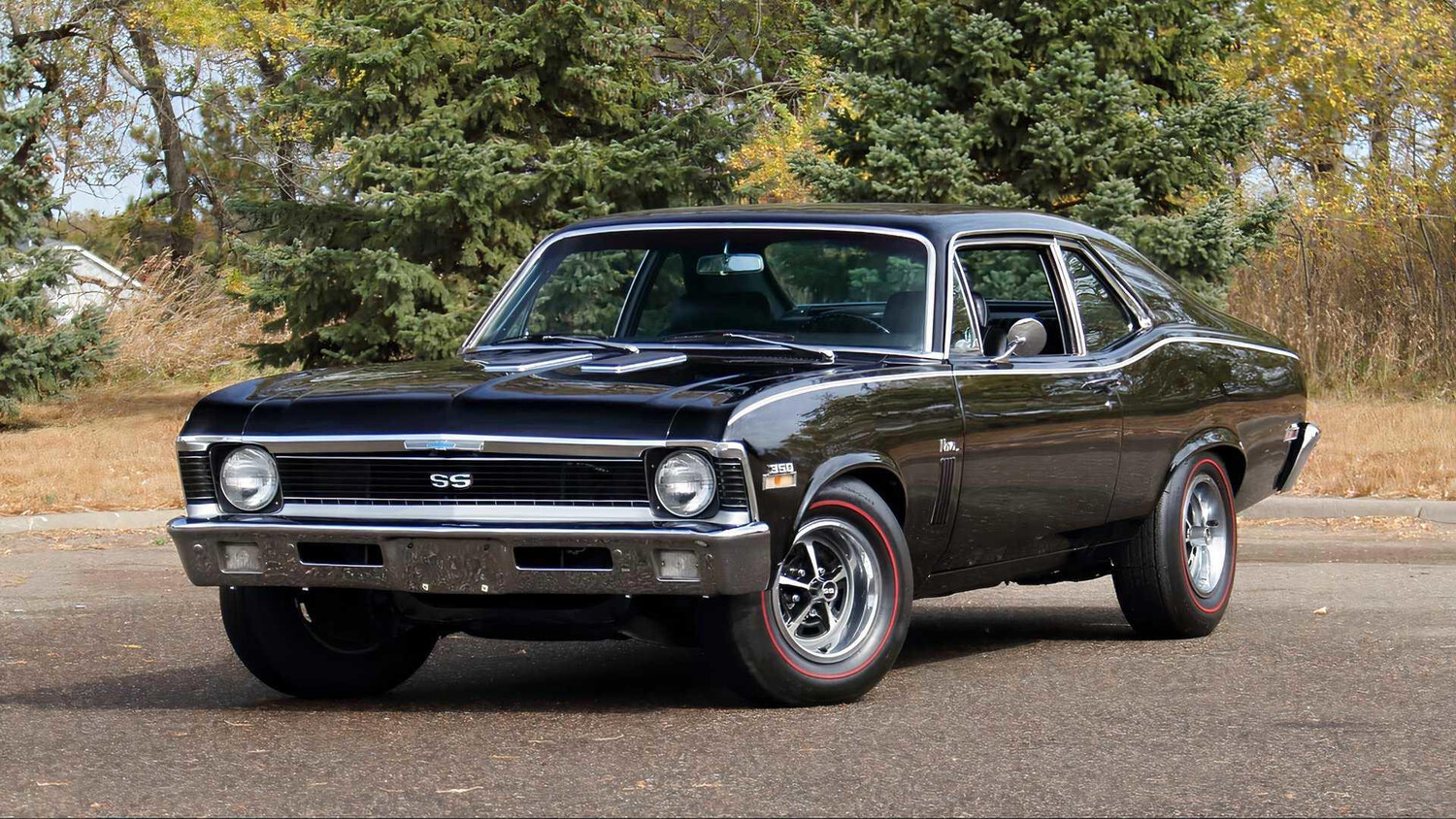
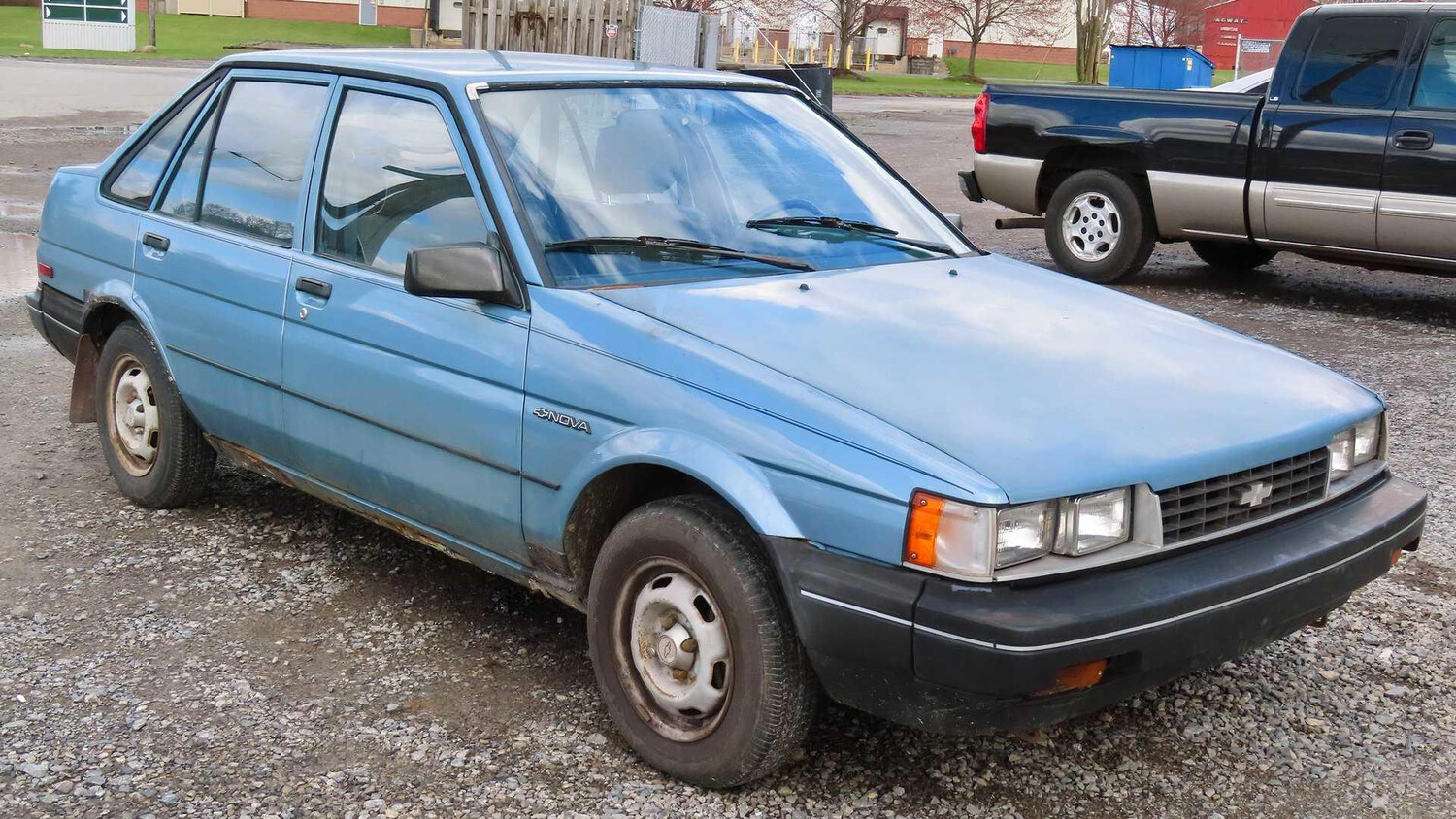
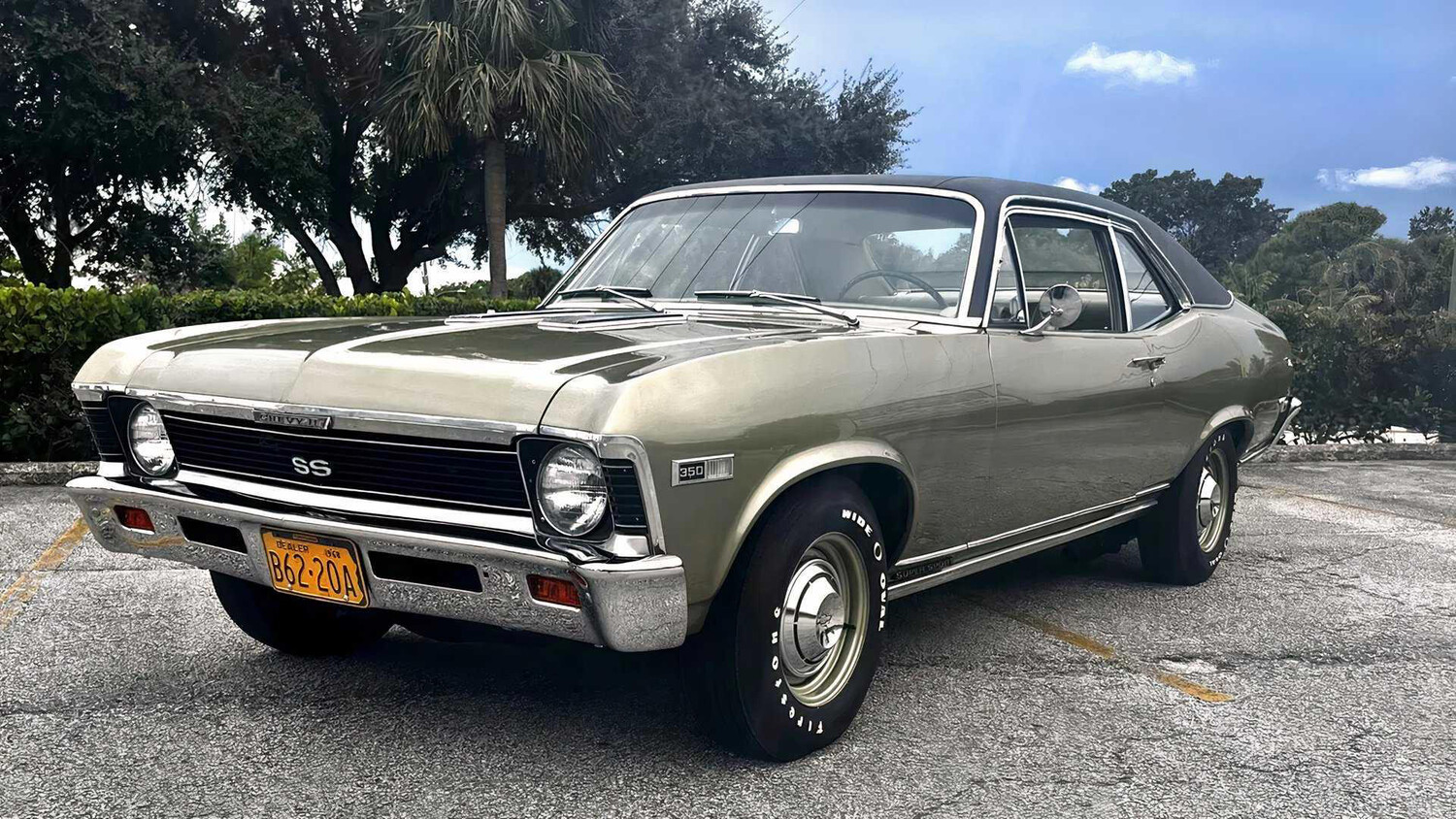
Some American Carsare more legendary than others. One of those more legendary models is definitely the Chevrolet Nova. Starting from fairly ordinary beginnings, the Nova ended up becoming a brilliant compact muscle car. It's a true staple of American car culture, and if you want to get into muscle cars it's one of the best classic options out there. So, here's everything you need to know about it! The Nova Is One Of Chevrolet's Most Legendary Models Mecum AuctionsThere aren't many Chevrolet models that have gained a more legendary reputation than the Nova. That's especially the case for 'muscle car' era of the Nova that lasted from the late '60s to the early '70s. But, the Nova's origins go back further than that. It was actually originally a car of the early '60s, designed to replace one of Chevrolet's most controversial cars ever. That car was the Chevrolet Corvair, a brilliantly quirky compact that fell victim to the fact that its rear-engined layout made its handling difficult (and even dangerous at times). The Chevy Nova Changed A Lot Over TimeMecumLike quite a few classic American models, the Chevy Nova changed quite a lot as time went on. The classic Nova went through a fair amount of styling changes, changes in engine options and a post-oil crisis refocus. It even had a minor name change partway through that classic run! It also resurfaced some time after the classic model stopped being produced, as a completely new car with a totally different appeal. First Generation (1962-1965) Bring A TrailerThe first-generation Nova was known as the Chevy II Nova, and was very much a car of its time. It has fairly ordinary, early-mid '60s compact car styling, and was available in a wide variety of body styles. You could have it in 2-door and 4-door bodystyles - the 2-door was available as a hardtop or a convertible, and the 4-door was available as a sedan or a station wagon. It also had a wide variety of engine options, ranging from a 153 cubic inch inline-4 to a 327 cubic inch V8. That wide variety of engine choices is something that would stay constant throughout the classic Nova's production run.The emergence of the V8 options in 1964 is what gave rise to the now-legendary Nova SS. The SS originally appeared in 1963 as an appearance package and nothing else. But, the appearance of those V8 options set the SS on the path to what it would become. Second Generation (1966–1967) MecumThe second-generation Nova (still called the Chevy II Nova) isn't much different from the first. It had a minor re-style, but that was really it. The engine options stayed mainly the same, with the only real differences being the 250 cubic inch inline-6 that was added in 1967 and the new 327 cubic inch Turbo-Fire V8. This new V8 was positioned as the top engine in the Nova's line-up, producing 350 horsepower and 360 lb-ft of torque. Third Generation (1968–1974) MecumThe third-generation Nova was the first generation to just be called the Nova, without the Chevy II part of the model name. It's the Nova generation that most people know, and also the generation that's the most loved. Part of the reason for that is due to how fantastic the SS model is. The third-generation SS was a proper performance trim now instead of just being an appearance package, with the option of bigger V8 engines for the first time. This included the legendary 350 cubic inch small-block V8, and the 396 and 402 cubic inch V8s. The non-SS versions still got all the same engine options that the second generation had, with the only real difference being that the 153 cubic inch inline-4 was now only available as a 3-speed manual.The third-generation Nova got a significant re-style as part of the changes. That included the 2-door convertible and 4-door station wagon model being dropped, and a 3-door hatchback model being added. Whlie that means that there isn't a Nova for everyone so much anymore, it did focus the car into something that was more for sporting and performance-oriented buyers.That new performance focus made these third-generation Novas absolute favorites for drag racing. People quickly found out that these compact muscle cars could handle big power and big engines without too many modifications, and the lightweight platform meant that you could get an amazing power-to-weight ratio. Some builders even experimented with turbocharging to get the power up to stratospheric levels. With such a big community of drag builders, it's also really easy to get aftermarket support to modify these Novas. Plenty of companies make upgraded engines, transmissions and suspension components for these cars, and they all tend to be very easy to install. Fourth Generation (1975–1979) Bring A TrailerThe fourth-generation Nova is the final iteration of the 'classic' Nova model. It followed the lead of many other classic American models in re-jigging itself for a post-oil crisis world of increasing fuel costs and environmental regulations. The biggest engine available was now the 350 cubic inch small-block V8, and it only produced up to 170 horsepower. The 153 cubic inch inline-4 and 230 cubic inch inline-6 were also taken away from the bottom end of the Nova's engine options. Enthusiasts definitely saw this as an unwelcome change. But, the Nova had to pivot, and Chevrolet decided that taking it away from its compact muscle car past and more towards a premium or luxury option was the way to go. Fifth Generation (1985–1988) Wikimedia Commons/MercurySable99The fifth-generation Nova is the odd one out in the Nova family. It's not an American muscle car in any way, and there's a good reason for this. It was the result of a joint venture between General Motors and Toyota. It was based on the platform of the fifth-generation (AE82) Toyota Corolla, adopting its front-wheel drive and efficient inline-4 engines as a result. It was also styled very much like an '80s compact car, in either 4-door notchback sedan or 5-door hatchback body styles. That must have been anathema to anyone who had nostalgia for the Nova name!This new, Toyota-based re-imagining of the Chevy Nova didn't last long. It wasn't as successful as Chevrolet hoped it would be. It was completely off dealer lots by 1988, and (unsurprisingly) most people have forgotten about it. Those who do still remember it often feel like it shouldn't have ever been made at all. Don Yenko Used The COPO System To Make Novas That Were Downright Terrifying MecumThe Chevy Nova was a car that you couldn't typically get proper big-block engines for. If you wanted something truly monstrous under the hood, you had to exploit the loopholes of the COPO system. That's something legendary Chevrolet dealer Don Yenko did, creating his own hot-rodded version of the Nova SS. This is known as the Yenko Nova, and the first iteration of it showed up in 1969. Known as the Yenko Nova 427 S/C, this car had the 425 horsepower (according to its official factory rating - in practice, it had quite a bit more power than that) 427 cubic inch V8. It also exclusively came with a 4-speed manual transmission. The result of that was a car that was so overpowered for its chassis that it was downright terrifying to drive. It's also one of the rarest Nova variants ever - only 38 of them were ever built, and less than 10 are rumoured to still exist.In 1970, Don Yenko made things a little bit more sensible. He introduced the Nova Deuce, which was powered by a 360 horsepower version of the 350 cubic inch small-block V8. It also let you have a 3-speed automatic transmission if you wanted something easier than the 4-speed manual. The Yenko Nova Deuce might not be as terrifying as the original Yenko Nova 427 S/C, but it was still a speed demon. It's also almost as rare, with only 175 examples produced in its one year of production. What Should You Look For If You're Buying A Chevy Nova?Bring a TrailerAll classic cars have problems. The Chevy Nova is no exception. These cars are known to suffer from all the usual old car foibles, such as rust. Fourth-generation examples have a particular rust problem around the radiator support bolt hole area, as well as cracks around there. The plastic bumper filler pieces in these fourth-generation cars are also very hard to find, so it's worth checking to see if they still have the original pieces or whether they've been replaced with the closest-fitting alternative that people can get now.The upside of things is that, thanks to how much aftermarket support there is for these cars, you can get a lot of mechanical parts cheaply and easily. Thanks to the Nova's ease of maintenance, you can replace a lot of those parts yourself if you know what you're doing. If you're looking for a project car that'll give you plenty of American muscle, it's probably one of the best options out there. What's A Chevy Nova Worth Today? Bring a TrailerBecause the Nova is such a varied car and was produced over a long period of time, their used values vary wildly. Regular versions of the most desirable third-generation Novas have an average used value of $57,544 these days. Go for the SS, and you can expect to pay around $72,153. On the highest end of the scale, a 1969 Yenko Nova sold for $852,500 at Mecum's Kissimee sale in 2026.If you're one of those people who actually wouldn't mind owning one of the Toyota-based fifth-generation Novas, you're going to be able to bag yourself a real bargain. A 1987 example sold for just $5,500 in 2024. It's unlikely that these bargain-basement values will change any time soon, too. While it won't make you popular with the purists, it could be a fun car to take along to a Radwood event or two.Sources: Bring A Trailer, Chevrolet, Classic.com, Mecum Auctions, Stevesnovasite.com YouTube (@1320video)FAQQ: What years is the classic Chevy Nova?The classic version of the Chevy Nova was in production from 1962-1979.Q: How much is a 1970 Chevy Nova SS worth?Q: What engine options were available in the Nova? The classic Nova had a wide variety of engine options, ranging from a 2.5-liter inline 6 to a 7-liter V8. The fifth-generation Nova used 1.6-liter inline-4 engines.Q: Is the Chevy Nova a muscle car?The classic Nova is generally considered to be a muscle car. The fifth-generation Nova is a compact.Q: What is the rarest Chevy Nova?The rarest Chevy Nova is the 1969 Yenko Nova S/C 427. Only 38 of them were ever produced, and less than 10 are believed to still exist.