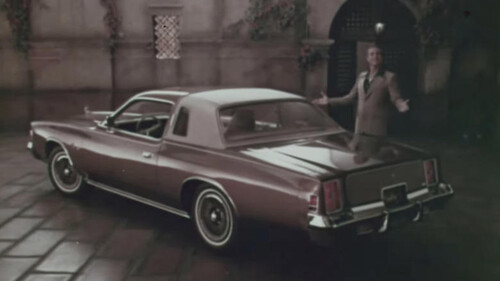
Detroit usually made Muscle Cars louder when it wanted buyers to notice. Stripes, scoops, decals, cartoon names, wide-letter tires, and paint loud enough to make traffic cops stretch before writing a ticket were all part of the deal. The formula was simple: if a car had the power, it had to look like it had just escaped from a drag strip.This one, though, went the other way. It hid the good stuff under a body with no special badging, no patriotic graphics, and no major advertising push. Even better, the package could reportedly be ordered on something as sensible as a station wagon. Somewhere in that strange decision is one of the funniest and most fascinating muscle car stories of the early 1970s: a factory performance car designed to disappear in plain sight. When Muscle Cars Started Losing The Plot Bring a TrailerThink back to 1971 and the muscle car era was already limping toward the exit. The late-'60s party had been glorious, but it came with a cleanup bill. Insurance companies were getting wise to big horsepower, emissions rules were getting tighter, and buyers who once wanted quarter-mile glory were starting to hear uncomfortable words like premiums, fuel economy, and regulations.But muscle cars were built on excess, so it's a weird pivot. They worked best when gas was cheap, horsepower was easy to advertise, and buyers could convince themselves that a big-block intermediate with a loud exhaust was a perfectly normal commute vehicle. By the early '70s, that story was getting harder to sell. The cars still looked mean, but the world around them had started to change. Cheaper, Quieter, Stranger Bring a TrailerAMC knew this better than most. It had already taken a proper swing with the Rebel Machine, a one-year-only performance model dressed in red, white, and blue war paint. It had the right attitude, the right kind of visual theater, and enough patriotic flair to make a bald eagle ask for a volume knob. But AMC was still AMC, fighting giants with deeper pockets, bigger dealer networks, and muscle cars buyers already knew by heart.The Rebel Machine was loud in the traditional sense, yet it couldn’t change AMC’s position in the muscle car food chain. It was outnumbered by the big names and arrived right as the market was starting to cool. So AMC’s next move, logically, wasn’t to go louder. It was cheaper, quieter, and much stranger. AMC Built A Muscle Car You Had To Know About Bring a TrailerInstead of replacing the Rebel Machine with another billboard on wheels, AMC tucked its next performance idea into the order sheet. Strange, but true. Detroit usually wanted people to see the expensive bits from three lanes away, but AMC built a package that asked buyers to know exactly what they were asking for.The package pulled together the kind of hardware that was important. It could include V8 power, dual exhaust, heavy-duty handling equipment, power front disc brakes, 15-inch styled steel wheels, E60-15 Goodyear Polyglass raised-white-letter tires, and a space-saver spare. It was a proper muscle-era parts bin grab, just without the matching costume. Secret Menu Item Bring a TrailerYou could choose a 360-cubic inch V8 or go for the 401ci V8. The 360 came in at 285 horsepower, while the 401 had 330 hop, though period horsepower figures vary depending on the source and rating context. The early '70s were messy years for power ratings, frankly. Automakers were moving from old gross horsepower figures to more realistic net ratings, and the numbers often look confusing today.The pricing made the whole thing even stranger. The 360 version cost as little as $373, while the 401 version came in at $461. In muscle car terms, that’s basically the price of unlocking a secret menu item. For a few hundred bucks, a buyer could turn a sensible AMC into something with real teeth. The catch, of course, was that almost nobody seemed to know the secret menu existed. The 1971 AMC Matador Go-Machine Was The Invisible Muscle Car Bring a TrailerThe car hiding behind all this is the 1971 AMC Matador Go-Machine, the quiet successor to the Rebel Machine. If the Rebel Machine walked into a room wearing a flag, the Matador Go-Machine slipped in through the side door wearing a cardigan and sensible shoes.The Go-Machine wasn’t really a model in the way most buyers think of a muscle car model. It was an option package, and that gave it a very different personality. Instead of a dedicated exterior identity, AMC offered a performance setup that could be folded into the Matador line without making the car scream about it. A few disclaimers here: there were no unique exterior badges to announce it, no crazy paint package, no special VIN code that makes modern verification easy. Today, paperwork such as a factory build sheet, dealer order, or window sticker matters hugely because the car itself doesn’t do much talking.Production is another part of the fog. Reports vary, but the safest range places total Go-Machine sales at roughly 50 to 70 units. This is deep-rarity stuff, the kind of production volume that makes even many famous limited-run muscle cars look common. Performance was respectable for the moment, especially considering the car’s low-drama appearance. The hottest versions are linked to 0-60 mph times of around 8 seconds and a quarter-mile in about 16 seconds. That won’t scare a modern hot hatch, but in 1971, inside an anonymous midsize AMC with minimal exterior tells, it was sneaky in the coolest possible way.The Matador also had a broader identity beyond this rare package. It was AMC’s mainstream midsize car, offered as a two-door hardtop, four-door sedan, and station wagon. It served regular families, fleets, and even police departments, which makes the Go-Machine twist even more subtle. The Wagon Detail Makes The Whole Story Better Bring a TrailerThe Go-Machine package could reportedly be ordered on a four-door sedan or station wagon. Read that again, because this is where AMC accidentally invents one of the best sleeper concepts in Detroit history. A 401-powered station wagon with dual exhaust, heavy-duty handling hardware, power front disc brakes, and no exterior badging sounds like something a forum user would invent after too much coffee.That was the magic of the package. Because it wasn’t tied to an obvious visual identity, the idea of a Go-Machine wagon feels almost too good. Imagine a family hauler sitting on styled steel wheels, looking ready for a grocery run, while packing the same basic performance intent as the coupe. It’s the kind of car that would make a stoplight hero deeply reconsider his choices somewhere around the second gear change. Brutal Timing Bring a TrailerThere’s a practical side to the absurdity, too. The Matador wagon itself was a real family tool, with useful space and available three-row seating. That made it exactly the wrong place to expect factory muscle hardware. And this might be subjective, but the lack of badging makes the wagon angle stronger, not weaker. That’s sleeper behavior at its purest, and frankly, Detroit could use a little more of that energy.The tragedy is that AMC’s timing was brutal. The company had the idea right when the market was losing interest in exactly this sort of thing. Insurance pressure, emissions rules, and changing buyer priorities meant a nearly invisible performance package had almost no chance of becoming a showroom hit. It was clever, affordable, and genuinely different, which in 1971 was apparently a terrific way to make sure hardly anyone bought it.Sources: Street Muscle Magazine, Cars For Sale.