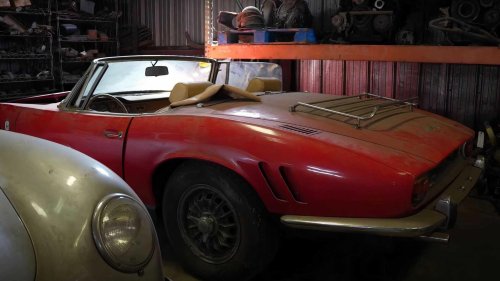
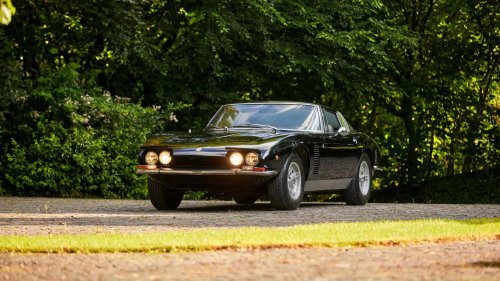
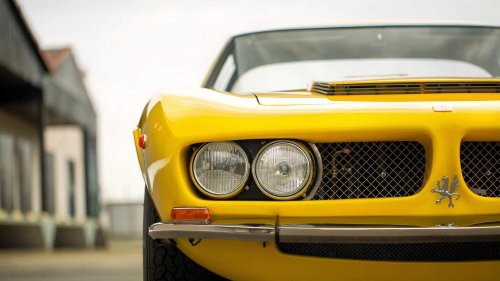
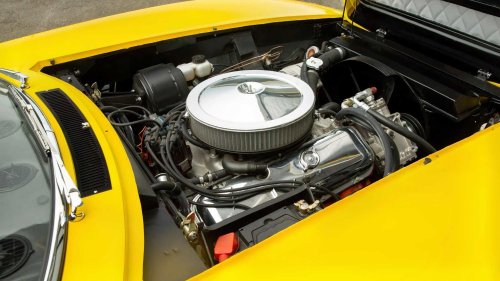
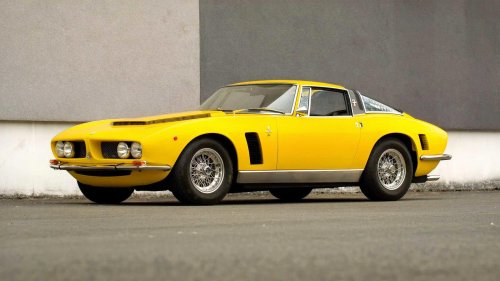
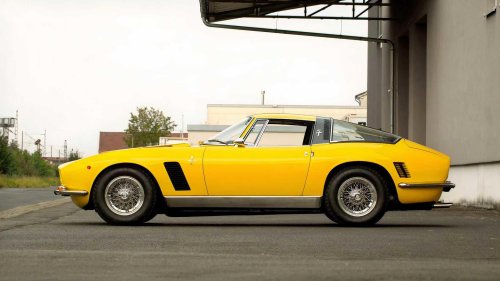
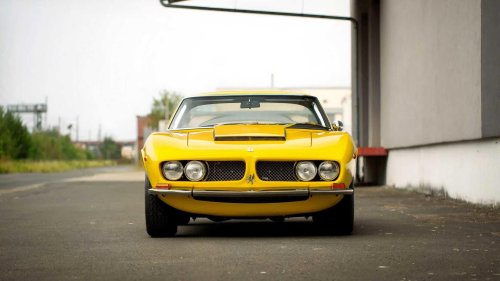
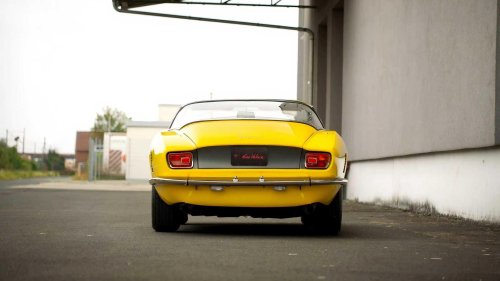
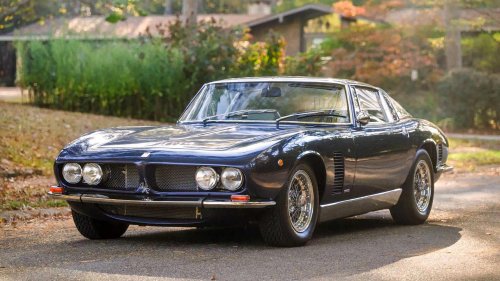






















There is a company in Italy that started by making refrigerators, graduated to bubble cars, and then produced one of the most beautiful grand tourers of the 1960s. The coachwork was penned by the same designer who later drew the DeLorean and other icons. The chassis was engineered by the man behind one of the most valuable Ferrari ever built.The tragedy is not just that nobody bought it. It's that nobody even knew it existed. It was an extraordinary machine from an extraordinary team of people, built at exactly the right moment in automotive history, and dismissed by the market because it did not have the right badge on the hood. The 1960s Had More GT Cars Than History Could Keep Track Of Mecum The 1960s are widely regarded as the golden age of the grand tourer. Italian manufacturers dominated the segment with cars that were simultaneously beautiful, fast, and artisanally crafted. Ferrari, Maserati, and Lamborghini, the three brands that established the blueprint for what a GT car should be, owned the market, the press coverage, and the imagination of every wealthy buyer from Milan to Manhattan. They had factory racing programs, established dealer networks, and the kind of brand recognition that money cannot manufacture. They were untouchable. Ferrari, Maserati, And Lamborghini Hogged All The Spotlight Mecum If you were a wealthy buyer in 1966, you walked into, those were the showrooms you walked into. Ferrari had the 275 GTB and the 365 GTB/4 Daytona. Maserati had the Ghibli. Lamborghini arrived to the scene with the Miura and changed the definition of what a supercar could be. These were the poster cars of the era, the film stars, the concours regulars. With the big three consuming every column inch of automotive press, nobody was seriously considering a company that had previously manufactured refrigerators, even if their cars were faster and cheaper than the established names. The Small Italian Coachbuilders That Got Lost In The Noise Via 2varish/ YouTube In the shadow of the big three of Italy, the 1960s produced a wave of small Italian manufacturers building extraordinary cars that were almost entirely absent from the history books. Many of them used American V8 engines for the very practical reasons of cost, reliability, and parts availability. They paired that American muscle with Italian design and Italian chassis engineering.European purists rejected them on principle. A Chevrolet engine under Italian sheet metal was considered impure, regardless of what it could actually do on the road. That snobbery drove most of these companies into obscurity. The 1973 oil crisis finished the job. Without dealer networks, without production volume, and without the prestige of a famous badge, they had no buffer when demand collapsed. The Iso Grifo Had A Corvette Engine In A Giugiaro Body, And It Was Magnificent Bring a Trailer The car that never got its moment is the Iso Grifo. Cheaper, faster, and more reliable than almost anything the Italian titans were selling at the time, dismissed purely because it had an American engine under the hood.The name Grifo means griffin, the mythological creature with the body of a lion and the head of an eagle. The name was a deliberate nod to its dual identity: American power, Italian body. The irony is that the identity the brand was most proud of was the same identity that cost it everything. A Refrigerator Tycoon, A Racing Engineer, And Italy's Greatest Designer Walk Into A Factory Bring a Trailer The origin story of the Iso Grifo is one of the more unexpected in automotive history. Renzo Rivolta had built his fortune through Isothermos, a company that made refrigerators. It then produced the Isetta bubble car, which BMW eventually licensed and made famous. The Isetta profits funded Renzo's real ambition: proper GT cars. The Iso Rivolta IR 300 came first, a 2+2 coupe built on Chevrolet Corvette mechanics with coachwork by Giorgetto Giugiaro at Bertone. Then Giotto Bizzarrini arrived. He was one of the engineers who had walked out of Ferrari in the famous 1961 revolt.Bizzarrini had previously designed the Ferrari 250 GTO, one of the most valuable racing cars in existence. He looked at what Rivolta was building and offered to do the chassis and engineering for a dedicated two-seater GT. He called his racing version his "Improved GTO," put a Chevrolet engine in it and built something faster than what he had left behind at Ferrari. Nuccio Bertone, whose studio was responsible for the coachwork, referred to the Iso Grifo coupe as his masterpiece. This is the same studio that brought the world the Lamborghini Miura and the Countach. A Chevrolet V8 Under Italian Sheet Metal That Could Embarrass Maranello Bring a Trailer The combination worked exactly as well as it should have. The 327 cubic-inch Grifo GL was quicker than a Ferrari 275 GTB and significantly cheaper to service. Then, for 1968, 90 monsters were built with the name "7 Litri." The Penthouse hood scoop was necessary to fit a Chevrolet 427 big-block producing 435 horsepower, operating in Ferrari Daytona territory. Only it was better because you could take it to a Chevrolet dealer for maintenance. Try doing that with a Ferrari V12 in 1968.The Grifo's design was so influential that the Maserati Ghibli, which followed from the same designer in 1966, shares its proportions, its fastback shape, and its overall silhouette. Giugiaro refined his own existing design and handed it to Maserati. The Ghibli got the recognition. The Grifo got nothing. Faster Than A Daytona, Cheaper Than A Ghibli, And Nobody Bought It Via Bring a Trailer The Grifo was faster than the Ghibli and cheaper than the Daytona, and it was available first. The people who would have bought it simply did not know it existed. The badge was wrong, the marketing was nonexistent, and the Italian establishment had already decided that American engines disqualified a car from serious consideration. It was a genuinely brilliant package failed entirely by perception, not by performance. The Performance Numbers That Should Have Made It Famous Via Bring a Trailer The 7 Litri hit 60 mph in approximately 6.1 seconds and topped out at a claimed 186 mph, with independent observers putting the real-world figure closer to 162 mph. For context, the Ferrari 365 GTB/4 Daytona made 352 hp, hit 60 mph in 5.4 seconds, and topped out at 174 mph. The Maserati Ghibli made 330 hp, did 0-60 in approximately 6.8 seconds, and hit 154 mph. The Grifo sat squarely between them in performance and below both on price.At Le Mans, the competition version of the car, the A3/C, took class wins in both 1964 and 1965. In 1965 it finished ninth overall, running with the GT40s and the Shelby Cobras over the Mulsanne straight. Remember, this was a car from a company that used to make refrigerators. Why Being Half-Italian, Half-American Killed It In Both Markets Bring a Trailer The Grifo fell into an identity gap between two continents with completely opposite ideas about what a grand tourer should be. European buyers sneered at the Chevrolet badge. American buyers had never heard of Iso. The car was a masterpiece designed for a market that did not exist.When Renzo Rivolta died suddenly in August 1966, Bizzarrini departed and took the racing program with him. Iso lost the engineer who had designed the GTO. That was a blow the company never recovered from. Then came the 1973 oil crisis. With only 413 total cars sold across nine years of production, Iso had no financial reserves to absorb the shock. The company closed in 1974, and the Grifo went with it. Fewer Than 500 Built And Now One Of The Most Undervalued GTs On Earth Bring a Trailer The Grifo now commands an average sale price above $500,000 for clean examples, with Series I cars averaging around $400,000. A Ferrari Daytona routinely sells for over $700,000. The Grifo is rarer, with arguably better looks, and comes with a drivetrain you can maintain for a fraction of the price. Project-condition Grifos have sold for around $162,000. The highest recorded sale crossed $1.8 million in October 2024. The market is waking up, slowly and decisively. The Last Affordable Giugiaro-Designed GT You Can Actually Buy Bring a Traier The Iso Grifo is the last Giugiaro-designed GT that remains genuinely attainable. A car sketched by the same hand that drew the DeLorean, the Volkswagen Golf, and the Maserati Ghibli. Engineered by the man who built the Ferrari 250 GTO. Coachwork by Bertone, the studio that gave the world the Miura and the Countach. Fewer than 500 examples survive. It is still cheaper than a Ferrari Daytona. It will not be for much longer, and when the window closes, it will not reopen.