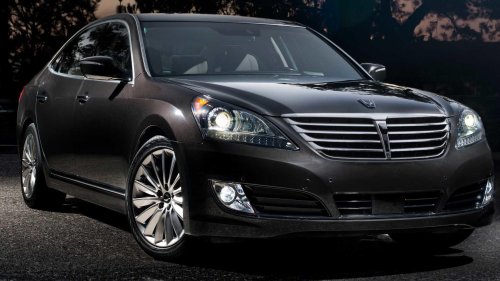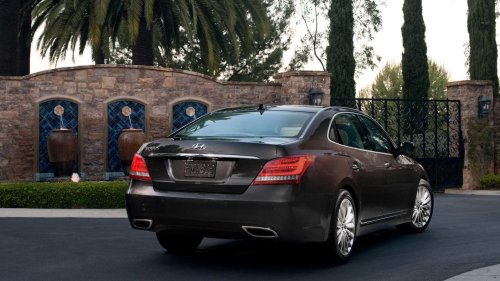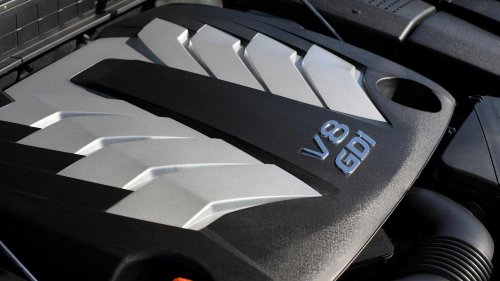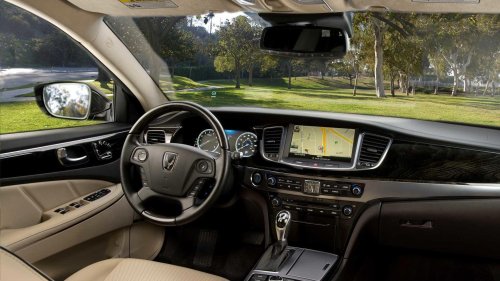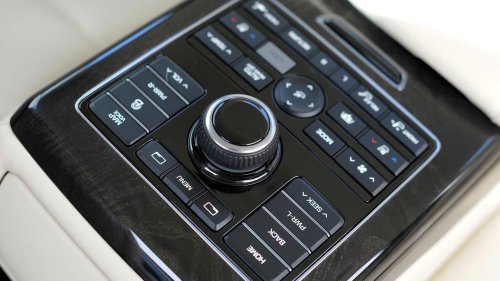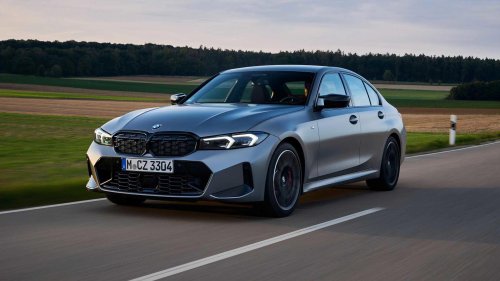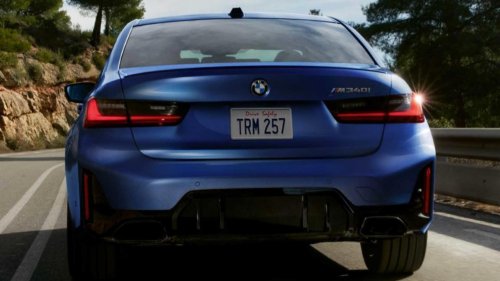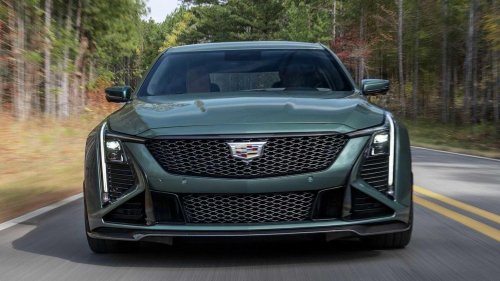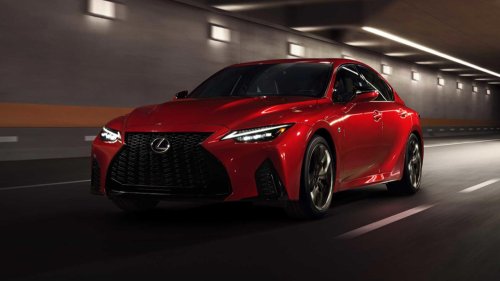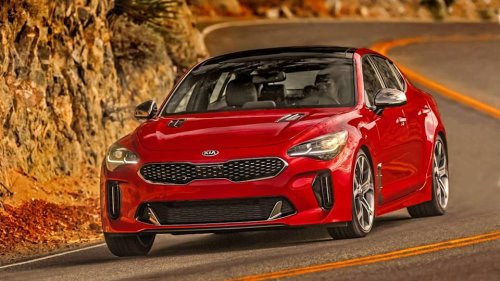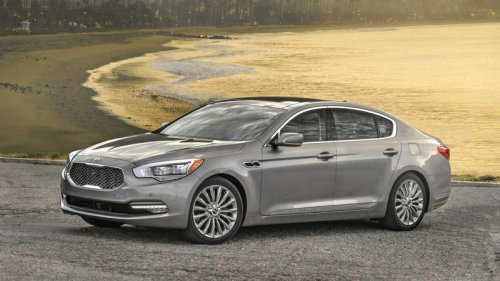
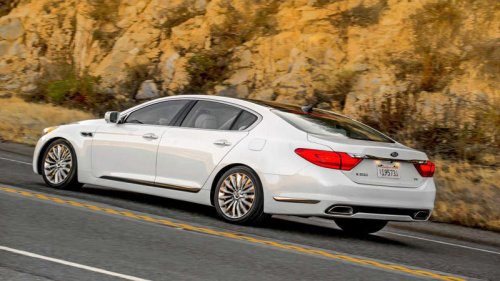
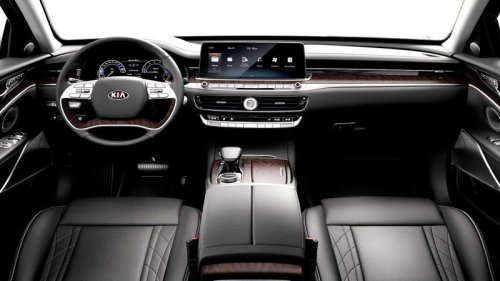
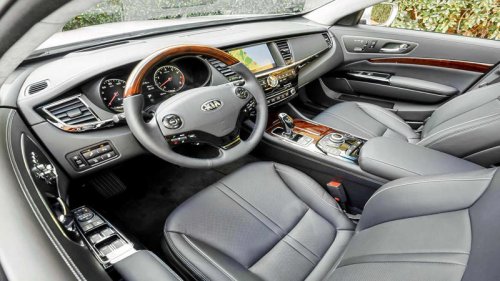
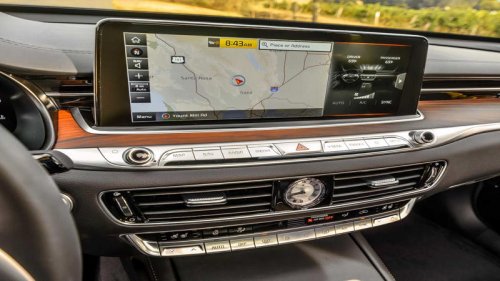
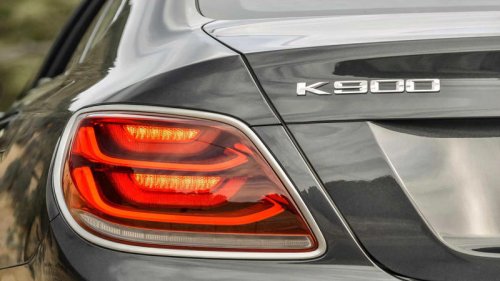
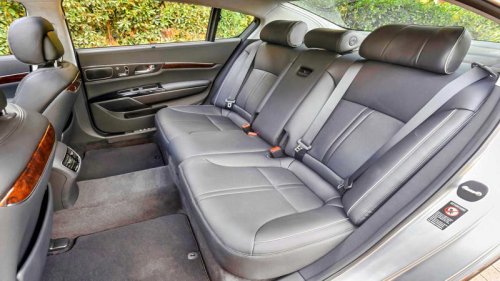
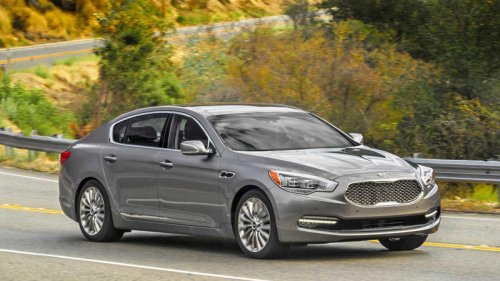



















The heyday of sedans is disappearing further into the past, as is peak-V8. Seeing any automaker attempt a new sedan in the modern era is exceptionally rare, especially in the world of full-size luxury vehicles. Over the last decade, we’ve lost a plethora of sedans, but the crossover craze has hit flagships the hardest. The Acura RL is gone, the legendary Lexus LS is gone, the Cadillac CT6 is gone, and the Audi A8 is down to its final year and its unlikely the Genesis G90 will live to see a third-generation. Surprisingly, the “Phantom” sedan in question came equipped with a V8, which, if you look at the current selection of available vehicles, is slowly disappearing alongside the sedan, the manual transmission, and most forms of automotive happiness.The thing the remaining full-size luxury sedans share is their importance and status within the brand. The BMW 7-Series is the pinnacle of BMW-themed luxury. The Mercedes S-Class IS Mercedes in many ways. The S-Class has introduced technology to the automotive industry, such as seatbelt pre-tensioners, LED lighting, adaptive cruise control, and, most recently, rear-seat frontal airbags. That is why the S-Class persists. It’s also why our Phantom V8 sedan is unknown even to some of the nerdiest car enthusiasts. Good, but sadly, not segment-defining or revolutionary. The Kia K900 Was A 420-Horsepower V8 Luxury Sedan Kia A Kia?? Yes, shock and awe, Kia made an S-Class competitor. Today, it might not be quite as surprising to see a Kia badge on a surprisingly competent luxury or performance vehicle, but 13 years ago, when the K900 was introduced, boy, was it a shock. Consider the Kia lineup at the time. The Optima Limited was as opulent as it gets for a Kia of that vintage. And, no disrespect to the Optima, which was a solid offering, but the plastic-fantastic interior in no way indicated that Kia would be moving up-market…and really up-market with the K900. A press release from Kia in 2013 says about the K900, “The all-new 2015 K900 is poised to challenge the full-size rear-drive luxury sedan segment with an extensive list of standard equipment, world-class accommodations, and stunning design that will redefine consumer perception and expectations of the Kia brand.”Kia Kia, along with Hyundai, was planning to change brand perception. Historically, it’s always been hard for a brand that primarily produces “regular” cars to justify a luxury car price tag, even if the product justifies the price. There is a reason why brands like Lincoln, Lexus, Acura, Cadillac, and Infiniti exist. Forgetting for a moment that full-size “every man” work trucks are $50k plus, people have a hard time adapting to a product far outside the scope of a brand’s image. The Kia K900 (and Hyundai Equus) were intended to initiate that transition in public perception. And what better way to do it than to jump into a segment dominated by the most well-known luxury marques with a 420-horsepower 5.0L V8-powered luxury sedan? Did The K900 Actually Compete With German Rivals? second-gen K900 Short answer: yes, it did. There will be naysayers who struggle to see beyond the image Kia conjures for some people, so let’s look at the facts. To paint a clearer picture, let’s take the segment icon, the S-Class, for comparison. And right out of the gate, let’s agree that if you’re willing to spend big money on options, the S-Class and 7-Series are obviously superior. They simply offer more, and the price reflects that, so it’s not exactly surprising. However, if you look at what it offers as standard, the K900 is nearly in lockstep with the German brands. Standard features on the Kia in 2015 that require the purchase of an optional package on the S-Class of the same year include: blind spot monitoring, lane departure warning, rear cross-traffic alert, 17-speaker Lexicon premium audio (13-speaker Burmester is an option on the S-Class), ventilated seats, and even heated rear seats. Keep in mind that the V8 K900 started at just under $55k, while the base S550 in 2015 started at just under $95k.Kia A fully-loaded K900 would have only set you back around $67k in 2015, while an optioned-out S550 would have been nearly $130k. A full-loaded K900 with the “VIP Package” includes reclining and ventilated rear seats, a massive 12.3” digital gauge cluster, a heads-up display, a 360-degree camera, and even soft-close doors! Which means that you could buy a fully optioned K900 AND a 2015 Cayman S for the same money as a fully optioned S550. Now, it’s worth noting that the Mercedes does offer a whole host of features like massaging seats, magic body control suspension, Distronic, Night Vision Assist, and even heated armrests—all things the Kia doesn’t offer, and that’s not even the complete list. It’s also worth noting that journalists at the time described the K900 as floaty, soft, and Lincoln Town Car-esque. A Car and Driver article from 2015 by Alexander Stoklosa and John Phillips even described the steering feel as “pea soup”, so it's clear that it’s not quite luxury performance as with the German brands, but more of an old-school approach to building a luxury sedan. So maybe the Kia isn’t quite on par with some rivals, but when it comes to material quality, standard features, and overall comfort, in-period reviews found the K900 to be a compelling alternative to the usual suspects. The Badge Problem Kia It’s a real shame, but like with clothing, jewelry, and even tools, many of us have a tendency towards brand snobbery. Now, that may be a result of past experience or a brand with a deservedly poor reputation, but it can be a major barrier for a brand without significant name equity. As previously mentioned, there is a real business case for automakers introducing sub-brands to legitimize their occupation of a different market segment. People in the North American market wouldn’t accept an S-Class-level product from Toyota, so Toyota introduced Lexus. A new brand unencumbered by the baggage of its past. Though Hyundai did this with Genesis right around the same time Kia introduced the K900, Kia did not. The K900 proudly wears a Kia badge. Unfortunately, despite the product being of more than sufficient quality to justify its $60k price tag (especially compared to the cost of a 7-Series or S-Class), it begged the question “$60k for a Kia?” None of us is immune to this, but it’s so silly for an incredibly competitive product to be dismissed simply because of the letters or symbol on the hood. They Did Succeed...From A Certain Point Of View Kia Thankfully, despite the badge snobbery and confusion, Kia succeeded in its mission with the K900. Did it succeed as a standalone product? Eh…not really. That said, it DID succeed in the sense that it changed brand perception. Now, it's true in some sense that all cars have greatly improved in perceived quality in the last 10 years, but look at how far Kia and Hyundai have come. When the K900 was released, their compact offering was the spartan and cheap-feeling Forte. Today, they offer the popular and competitive K4 in that same segment. More impressive was the Kia Stinger. Without the K900, Kia would have no experience with building rear-wheel drive cars, and the Stinger would’ve likely been subject to even more confusion and hesitation from customers.Kia Thanks to the K900, it wasn’t quite as shocking when Kia decided to introduce a rear-wheel drive 365 HP 3.3L twin-turbo V6 equipped M340i fighter. To be honest, it was still a bit of a shock, but with the Genesis brand introduced a few years earlier and the K900 doing some early legwork, the Stinger launched to critical success. Despite being less successful with respect to sales, the Stinger continued to help shape the public perception of Kia to include greater variety and to legitimize more performance and luxury within the brand. The Phantom V8 Kia With all this positive K900 talk, you might be wondering, “If it’s so good, why haven’t I seen one?". If you’ve even heard of the K900, you’re more in the loop than most. While it was successful insofar as it had a major impact on the brand as a whole, the K900 was not a sales success. During its most successful sales year, 2015, it sold only 2,524. In that same year, the S-Class sold 21,934 units. Of the 8 years Kia sold their flagship V8 sedan in the North American market, 6 saw fewer than 1,000 sold, and 5 of those 6 saw fewer than 500 sold. Unfortunately for Kia, the luxury sedan market had already begun its death march by the time they introduced the K900. Had they found a way to make a luxury successor to the V8 Borega SUV, they might have found more buyers. However, given the blueprint left by Lexus, Infiniti, and others who introduced their new brand with a flagship sedan, it almost made sense. And yet, the SUV/crossover market was just so dominant by the end of the K900’s first generation in 2018 that companies like Ford decided to stop sedans altogether, let alone full-size luxury sedans.Kia It’s worth noting that the second-generation of the K900, sold from 2019-2021 in North America, dropped the V8 option entirely. Which makes the first-generation V8 even more rare and more special. Not special enough that you can’t get a super low-mileage V8 for $15k or less, but nevertheless, an important contributor to the reimagining of the Kia brand and a true Phantom of automotive history.Sources: CarandDriver.com, KiaMedia.com, Media.musa.com, goodcarbadcar.com