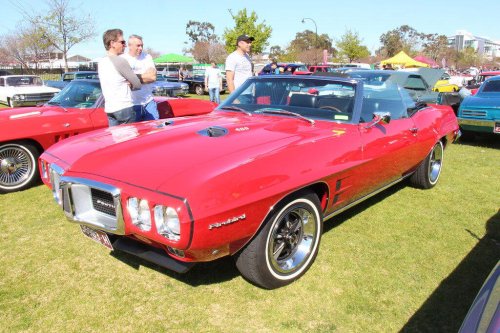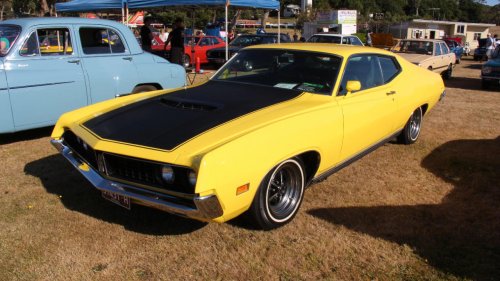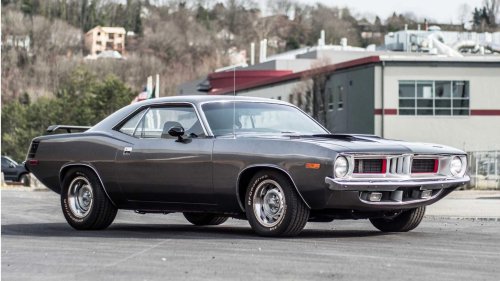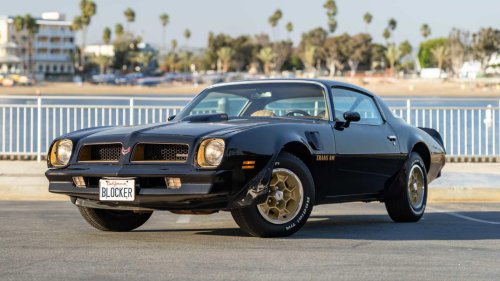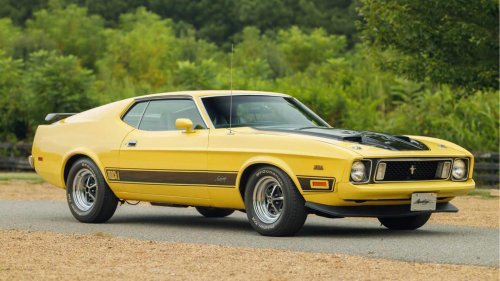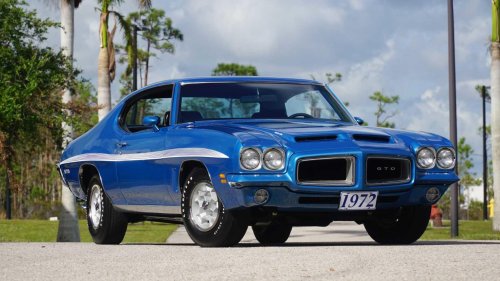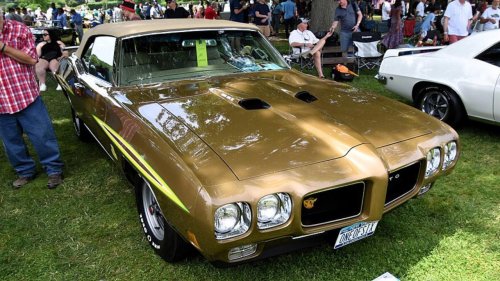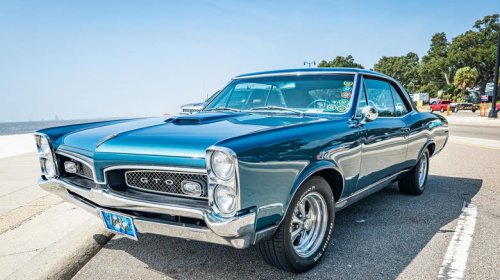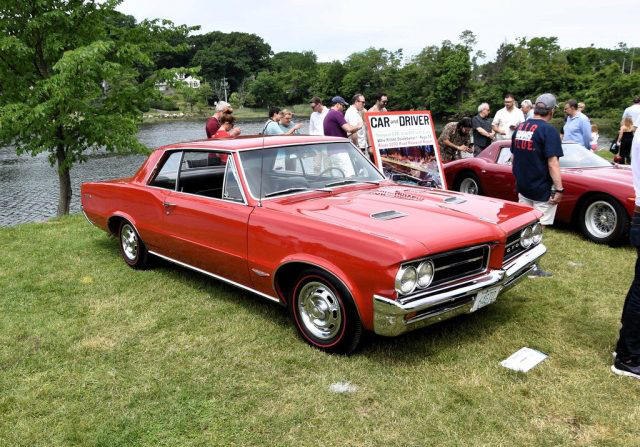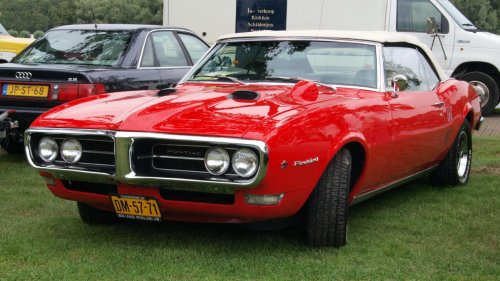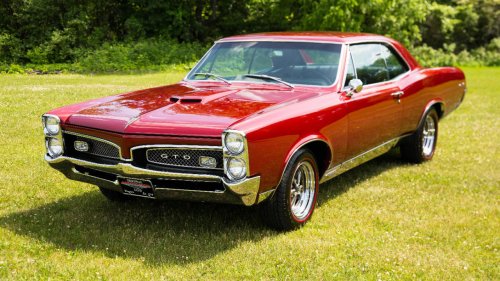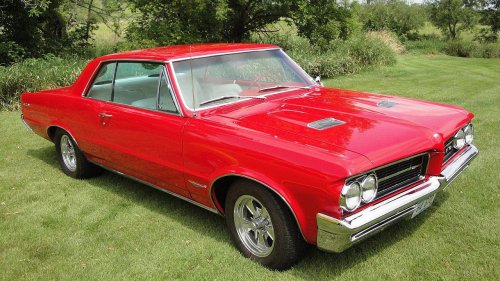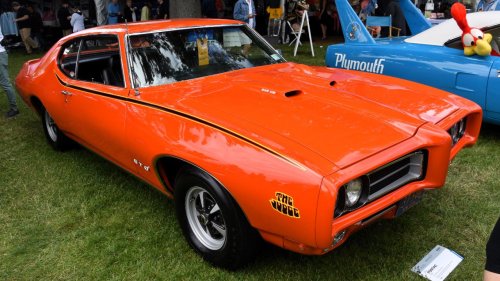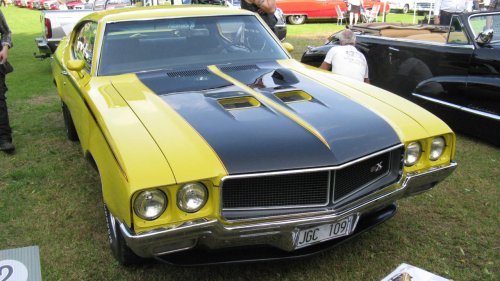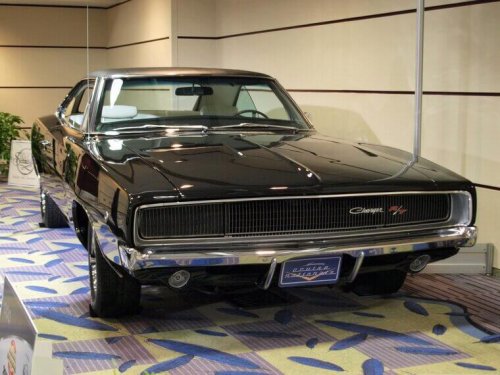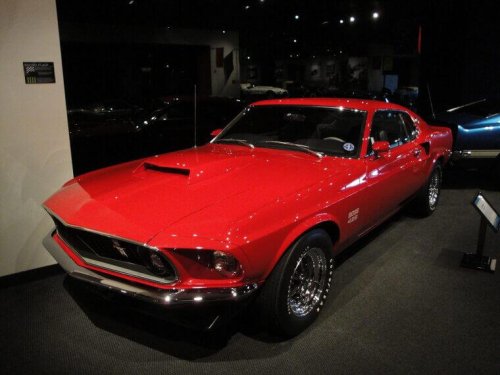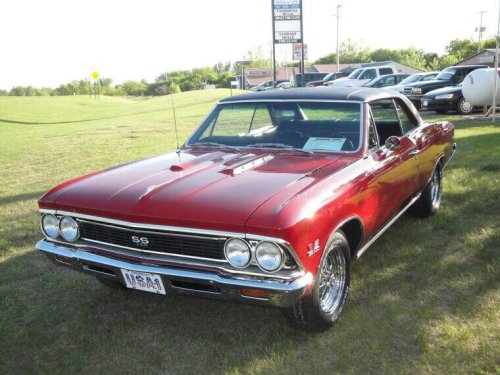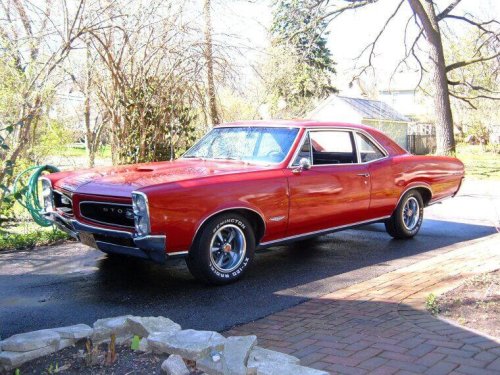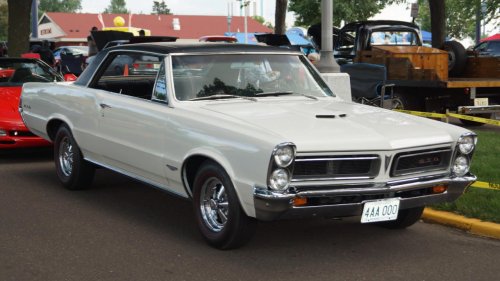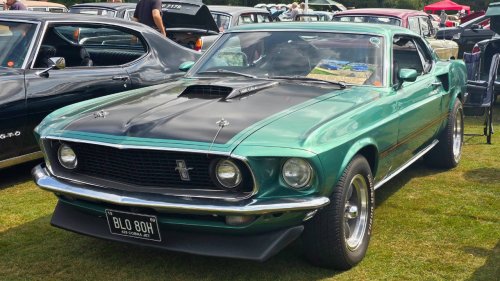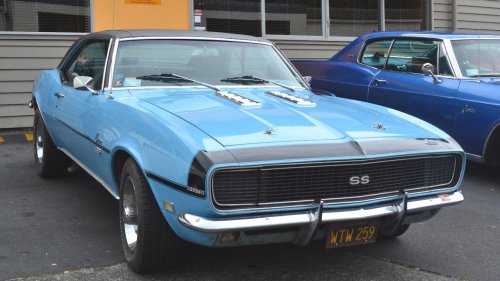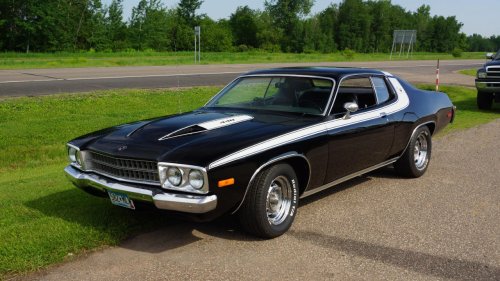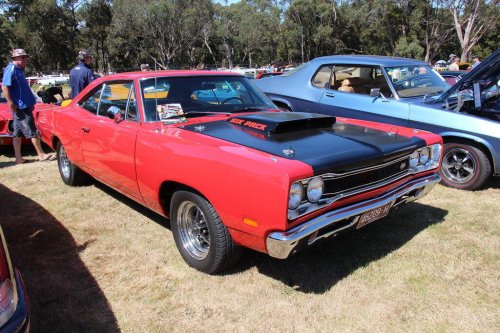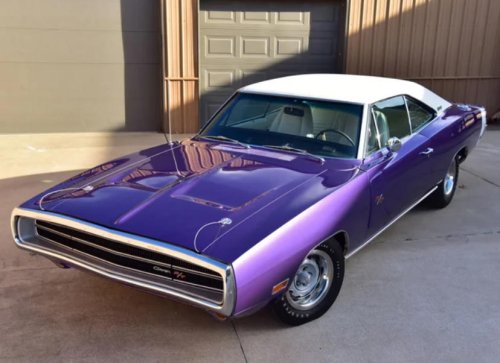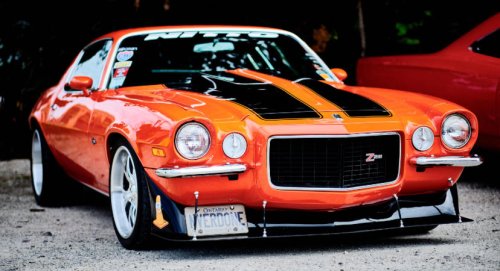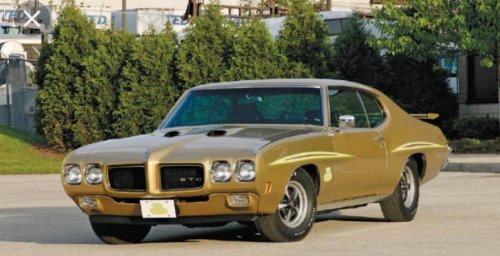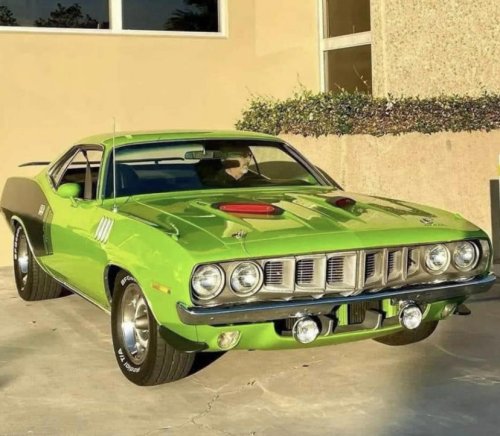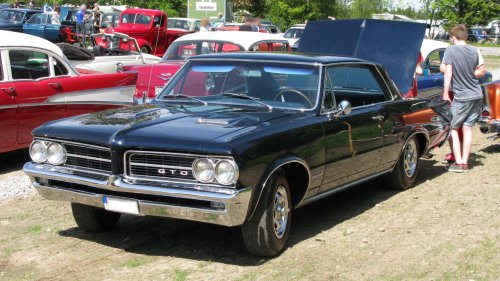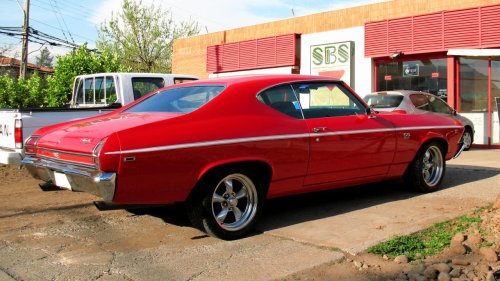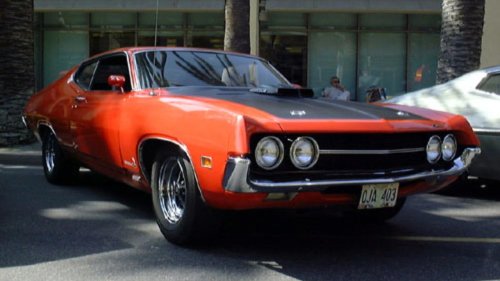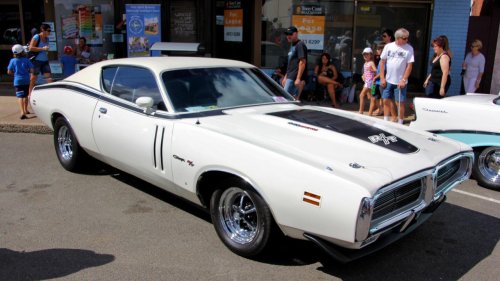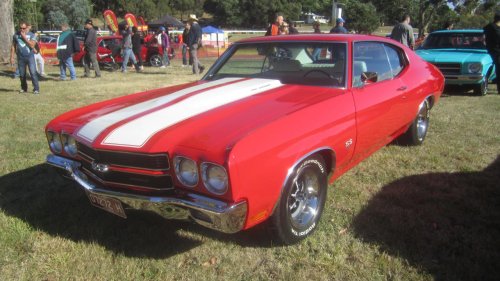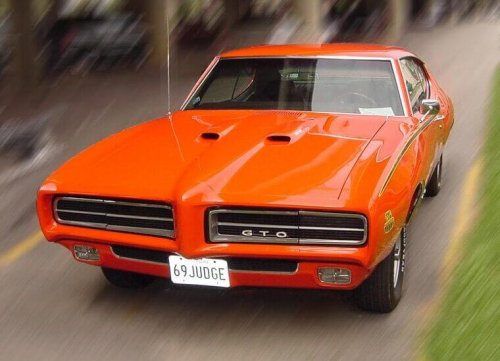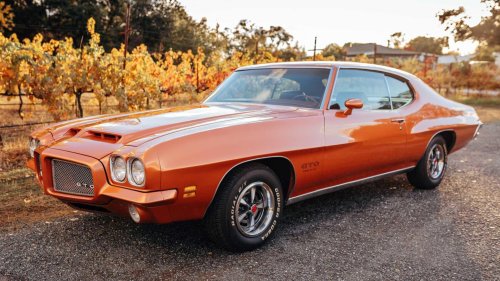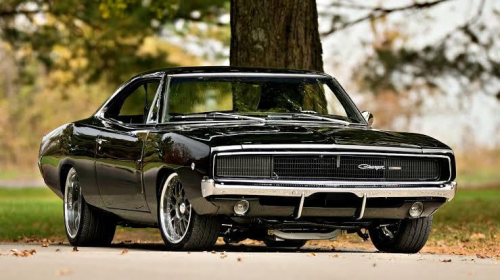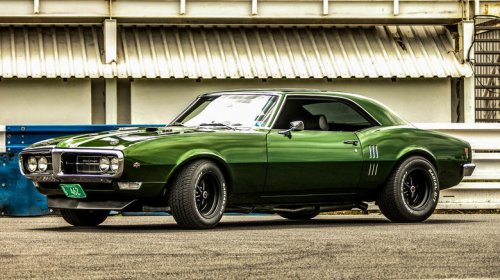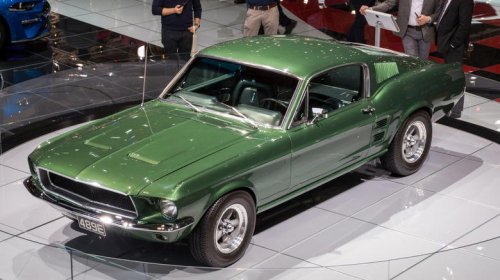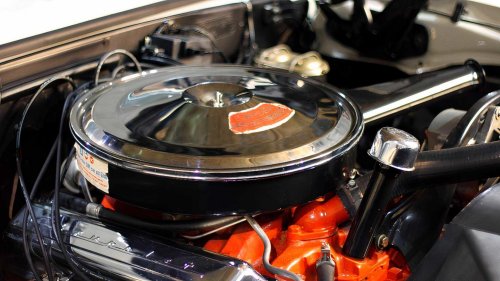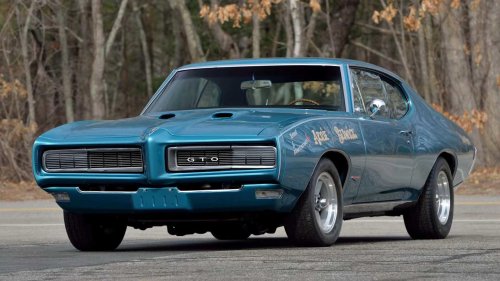
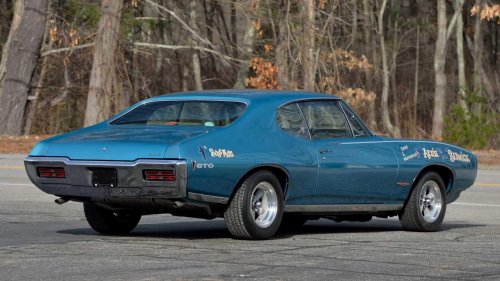
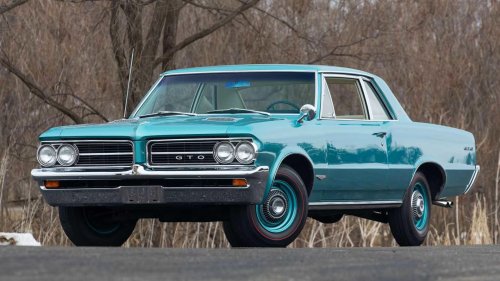
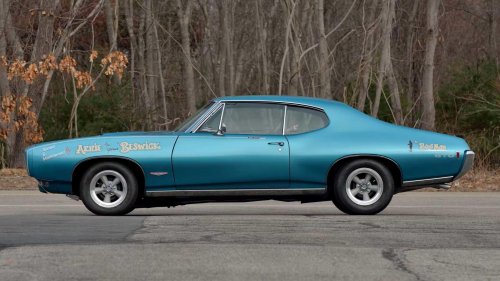
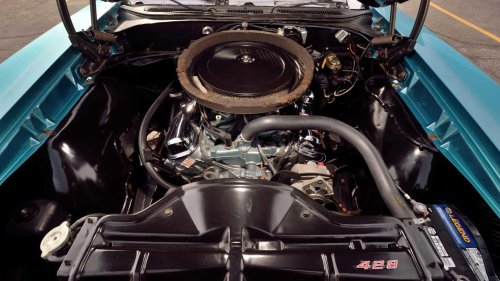
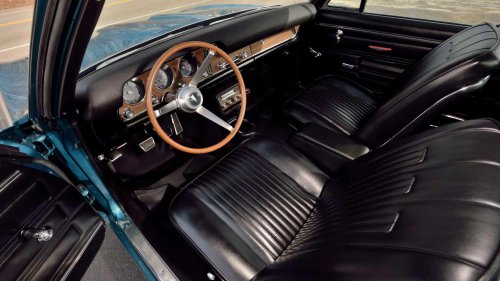



















The muscle car scene of the '60s and early '70s is peppered with the usual glitterati. The so-called Golden Era is ruled over by royalty such as the Chevy Chevelle SS 454, the Dodge Charger R/T, the Pontiac GTO, the Ford Mustang Mach 1, and the Plymouth Hemi 'Cuda. Then there are the "American Supercar" builders of the day, with names like Yenko, Nickey, Baldwin-Motion for Chevrolet and Grand Spaulding Dodge for Mopars. But there is one wild muscle car special that was one of the rarest and most powerful of its time—yet its place in history has barely been inked in. The Pontiac GTO Wasn't A Car That Shouted: Give Me More Power Mecum Auctions It's hard to imagine the American automotive world without the two words "muscle car," but there was a time long, long ago when the term didn't exist. In the '50s, Pontiac was setting about changing its image and getting a bit more groovy, with young engineers John DeLorean, Russ Gee, and Bill Collins brought in to give the brand a more youthful stride.The breakthrough came on a Saturday morning at Milford Proving Grounds, where the crew would gather to brainstorm. The story goes that Collins casually suggested to DeLorean that a 389 could easily be dropped into a prototype '64 LeMans coupe, and the Pontiac GTO was born. With the LeMans with the GTO option package, which included the 389 V8, the muscle car was born. By '67, the old 389 was swapped out for Pontiac's all-new 400-cubic-inch engine. In '68, the second-generation GTO arrived, packing the 350-horsepower 400 engine as a standard offering, with a Ram Air engine available with a High Output 400 with cold air induction and freer-flowing exhaust, bumping performance up to 366 horsepower. One Pontiac Dealership Could Turn Sufficient Into Crazy Mecum For many buyers, a 366-horsepower Ram Air 400 would be sufficient for a late-'60s muscle car. But for anyone who found that having almost the same level of power as a V8-powered E39 BMW M5 (a performance car that wouldn't be invented for another 30 years) in a coupe with drum brakes all round, just wasn't enough, then help was at hand in Royal Oak, Michigan. Dealership Royal Pontiac was the Pontiac equivalent of Chevy specialist Yenko, operating out of Pennsylvania.That's to say that owner Ace Wilson was obsessed with racing and wanted to create an outlet for both Pontiac's high-performance parts and racing know-how. The company had experience when it came to GTOs, working on the first-gen cars to squeeze out as much power as possible, adding extra-thin head gaskets and intake heat riser blocks, among other modifications. When the second GTO arrived, the muscle car horsepower wars were well and truly on, and Royal Pontiac couldn't resist a much wilder modification. The '68 Royal Bobcat Is A Muscle Car Hero That History Forgot MecumSource: Independent testingWith the new, far more modern second GTO arriving, perhaps it seemed like a shame that the displacement and power largely stayed the same. Wilson had a plan to give it a dramatic increase in power—and displacement—by replacing the stock Ram Air 400 engine with a 425-horsepower 428 unit, all for $650. At this point, it is worth saying that there are no records of how many of these conversions were made, but it is largely considered that just one survives, and that is known as the Boss Man Royal Bobcat GTO.For this car, original owner Mike Rutherford asked friend Arnie Beswick to do the conversion, but because of his busy diary, he recommended ordering it through Royal Pontiac and asking for the garage to stick the new motor in. Easier said than done, with Beswick ending up speaking to GTO Godfather Jim Wangers and several people at Royal before the conversion was agreed. Just to add to the mystique, the car's arrival at Royal was the same day that Popular Hot Rodding magazine photographer Lee Kelley was visiting, who bagged the infamous cover pic of Royal's Milt Schornack and Dave Warren craning the 428 in. The Royal Bobcat Was A Far Out '60s Muscle Car Mecum This wasn't just a standard 428 either, with preparation including skimming 0.025 inch off the underside of each cylinder head and installing special thin gaskets. Royal also put 0.060-inch shims under the valve springs to make the mill a little more bombproof. Another big change was making the hood scoops functional, gulping air into the carburetor and reducing under-hood temperatures. The engine swap itself was a straight bolt in job.When independently tested, the 428 Royal Bobcat GTO, which has a three-speed auto with Hurst shifter, was rated at 390 horsepower and 465 lb-ft of torque. The car hit 60 mph in 5.2 seconds and 100 mph arrived in 12.9 seconds. The quarter-mile was dispatched in 13.8 seconds at 104 mph, with top speed estimated to be 117 mph. A seriously quick car then. Despite a slight power deficit compared with the 1968 Dodge Charger Hemi, which packs 425 horsepower and 490 lb-ft of torque, the GTO wouldn't be far behind. The Charger reaches 60 mph in 4.8 seconds and covers the quarter-mile in 13.5 seconds. How Royal Pontiac Missed Out On The History Books Mecum Whereas, say, Yenko was still creating performance cars in the '80s (such as the rare 1981 Yenko Turbo Z Camaro), Royal Pontiac seemed to all but disappear. The truth was that the 428s racing down Woodward Avenue were said to have been frowned upon by GM, and this was getting back to Wilson's father, who apparently told his son to wind it in. Soon, the pressure was enough for Wilson to wrap up the high-performance end of the dealership, and in '70, Royal Racing Team was sold to John DeLorean's brother, George.Wilson sold the dealership in '74, and with the muscle car era coming to an end, this chapter of Pontiac madness was closed. It seems that while Yenko created, for example, 201 Camaros in '69 (Hagerty), Royal was a lot smaller with its output, making these cars almost mythical in their rarity. Buying A Royal Bobcat Is Not Easy Mecum Which means that if you want a second-gen 428 Royal Bobcat GTO, you may be in for a long wait. The Boss Man example, which could be the only remaining example in existence, sold in 2021 for $115,500. You do see some tributes around, and even some rough curbside GTOs with 428 on the rear, but it's very hard to say if there are any other true examples like the Boss Man. What you can get is a first-generation GTO with the Royal Bobcat kit, and these tend to be cheaper. In 2020, a '64 Royal Bobcat GTO sold for $88,000 and a '65 car fetched $114,900 in 2024. Who needs the muscle car royalty, when you can have a Royal Bobcat instead?Sources: Hagerty.com