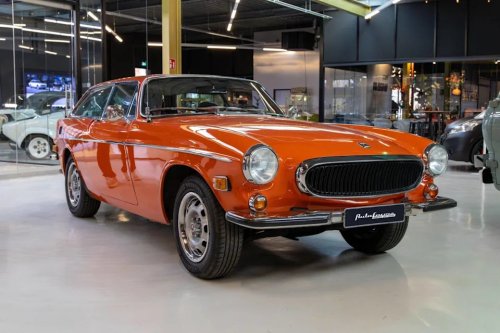
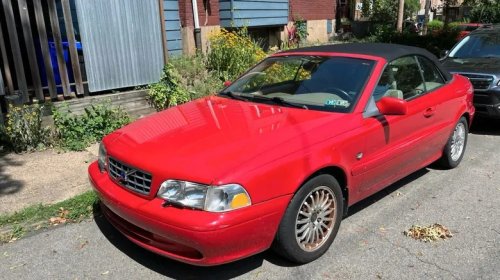
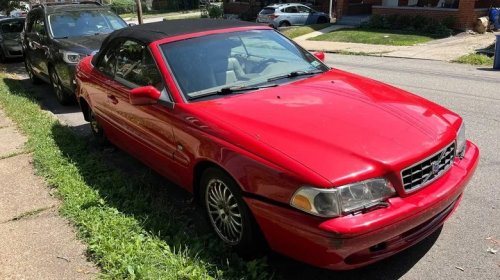
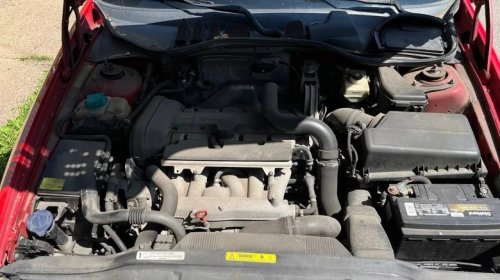
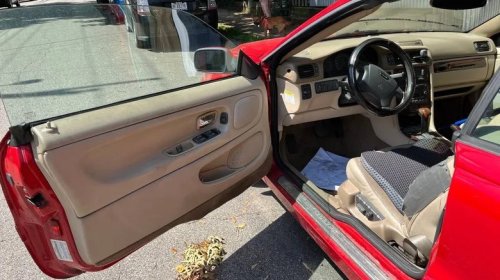
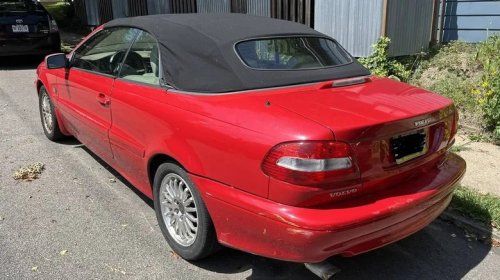
Volvo is perhaps the most enduring of the classic Swedish marques. Founded in 1927, it ended up gaining a reputation for being one of the most solid automakers in the business. Many of us have either owned at least one Volvo, or had parents or other family members who owned one. That's not surprising, when you consider how much of an emphasis Volvo has always placed on reliability and build quality.While many Volvos were designed to be safe and practical family runarounds or luxurious sedans, it has produced a few Sports Cars over the decades. One of those Volvo sports cars has flown under the radar for years, but is now quietly gaining classic status. It's classic status that's probably well-deserved, as this car has a lot of good qualities to it. Not only is it based on one of the most reliable cars ever made, but it was also designed by a styling house responsible for some of the best-looking cars ever made! The Volvo 780 Is Reaching Proper Classic Status Volvo 780 6 Specs Source: VolvoFirst shown to the public in 1985, the Volvo 780 is part of the venerable 700 series of Volvo models. It shared a lot of the mechanical parts of the Volvo 760 sedan and wagon. That included its engines. The 780 was initially only available with the same 2.4 liter 6-cylinder turbodiesel and 2.8-liter PRV V6 petrol that you'd find in the 760. A Turbo model then later became available, powered by a 2.3-liter turbocharged inline-4 petrol engine that was also available in the 760. The V6 petrol wasn't available in the Italian market, due to Italy's tax rules regarding engine size at the time. Italian customers initially had to make do with the diesel engine, until a 2.0-liter turbocharged inline-4 petrol engine was made available specifically for them. It Was Designed By Bertone The thing that sets the 780 apart the most from other Volvos of its era is its coupe body style. While it may not have looked as striking as many of its rivals, it still has classy lines that fit within what you'd expect a 1980s Volvo to look like. The 780 having such refined styling isn't surprising when you realize that it was designed by Bertone. Volvo had worked with the legendary Italian design house for the styling on previous projects (we'll get into that a bit more later), and Volvo trusted that it would do a good job. That trust was definitely well-placed! It's Still Very Cheap To Buy Because the Volvo 780 has flown under the radar for so long, it's a classic car you can still get on the cheap. According to classic.com, the average value of the 780 across all model years and trims is $8,516. Only a couple of examples have either been listed at or sold for significantly higher than that.Prices as low as that are getting increasingly rare for cars from the '80s. With the Volvo 780 on the way to getting proper classic status, 2025 might be a good year to buy one of these. It'll (Probably) Last You A Lifetime While it might seem a bit boring to base a luxury sports coupe on a fairly boring and boxy sedan, it might have actually been a genius move for Volvo to do that. Like many classic boxy Volvos, the 760 is generally regarded to be one of the most reliable cars ever made. Much like Mercedes-Benz around the same time, Volvo had a habit of overbuilding its cars. As a result, many 760s are still around today. In fact, there are plenty of owners who still use these decades-old cars as their daily drivers! If the 760's reliability record is anything to go by, the 780s out there in the world should keep running for decades more to come. It Almost Had A Turbocharged V6 The Volvo 780's engines were strong, proven units. They were definitely good enough to power a luxurious coupe. But, the 780 could have had a much more interesting powerplant than what it ended up having. If Volvo's original plans for the car had been a success, it would have had a turbocharged 2.5-liter version of the PRV V6. This version of the engine would have been the same as the one that powered the turbocharged version of the Renault-Alpine GTA. In that car, the turbocharged V6 produced 200 hp and 214 lb-ft of torque. That would have made it significantly more powerful than the 780 Turbo we ended up getting.Why did this engine not end up powering the Volvo 780, even though it was proven? Well, Volvo ended up running into some major setbacks when they tried to get it in the car. While it did fit in the 780s engine bay, its smaller size compared to the Renault-Alpine GTA meant that it started overheating. Volvo couldn't fix that problem. So, they decided to abandon the idea of putting the turbocharged PRV in the 780. In fact, Volvo abandoned the idea of using that version of the PRV engine at all! That's a bit of a shame in some ways, as a turbo V6-powered Volvo Coupe could have been a proper sleeper that could worry some of the more prestigious sports cars of the day. Its Predecessor Was Another Classic Bertone-Designed Volvo Coupe The Volvo 780 wasn't the first Bertone-designed Volvo Coupe to enter the market. That was the Volvo 262C. Only produced for a few years between 1977 and 1981, it was developed from the Volvo 260 sedan. It came with an earlier version of the PRV V6, the top engine option you could get in the 260 at the time. Originally a 2.7-liter unit, it got a size boost to 2.8 liters at the same time the 260 did in 1980.Much like the Volvo 760 the 780 was based on, the 260 has a reputation for having bulletproof engineering. In fact, the slightly lesser 240 has been regarded as being the most reliable Volvo ever made! That should mean that, like the 780, the small number of 262Cs built should be around for decades more than they've already lived.The 262C is definitely a more striking-looking car than the 780. That's thanks to its noticeably lower roof, which is 3.9 inches lower than the roofline on a regular Volvo 260 from the time. Having that bit of extra style meant that the cabin was a bit more cramped than what you'd usually get in a large Volvo. But, since this was supposed to be a luxury coupe and not a family hauler, that was probably a price worth paying for the fancier looks. Volvo Made 5 Convertibles While we may know the 262C as a coupe, Volvo did actually make a small number of convertible versions of it. These were known as the 262C Solaire, and started off as a special project for the CEO of Volvo North America. The convertible conversion was outsourced to Newport Conversions, who were based in Santa Ana, California.While making a convertible version of the 262C sounded like a great idea, Volvo didn't see things that way. In typical Volvo fashion, they got worried about the safety of the convertible conversion. As a result, the project was pulled after only 5 convertibles were made. Its Successor Was The Last-Ever Volvo Sports Car Bring a TrailerThere was a gap in the Volvo model lineup after the 780 disappeared in 1990. But, that gap didn't stay vacant for too long. 6 years later, the Volvo C70 turned up. Partially designed by legendary designer Ian Callum and partially engineered by TWR, the C70 was an instant hit. Like the 780 and the 262C before it, it was based on a Volvo sedan of the day. In the case of the first-generation C70, that was the 850.While the C70 was supposed to be a grand tourer rather than an out-and-out sports car, it wasn't exactly slow. From 1997, you could get a T5 version of the car. The T5 was powered by a 2.3-liter turbocharged 5-cylinder engine that produced 237 hp and 243 lb-ft. That made it significantly more powerful than the most powerful variant of the 780. The C70 managed to last longer than 780 and the 262C did, too. The first generation lasted until 2005, and the second generation version wasn't taken out of Volvo's model line-up until 2013.Not only did the C70 have a much longer production run than the 780 and the 262C, but it also managed a big feat that its predecessors couldn't. It got a mass-produced convertible version! Clearly, Volvo weren't worried about the potential safety problems of making a convertible sports car anymore. The T5 engine was also available in the convertible version, making it Volvo's only properly fast convertible ever. Even so, it was still very much a cruiser instead of an out-and-out sports car.





















 +18 others