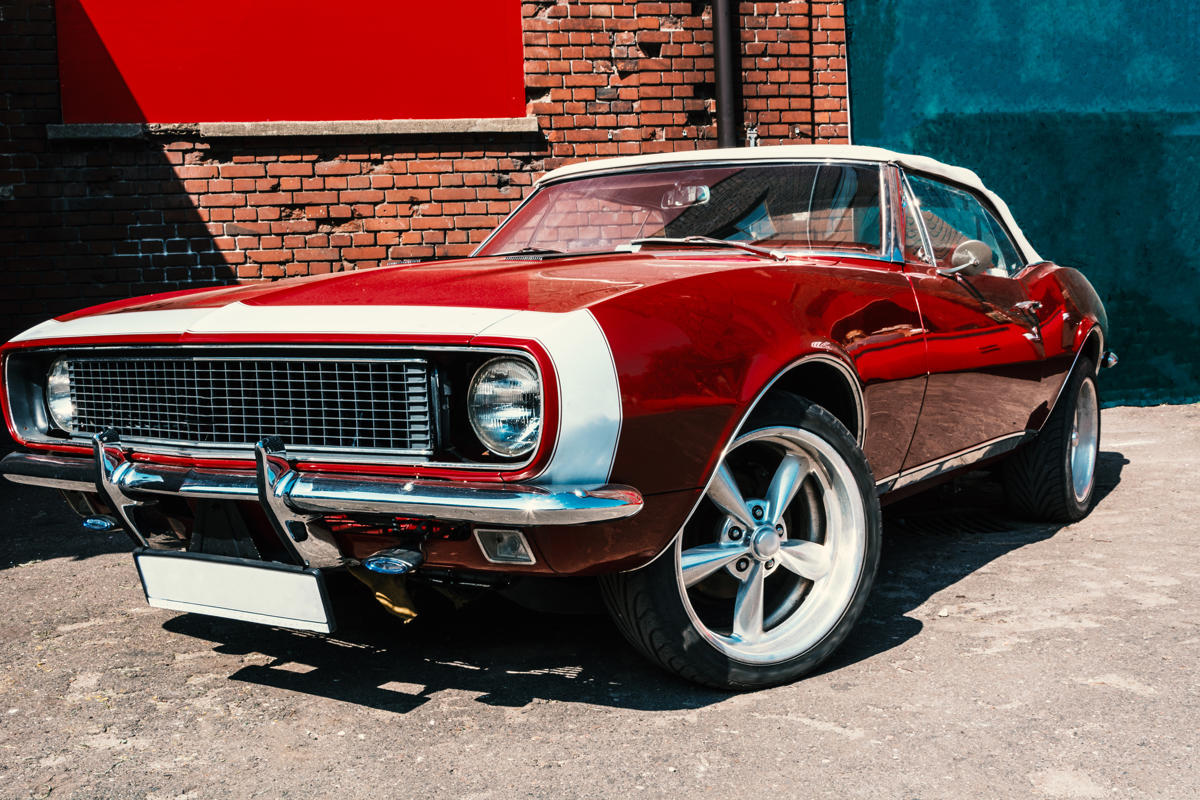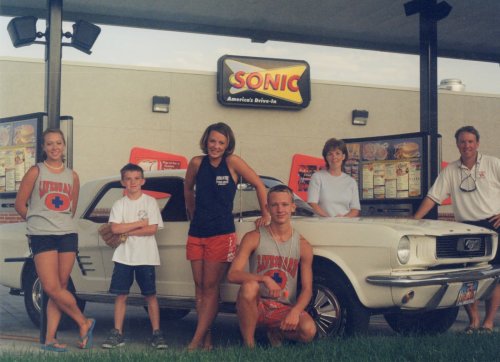




























Not every classic car feature aged like fine wine. Some got better, some disappeared, and a few make you wonder what the engineers were smoking during the design process. Thus, this list is all about the quirky, the unnecessary, and the oddly brilliant features that showed up in classic cars.To make the cut, each feature had to be factory-installed or dealer-offered, and it had to be something that feels genuinely weird or hilarious by today’s standards. These features weren’t always practical – most weren’t – but they certainly had character. And in a time when cars are starting to feel more like tech appliances, it’s worth looking back at the moments when automakers took a swing, and well, sometimes a miss. Hidden Gas Caps via Bring A TrailerHidden gas caps are definitely up there among the coolest classic car features we don't see anymore. You see, back in the '60s, car designers really leaned into the whole "sleek and seamless" look. Yes, even when it came to gas caps.Just take a look at the 1965 Ford Mustang, for example. Instead of a traditional filler door, Ford hid the cap behind the faux fuel cap on the rear panel. GM did similar tricks with models like the '67 Camaro and even the Corvette.Sure, it did look pretty cool. But it was easy to forget where the cap actually was, especially if you were borrowing the car or hadn't driven one in a while. It's one of those small design quirks that feels clever until you're at the pump fumbling around, making a complete fool of yourself in the gas station parking lot. Dual Fuel Tanks via Bonhams Auctions Another hilarious classic car feature that demands a spot on our list is dual fuel tanks. The Citroën 2CV was already a weird little car. However, the Sahara version, produced from 1960 to 1966, took things to a whole new level. Designed for desert use in the 1960s, it came with not one but two engines, with one in the front and one in the back. And to feed those, it had two separate fuel tanks, one under each front seat. That meant two fuel fillers, two gas gauges, and, yes, two sets of keys to start the engines independently.It was brilliant for rugged terrain but totally absurd in daily life. So, it's probably a good thing that fewer than 700 units were ever produced. Filling up meant going to both sides of the car, popping open the doors, and lifting the seat cushions like you were about to check for loose change, except you were really just trying to find a gas cap. The whole thing was pretty wild, hilarious, and, frankly, absurd. Swivel Seatsvia Bring A TrailerSwivel seats sound like something out of a diner booth, but in the 1970s, Chrysler decided they belonged in a car. The idea was simple: make it easier to get in and out by letting the front seats rotate toward the door. According to a Moparts.com forum, some of the better-known models that featured swivel seats were the Chevy Monte Carlo, the Chrysler Cordoba, the Buick Regal, and the Pontiac Grand Prix.In theory, it made entering and exiting more graceful, especially if you were rocking bell-bottoms. But in practice, it looked like you were about to launch into a game show spin. You’d park, pop the lever, and spin sideways like your car was trying to shake you out. Useful? Maybe. Slightly ridiculous? Absolutely. Mini Steering Wheels On The Dash via FordFord really thought they were onto something with these hilarious mini steering wheels. Ford unveiled the “Wrist-Twist” steering system in 1965.This concept replaced the traditional steering wheel with two mini dials mounted on the dash. The idea was that drivers could steer just by turning the knobs with their wrists. No giant wheel. No hand-over-hand movements. Just a couple of twisty discs like you were adjusting a vintage radio.Ford claimed it improved visibility, made driving less tiring, and looked more futuristic. In reality, it looked like something out of The Jetsons. It never made it to production, which is probably for the best. This concept was bound to cause accidents. Many drivers have enough trouble navigating with one wheel, let alone two the size of saucers. In-Car Ice Maker And Fridge via ToyotaToyota once turned a regular van into a mini mobile kitchen with a built-in ice maker and fridge tucked right into the dashboard. This feature appeared in select 1980s and '90s Toyota van models in Japan, likely aimed at business folks or campers who needed cold drinks on the go.It’s straightforward enough. You simply push a button, ice pops out, or your beverage stays chilled. Handy on a hot day, sure, but also overkill for a vehicle meant for errands or cargo hauling. The fridge added weight, took up space, and probably drained the battery. Still, it’s quirky enough to make you pause in modern times and ask yourself: “Should we bring that back?” In-Car Record Player via StellantisSpinning records down the highway? Yes, this is hilarious, but also very real. In 1956, Chrysler offered an optional in-car record player called the Highway Hi-Fi. Chrysler developed these in-car record players in partnership with CBS-Columbia. Per Mac's Motor City Garage, the unit was mounted under the dash and played custom 7-inch records at 16⅔ RPM. This was slower than standard LPs, with the intention being that they'd last longer on the road.In theory, it was cutting-edge entertainment. In reality, it was a shaky, skipping mess. The suspension was modified to reduce vibration, and the records were weighted for stability, but let's be real. If roads are iffy today, they certainly weren't the smoothest in the '50s. Every bump risked turning your Sinatra album into an abstract remix. The idea was cool, but the execution just couldn't keep up with the potholes. Still, it remains one of the most gloriously impractical features ever stuffed into a dashboard. Swing-Away Steering Wheel via Bring A Trailer The 1961 Ford Thunderbird had style, presence, and one of the most unexpectedly helpful features of the early ’60s: the Swing-Away Steering Wheel. According to the Ford Authority, this optional setup allowed the entire steering column to slide approximately 10 inches to the right when the car was in park, providing drivers with more room to exit gracefully. It was kind of like someone holding the door open for you. Nice, sure. But it's not really necessary either.So, how did it work? Well, the mechanism was connected to the gear selector, so it only moved when the car was safely in park. It was definitely clever. We'll give Ford that. It was also functional and safe, considering you could only move it when parked. So, sure, we can't really argue that it wasn't practical. However, it also has a distinct mid-century weirdness that is unmistakable, which is why it definitely deserves a spot on our list. Pivoting Headlights via Bring A Trailer Pivoting Headlights? Say what? Yep, it's weird, funny, and very real. The Citroën DS was already a rolling spaceship when it came out, but the 1967 update took things a step further with pivoting headlights. According to Piston Heads, instead of fixed beams, the DS used a mechanical linkage that turned the inner headlights in sync with the front wheels. So when you steered into a corner, the lights actually turned with you.It sounds simple now, but at the time, it was wild. Most cars just pointed straight ahead, no matter where you were going. This setup helped drivers see around curves, especially on dark country roads. It wasn't just smart. It was French car engineering at its absolute quirkiest. Useful? Absolutely. But it was also kind of hilarious to see in action, like the car was literally peeking around the corner with you. Vacuum Ashtrayvia HemmingsBack in the days when smoking in cars was as common as seatbelt-less cruising, GM offered something that feels both bizarre and weirdly high-tech: a vacuum-powered ashtray. Per Hemmings, this was a dealer-installed accessory available in the late 1950s for cars like the Chevy Bel Air and Impala.The idea? You’d tap a button, and a little built-in vacuum would suck the ashes down into a jar tucked under the dash. No more flicking out the window, no more overflowing trays. It allowed for just one very clean and oddly satisfying solution to a smoky problem. However, according to HH Classic, very few drivers saw value in this dealer-installed option. It was the '50s, so just tossing the ash out the window was definitely the preferred method.Of course, it was hilariously unnecessary. You still had to empty the jar, and if the vacuum line got clogged, good luck. Still, it’s one of those “only in the ’50s” luxuries that make modern conveniences look boring. Spare Tire Windshield Washer Combo via Bring A TrailerLeave it to Volkswagen to solve a simple problem in the most roundabout way possible. Starting in 1961, the VW Beetle’s windshield washer system didn’t have a motor. Nope, that would be too easy. So, instead, it used air pressure from the spare tire to spray washer fluid onto the glass.We have to admit, the setup was clever, kind of. Per Jalopnik, a hose ran from the spare in the front trunk to the washer reservoir. Every time you hit the switch, it pulled pressure from the tire to push fluid through the nozzle. It worked, well, until it didn’t.If your spare got low, so did your washer pressure. So now you’re not just out of washer fluid. You’re also driving on a deflated backup tire. It’s the kind of charmingly overcomplicated engineering that makes you shake your head and smile. It was totally brilliant, ridiculous, and distinctly VW.Some of these features were ahead of their time. Others were just, well, plain weird. But that’s precisely what makes them so great and hilarious. From swivel seats to spare tire windshield washers, these oddball ideas remind us of an era when automakers weren’t afraid to get a little experimental, even if it meant stuffing a record player under the dash or rigging up a vacuum-powered ashtray. Sure, most of these hilarious classic car features didn’t stick. But they certainly added some personality and a whole lot of charm.