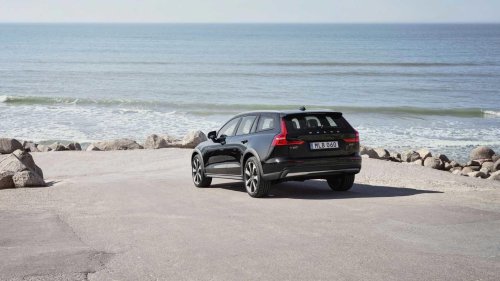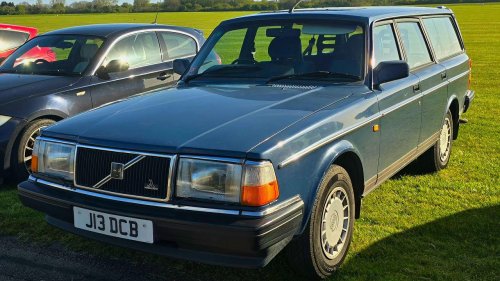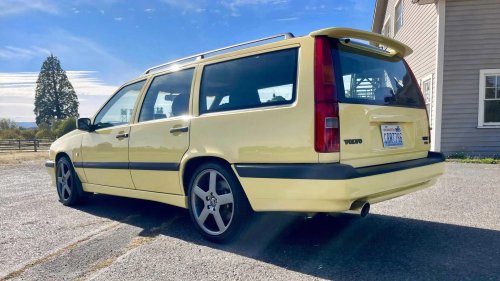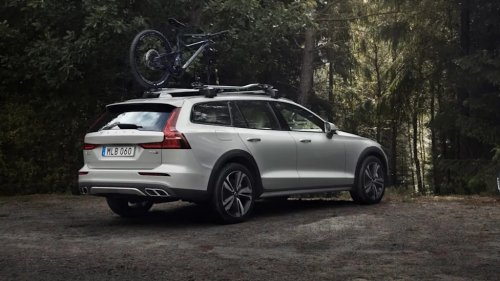
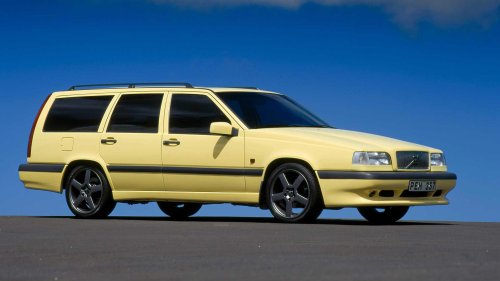
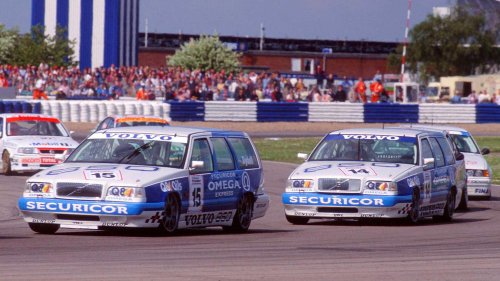
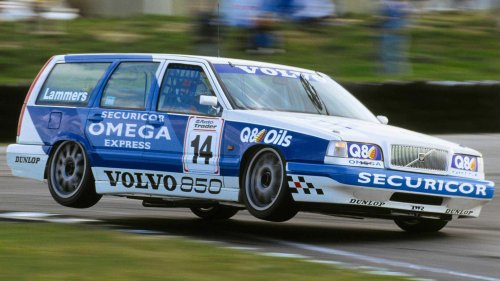
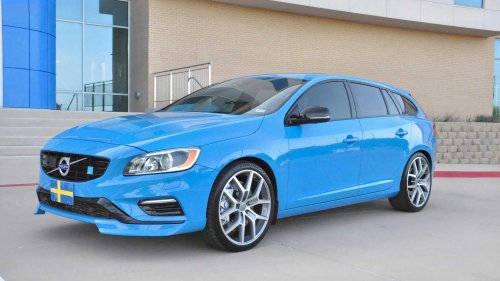
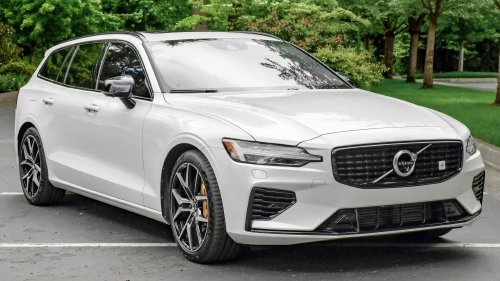



















Today, Volvos have gained some premium appeal with fresh styling and clean interiors, but the station wagon is still a key part of the brand’s identity. The V90 is a great family car, but though there have been fast versions, it’s no sports car. Yet one station wagon from Volvo’s not-too-distant back catalog can legitimately lay claim to sporting credentials. It even went racing in major European competition, and it came about with the help of none other than Porsche. Volvo’s Lengthy Love Affair With Space VolvoNo, not that kind of space. The space that allows you to take your family, their luggage and pets along for the ride. The space that allows you to move house without a U-Haul truck and means you can sleep in the trunk if you have to. For years, Volvo has been the king of building big station wagons that might not necessarily be glamorous, but definitely have their uses.Take the most iconic of all the Volvo station wagons, the 240. A development of the earlier (and, visually, almost identical) 245, named for its 200-series platform, four-cylinder engine, and five-door station wagon body, it was the definition of substance over style. Solid, spacious and safe, it did everything customers demanded of it, including becoming the most reliable Volvo ever, and that in itself became cool, albeit in a subversive kind of way.via Bring a Trailer Then, more recently, there was the V70, which was particularly awesome when it was jacked up to create the Subaru Outback-rivalling V70 Cross Country and eventually became the XC70. But even with a more conventional ride height and no body cladding, the V70 was brilliant at filling its brief. Namely, carrying lots of stuff in comfort.But while the 240 and V70 were definitely practical, they weren’t necessarily all that sporty. But one Volvo wagon bucked the trend, and allowed customers to see Volvo — and, to an extent, station wagons — in a whole new light. It was called the 850, and though basic versions followed the 240’s example, Volvo enlisted the help of Porsche to create a high-performance hero called the 850 R. The Volvo 850 Had No Business Being This Fast Via VolvoThe 850 was, at first, a Volvo like any other. A boxy, mid-size family car offered in sedan form only at first, it was everything Volvos are meant to be. Safe, spacious, and almost entirely uninspiring. Then Volvo decided to create a station wagon version, that was slightly less awkward to look at and more practical, which was already something of a win.Then, in a fit of madness and/or inspiration, depending on how you look at it, Volvo rocked up at the 1994 Geneva Motor Show with the 850 T5-R station wagon. Painted bright yellow and fitted with a Porsche-tuned, transverse-mounted 2.3-liter turbocharged and intercooled five-cylinder gasoline engine, it was good for around 250 horsepower. Originally, Volvo was only going to make 2,500 cars, but demand from the European market was so strong that the Swedish company felt the need to rapidly build some more.In 1996, Volvo gave the hot version a slightly larger 2.4-liter five-cylinder engine and a slightly shorter, catchier name: 850 R. And the brand decided to market the car in the U.S. once again, albeit solely in combination with the four-speed automatic transmission.Via: Bring a TrailerEven so, the 850 R was a bit of a wolf in sheep’s clothing. At a glance, it looked like a high-school teacher’s family bus, but closer inspection revealed lowered suspension and big brakes, as well as a subtle body kit to give it a very slightly sportier image. And it was worthy of the look, with 247 horsepower heading straight to the front wheels. It was a bold choice, given the performance sedans of the time were almost all four- or rear-wheel-drive, but Volvo persevered.Could the tires cope? By all accounts, the answer to that was “barely”. Even though they were low-profile Pirelli P-Zeros, they could still achieve plenty in a straight line. With a manual gearbox on board, the 850 R could get from 0–60 mph in 6.2 seconds, which made it only around half a second slower than the BMW M3 of the era. And the BMW was a six-cylinder sedan that wasn’t hampered by sending its power to the front. Flat out, the 850 R would hit 150 mph. The Station Wagon That Went Racing Via: VolvoIn 1994, Volvo’s marketing department, apparently very proud of its unhinged creation, decided to make waves with the 850 station wagon by entering it into the British Touring Car Championship (BTCC). For those unfamiliar with the British motorsport scene, it’s essentially the Limey version of NASCAR. But being British, it’s done on a much smaller scale.Nevertheless, it’s popular on the other side of the pond, with a liberal attitude to personal space and the tight, technical, historic tracks of Great Britain combining to create lots of accidents. Sorry, we meant excitement. But also accidents. It’s quite the spectacle, albeit a chaotic one. But even the chaos of BTCC found the arrival of a station wagon — or an “estate,” as the locals would call it — something of a novelty.Via: VolvoRickard Rydell, one of Volvo’s drivers, didn’t even know Volvo would be bringing a station wagon to the grid, and claimed he would have hesitated to drive for the team had he known. Nevertheless, Rydell got into the spirit, even driving a parade lap with a plush dog in the trunk to antagonize the other competitors and showcase the 850’s load-hauling capability.Ultimately, the 850 race project didn’t really pay off. Although it theoretically had better aerodynamics than the sedan, it still wasn’t all that successful on the track. And to add insult to injury, motorsport’s governing body, the FIA, changed the BTCC rules in 1995 to favor sedans, and Volvo reverted back to the four-door 850 to comply.Yet the 850 wagon had done its job, and become one of the coolest cars ever to grace the UK touring car competition. In fact, Top Gear Magazine’s readers declared it the coolest BTCC racer ever. Praise doesn’t come much higher than that, especially when it was up against the much-loved Lotus Cortina, the BMW M3 and even the Ford Galaxie. Volvo’s Other High-Performance Wagons Bring a TrailerThe 850 is by no means the only Volvo station wagon to have been given a performance-oriented upgrade. In 2011, Volvo handed the V60 station wagon over to what was then an in-house racing team called Polestar. The company, which went on to become a standalone brand making electric cars, tuned the 3.0-liter straight six to produce 324 horsepower (which rose to 350 horsepower in later years) and tweaked the brakes and suspension. In the process, Polestar created a station wagon with real performance, getting from 0-60 mph in just under five seconds, and topping out at 158 mph.Later, with the new-generation V60, Volvo went for a slightly less bold approach to performance with the V60 and V90 T8 Engineered By Polestar models. As before, the two wagons were lavished with attention from Volvo’s in-house hooligans, but the power came from a 2.0-liter plug-in hybrid system. Nevertheless, with 415 horsepower and adjustable Ohlins dampers, as well as sound deadening and stiffening, the Polestar Engineered cars were designed to offer refined performance and handling, rather than outright straight-line speed. Although the V60 Polestar Engineered was a spectacular achievement, it was axed from the U.S. line-up in February 2025.2020 Volvo V60 Polestar The 850 R Is Now A Second-Hand Bargain Via: Bring a TrailerThe average 850 R fetches around $13,000 at auction, although completely pristine examples will likely fetch more than that. Nevertheless, that’s cheap for something very nearly as fast as a contemporary M3, and that has genuine motorsport pedigree.Strangely, if you want the earlier T5-R, the average price in 2025 was much the same, although the rare manual versions can fetch between $25,000 and $30,000. Nevertheless, as a sleeper that will outrun plenty of high-performance vehicles, it's still quite a bargain.With manufacturers hesitant to build such cars these days — plenty of brands don’t even make big station wagons any longer — we suspect the value of mint 850s could increase even more over the coming years. Now might be a good time to pick up a cool, different and strangely desirable modern classic. Albeit one that’s a bit left-field.Sources: Autocar, Footman James, Road & Track, CarBuzz, Classic.com, Goodwood, Volvo