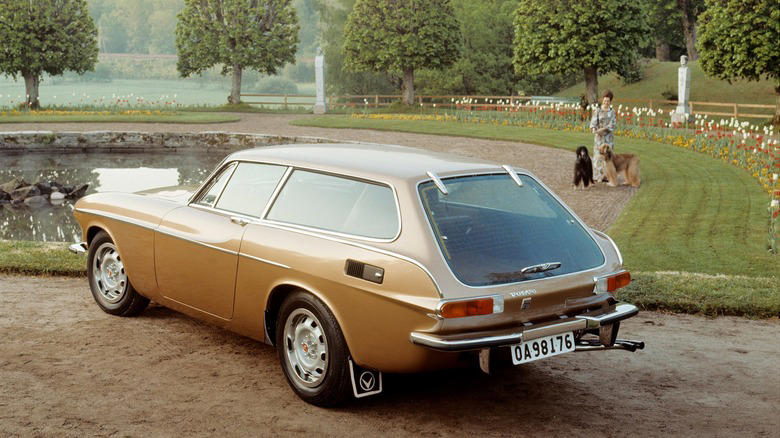
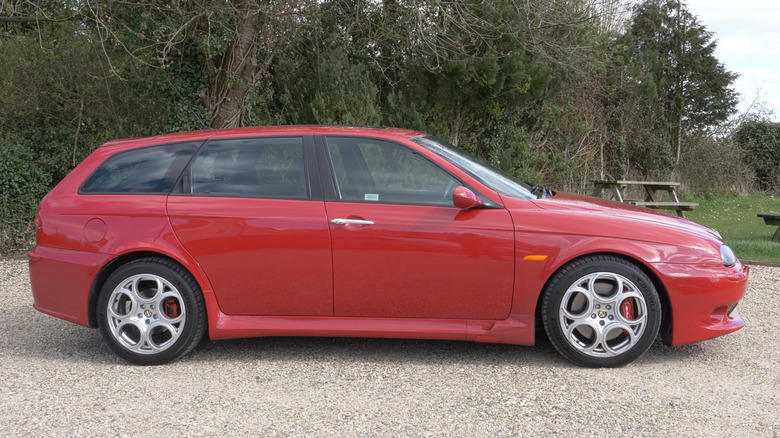



















Volvo 1800ES (1971 to 1973)Few companies have perfected the wagon formula as much as Volvo did. From the simple 740 wagon to the performance-oriented 850 T-5R wagon, Volvo has been giving us memorable wagons for decades now. However, it all started with the stunning 1800ES — the world's first lifestyle sports wagon.The 1800ES was not your ordinary family wagon, though. It was a shooting brake concept built on the beautiful P1800 coupe, with a memorable design that inspires awe to this day. The P1800 was already a stunning car — one of the most attractive Volvos ever made, but the 1800ES certainly holds its own with its elegant, graceful design. It looks as if the designers carved it by hand, with horizontal lines accentuating the length of the vehicle and exquisite details.The crown jewel, however, is the part that makes this a wagon. Namely, the 1800ES's tailgate is frameless, enhancing both style and practicality. The capacious rear end also opened more space for cargo and rear passengers, transforming the sports coupe into a practical family car.The Volvo 1800ES came with two engines; initially, it was equipped with a 1.8-liter four-cylinder, later replaced by a 2.0-liter unit. The latter made 130 horsepower, enough for a 0-60 sprint of 11.3 seconds and a top speed of 115 mph. Far from earth-crushing, but lively enough for a 1970s car. Crucially, Volvo equipped the transmission with an electric overdrive, turning the stylish wagon into a comfortable mile eater.Alfa Romeo 156 Sportwagon (2000 to 2005)Alfa Romeo has been dipping its toes in the wagon segment since the 1950s, but has always done so just to participate. There was no standout model — until the turn of the millennium, when the Italian automaker introduced the 156 Sportwagon. Alfa's first effort to create an attractive wagon was a real game changer, not only for the company but the industry, too. Star designer Walter de Silva had a challenging task at hand. The regular Alfa Romeo 156 sedan was already stealing hearts with its distinctive design that combined modern design elements with Alfa's traditional aesthetic, and a wagon body style could've ruined the proportions. Still, the Sportwagon might look even better. Walter de Silva resisted the temptation to make the rear end longer, keeping the rear overhang short. In fact, the Sportwagon is just 0.43 inches longer and 0.6 inches higher. The strong shoulder line was retained as well, with two incisions creating a dynamic profile. The headlights and taillights on both 156s are similar as well. Finally, the rear door handles were hidden, just like in the sedan, giving the Sportwagon a sporty, coupe-like vibe.Speaking of sporty, Alfa Romeo offered a high-performance GTA model from 2002. Packing a 3.2-liter V6 engine with 247 horsepower, the 156 Sportwagon GTA reached 62 mph (100 km/h) in 6.3 seconds when equipped with a six-speed manual. Unfortunately, the GTA is a front-wheel-drive machine, but we'll cut it some slack because it's so beautiful on the outside.