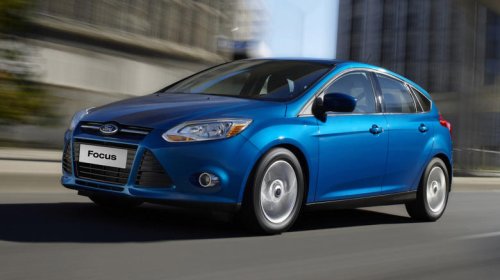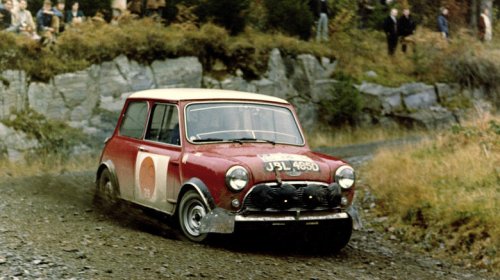
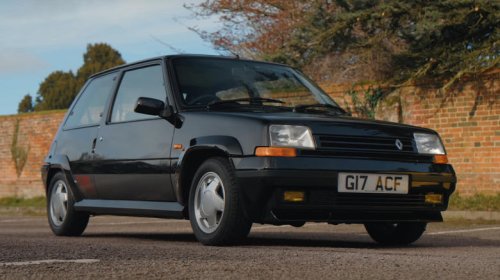
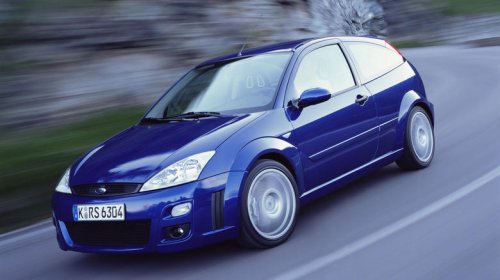
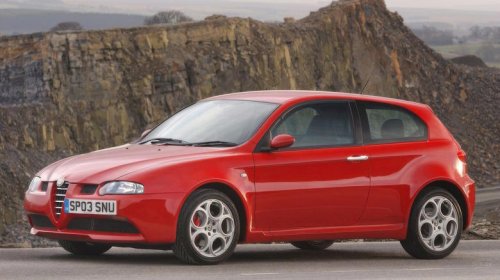
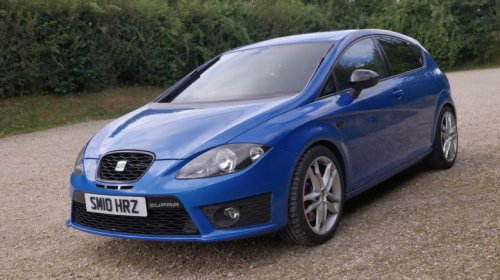


















BMC Mini Cooper S Mk1 & Mk2 (1963 to 1971)The first Mini Cooper wasn't the first hatchback to hit the market, but it's undoubtedly the car that popularized this body style. With its incredibly small footprint and fuel-efficient engines, the Mini was perfect for Great Britain's narrow streets, quickly becoming a favorite among British drivers.Still, cars don't become legends because they are small and economical. They need a certain je ne sais quoi, which the first Mini has in spades. Like the fact that they are fantastic cars to drive. Despite being a front engine, front-wheel-drive car, the Mini feels feedback rich and dialed in.These engaging qualities forced BMC to work on a high-performance version. Called the Cooper/Cooper S, it became one of the world's first hot hatches, but also a rally icon. Instead of the diminutive 848cc engine of the original, the Cooper S engines spanned from 970cc to 1275cc in the Mk2, producing up to 75 hp. Thanks to the low curb weight of 1,539 pounds, zero to 60 took a brisk 10.5 seconds.Then there is the way it looks. Short, square, and low-slung, the Mini had nailed the perfect hatchback proportions. Meanwhile, the tiny wheels, shoved out to the corners and sitting in smoothly designed wheel arches, give it an unmistakable go-kart vibe. The details were spot-on, too — the front grille looks like a moustache, and the black roof adds a dash of sportiness. The design was so influential that BMW has built a whole brand around it.Renault 5 GT Turbo (1987 to 1991)France has given us some of the best hot hatches ever made. Unlike their rivals, though, French automakers always produced quirkier designs, and none did it better than the second-gen Renault 5 GT Turbo. No, it's not the original Renault 5 Turbo. Admittedly, the mid-engine homologation special looks stunning, but it's not a practical hatchback — it doesn't even have a trunk.It doesn't matter, because the 5 GT Turbo combines symmetry and Renault's artful approach perfectly. The rear hatch is cut sharply, giving the 5 GT Turbo a more avant-garde look, with the front end and windshield slanted in the opposite direction for perfect symmetry. Renault's use of geometry is also evident in the wide trapezoidal wheel arches, which follow similar angles. Futuristic, tidy, and cheeky, the design has stood the test of time. However, the Renault 5 GT Turbo isn't a legend today only because of its looks. It passes the hot-hatch test with flying colors, too, courtesy of a 38mm lower suspension and thicker anti-roll bars.Still, the star of the show was, of course, the 1.4-liter turbocharged engine. Equipped with a Garrett T2 Turbo, the carbureted four-cylinder initially made 115 hp, though Renault bumped the Phase 2 to 120 hp using a water-cooled turbocharger and a remap. Thanks to the low curb weight of only 1,830 pounds, the 5 GT Turbo sprinted to 62 mph in just under 8 seconds and had a top speed of 127 mph.Ford Focus RS Mk1 (2002 to 2003)It wouldn't have been an overstatement to say that the first-gen Ford Focus hatchback was a revolution when it appeared in 1998 at the Geneva Motor Show. With its visually striking, angular, and futuristic styling, the Focus oozed concept car looks, yet it was available at competitive prices at dealerships.Still, it was the high-performance RS model that puts the Focus Mk1's design in history books. Based on the cooler three-door model, the Focus RS Mk1 looks sportier and way more purposeful. The angular details give it a dynamic look, further amplified by the wider wheel arches, lowered stance, and more aggressive front fascia. Meanwhile, the sloping window line and highly positioned taillights give it a coupe-like look that works so well with the RS moniker.The Focus RS' engine was also deserving of the RS moniker. A 2.0-liter turbocharged four-cylinder, the tuned Duratec unit produced 212 hp and a meaty 229 lb-ft of torque, enough for a zero to 60 sprint of 5.9 seconds and a top speed of 143 mph. It only drove the front wheels through a five-speed manual, but the Mk1 was still equipped to tackle corners like a go-kart, with a Quaife limited-slip front differential taking care of torque steer. It also featured a 65mm wider track and 25mm lowered suspension with Sachs dampers to keep body roll under control.Alfa Romeo 147 GTA (2002 to 2005)What happens when you match perfect hatchback proportions with Italian exotica? The Alfa Romeo 147 GTA, of course. One of the best-looking hatchbacks ever designed, the Alfa's V6 street racer looks like an Italian supercar in hatchback clothing. Designers Wolfgang Egger and Walter de Silva's creation is beautifully contoured, with every surface looking like it was shaped by a master sculptor.Even so, it retains the sharpness you'd expect from an Alfa Romeo performance vehicle. The front end is keen and pointy, while the rear has coupe-like qualities. The front fascia also features Alfa's iconic shield grille, nested between two angry-looking headlights. The taillights look like pieces of art, too, and the telephone dial wheels deserve an article of their own. The Alfa Romeo 147 GTA oozes personality and flair that few other hatchbacks can ever match.Yet, there is substance under the stunning sheet metal. See, this is not your usual hot hatch with a four-cylinder engine. Instead, Alfa Romeo used a naturally aspirated 3.2-liter V6 producing 250 hp and 221 lb-ft of torque. Thanks to the relatively low curb weight of 3,000 pounds, the 147 GTA gets to 60 in brisk 6.2 seconds and can reach 153 mph.Unfortunately, all that V6 power goes to the front wheels only. Once you hear the angry V6 roar, though, you'll instantly forget about that. Besides, with an aftermarket Q2 diff, the 147 GTA is excellent in the corners, and comes standard with a six-speed manual.Seat Leon Cupra/Cupra R Mk2 (2006 to 2012)Remember the Walter de Silva guy that co-designed the Alfa Romeo 147? Well, he later joined Seat as a head of design, transforming it into a style-forward brand. Seat has produced many cool-looking hatchbacks, but the Leon Cupra Mk2 hot hatch stands above the rest with its timeless look.De Silva's influence can be seen from every angle. The V-shaped hood hugs the small but prominent Seat grille, connecting with the flowing roofline. The cat-eye headlights give it a classically beautiful face, but with a dose of predator aggressiveness. The lower line of the headlights continues as an incision in the side profile, which continues elegantly to the rear wheels. Then there's the wedge-shaped roof, which gives the Leon Cupra a forward-leaning stance, and Alfa-esque rear taillights with a squinted cat-eye look. There's a lot going on, but it works. Sharp, angular, and elegant, the Leon Cupra Mk2 still captivates viewers.Underneath, Seat's hot hatch was essentially a Golf GTI Mk5 but with more power. Equipped with a 2.0-liter turbocharged four-cylinder, it produced 241 hp, enough for a zero to 62 mph sprint of 6.4 seconds. Later, Seat upped the ante with a 265 hp tune of the engine, which brought the acceleration figure down to 6.2 seconds. A six-speed manual was standard on both versions, though the Cupra R was equipped with an electronic differential lock (XDS) to limit torque steer.