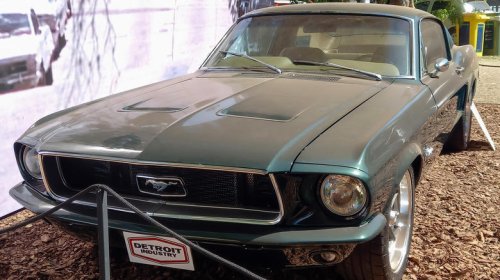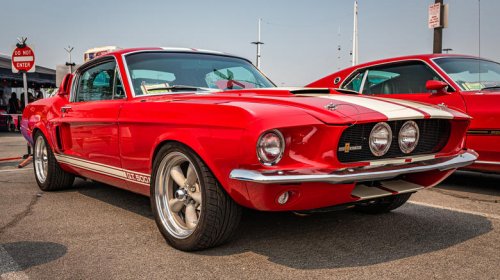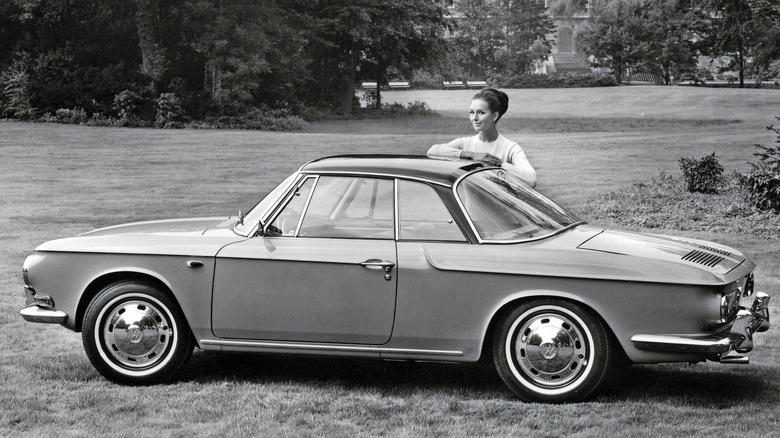
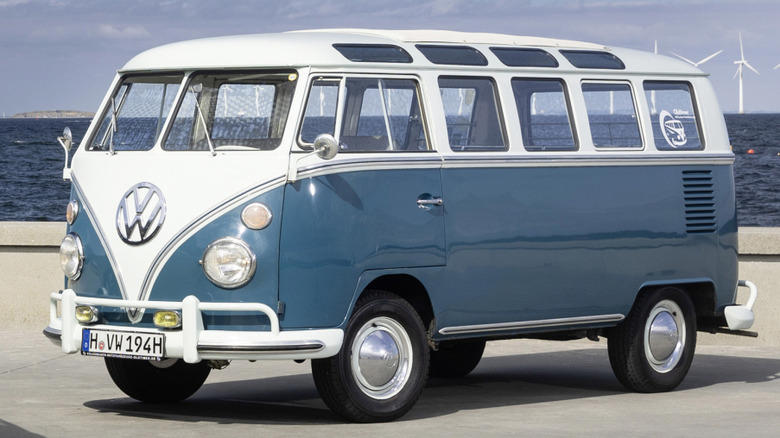
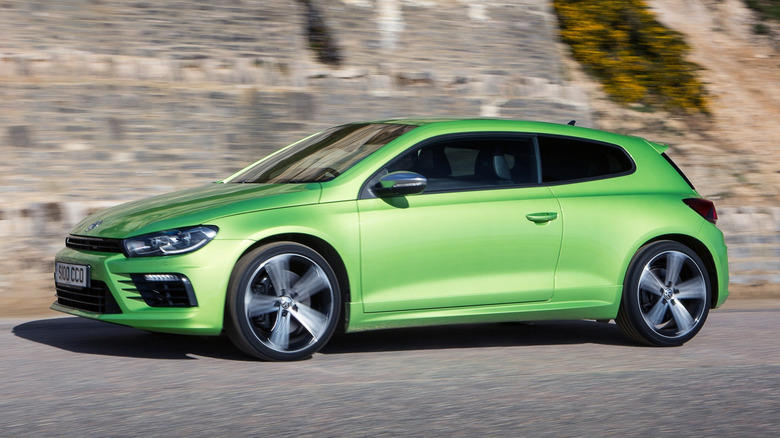


















Volkswagen Type 34 Karmann Ghia (1961 to 1969)There is another, more obscure version of the Karmann Ghia — the Type 34. The reason it deserves its own place on this list is that it looks entirely different. Instead of the swooping, seductive lines of the original, the Type 34 was all about sleekness and understated elegance.Karmann produced three different body styles — a classic coupe, convertible, and a fastback. Each had its own merits, but it's the coupe that stands out with its stunningly simple design. Low and wide, with long overhangs and symmetrical proportions, the Type 34 coupe has a timeless look that will never go out of fashion. Moreover, it had a recognizable, long rear "hood," which advertised the rear-engine configuration. The Type 34 Fastback is also an interesting design, as it looks almost like an angrier Mustang Mk1 from certain angles.The Karmann Ghia Type 34 wasn't only a design exercise. It was meant as a higher-class car than the Type 14, and so it was initially offered with a 1.5-liter engine with 53 hp. In 1967, VW upgraded the Type 34 with a 1.6-liter unit good for 66 hp, alongside front disc brakes. Unfortunately, that wasn't enough for market success. VW built fewer than 43,000 units, compared to 445,000 Type 14s. Hardly surprising, as in Europe, the Type 34 cost $3,000 during the mid-1960s. For comparison, the Mustang launched at $2,368 with much better performance. Volkswagen never offered the Type 34 in America, but with the Mustang being its closest rival, it would've never succeeded, anyway.Volkswagen Type 2 Microbus/Transporter (1950 to 1975)The Karmann Ghia models are easily the best-looking cars based on the Beetle, but none is as iconic as the Type 2 Microbus. Although it shared the wheelbase with the Beetle, the Microbus offered a vastly more capacious cabin. It was wider and longer, offering three seating rows for up to nine passengers, and additional space for cargo on the shelf over the rear engine. The Microbus was also a great traveling companion, particularly among the same counterculture folks that love the Beetle. The large windows that spanned across the van's length allowed excellent views of the scenery, while the large body panels served as a blank canvas for artistic expression. It was also infinitely customizable, with many units being converted into campers. Acceleration was terrible — the Microbus arrived with only 25 hp, though it had a longer final drive for the highway. Still, it was the aerodynamic body, designed like a bullet train, that turned the original Microbus into an automotive icon. The van retained the bug-like front end of the Beetle, but was sleeker overall, thanks to the longer body. The clean lines gave it elegance, but the star of the show was the two-tone exterior, combining a white roof with painted body panels. The Type 2's most recognizable feature was the front end, with the huge VW logo and paint-line crease that gave the front end more structure. The split windshield only added to the van's distinctive character.Volkswagen Scirocco R (2009 to 2018)For some, the last Scirocco was merely a redesigned Golf. A less practical one, at that. Yet, look a bit deeper, and it becomes apparent that the Scirocco deserved its place in VW's lineup. Sure, it utilized a front-wheel-drive platform, during a time when the Toyota GT86/Subaru BRZ twins attracted customers with their drift-ready rear-wheel-drive configuration. Heck, the high-performance Scirocco R version didn't even receive the all-wheel drive from the Golf R. But it didn't matter, because the Scirocco R scored highly where it mattered the most — the driving experience. Yes, the front wheels were tasked with steering and dealing with up to 276 hp (2.0-liter turbo-four), but the lack of AWD also made the Scirocco R lighter than its Golf counterpart by 300 pounds. That's two average people. Accordingly, the Scirocco R only needed 5.5 seconds to reach 62 mph (six-speed DSG), but also felt more agile in the corners. Playful, even. Choose a variant with the six-speed manual, and grinning on a twisty road is guaranteed.Even the harshest critics of the Scirocco R will agree that it's a stunner. Volkswagen managed to turn Golf's platform into a shooting brake lookalike, giving it almost an exotic car look. Low. Sleek. Pointy and purposeful at the front. Muscular at the back with wide haunches and prominent taillights. The Scirocco R truly is a sight to behold, particularly in person, where its low-slung and wide proportions leave you in awe. We are truly sad VW stopped producing the Scirocco in 2017.