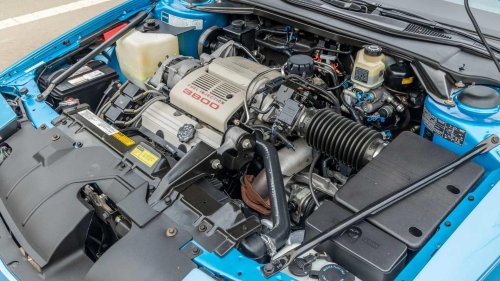
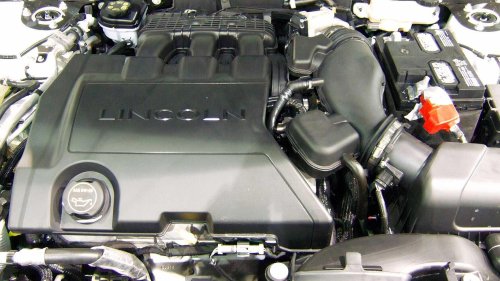
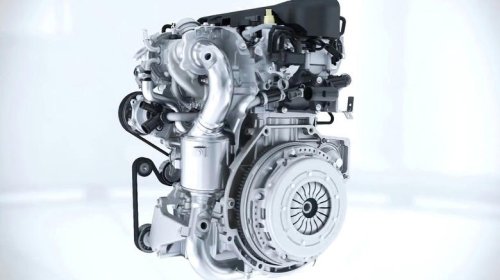
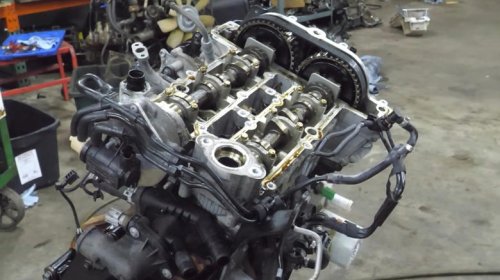
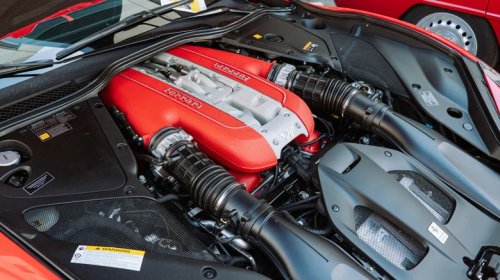
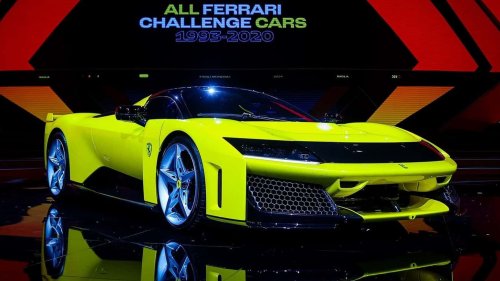
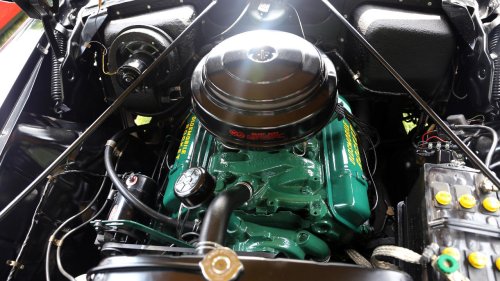
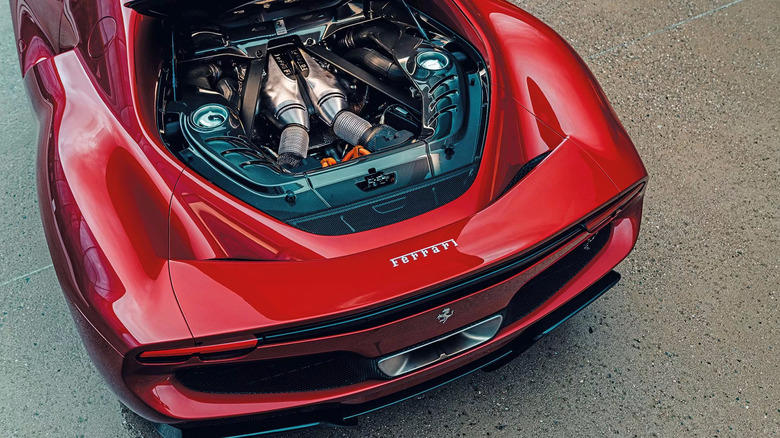
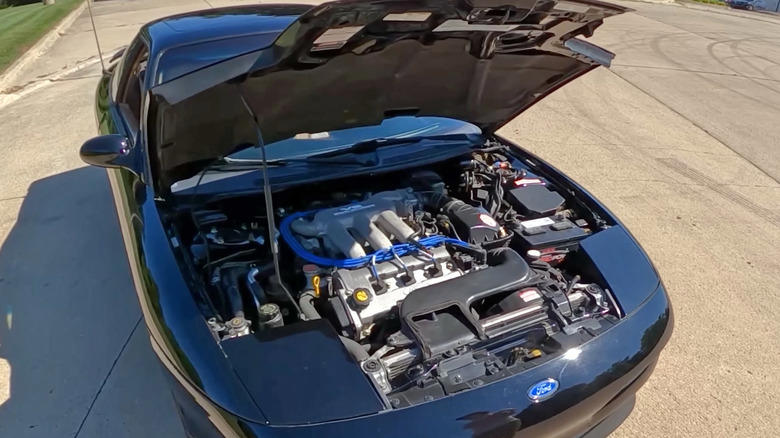
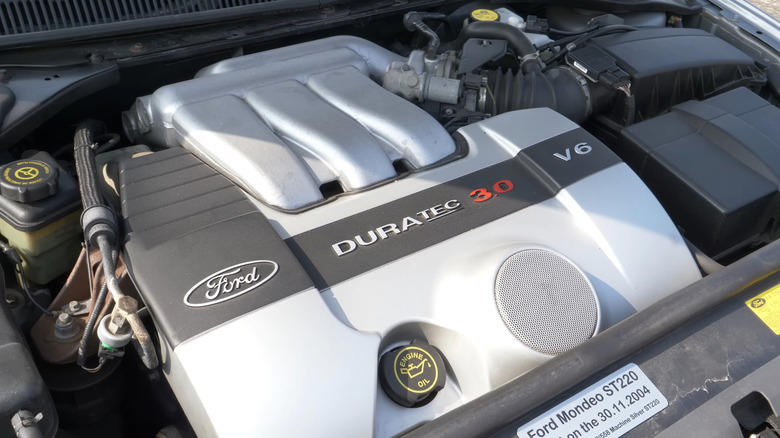
Ferrari 296 GTB 3.0 Twin Turbo V6 Hybrid (2021-Present)Most people would say turbocharged engines can never sound as good as their naturally aspirated counterparts. Sure, they can add a significant amount of power, but they also muffle the intake and exhaust noises. Yet when you hear the Ferrari 296 GTB singing while approaching the redline, you'll certainly question that argument, especially since it's also a hybrid.Yes, the high-revving V8 in the 458 sounds better. But you can't deny that Ferrari did a damn good job with the 120-degree, 3.0-liter twin-turbo V6 in the 296 GTB. You still get the captivating sonic signature Ferrari is known for. Exhilarating. Ferocious. Rich, yet still razor-sharp at higher revolutions. It's a bit muffled compared to the 458's V8 zinger, but still incredibly satisfying for a twin-turbo V6.The Ferrari V6 symphony is all the more impressive when you also add the numbers to the equation. On its own, the twin-turbo unit makes impressive 654 hp and 546 lb-ft of torque. Amplified by a 165-hp electric, the advanced powertrain makes 819 hp, all going to the rear wheels via an eight-speed dual-clutch gearbox. As you'd expect, the 296 GTB is a missile in a straight line, reaching 60 in a mind-boggling 2.4 seconds. The 205-mph top speed is pretty nuts, too. Oh, and as you'd expect from a mid-engine Ferrari, the 296 GTB is also very good around corners.Mazda MX-6/Ford Probe GT 2.5 V6 (1992-1997)You don't need to spend a fortune to enjoy a smooth V6 symphony. The second-gen Mazda MX-6 and Ford Probe GT twins might not have offered supercar performance, but they were super cheap and still pleasurable to drive. A big part of the experience is of course Mazda's 2.5-liter naturally aspirated V6 unit powering the front wheels. Interestingly, the engine is a bored and stroked version of the 1.8-liter V6 unit in the MX-3, though it replaced the 145-hp, 2.2-liter turbocharged four-cylinder from the previous-gen vehicles. In the second-gen models, a 2.2-liter naturally aspirated four-cylinder was the entry-level engine.With 164 hp and 160 lb-ft of torque on tap, the V6 was quite potent for the era, sending the Probe GT to 60 mph in just 7 seconds. Both cars came with a five-speed manual as standard, sending the power to the front wheels only. So no drifting was possible, but as far as sonic experiences go, it didn't get much better than these. Mazda's V6 sounds smooth and free breathing, with a raspiness in the background reminding you of its cylinder configuration. It's not loud or raucous, but it still has a performance edge to it. You'll undoubtedly push it close to 7,000-rpm redline quite often.Ford Mondeo ST220 3.0 Duratec V6 (2001-2007)Ford also had its own sonorous 1990s V6. Called the Duratec, this 60-degree 3.0-liter unit was meant to replace the aging 3.8-liter V6 in the automaker's lineup. It was quite an advanced engine for the era, with DOHC, four valves per cylinder, sequential multipoint injection, and cast-iron cylinder liners. Ford used it in the Taurus and Mercury Sable, though the Duratec V6 was later utilized in the Jaguar S-Type, Lincoln LS, Mazda 6, and Mondeo ST220 (in Europe). A version with variable valve timing appeared in 2006, propelling the Ford Fusion, Mercury Milan, and Lincoln Zephyr.The Duratec V6 was quite a potent engine, producing 224 hp and 203 lb-ft of torque in the Mondeo ST220. 0-60 took only 6.8 seconds, an impressive feat for a front-wheel-drive sedan with a six-speed manual. Still, accelerating in the Mondeo ST220 was all about the noise; the Duratec V6 sounds throaty at lower revolutions, with a linear buildup as it approaches the 6,800-rpm redline. There is a hint of motorsport in the sonic signature that gets your heart pumping faster. It's raspy and angry yet still refined. The fact that you get to experience it with a stick shift only adds to its appeal.



















 +48 others