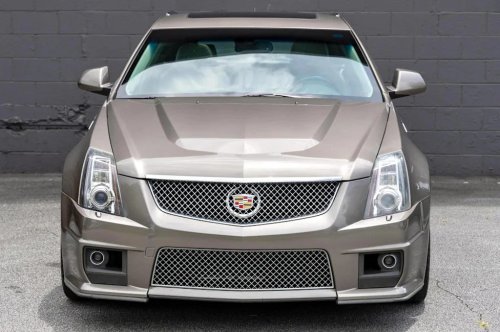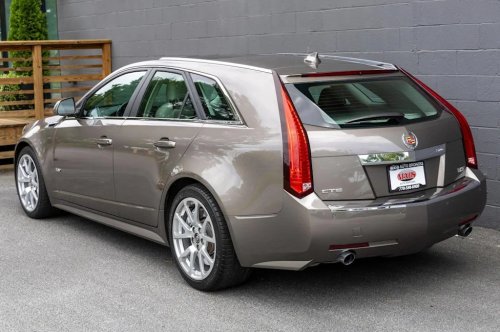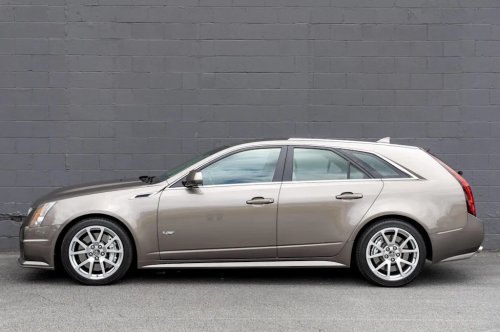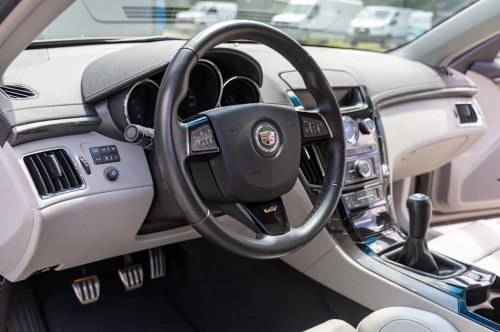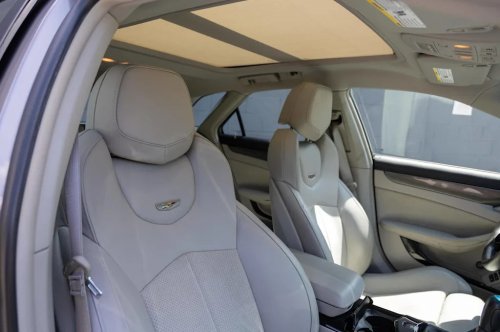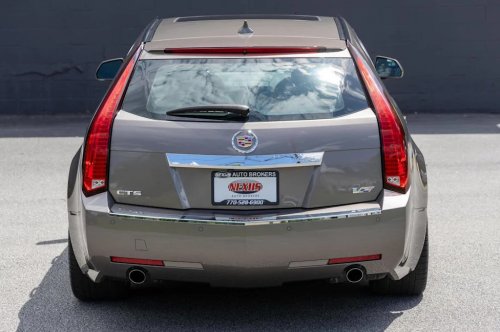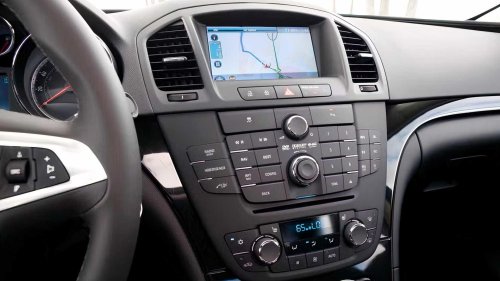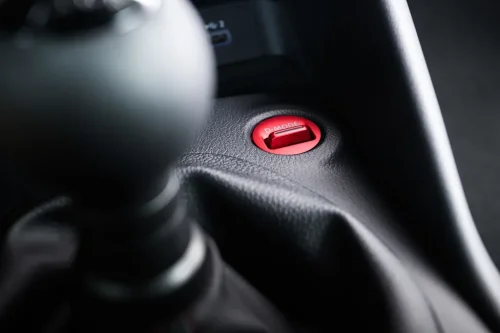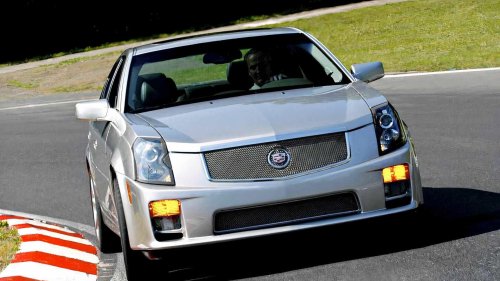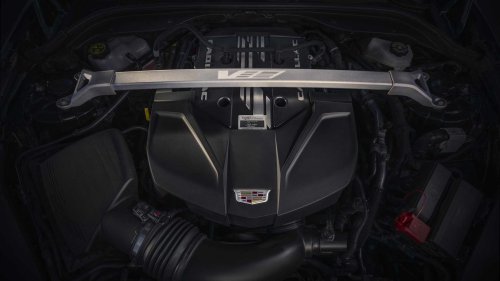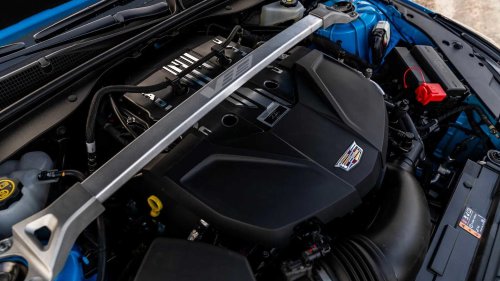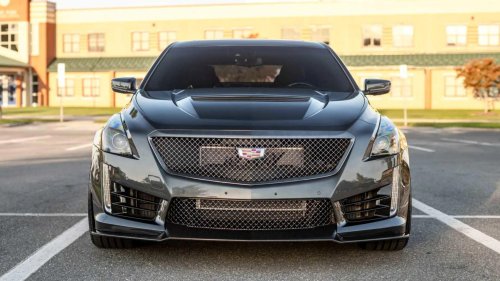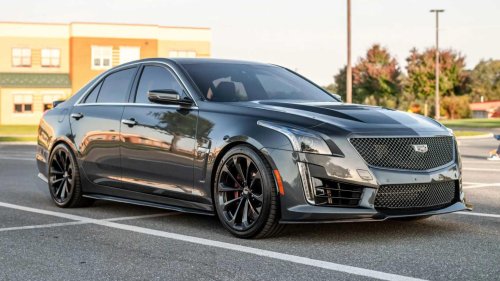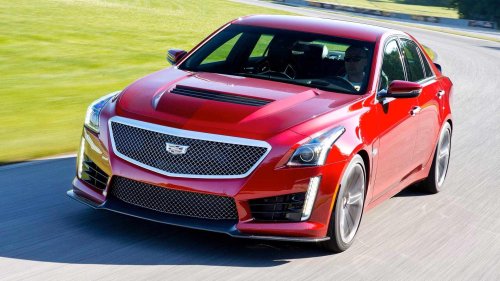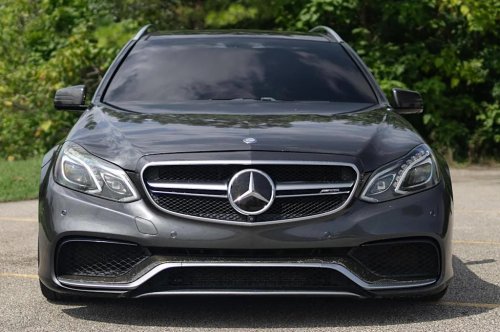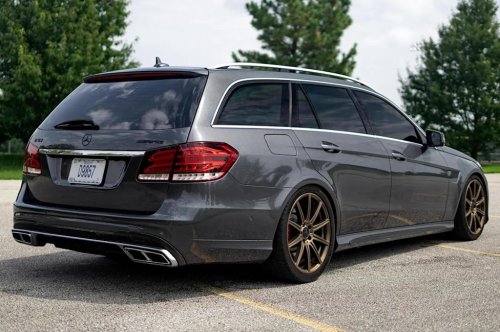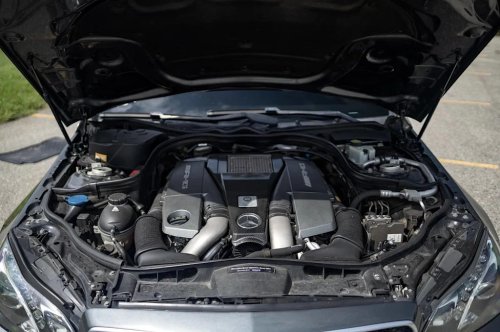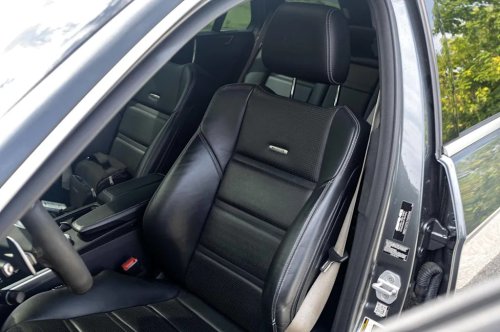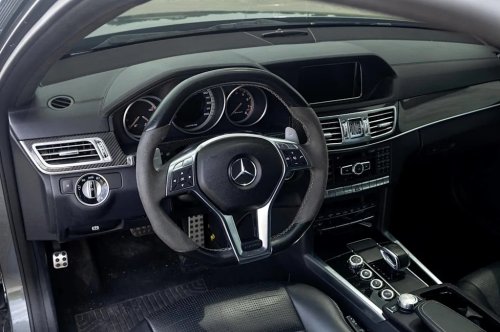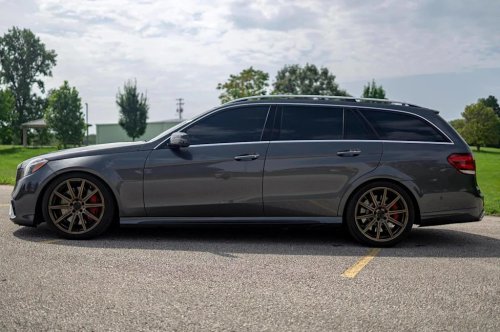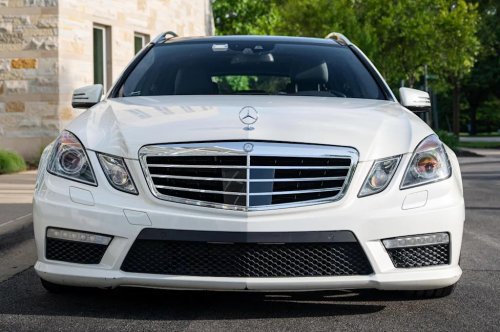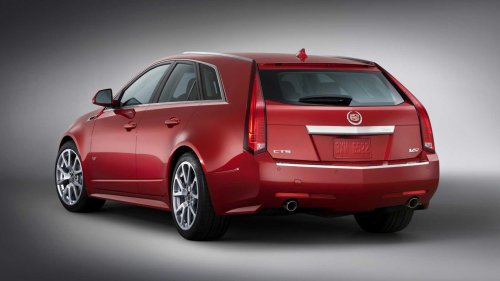
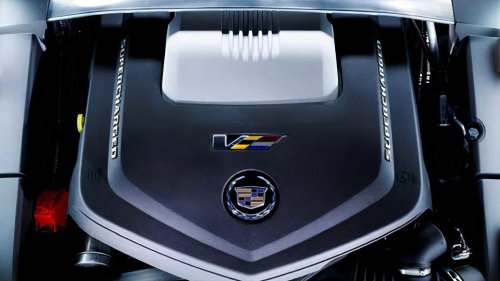
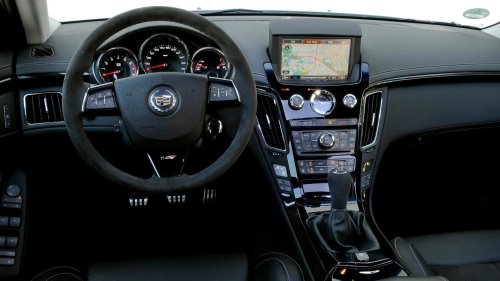
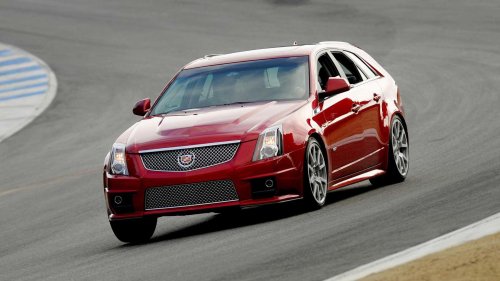
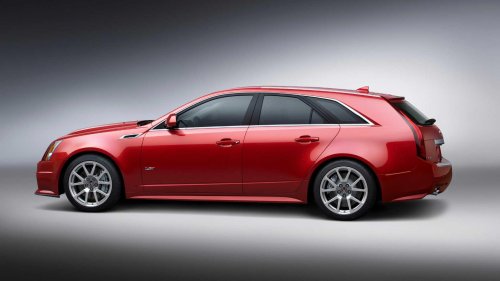
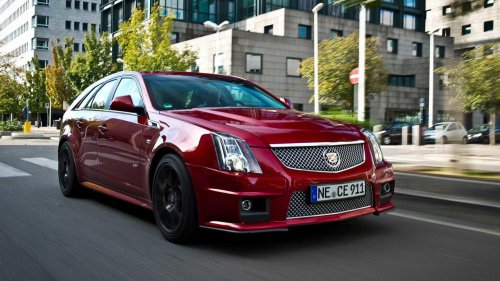



















Jump LinksOut-Muscling The Competition In Pure American Fashion6.2L V8 Means No Replacement For Displacement6 Ways To Connect Driver & MachineFast, Practical, & Fun To DriveOne Of The Few American-Made Cars That's An InvestmentIf you were around in the early 2010s, you’d recall how the landscape was abuzz with powerful cars, but also changing at a rapid pace. Crossovers and SUVs began their march toward market dominance and nearly every automaker was dancing to this tune. But over at General Motors, a small group of engineers thought it good to craft a love letter to the true enthusiast. They didn't build a delicate roadster or another fast sedan; instead, they created something that would be known as a "unicorn" — the Cadillac CTS-V Wagon. It was a vehicle that defied every logical market trend of its time.The idea and dream of the American station wagon had been relegated to memories of wood-paneled hulls and sluggish commutes. Then came the CTS-V Wagon and shattered that image instantly. It was the ultimate sleeper; a vehicle that could carry a week’s worth of groceries in one haul while simultaneously hunting down European exotics on a stretch of road. But more importantly, it offered something that has since vanished from the American domestic market: a heavy-duty, six-speed manual transmission. This gearbox was mated to a supercharged V8 engine in a long roof body. This wasn't just a car; it was a defiant middle finger to the new normal. A Rare Breed: The CTS Lineup and Production Out-Muscling The Competition In Pure American Fashion Cadillac The second-generation Cadillac CTS was a pivotal moment for the automaker. It represented the peak of the "Art & Science" design philosophy the brand adopted at the time. But in pure American fashion, Cadillac didn't just want to compete with the Germans; they wanted to out-muscle them. To do this, they expanded the CTS into a triad of body styles: the sedan, the coupe, and the sport wagon.While the standard CTS Wagon was already a niche product, the "V" variant was nearly invisible in terms of mass-market sales. Over its brief production run from 2011 to 2014, the CTS-V Wagon became one of the rarest modern American cars ever produced. How so? Well, under 2,000 units were produced over this period, with the official number often cited at roughly 1,764 units. Cadillac was - and still is - no stranger to building tens of thousands of vehicles every year, but the CTS-V Wagon was never intended to be a profit leader; it was a halo project meant to establish Cadillac’s performance credentials. Because so few were made, and even fewer were equipped with three pedals - unconfirmed at 514 units - the car achieved "instant classic" status the moment it left the Lansing Grand River Assembly plant. The Heart of the Beast: The LSA V8 6.2L V8 Means No Replacement For Displacement Cadillac Under the creased aluminum hood sat the crown jewel of the GM powertrain basement: the LSA engine. This 6.2-liter supercharged V8 was a slightly detuned version of the LS9 found in the Corvette ZR1, still producing a tar-shredding 556 horsepower and 551 lb-feet of torque in the CTS-V Wagon. Power delivery was thunderous, too, with a wave of torque pushing your neck into the headrest. Thanks to the 1.9-liter Eaton supercharger, which also served the Camaro ZL1 and Corvette ZR1, there was no waiting for the power to arrive; it was simply there. This surge of power was accompanied by a signature metallic whine that harmonized with the deep thrum of the small-block V8. Off the line, this 4,300-lb wagon went from 0 to 60 mph in about 4.0 seconds, a figure that remains impressive even by today's standards. Not too shabby for a rear-wheel drive car... But it wasn't just about straight-line performance, though. The engine, even if perhaps a bit over-engineered, provided the CTS-V Wagon with a dual personality: a civilized cruiser at low engine speeds and a violent monster when the throttle was pinned. Three Pedals & A Dream: The 6-Speed Manual 6 Ways To Connect Driver & Machine Cadillac While most luxury automakers and buyers opted for the 6L90 automatic transmission, the true purists gravitated toward the Tremec TR-6060 six-speed manual gearbox. This was the same heavy-duty gearbox that also did duty in the Shelby GT500 and the Dodge Viper; which is why Cadillac chose it, because it could handle the LSA’s massive torque without disintegrating.But why not an automatic transmission for all the units? This is a good question, especially because in the early 2010s, automatic transmissions were getting faster and a lot better. However, they still lacked the visceral connection between man and machine that a manual could offer. The automatic CTS-V Wagon did its part, but the manual CTS-V Wagon was an experience. The six-speeder allowed the driver to control the weight transfer of the long-roof body with precision, using the engine braking to better influence how the car behaves in a corner. Additionally, and perhaps one of the most influential things, the manual version lacked the "over-boost" protection sometimes felt in an automatic transmission. This aspect gave the driver raw, unfiltered access to the engine's capabilities, and it ensured that the driver was the most important component in the machine. The Art, Science, & Aero Behind The CTS-V Wagon Fast, Practical, & Fun To Drive Cadillac The exterior of the CTS-V Wagon features a mesh grille designed for maximum airflow, a functional "power dome" hood, and flared fenders that barely contain the 19-inch forged aluminum wheels. The most striking feature, however, is the rear. The vertical LED taillights are a hallmark of Cadillac’s heritage and stretch from the bumper to the roofline. It frames the tailgate that hides a surprisingly generous 25 cubic feet of cargo space behind the rear seats.Inside, the "V" distinguished itself from the standard CTS with several high-performance touches:Recaro Performance Seats: Heavily bolstered and adjustable in 14 directions Suede Microfiber Accents: The steering wheel and shift knob were wrapped in grippy suede The Pop-Up Infotainment: While dated by today’s screen-heavy standards, the mechanical pop-up screen was a high-tech novelty of the era. Magnetic Ride Control (MRC): The shocks used magneto-rheological fluid to adjust damping rates every millisecond. It allowed the wagon to ride like a true, classy Cadillac on the highway and handle like a sports car on the track. Is It Worth Considering As A Used Buy? One Of The Few American-Made Cars That's An Investment CadillacIf you are looking for a bargain, look elsewhere. The Cadillac CTS-V Wagon is one of the few modern American cars that appreciated significantly in value over the last 10+ years. Manual examples, in particular, often sell for more than their original MSRP (manufacturer’s suggested retail price) of $62,990 in 2011 - or higher - depending on mileage and condition, as the above table proves.As a used purchase, it is a remarkably solid choice for an enthusiast. The LSA engine is generally reliable and easy to modify if you, for some inexplicable reason, want even more power. However, potential buyers should be aware of "the enthusiast tax." Maintenance items like the Magnetic Ride shocks and the Brembo brake rotors can be expensive to replace. There is also the "supercharger isolator rattle" that’s common in early models, though most have been fixed under warranty. If you find a well-maintained CTS-V Wagon with a manual transmission, it is essentially a blue-chip investment. It Still Personifies American Freedom Caddy 1The Cadillac CTS-V Wagon was an anomaly. A glorious one, at that. It was born from a brief moment in time when General Motors was willing to take massive risks to prove its engineering prowess. By the time production ended in 2014, the world had changed. Cadillac, too, had shifted its focus the "V-Blackwing" sedans, and the wagon format was abandoned in favor of high-performance SUVs like the Escalade-V.But at the end of it all, the CTS-V Wagon remains the last of its kind: an American, manual-transmission, V8-powered long-roof. It represents a perfect crossroads where practicality and insanity meet. It didn't care about market segments or what buying patterns suggested. For those lucky enough to own one, it’s the ultimate expression of American automotive liberty.Sources: General Motors