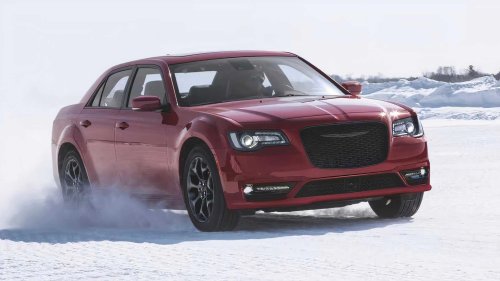
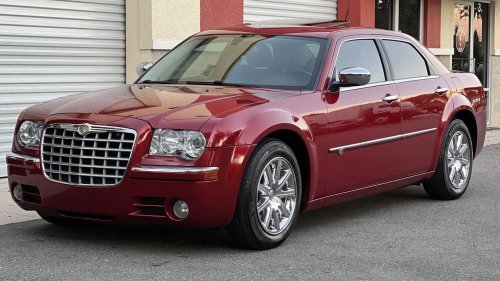
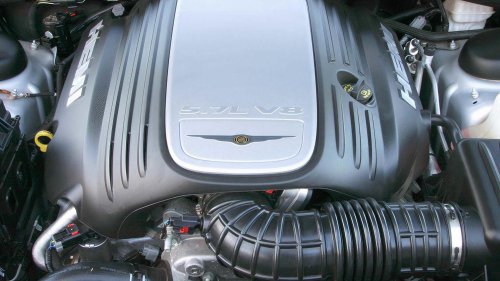
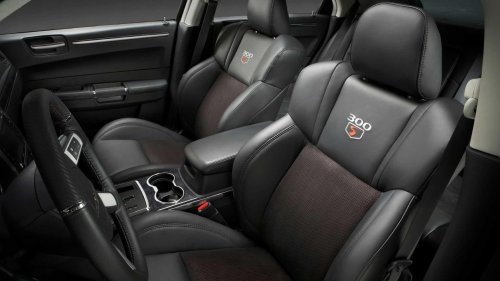
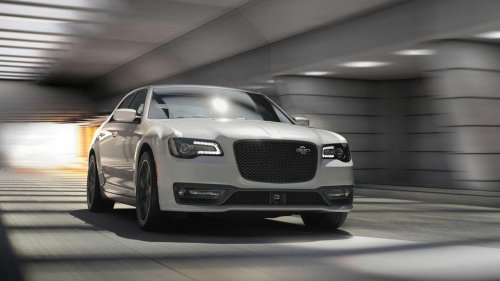
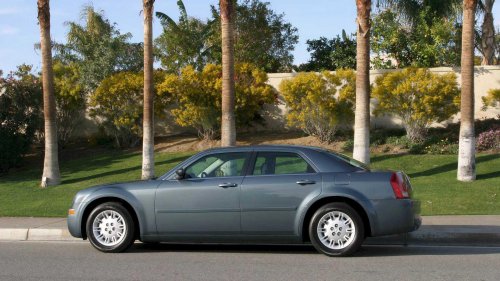
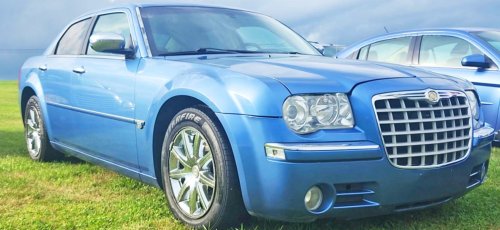
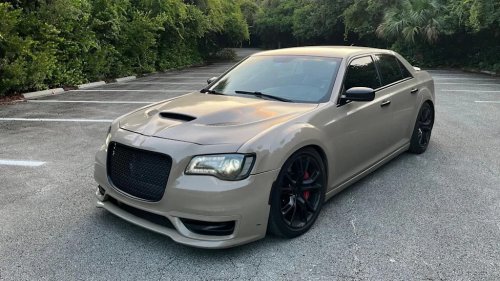
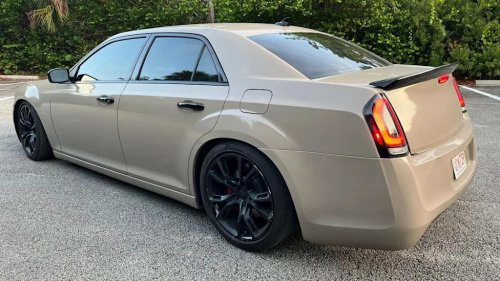
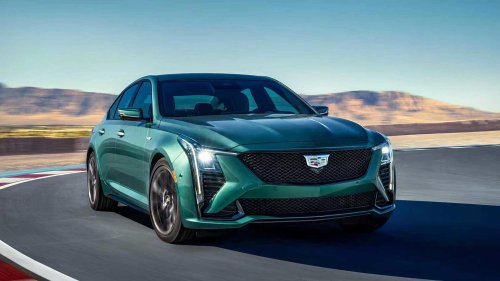
The American automotive world towards the end of the last century was a very different place. Sedans tended to rule the road, and consumers just loved the idea of a full-size rear-wheel-drive V8 American luxury four-door as their next means of transportation. This type of car was practical enough for life at that time and fuel economy wasn't such a big issue as it is now. And sedans were capable in almost every environment, with the entire industry seeming to revolve around them. However, times change and as the new century appeared, tastes also evolved.The market slowly but surely moved on from sedans towards SUVs and crossovers and manufacturers gradually started to remove sedans from the mix altogether. Some vehicles held on longer than others, and most especially the Chrysler 300, which made it all the way through to the end of the 2023 model year. But by that time, it was definitely an outlier, and its days, too, were numbered. The Chrysler 300 Was The Last Of Its Kind ChryslerFor those who may want to be pedantic, you could argue that the Chrysler 300 was not literally the last American rear-drive luxury sedan sold in the United States. Cadillac does keep that idea alive to an extent with its CT4 and CT5, but you could also argue that they are smaller and more like European-style sport sedans than the traditional broad-shouldered American sedan itself.When Chrysler retired the 300, it was the last big mainstream and distinctly American, rear-drive sedan. It had old-school proportions, came wrapped up in an accessible pricing package, and had available V8 power. It also had the footprint, the trunk size, the cabin space, and the visual presence that people once expected from an American flagship-style sedan, but the market spoke, and it just had to go.Everything about the 300 was significant. Its rear-wheel drive layout gave it its long hood and short deck profile, and it looked entirely different from those front-wheel-drive family sedans that were pretending to be premium. Chrysler had always leaned into that identity from its first-generation 300s and when it revived the idea, it also featured a proudly rear-wheel drive architecture, with the company marketing the model as an iconic full-sized sedan.For all its bluster, perhaps the 300 was getting a little long in the tooth by the time it disappeared, and it certainly wasn't perfect by any means. It had a spotty crash test record, and the interior no longer set class standards. Almost everything about it was out of date by the standards of that time, but it was still selling, albeit in smaller numbers, in the marketplace. Its tenacity surely makes it a great American product, and it was, in any case, the last credible example of a formula that gradually went out of fashion. It impressed with its available Hemi muscle and some genuine long-distance comfort, and its disappearance surely left a vacuum. The Sedan That Brought the Swagger Back Chrysler The modern interpretation of the Chrysler 300 arrived in 2005 as part of a plan that Chrysler had to revive its corporate fortunes. During those years, Detroit was steadily moving towards front-wheel drive, softer shapes, and less memorable identities, but Chrysler thought that it would try a new family of rear-wheel-drive sedans. And so, it made the 300 instantly recognizable with its upright grille, long hood, and chopped roofline. It looked imposing on the lot and perhaps more expensive than its sticker suggested.Chrysler also re-introduced a Hemi V8 to its nameplate after almost decades away. The 5.7-liter Hemi turned out 340 hp and 390 lb.-ft of torque and could get the car to 60 mph in around 6.3 seconds. That was plenty of performance in a sedan that only wore a Chrysler badge and even more so, when you consider that it came in well below traditional European luxury heavyweights in price. Chrysler then conducted a redesign in 2011, giving the 300 a much-improved cabin, better insulation, a new Pentastar V6, and further Hemi availability. The V6 produced 292 hp, and the Hemi gave you 363, to offer buyers lots of theater, torque, and spaciousness in a very familiar package. Swagger, Comfort, And Real Muscle Chrysler The Chrysler 300 had a very broad appeal for many reasons. It looked like a traditional premium sedan with that imposing shape and character and, for enthusiastic drivers, performed exactly like a good rear-wheel drive should. You could also buy it in several different iterations, including V6-equipped 300 models and eventually the 300C. This bruiser had a 6.4-liter Hemi with 485 hp and 475 lb.-ft, and it came with a limited-slip differential, Brembo brakes, active damping suspension, and a 0-60 mph time of no less than 4.4 seconds. Those figures placed this big and unlikely sedan firmly into performance territory and there was no doubt that right up until the end, the 300 could absolutely move.But the 300 was also infinitely livable, with its substantial trunk, plenty of room for an adult party, comfortable ride, and available all-wheel drive on V6 trims. It was every inch an old-fashioned premium daily driver, being easy to deal with and settle into. It was also tuned for authority, and it had space, utility, and power in equal measure. And in that respect, you could say it was a bit of a mix between a crossover and a sports sedan before that market decisively split. Imperfect But Still Deeply Authentic Stellantis By the end of its run, the Chrysler 300 was definitely living on borrowed time. Its inherent age showed up in its safety ratings and the IIHS handed out marginal ratings for driver-side small overlap tests, among other disappointing results. The 300 had been hanging around for almost two decades in its new iteration, but it managed to survive because buyers wanted what it uniquely offered.Chrysler could see the car's base appeal and kept refining the formula rather than trying to reinvent it, improving technology and adding all-wheel drive across certain models over time. Crucially, the company didn't try to soften the car's appearance to make it more anonymous, and it still looked like a bully 300 at the end of its days. And that’s more than can be said for some sedans during that transitional time, which tended to fade into obscurity while trying to fit in. The 2023 300C Retired In Style StellantisChrysler clearly believed in sending the 300 to its final resting place in style and its 300C was certainly not a timid farewell package. This was a proper send-off, and it came with lots of bells and whistles as well as its headline power. Chrysler produced a limited run of around 2,000 cars in the U.S. and sold them easily to suggest that the market wasn't entirely happy with this goodbye. The company also decided to reintroduce the Hemi option to the nameplate to remind people of the 300 in its better years. Eventually, though, the end arrived and production ceased in December 2023, closing the book on traditional sedans in America. What The Chrysler 300 Leaves Behind Chrysler The Chrysler 300 represents the last great American sedan, combining full-size dimensions, rear-wheel drive architecture, mainstream brand accessibility, and available Hemi V8 power. And while Cadillac still sells excellent rear-drive sedans, they're largely driving in a different lane. Those Caddies don't really hark back to the day when imposing luxury sedans were everywhere across America and rolling along like pure power statements. And so, it's good to remember the Chrysler 300 for what it was, as a fine American rear-wheel drive luxury sedan that closed the book on the genre. No other car today carries quite the same mix of swagger, size, comfort, affordability, and attitude and its very personality reminds people why that segment was once king of the road.