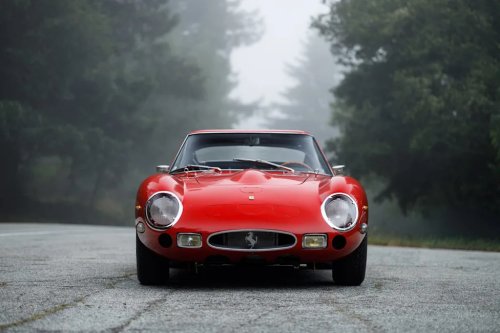
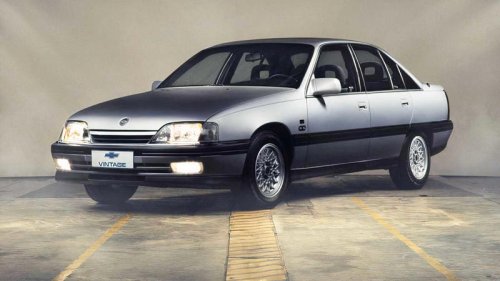
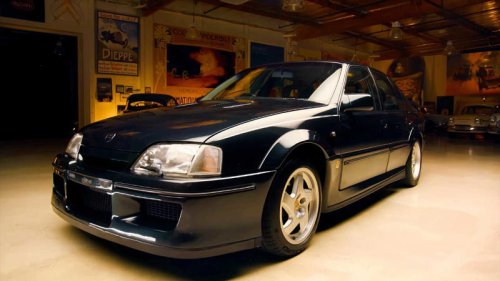
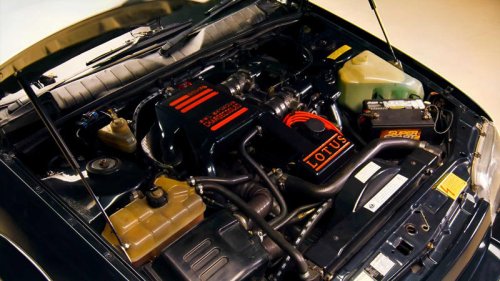
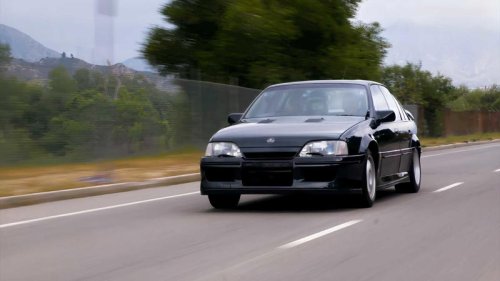
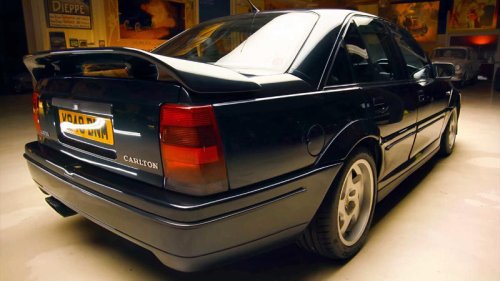
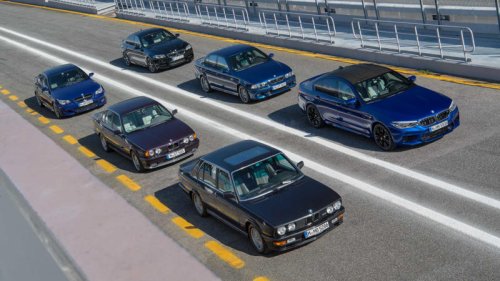
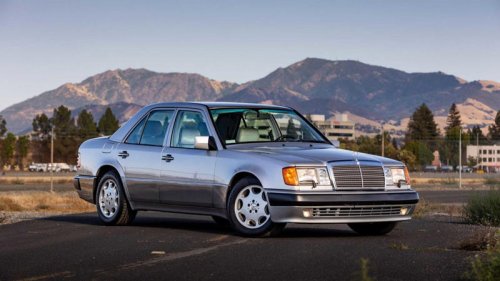
Sometimes the best performance cars come from strange friendships. A big company with a sensible image borrows the nerve, talent, and bad ideas, in the best way, from a specialist brand. The result can be magic. Back in the early 1990s, one of Europe’s most ordinary family-car makers somehow landed on the right side of that line. It built a four-door sedan with room for kids, luggage, and a very serious speeding ticket. On paper, it could run past the BMWs and Mercedes sedans people expected to fear. More surprising still, it had the speed to embarrass a Ferrari.Sure, that sounds like pub talk, but it was real. The car came from a company better known for practical transport and company-car lots, and that is what made the whole thing so wild. The shape looked familiar, but the badge and engineering behind it were insane. Opel Wanted More Than Just Another Sensible Sedan General Motors By the late 1980s, Opel had a clear image in Europe, and it was not exactly wild. The company built solid, sensible cars for families, commuters, and company fleets. It made the kind of vehicles people bought with their heads, not their hearts. That worked fine for volume sales, but it did not do much for excitement. In enthusiast circles, Opel was respected more for being competent than for being dangerous. Nobody looked at an Opel showroom and expected to find a four-door missile hiding between the practical sedans.However, the market had started to change. Germany’s executive-car class was getting faster, sharper, and a lot more competitive. BMW had already shown what a fast sedan could be with the M5, and Mercedes was moving in the same direction. Buyers with money wanted more than comfort and badge value – they wanted power, speed, and bragging rights too. That left Opel with a problem. It had a strong rear-wheel-drive executive platform, but it did not have the kind of halo car that could make enthusiasts stop mid-sentence.Opel also had a rare opportunity sitting inside the same corporate family. General Motors owned Lotus, which meant a mainstream brand suddenly had access to one of the sharpest engineering minds in the business. That opened a door most automakers never get – the German brand could build something that changed the way people saw the badge, not with stripes and spoilers alone, but with real engineering muscle. That project was about image, pride, and a little bit of glorious insanity.So the idea took shape – start with a roomy executive sedan, keep the usefulness, keep the familiar shape, and then hand it over to the people most likely to do something completely unreasonable with it. The goal was to build a car that looked calm, drove hard, and hit the Autobahn like it had a personal grudge. What came out of that plan would become one of the boldest sleepers of its era, a machine so absurdly fast that the badge on the hood almost felt like part of the joke. The Lotus Carlton Was Faster Than People Dreamed About Jay Leno's Garage YouTube That car was the Lotus Carlton, sold in mainland Europe as the Opel Lotus Omega, and it did far more than just give Opel a halo car. It turned a sensible executive sedan into one of the most shocking performance cars of the early 1990s. Lotus took Opel’s large rear-wheel-drive platform and transformed it into something that could run with exotic machinery, not just German sport sedans. On the surface, it still looked like a serious business car. Underneath, it had the kind of pace that could ruin a Ferrari owner’s afternoon.The numbers sounded almost rude for the time. Lotus gave the car a 3.6-liter twin-turbocharged inline-six that made 377 horsepower and 419 lb-ft of torque, sent through a six-speed manual. Top speed landed at 176 mph, while 0-62 mph took just 5.4 seconds. Those figures were hard enough to believe from a low-slung Italian coupe, but coming from a four-door Opel-based sedan, they sounded like someone had mixed up the spec sheets after lunch. But those numbers were real.What made it even more special was the way it delivered that speed. This was not some stripped-out toy built to impress on a smooth track for ten minutes. It was a full-size sedan with space, comfort, and long-distance muscle. It could carry four adults, luggage, and enough boost to make the highway feel suspiciously short. That was the trick. The Engineering Behind The Craziest Sedan Of The Era Jay Leno's Garage YouTubeThe real madness started under the skin. The Lotus engineering team took Opel’s 3.0-liter straight-six, stretched it to 3.6 liters, and then added two turbochargers. That alone would have been enough to wake the neighbors, but Lotus kept going. It strengthened the engine so it could handle real boost.The rest of the car needed the same treatment, because huge power means nothing if the chassis starts sweating at triple-digit speeds. Lotus reworked the suspension, widened the track, fitted bigger brakes, and gave the car serious tires to put the power down. It also borrowed parts from across General Motors’ empire in a way that now feels almost too weird to be real. The six-speed manual, for example, came from the Chevrolet Corvette ZR1 because Opel did not have a gearbox tough enough for the job. The rear differential came from an Australian Holden. So in one car, buyers got German bones, British tuning, American muscle, and Australian backup. It sounds like the setup to a bad joke, but the punchline was 176 mph.That mix gave the Carlton its unique character. It felt heavy, planted, and brutally effective, like a car built to flatten huge stretches of Autobahn in one long charge. That is an important part of its story, because Lotus usually gets linked with light, nimble sports cars. This sedan played a different game and traded featherweight agility for high-speed stability and giant midrange shove. It was less about dancing through corners and more about smashing the horizon into the windshield. For a big luxury sedan, that was a very serious trick. It Was Actually Faster Than Ferrari Jay Leno's Garage YouTube The Ferrari comparison stops sounding like bench-racing nonsense once the old magazine numbers come out. In period testing, Autocar ran the Lotus Carlton from 0 to 60 mph in 5.1 seconds, from 0 to 100 mph in 11.1 seconds, and from 30 to 70 mph in just 3.8 seconds. Car and Driver, testing a 1990 Ferrari 348ts in its five-car supercar shootout, recorded 0 to 60 mph in 6.0 seconds, a quarter-mile in 14.5 seconds at 99 mph, and a 166-mph top speed. The Ferrari still had the poster-car image, but the big sedan had the better stopwatch.The magazines also explain why the comparison stuck for so long. Car and Driver found the 348 exciting, but also nervous at speed, noting that the car grew uneasy on fast, uneven roads and felt difficult to hold steady above 100 mph. The Lotus, in turn, had a different job – it was built to stay planted, crush distance, and pile on speed with almost rude ease. That is why enthusiasts still talk about it with a grin. It was the family four-door that made a Ferrari look a little overpriced when the timing gear came out.An infamous police chase in Sweden also cemented the Carlton's cult status. A short video from an unmarked Saab 9-3 2.0 turbo police car shows a Carlton driver getting away in the pursuit, only to be visited by the police at their home later. One Of The Most Expensive Cars To Wear The Opel Badge Jay Leno's Garage YouTube The price helped make the Lotus Carlton and Opel Lotus Omega such a strange thing in the era. Vauxhall offered it for £48,000 when new in the UK, and for a brand known for sensible transportation, that was huge money in 1990. That made the Carlton less of a volume car and more of a statement piece. It was a halo car with an attitude problem.Production stayed low, which only deepened the myth. Lotus lists total volume at roughly 950 cars from 1990 to 1992, and Vauxhall says only 286 Lotus Carltons were sold in the UK. Vauxhall and Opel had reportedly hoped for 1,100 cars, but the early-1990s recession and the steep price stopped that plan, leaving around 320 Carltons and 630 Omegas completed. That is a tiny run for a car that made such a large noise.Today, that rarity shows up in the market. The Classic Valuer pegs an average-condition Vauxhall Lotus Carlton at £50,625 and notes a public-sale high of £111,524. At the same time, auction estimates for strong cars have sat in the £60,000 to £70,000 range, and Magneto reported that the final Vauxhall Lotus Carlton built sold for £107,536 in 2024. Simply put, average examples already need real money, and the best cars flirt with or pass six figures. The Germans Had Great Alternatives At The Time BMW To be fair, the Lotus Carlton did not exist in a vacuum. The early 1990s also gave buyers two excellent German answers to the fast-executive-car question – the BMW M5 E34 and the Mercedes-Benz 500E. Neither had the same shock factor, but both had serious engineering, real prestige, and a cleaner path to convincing nervous buyers that a fast sedan was a reasonable life choice. If the Lotus was the hooligan in the room, the Germans wore nicer watches.The BMW M5 E34 appealed to the driver who wanted skill, balance, and a hand-built feel. The early car made 315 hp and hit 62 mph in 6.3 seconds, while the later 3.8-liter version reached 340 hp and 155 mph. It was still a superb machine, and many enthusiasts would call it the more precise car on a twisty road. But in raw top-speed theater, it could not live with the Lotus. The M5 felt like a master class, but the Carlton felt like a bar fight with engineering degrees.Cars & Bids The Mercedes-Benz 500E took a different route. Mercedes asked Porsche to help with engineering and development, and the car packed 326 hp, 5.9-second 0-62 mph acceleration, and an electronically limited 155-mph top speed. It was discreet, muscular, and deeply refined. For many buyers, that was the smarter choice – it sounded richer, looked richer, and came from a richer badge. But the Lotus Carlton remains the story enthusiasts tell first because it aimed past “excellent” and landed on “slightly insane.” That made it harder to justify then and impossible to forget now.Source: Opel, Lotus, Car and Driver



















 +44 others