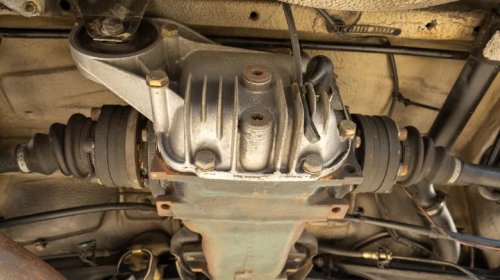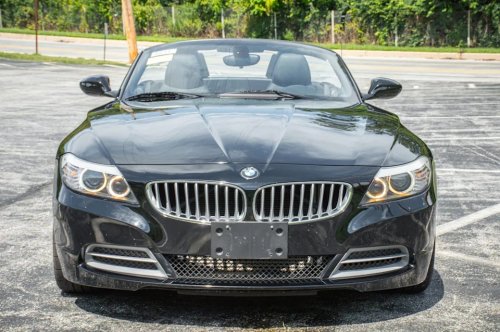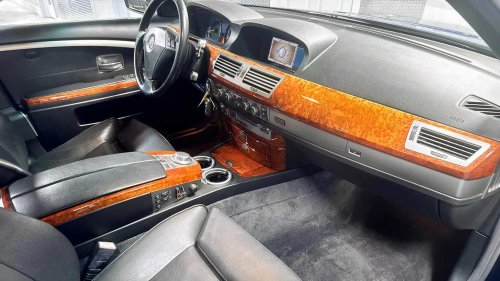
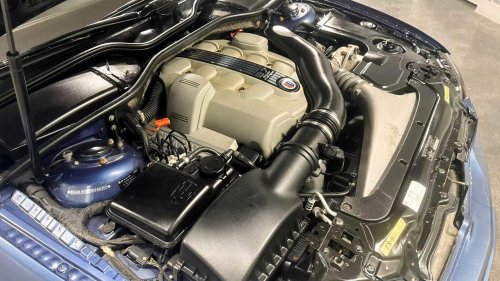
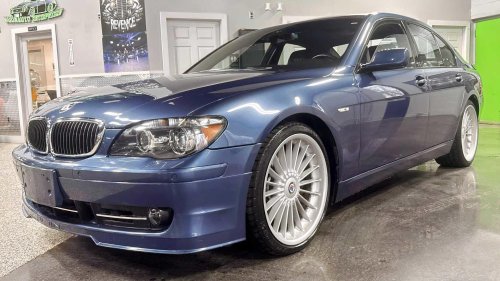
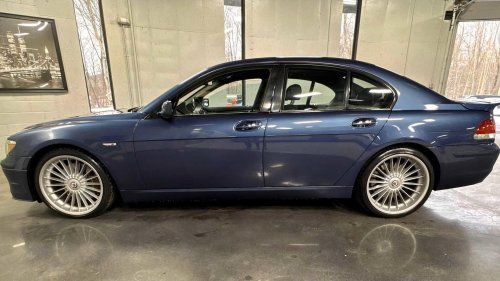
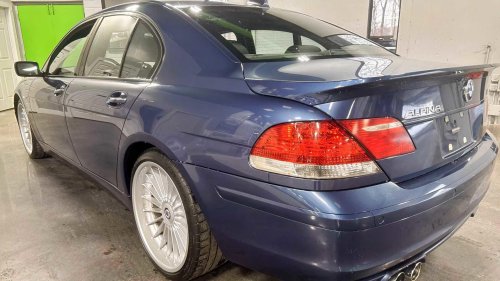
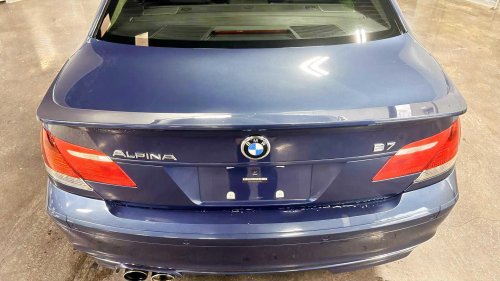



















The BMW 7 Series is a comfortable, anonymous, executive saloon that probably goes unnoticed more often than not in regular traffic. Nothing to look at. Nothing to remember. But, there is one version of this car that looks like the standard luxury flagship, and it carries a supercharged V8 producing 493 horsepower, assembled by hand in Bavaria by a company with its own distinct vehicle identification numbers, its own production records, and its own numbered plaque on the headliner. Only 803 examples were ever made for the US market, and the vast majority of drivers who see one have no idea what they are looking at. That is exactly the point. The 7 Series That BMW Did Not Build MecumAlpina is not a tuning company in the conventional sense. It is a vehicle manufacturer, formally recognized by the German government as such since 1983, producing cars with their own type approval, their own VIN sequences, and their own production records that sit entirely separate from the BMW production database. Every Alpina that leaves the Buchloe facility is a different vehicle from the BMW it started life as, not a modification of one. The company has operated in partnership with BMW since 1965 and works directly with development-stage access to BMW platforms, not from finished road cars. The result is a product that shares visual DNA with a BMW without being one in any meaningful engineering sense.The E65 B7 was the first Alpina ever to use a supercharged engine. It was introduced at the Frankfurt Motor Show in 2003, with production starting in 2004. The body shells came from the BMW plant in Dingolfing. The N62 engine was built at BMW Steyr in Austria and then sent to Alpina's Buchloe facility where it was disassembled, rebuilt with Alpina-specific components, and reassembled as the H1 unit. That engine then returned to Dingolfing for installation in the car, which was assembled and painted alongside the regular 7 Series before being sent back to Buchloe for final inspection, finishing, and the numbered roof plaque. The process is laborious by design. Alpina has never been interested in volume. What Alpina Did To The N62 Mecum The base N62 4.4-liter V8 is not a slow engine in standard form. Alpina's modifications transformed it into something considerably more serious. The starting point was an Alpina-specific block with a forged crankshaft and lower-compression Mahle pistons capable of handling forced induction reliably at sustained output. An ASA centrifugal supercharger, running 0.8 bar of boost, was mounted and driven by a dedicated poly V-belt running separately from the engine's other ancillary systems. This arrangement avoided the packaging compromises that a common belt drive would have required. The heat generated by the supercharger was managed by a high-transfer-rate air-to-air intercooler mounted in the engine bay.The exhaust system is an Alpina-commissioned Akrapovic unit using an EMITEC metallic catalytic converter in place of the standard ceramic unit, reducing backpressure and weight simultaneously. The ECU received Alpina-specific calibration to manage the supercharger, the BMW Valvetronic variable valve timing, and the overall power delivery. The transmission is a ZF six-speed automatic with Alpina's Switch-Tronic system, which allows gear changes via buttons on the steering wheel. The rear axle was sourced from the 745d to handle the torque output. Meet The 2007-2008 Alpina B7 MecumThe US market received the B7 for the 2007 model year only, with the final cars built in January 2008. The Alpina Register confirms 803 North American examples produced with VINs ranging from DT89000 to DT89802, all short-wheelbase, all rear-wheel drive. The starting price was approximately $115,695 for the 2007 model year. Independent road testing confirmed the car produced 164 more horsepower than the 745i it was based on, and reached 60 mph 0.4 seconds faster than the 760Li V12 flagship despite weighing 150 kg less. It carried no electronic speed limiter, meaning 186 mph was a real-world figure rather than a governed ceiling. How To Spot One In Traffic Mecum The differences between a standard E65 7 Series and the B7 are deliberately subtle. The front apron is slightly deeper with larger air intakes integrated into the lower bumper. The ride height sits lower than a standard 7 Series due to the sport-tuned suspension. The most distinctive visual element is the 21-inch 20-spoke Alpina wheels, which carry the signature blue-and-green center cap detail visible to anyone who knows to look for it. The rear trunk lid carries a modest spoiler and B7 badging. Inside, the numbered production plaque is mounted to the headliner above the driver, and the instruments carry Alpina's blue-background dials. Without that knowledge, the car looks like a well-specified 7 Series. That is not a failure of design. It is the entire point. What A B7 Is Worth Today MecumThe pricing picture for the E65 B7 is one of the more unusual in the current collector market. Market data for the Alpina B7 shows an average sale of $21,311 across all recorded transactions, but the spread between the lowest and highest sales is enormous. A $3,500 sale and a $40,000 sale represent the same car in profoundly different states of preservation and documentation. The Alpina market for earlier generations has been well-established: market commentary confirms that early E28 and E34 Alpinas command significant premiums over their M-car equivalents, with the E28 B7 Turbo selling at 200 percent over an E28 M5 in documented auction results. The E65 B7 has not yet reached that trajectory. A car with a documented service history, original specification, low mileage, and a verifiable VIN from the Alpina Register is a fundamentally different purchase from one without those credentials.Ownership costs carry the standard caveat of any complex German performance car at this age. The N62-based H1 engine requires specialist knowledge rather than standard BMW dealer servicing, and parts for Alpina-specific components require sourcing through the Alpina network. The supercharger itself is not a common failure point when properly maintained. The iDrive electronics and ancillary systems are the more likely maintenance items at this mileage. Insurance is straightforward once the car is correctly declared as an Alpina rather than a BMW, which requires documentation from the Alpina Register for US-market cars. The Phantom Flagship Mecum 803 cars. That is the entire US production run of a supercharged V8 executive sedan that beat the 7 Series V12 to 60 mph, carried no speed limiter on its way to 186 mph, and was hand-assembled and inspected in Bavaria before being numbered and delivered to its first owner. The person who bought one new was paying $115,695 for a car that most valets, most car enthusiasts, and most automotive journalists would mistake for a standard luxury saloon at a glance. That level of anonymity, combined with that level of hardware, is what Alpina has always been selling. The market has not yet fully understood what 803 examples of it is worth. That gap between what the car is and what it costs is, depending on your perspective, either a problem or an opportunity.Sources: The Alpina Register, Hagerty, Mecum.