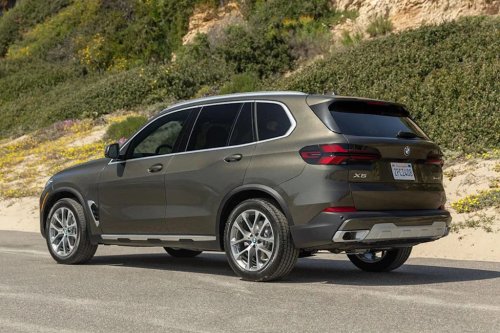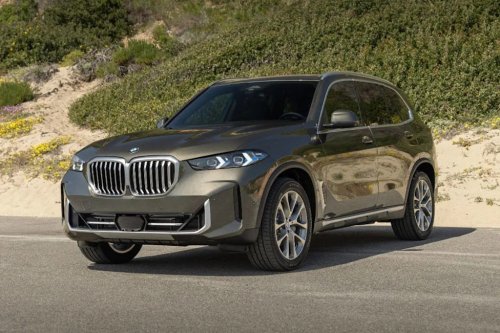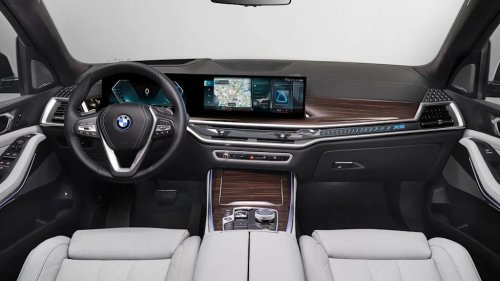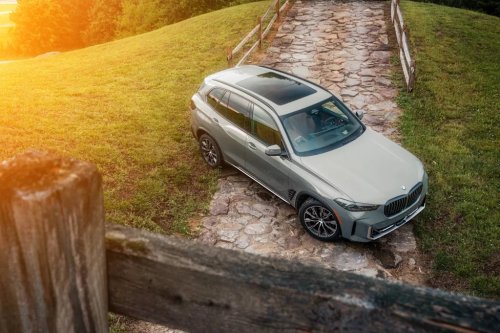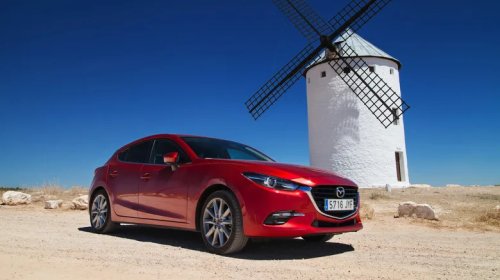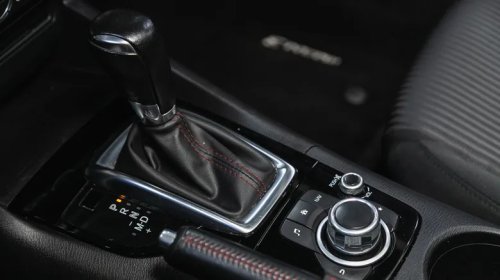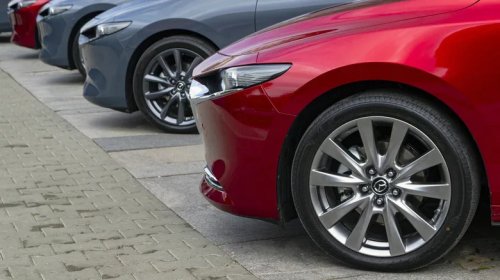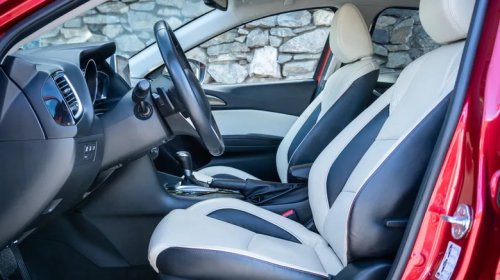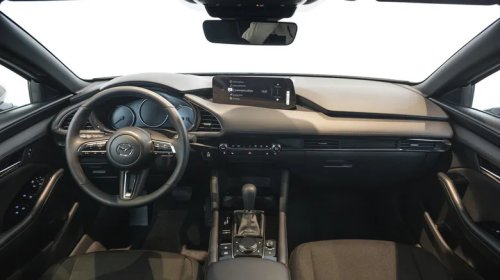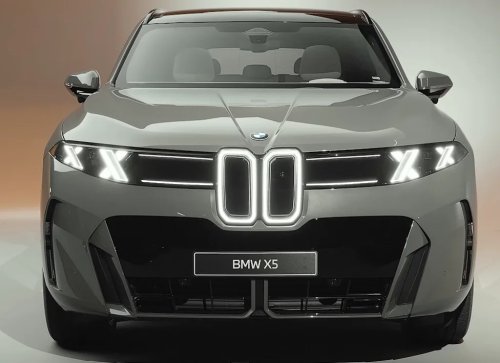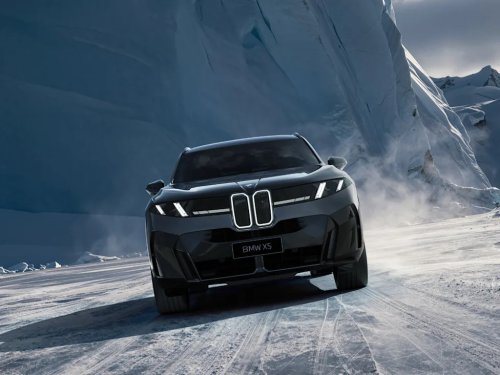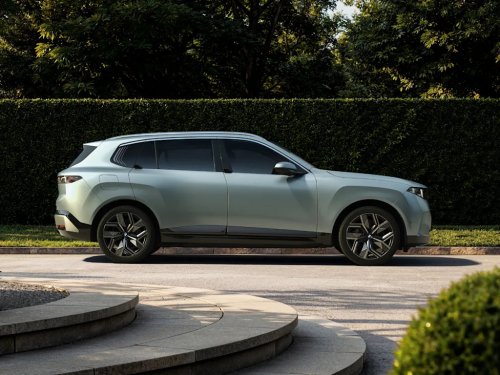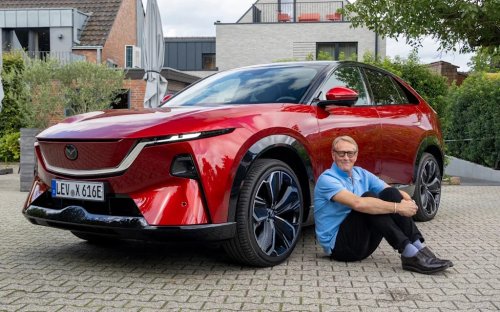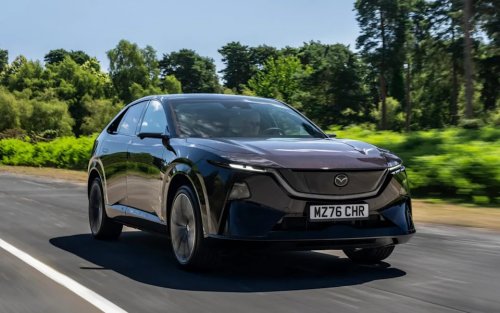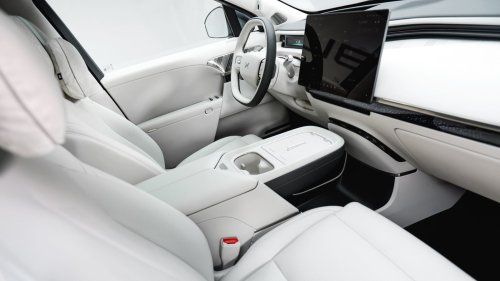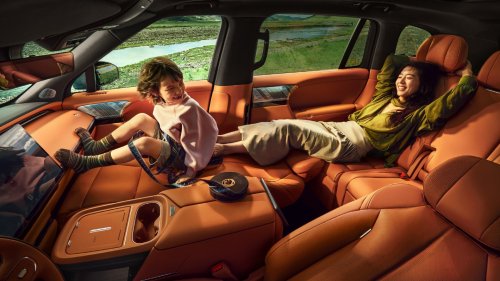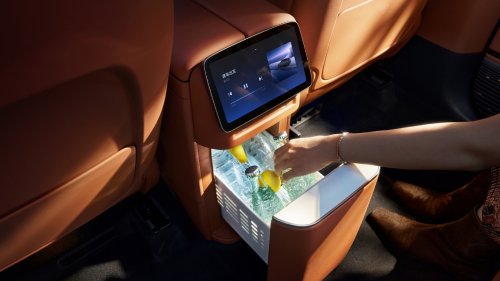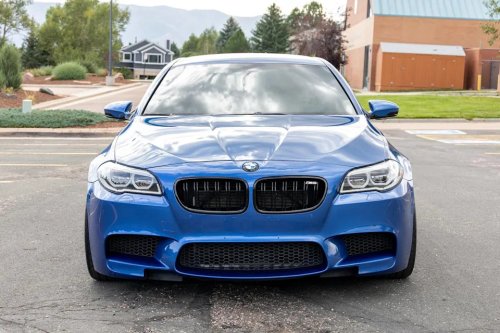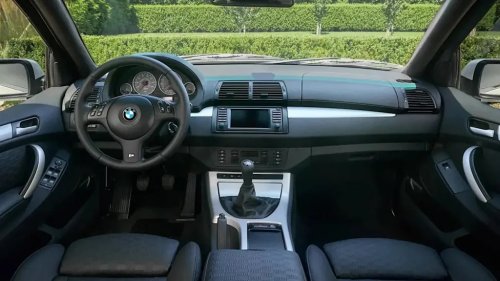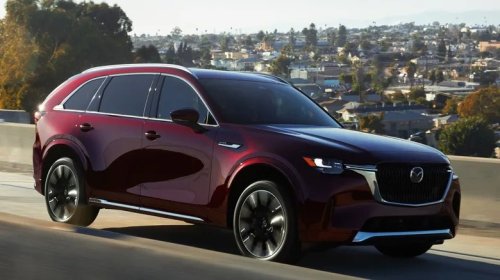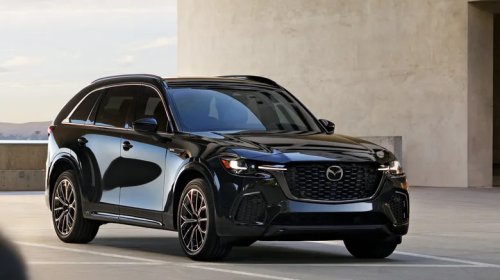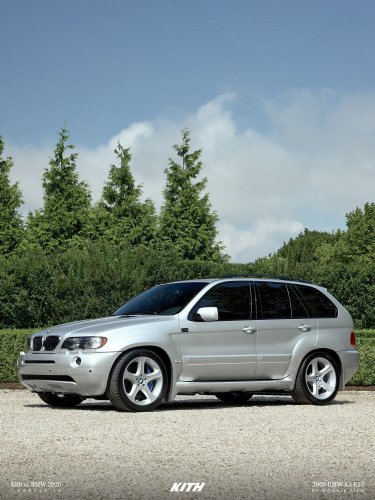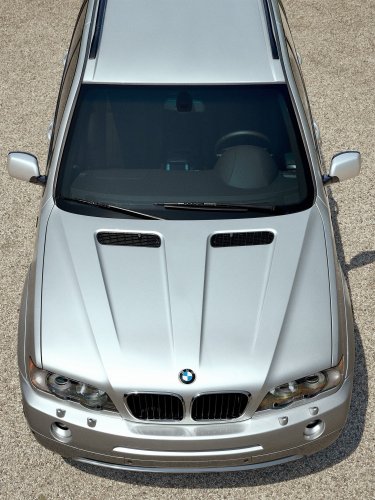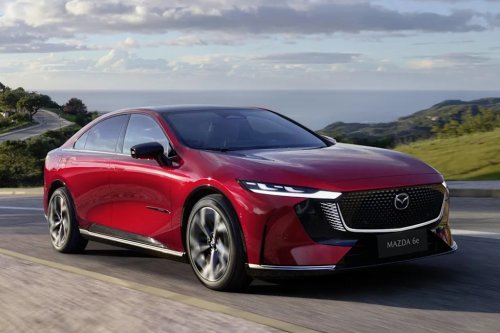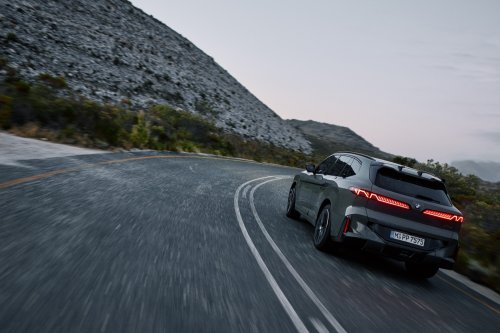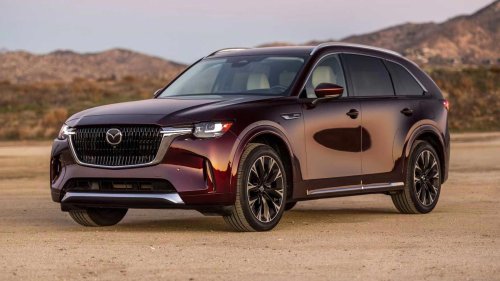
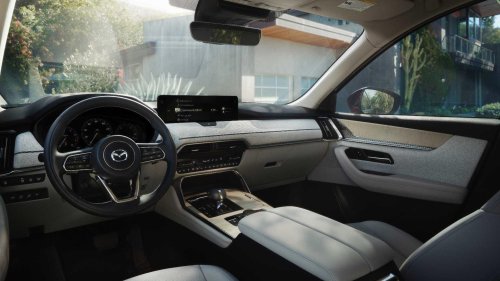
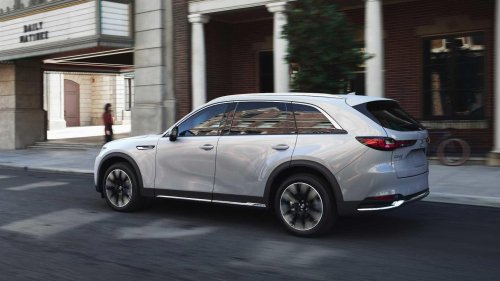
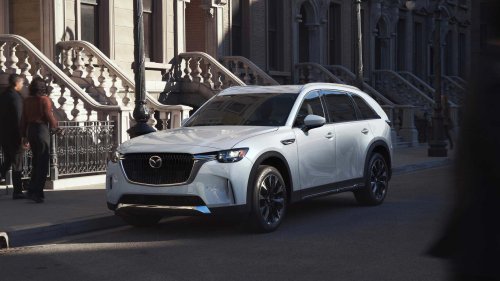



















The premium three-row SUV segment has really been heating up in recent years. Once Mercedes-Benz and BMW finally decided to compete against the Audi Q7 and Volvo XC90 with their GLS and X7, the number of European options for premium three-rows instantly doubled.Around the same time, the smaller, primarily two-row models from the Europeans continued to grow in size, enabling the X5 and GLE to also offer tiny third rows, although the X5 no longer does.Now in 2026, Audi's even bigger Q9 is due soon, with a Porsche version likely to follow eventually. And that doesn't even include the non-European competitors like the Acura MDX, the new and strong-selling Lexus TX, the Cadillac Vistiq and Escalade IQ, the coming Genesis GV90 and the current GV80, or all the body-on-frame premium three-rows from America and Japan. The segment is downright crowded.Most of these shoppers want something big, either to haul people or things, but want to do that with style, power and every luxury feature imaginable. But Mazda figures it can offer all this for far less than the others, especially the worst-value European brands, and help elevate their brand to the premium positioning they've been striving for.While the CX-90 (and it's nearly-identical twin, the two-row CX-70) haven't been red-hot successes, they've sold well and made premium shoppers think twice before splurging on something else, just to get a more prestigious badge. Let's discuss how the CX-90 compares to those swanky European competitors.For this article, we're focusing on the smaller of the European three-rows, the Mercedes-Benz GLE, the Audi Q7 and the Volvo XC90, plus the two-row X5. The Mazda splits the size gap between the smaller and bigger ones, coming in about five inches longer than X5, for example, but five inches shorter than the X7, so it's not necessarily a direct competitor to either. Mazda's Unexpected Play: The Inline-Six and RWD Architecture CarBuzz/ValnetThe hallmarks of the highest-regarded vehicles in this segment, the X5, GLE, and Q7, are a 6-cylinder engine and a rear-wheel-drive-based architecture. Since Mazda was aiming for the best with the CX-90, they made the massive investment to make their own turbocharged inline-six and rear-wheel-drive platform, all completely in-house, with no outside help or parts-sharing.No other competitor has committed this fully to matching these three other than Genesis. Sure, plenty offer 6-cylinder options, but they're all on front-wheel-drive-based all-wheel-drive platforms. The pleasant side effect of this platform investment is that it gives the CX-90 great proportions, and Mazda's skilled designers utilized them well, crafting a design that's attractive without being in-your-face. It's a design that should age well too.Beyond the platform, Mazda also actually exceeded the cylinder count and power of the base variants for all the others except for the X5 which has 375 horsepower versus the 340 hp the Turbo S version of the CX-90 has. Even the base CX-90 includes 280 hp from a detuned version of that turbocharged inline-six.Meanwhile, Audi and Mercedes downgrade you to little 2.0-liter 4-cylinder turbocharged engines and make you pay even more to get the 6-cylinders in those. Volvo doesn't even offer a 6-cylinder, only adding a plug-in hybrid system onto their turbocharged 4-cylinder to provide a higher-horsepower variant.And even there, Mazda has an answer, with the CX-90's plug-in hybrid variant that also uses a 4-cylinder, although the Volvo's 455 hp does handily outmuscle the CX-90 PHEV's 323 hp. Mazda really did cover the bases here, but it goes beyond merely matching offerings. The inline-6 is smooth and torquey too, just like the Europeans.It's not just about power and driven wheels though. When it comes to the rest of the driving experience, the CX-90 holds up there too. As someone who has spent time driving all of these, the Mazda isn't quite as agile in corners or as quick to respond as the X5, but otherwise, it compares favorably. And especially compared to the very dated XC90 and Q7, the Mazda actually feels better. More planted, more substantial, more confident. It's also smooth, quiet and safe. Surprisingly Luxurious MazdaIf you've never been in a CX-90 or CX-70, you might assume that being just a Mazda would mean that the big compromise for all that previously mentioned goodness would be a cheaper-feeling interior. On the contrary, the CX-90 interior is surprisingly luxurious. And even though it's only in its third model year, it's aging like fine wine, as we're currently verging on screen burnout in the car industry with buyers vocalizing their dislike of massive tablets. This is especially true in luxury vehicles, where craftsmanship and high-quality materials for switchgear are being tossed for profit-juicing on-screen controls instead. Mazda just fell into the same trap with the new CX-5.But thankfully – at least for now – the CX-90 spares you from all that. It has a tastefully integrated screen that's big enough without being overboard, and it's controlled either by touch or a knob, just like the X5 offers. The gauge cluster is digital, but it's also nicely integrated into a hooded dash for a more traditional appearance. The materials are very good too, with available Nappa leather, genuine maple wood trim, and even a unique hanging stitch that connects the upper and lower dashboard, which is a design inspired by a Japanese hand-bookbinding technique called Kakenui.Every touchpoint feels plush, and even things that some of the others overlook, like padding for your knees on the center console and doors, are present and plush in the Mazda. Some of the buttons feel slightly nicer in the European competitors, and they also offer extra features like massaging seats, fancier stereos and more abundant ambient lighting, but at their higher price tags, they should.The final and very important thing that makes the CX-90 feel more luxurious inside is the extra space it provides. Compared to the X5, GLE, and XC90, the CX-90 is over five inches longer. The Q7 comes the closest at just 1.2 inches shorter, but Mazda made sure to exceed the others here, too. While the optional third rows in the GLE, and the discontinued one in the X5, are basically jump seats, and the standard third rows in the Q7 and XC90 are kid-friendly but tight for adults, the CX-90 has a properly useful third row for adults and kids alike. It's not the biggest third row in the premium unibody segment (that honor goes to the Lexus TX), but it easily beats the Europeans. And even the 3–4 inch longer GLS and X7's third rows struggle to be as roomy. Fantastic Value For The Open-Minded MazdaSo, we've established that the CX-90 matches the more expensive European competitors in just about every way. But exactly how much do you save by going for the Mazda?A lot.The 2026 Mazda CX-90 starts at just $39,300, plus a $1,530 destination charge. That base version includes all-wheel-drive, three-zone climate control, heated seats, and all the safety tech. Let's first compare what a low trim with comparable equipment costs with the competitors. The BMW X5 has the most standard horsepower by a long shot, so maybe a bit uneven there, but one with comparable equipment to the base CX-90 will cost you $70,950 plus $1,450 for destination. That's over $31,000 more. And yes, a base X5 actually costs over $70,000 now.The Mercedes is nearly as bad, with a comparable GLE costing $68,600 plus the $1,350 destination charge. Things are a little better over at Audi, with the dated Q7 demanding only $62,000 before a $1,295 destination charge. But that's still about 23 grand dearer than the CX-90. Volvo charges you a similar $61,050 plus $1,395 destination to get into a base XC90.On the top end, the gap doesn't get much better, but, to be fair, the Europeans do include more features in these top packages. A fully loaded CX-90 Turbo S costs a still-reasonable $57,570 plus $1,530 for destination. To get all the same features in an X5 (minus the unavailable third row), you'll be paying $82,150, plus the $1,450 destination fee. That's about a $24,500 difference.A comparable GLE 450 will cost you a whopping $85,770 plus $1,350 destination at the Mercedes dealer. The Q7 with comparable equipment is $78,700 plus $1,295 destination, although if you insist on Nappa leather instead of the standard leather to make it truly equal, tack on another $4,800.Finally, XC90s that match the CX-90's equipment will run you $73,850 plus $1,395 destination for the 295-hp version, and $83,900 plus $1,395 for the 455-hp T8 plug-in hybrid version, depending on whether you want to go way lower or way higher in horsepower compared to the Mazda. Why Buyers Still Miss It MazdaSo Mazda largely matches the Europeans while costing tens of thousands less. But then, why are they not selling more than the 55,156 units they sold last year? While that's still a respectable number, there are a few reasons why some premium shoppers avoid the CX-90. The simplest reason is brand bias and bragging rights. For those who take pride in the brand they drive, saying you own a vehicle from the European luxury brands will impress more people than a Mazda will. And while Mazda has always made some great cars, their aspirations for premium positioning are fairly new, and it will take time to change perceptions.The final hurdle that will also take time is the reliability of this new powertrain. While the Europeans use engines and transmissions that are pretty known quanties at this point, the CX-90's track record is somewhat unproven still, since it's only been on sale for about three years. Thankfully, it's not making terrible headlines like Toyota's newest 6-cylinder, so it appears that the Mazda's engineering is still pretty solid.And for luxury buyers that often lease or swap in and out of cars fairly often, an uneventful three years is likely all that's needed anyway, so we'll see if CX-90 sales continue to grow or not. The truth is, the CX-90 is the best buy if you're looking for a premium three-row SUV. Hopefully, less premium SUV buyers misjudge it as time goes on.Sources: Mazda, BMW, Mercedes-Benz, Audi, Volvo