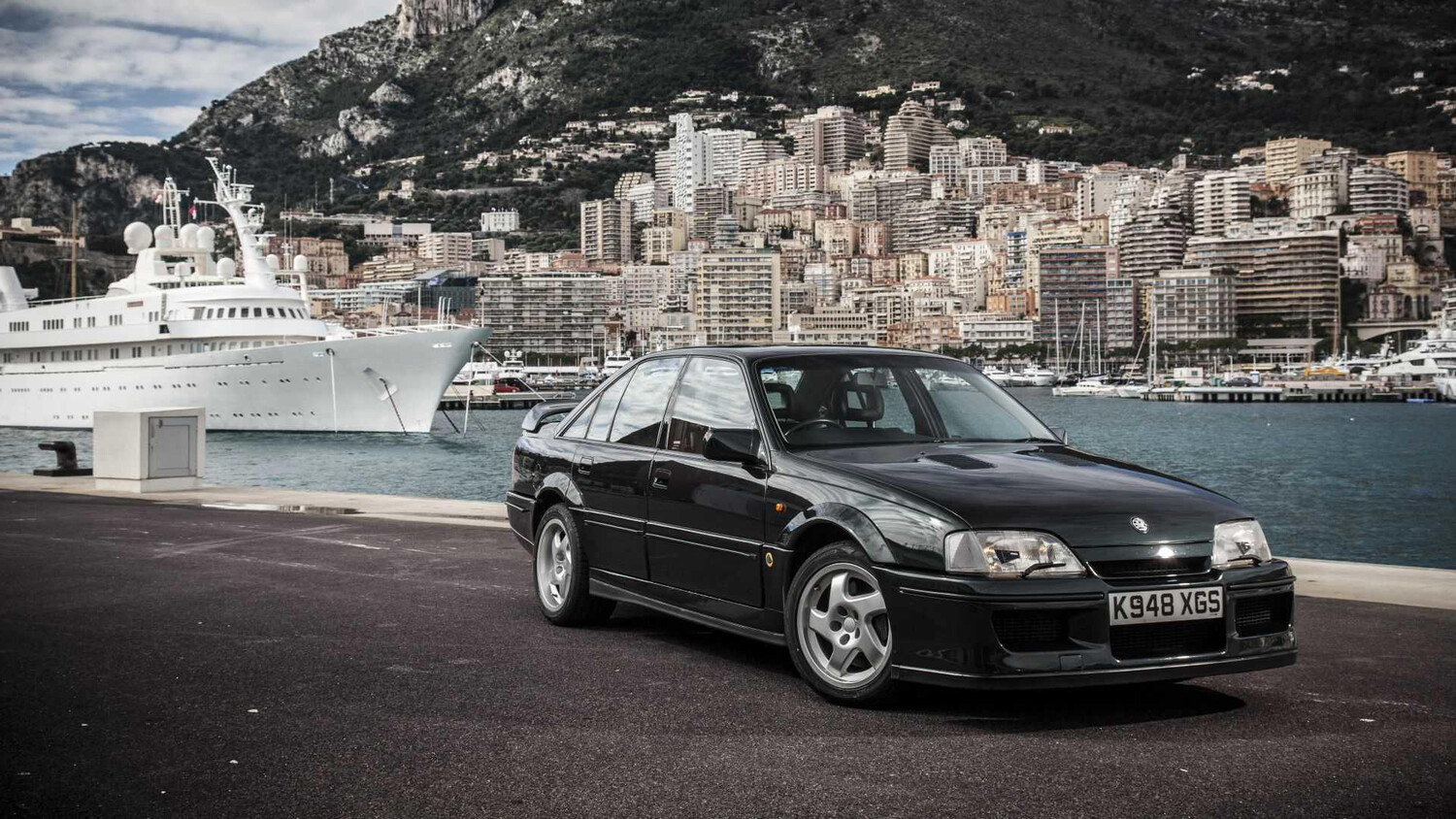
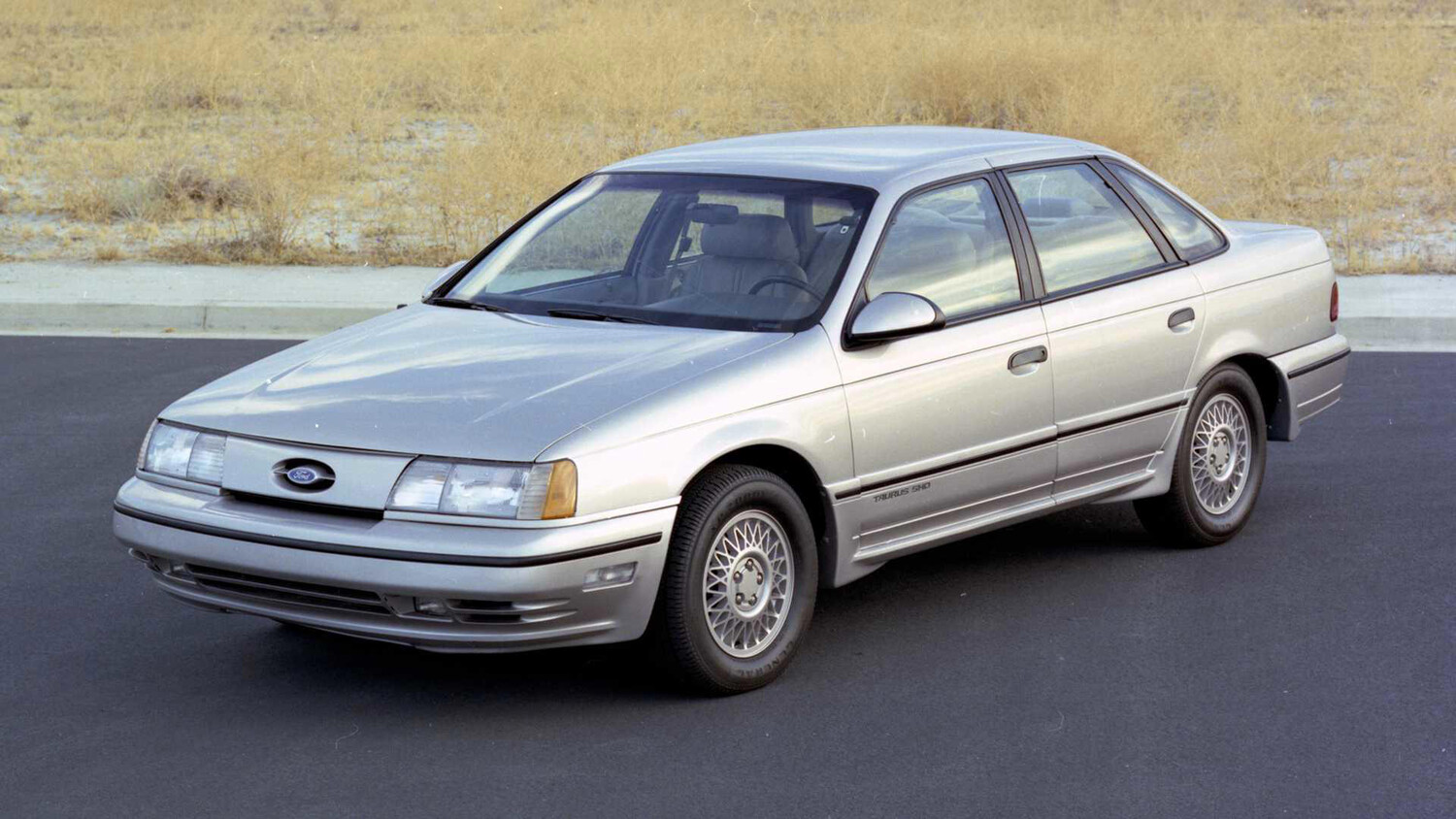
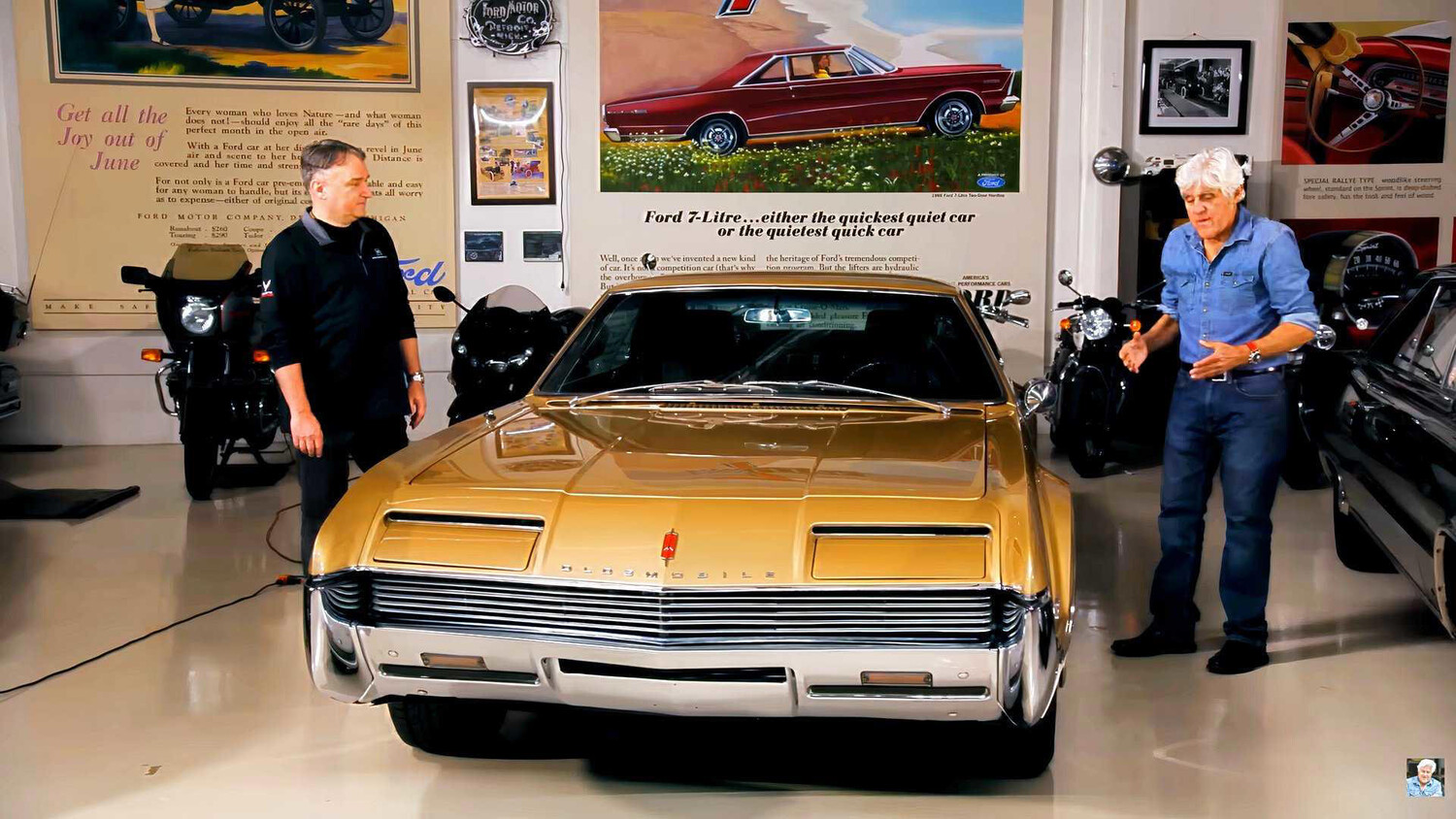
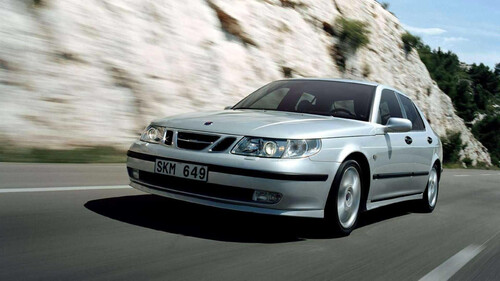
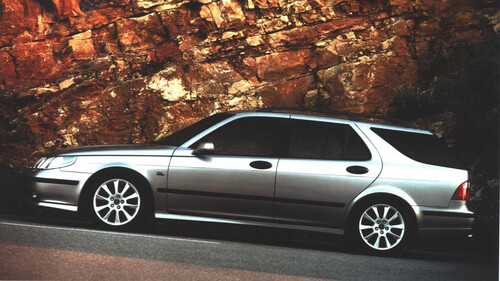
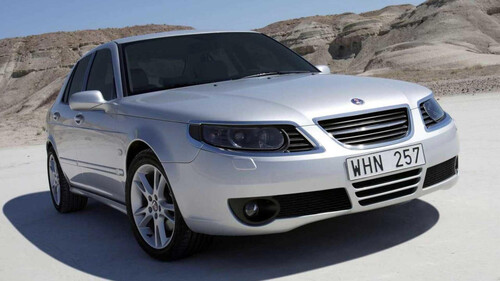
A “sleeper car” is one which is high-performance in an unassuming shell. They fly under the radar, looking like any other normal car, until their driver decides to wake them. And while there’s no shortage of sleeping beasts, Jay Leno has one which is arguably the king of them all. Unexpected Performance Comes In All Shapes And Sizes By its very definition, a sleeper car has to have a pretty standard look. It can have the same performance as a Ferrari F40, but while the F40 looks like it’ll get you there that quickly, a sleeper looks normal. It’ll blend in.This mix of power and drag mundanity has led to some of the most exciting, and unexpectedly fast, cars the world has seen. Lotus Carlton StellantisThe Carlton was originally made by Vauxhall / Opel, who are notable purveyors of boring vehicles. A large saloon car intended to ferry executives and families from place to place, the Vauxhall Carlton (also known as the Opel Omega) was released in 1978 and would hit 62 mph in around 7.6 seconds by the end of its run. Not exactly slow, but nothing to write home about.When Lotus was acquired by GM, who also owned Vauxhall / Opel, in 1986, Lotus decided to use the Carlton to show what it could do on the engineering front. What came was the Lotus Carlton, which was a 377 hp monster that hit 62 in 5.0 seconds and was faster than a Ferrari 348. In a car that looked like the driver was late to their 9:45 am meeting. So fast was the Lotus Carlton that the British government tried to ban it, though it was mercifully unsuccessful. Ford Taurus SHO FordThe Ford Taurus helped to save Ford by being a mass-market friendly, interestingly-designed car. Two million of them were sold between 1986 and 1991, making them an incredibly common sight on the roads, but not all Tauruses were created equal. There were some that had the base 106 hp, and some that had a little more at 140 hp, but there were some others that were a little… spicier.The SHO (Super High Output) variants packed 220 hp under the hood, courtesy of a Yamaha-built V-6. This would help them to hit 60 mph around three to four seconds faster than the normal ones, and contributed to Ford’s rebirth. Saab 9-5 Aero Via: SaabThe Saab 9-5 was a sedan straight out of Sweden, looking every bit as minimalist and function-oriented as their other cars (which is to say, a little bit boring). With 148 hp as standard, it hardly set the tires alight. But that was the standard version. If you knew what to look for, you’d find the Aero version. With a more powerful 227 hp engine, the sedan could outpace a Porsche 911 Turbo from 40 mph to 90 mph.Of course, these were all manufacturer-created and approved vehicles. Sometimes, the best sleeper is one that you make yourself. Or, in the case of Jay Leno’s Oldsmobile Toronado, one you make in secret alongside the manufacturer. Jay Leno’s Oldsmobile Toronado Is The Ultimate Sleeper Jay Leno's GarageThe Oldsmobile Toronado doesn’t sound like a good prospect for a sleeper. The car, released in 1966, was innovative and groundbreaking for a few reasons — chief of which was the front-wheel-drive approach. American production cars hadn’t really been propelled by their front wheels since the 1930s, so sending the power to the head of the car and keeping the weight of the engine on top of the driven wheels was a revelation. It led to better traction, better stability, and more legroom, which all conformed to the Toronado’s luxury aim.The design also backed this up. It was futuristic, bold, and wide. It imposed itself on the roads, and that FWD approach meant it had a little more freedom to be flatter and tend more towards the luxury aspect.Then we get onto the engine. Rolling out the factory with a 425 cubic inch, 7.0-liter, 385 hp, 475 lb-ft, Super Rocket V8 isn’t exactly subtle, and is certainly not slow. So how on God’s green earth is Jay Leno’s Toronado a sleeper? It looks powerful, it is powerful, and it came out of the factory powerful. In the world of sleep, the Toronado is already a crate of Red Bulls and two coffees. But Leno’s Toronado specifically isn’t standard; it’s a 1,076 hp, twin-turbocharged monster with an LS7 from the C5-Racing program under the hood that now uses rear-wheel drive.Jay Leno's Garage This uniquely American car was, in a way, inspired by the uniquely British Bentley Continental. Having driven the Bentley, Leno figured that America had already built a large, powerful grand tourer-esque car in the Toronado. So, he decided to try and beat the Conti and its 6.75-liter turbocharged V8 that pushed 420 bhp and 650 lb-ft of torque.To start, the Toronado’s engine was replaced with an LS7 which was then twin-turbocharged to 19 pounds, the drivetrain was rerouted to the rear wheels, and power whacked up from 385 hp to 1,076 hp. That Bentley was well and truly beaten. But of course, you can’t simply triple the power and leave everything else the same or the car will flex and bend itself into a pretzel. So the underneath was upgraded too.In fact, the car pretty much became a C5 Corvette in all but appearance. The suspension was from a C5 Corvette, as was the transaxle, and the chassis. Brakes also came courtesy of the ‘Vette, though the upgraded 17-inch wheels (larger than the 15-inchers it came with) were custom-made.And in comes the sleeper aspect. To all intents and purposes, Leno’s Toronado looks like a very nicely maintained, well-restored Toronado. Everything in place, shiny, and factory-fresh, ready to cruise to a meeting with other cars and people of a certain vintage. But underneath, it has more horsepower than most other supercars, and around as much as a modern-day F1 car. From a 1960s car that was originally a front-wheel-drive luxury cruiser. A Pioneering Restomod Before Its Time Jay Leno's GarageRestomods today are fairly commonplace. You’ve got your Singers, Alfaholics, and Eagles of the world pumping out Porsches, Alfa Romeos, and Jaguars respectively that take the aesthetic of the originals, but do away with the troublesome reliability and mechanical woes those cars came with. But, back in 2004 when Leno took this on, the concept of a restomod was relatively unknown.Those companies, and others like them, can command major asking prices for their new-yet-old cars after they’ve applied their handiwork, which obviously makes the task of pricing a car like this difficult. You might be able to pick up a driveable Toronado for $15,000 - $20,000 today, but what other ones exist with four-digit power figures? How about Toronados with four-digit power figures that were previously owned by Jay Leno?But price is largely irrelevant. Leno wasn’t doing this for profit, but for the love of cars and the desire to have something truly his. In creating this C5 Corvette wearing the skin of a Toronado, he proved, long before they became prevalent, that restomods were not only possible, but exciting. And while the power is exciting and all, and the price (if it had one) would be large, being a trailblazer for the modern day restomod scene is a much more fitting legacy for this Toronado. Everything else is just a bonus.