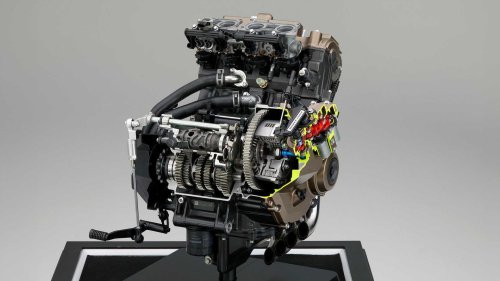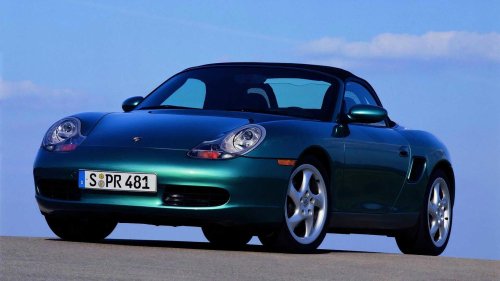
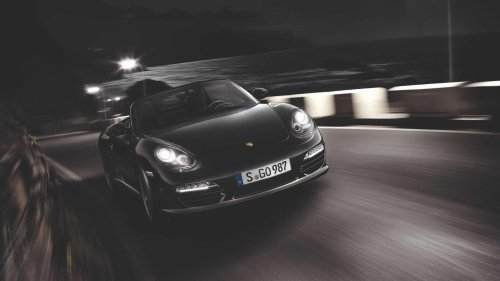
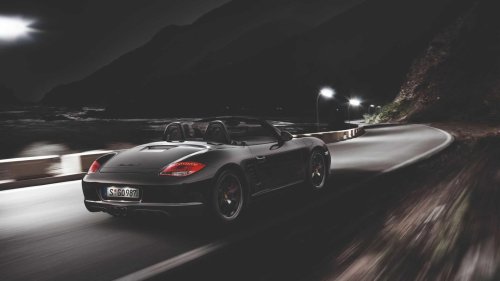
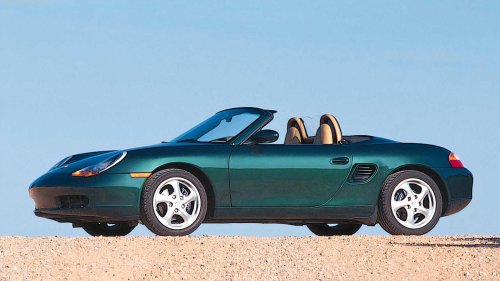
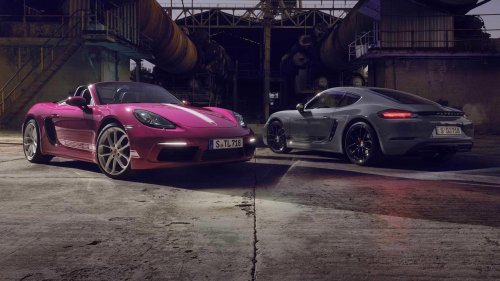
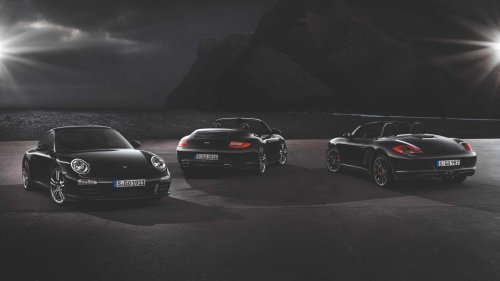
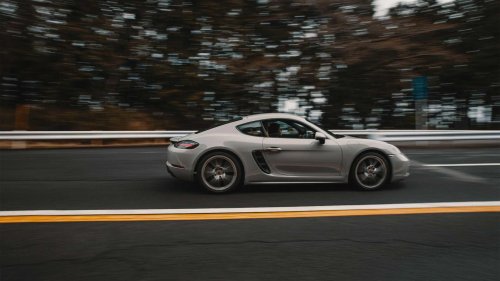
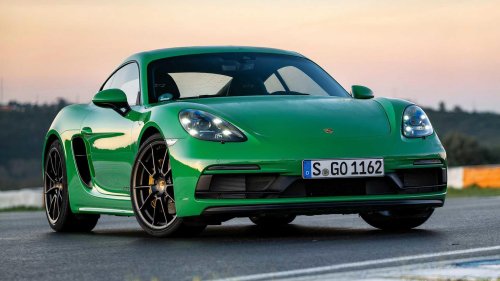


















There have been several examples in Porsche's history where the brand has made a big change only for the enthusiast community to claim it's a terrible idea and goes against everything Porsche stands by, only for it to then it become a big success. Building an SUV, switching the 911 to a water-cooled engine rather than a flat-six, the Porsche Panamera's styling, and the first all-electric Porsche come straight to mind.A lesser remembered example is the visceral enthusiast reaction to the Porsche Boxster and Cayman moving from a naturally aspirated flat-six to a turbocharged flat-four. However, it's turning out not to be just a great car, but also a market depreciation-beating wonder.According to the 2026 iSeeCars value retention rankings, the 718 Cayman, the hardtop version of Porsche's mid-engine sports car, has an average five-year depreciation of just 9.6% versus the industry average of 41.8%. That's a drop in value of just $6,988 from MSRP over five years. It outperforms Porsche's iconic flagship and the purist's ideal, the 911, at 11.1%. It makes the 718 Cayman the best car in America for holding its value. The Boxster Was Born An Underdog Porsche The 718 was born as the Boxster in 1996 when Porsche was in a financial bind and cost-cutting mode. Porsche needed a cost-efficient model with a more reasonable price point than the 911. At that point, Porsche had tried selling cars that weren't the 911, and it hadn't gone particularly well as a whole. Straight off the bat, going against it was that it used a water-cooled flat-six engine in the middle of the car, when Porsche's hardcore only wanted their flat-sixes air cooled and the engine at the rear.Because of its price point, the Boxster was also immediately considered by snobs as either being for posers who wanted the badge or the new poor-man's Porsche. For the more sexist, it was spoken of as the hairdresser's Porsche. However, the Boxster was successful enough to give Porsche breathing room to get the Cayenne to market, and save the company from a fate worse than bankruptcy – being bought by Mercedes. While the Cayenne is often cited as the car that saved Porsche, the Cayenne wouldn't exist without the Boxster. Losing A Pair Of Cylinders Porsche Porsche fans as a whole have historically – and loudly – resisted change. Which means Porsche cutting two cylinders from the flat-six engine and replacing the displacement with a turbo in 2016 had predictable results. While it was understood that there wouldn't be a loss in power, the straight-six is iconic, even in a "lesser" Porsche.Porsche Lopping two cylinders off is tantamount to sacrilege. Disliking the Porsche flat-four was an emotional response, but the engineering was beautifully thought through.The new turbocharged 2.0- and 2.5-liter flat-fours for the Boxster and Boxster S revved out to 7,500 rpm, not as high as a turbo engine usually wanted to go at the time, and the engine itself was derived directly from the turbocharged 3.0-liter flat-six in the 911.Porsche was forced into making the Boxster more efficient by tightening fuel-economy requirements, but managed to hold onto horsepower and improving performance with more low-end torque the previous Boxster's straight-six. The new engine also borrowed the variable turbine geometry (VTG) technology from the 911 to help boost the turbo's response at low revs without sacrificing top-end power.Porsche The visceral sounds people were worried the flat-four wouldn't have compared to the flat six were, indeed, valid. But Porsche pulled a little trick that improved off-then-on throttle response by leaving the throttle open while retarding the timing and closing the wastegate.That causes air to continue pumping through to the turbo and keep spinning, ready for the driver to get back on the throttle. As a by-product, the tuning gave the engine its exhaust pops and burbles. It didn't replace the throatiness of the straight-six, but Porsche also knows how to tune an exhaust for sound. Somehow, The Boxster And Cayman Are Still Underdogs Porsche Why the 718 generation of Boxster and Cayman are holding their value is hard to pin down beyond the initial logic of demand being higher than availability. The 718 generation is a strong seller, so there are plenty out there in the wild. Clearly, owners are holding onto them, whether it's because they love the car and are driving it a lot or as a garage-kept car for weekend adventures.Porsche Older Boxster models have had a lot of hype over the past few years as a used bargain, but its possible the hype has made driving enthusiasts look at the modern Boxster and Cayman again. After all, they're still a proper mid-engine Porsche sports car.It's also possible that Porsche has simply priced enough people out of the 911 and overpriced the 718 to the point that used 718 models have become the sweet spot. As a result, the 718 might finally be getting its due – after all, it's not as astronomically expensive as the 911, it's reasonably economical and plenty powerful, and the engine is in the right place.Unlike the 911, the Boxster was designed from a clean sheet with the engine in the middle, while the 911 has been slowly working the engine forward from being perched on the back in 1964.If a defining feature wasn't the 911 having two seats in the back, it's hard to imagine Porsche wouldn't just mount the engine in the middle. Except it has – the Cayman and Boxster aren't hampered by a 2+2 seating configuration most 911 owners don't use. Taking that thinking forward, the Cayman and Boxster with just two seats and an engine in the middle are Porsche's purist sports cars. The Value-For-Money Underdog 2021 Porsche 718 Cayman However, the 718 is still the underdog, as when someone says the word Porsche, the first thought is a 911. It's still the most iconic Porsche, the one people are willing to spend a small fortune to buy new, and the one that inspires the most emotional response. But if you accept that the 718 is the purer sports car and don't need the history and sound of the bigger engine, then even with only 9.6% depreciation over five years, that's almost 10 percent less than the retail of one of Porsche's great cars.The 718 starts at $75,400 for the hard-top Porsche Cayman and $77,600 for the soft-top Porsche Boxster, but that's before options and Porsche is the best in the world at getting people to pay for options without being Ferrari. If you want the more powerful Boxster S or Cayman S, then they start at $87,900 and 90,000, respectively.Porsche Suddenly, 10 percent less for a car with just 30,000 to 40,000 miles on the clock is real money. Assuming the car for sale isn't bare-bones without options, that's going to save over $10,000 for the sake of a previous owner putting some miles on the clock.