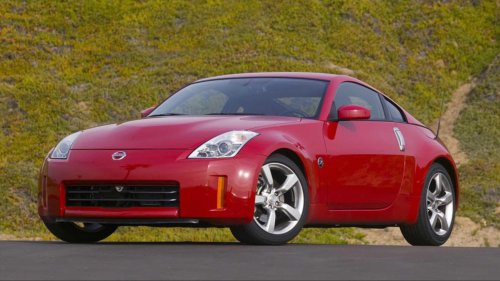
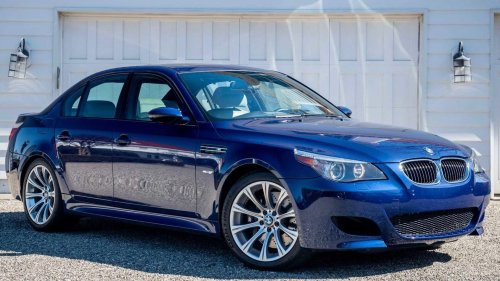
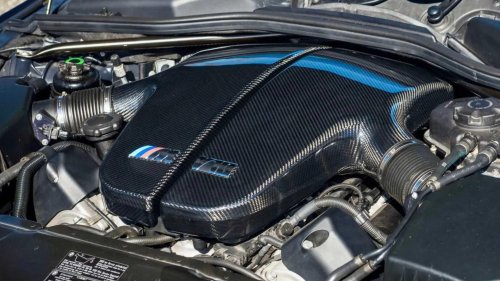
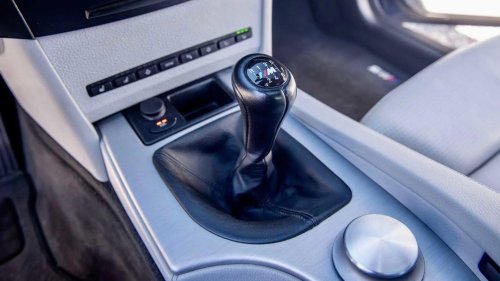
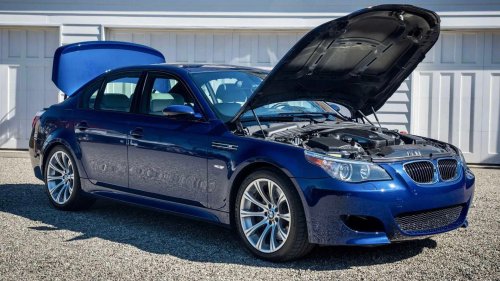
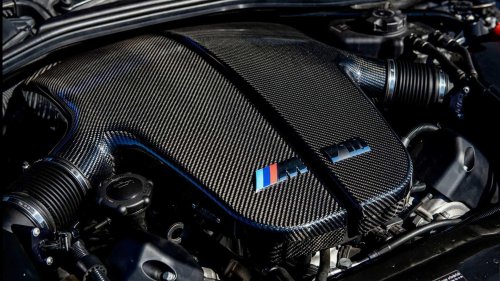
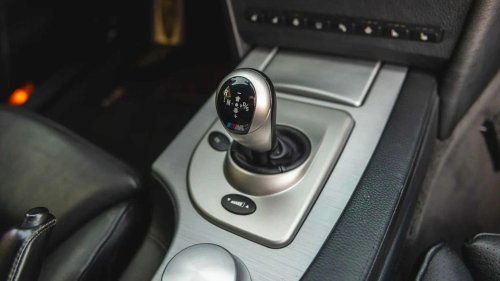
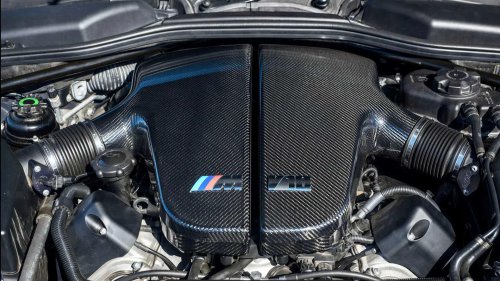
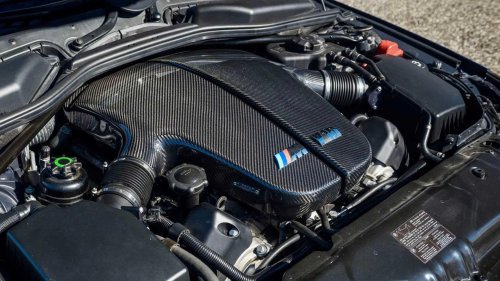
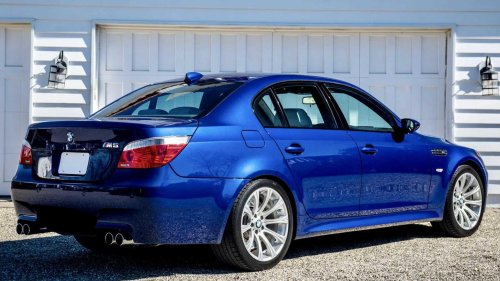
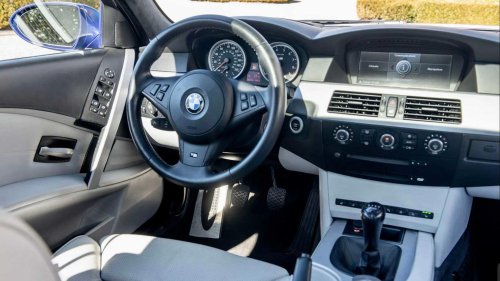



















The best sleeper cars are the ones that look like they belong in a school pickup line. Four doors, sensible proportions, a color nobody remembers five minutes after seeing it. Rather than a flaw, that anonymity is the entire point.While there are several sleepers you can buy at varying budgets, if you're lucky there is a unique sleeper which won't cost you more than $10,000 to acquire. What makes a sleeper interesting at this price level is the question of why it got here. Something convinced enough buyers to walk away until the listing price reflected the fear more than the car itself.Sometimes that fear is completely justified. Sometimes it is a problem that looks catastrophic on paper but is entirely manageable in practice, if you go in knowing what you are dealing with. The Best Cheap Performance Cars Are Cheap For A Reason NissanFinding a genuinely quick used car for under $10,000 is not impossible. There are real options out there. A 2004 Subaru WRX with 247 horsepower and all-wheel drive for around $7,600, a 2003 Nissan 350Z with a 3.5-liter V6 and rear-wheel drive for around $8,800, or a 1999 Pontiac Firebird Trans Am packing a 5.7-liter V8 and 320 hp for under $8,000. Each one is a legitimate performance car at a price that requires no compromise on the basics.But look closer and each of them carries something. An age, a mileage reality, a reliability reputation, or a parts situation that explains why the market settled where it did. Nothing in this bracket is cheap by accident. The price is always telling you something. Also, none of them would qualify as a "sleeper".The interesting ones are different. The price is low for a specific, well-documented reason. One that is entirely manageable if you know what you are looking at. Not every cheap performance car is a hidden gem. But some of them are priced low because perhaps a particular problem scared off enough casual buyers to push the number somewhere that serious buyers find hard to ignore.One car fits that description better than almost anything else in this bracket. It has four doors and four seats, looks completely unremarkable from the outside. The story behind its value is more interesting than the price itself, and understanding it is most of the work. The Only BMW Sedan With A V10 Engine Bring a Trailer The BMW E60 M5 was built between 2006 and 2010, and it was unlike any other M5 before or since. BMW's engineers made a decision that no other mainstream automaker had made at the time: they put a naturally aspirated V10 engine in a four-door family sedan and shipped it off to dealerships.That engine is the iconic S85, a 5.0-liter unit that remains BMW's first and only production V10. It produces 500 hp and 384 lb-ft of torque, with a redline of 8,250 rpm. Numbers that make the world's first super sedan in 2006. The S85 was so focused on high-rpm performance that peak power arrives at 7,750 rpm, which is closer to a motorcycle engine than anything you would expect to find under the hood of a family sedan to pick up the kids from school.Bring a Trailer BMW developed the S85 during its Formula 1 partnership with the Williams F1 team, at a time when V10 engines were the standard in the sport. The connection between the road car engine and BMW's motorsport program was genuine, and it shows in the way the engine behaves. It rewards high revs, it sounds like nothing else, and it carries an engineering ambition that BMW has not repeated since. BMW E60 M5 Specs The performance numbers back all of that up. The E60 M5 gets to 60 mph in 4.1 seconds, from a car that weighs 3,800 lbs and achieves near-perfect 50/50 weight distribution front to rear. It was the fastest four-door sedan on sale when it launched, and its straight-line performance still holds up well against modern sport sedans costing two or three times as much.The E60 M5 is almost indistinguishable from a standard 5 Series unless you know what you are looking at. Owners consistently describe it as a 500 hp sleeper that does not announce itself to anyone who is not specifically looking for the M badges and the quad exhaust tips.Bring a Trailer When it launched, the E60 M5 carried a sticker price of $81,200, roughly $128,000 in today's money. Classic.com says the lowest recorded sale price for an E60 M5 SMG is $9,400 for a 2006 modified example with 147,000 miles sold in September 2024.In contrast, the average sale sits around $27,000 for the automatic. A handful of examples have sold for around $10,000, and several are available for less than $15,000 with fewer miles.Kelley Blue Book puts a 2006 model's private-party value at $9,864. The gap between what this car was and what it costs today is where the real story begins. The Rod Bearing Problem Explained — What It Costs To Make It Go Away Bring a Trailer The price on the E60 M5 exists for one primary reason. The S85 engine has a documented rod bearing problem, and that problem has scared off enough buyers over the years to push values down to a level that looks almost absurd.The notorious rod bearing wear typically shows up between 80,000 and 120,000 miles, announcing itself through metallic knocking during cold starts. Left unaddressed, it leads to catastrophic engine failure, and a full engine replacement on an S85 can cost $50,000. That number is the one that ends most conversations before they start.Bring a Trailer However, the rod bearing issue is well understood, well documented, and entirely preventable. Specialists recommend replacing the bearings as routine preventative maintenance before 80,000 miles, long before they become a problem.That cost, at a reputable independent shop with S85 experience, runs between an estimated $3,000 and $5,500 all-in for parts and labor. Owner reports from across the US put the number at around $2,800 in Seattle, closer to $5,200 in Florida, and as high as $8,500 at a dealership, which is the number nobody should be paying. Forums and BMW Blog suggests owners should consider upgraded bearings with improved clearances and high-performance oil.Bring a Trailer The engine is not the only thing to be aware of. The SMG III transmission, the seven-speed single-clutch automated manual fitted to most E60 M5s, is known for overhearing, jerky low-speed behavior and hydraulic pump failures. The electronic throttle actuators are a third concern, with worn internal gears capable of sending the car into limp mode without much warning.None of these are hidden surprises. Every single one of them is mapped, discussed, and repaired regularly by independent specialists across the country. The community around this car is large and knowledgeable, and the failure modes are as well understood as those of any other enthusiast car at this age and mileage.A neglected E60 M5 is a serious financial risk. But a properly maintained example, with documented service history and bearing work already done, is something else entirely. The Only Checklist You Need Before Buying An E60 M5 Bring a Trailer The first question to settle before you look at any specific car is the transmission. Starting in 2007, BMW offered the E60 M5 with a six-speed manual gearbox as a gift to the North American market. The SMG was the default everywhere else in the world, and it remained the more common option even in the US.Manual cars carry a significant price premium. The average SMG-equipped E60 M5 sells for around $27,000, and you can expect to pay roughly $6,000-7,000 more for a manual. That means a sub-$10,000 example will almost certainly be an SMG car, and you need to go in knowing that the transmission carries its own ownership risks alongside the engine.The single most important question to ask any seller is whether the rod bearing work has been done. A safe example has full service records, documented rod bearing replacement before 80,000 miles, and no history of throttle actuator faults. If the seller cannot produce paperwork that answers those questions, the price needs to reflect the risk you are taking on.Bring a Trailer Oil consumption is a useful diagnostic signal before you buy. The S85 naturally consumes some oil, but anything above one quart per 1,000 miles points toward internal wear and warrants a closer look. Ask when the last oil change was done and what the consumption rates.Beyond the engine, check the cooling system carefully. The water pump, expansion tank, and thermostat are all known failure points on aging E60s, and overheating is one of the fastest ways to turn a manageable car into an expensive one. Pull the Carfax report, look for accident history, and ask about VANOS solenoid service.A car at $8,000 to $10,000 with documented bearing work and a full service history is a fundamentally different purchase from one at the same price with no paperwork at all. At this end of the market, the service records are worth as much as the car itself. There Will Never Be Another One – That Is Reason Enough Bring a Trailer The E60 M5 is the only naturally aspirated V10 that BMW ever put into a production car. As the current M5 moves deeper into hybrid territory with turbocharged V8 power and all-wheel drive, the S85 represents something that will not come back: a high-revving, naturally aspirated engine with a racing program behind it and an 8,250 rpm redline in front of you.The 2026 M5 makes more power, goes faster, and costs upwards of $125,175 before options. It is also a fundamentally different car, heavier, more complex, and built around efficiency as much as performance. There is nothing wrong with it, but it is not this.Bring a Trailer The E60 M5's price floor exists because most people hear the words rod bearing failure and stop reading. The ones who keep reading find a car that launched at $81,200, hits 60 mph in 4.1 seconds, sounds like nothing else on the road, and fits into a grocery store parking lot without anyone noticing. Ten thousand dollars buys you a lot of things, including a V10 BMW.Sources: Classic, BMW Blog, BimmerForum