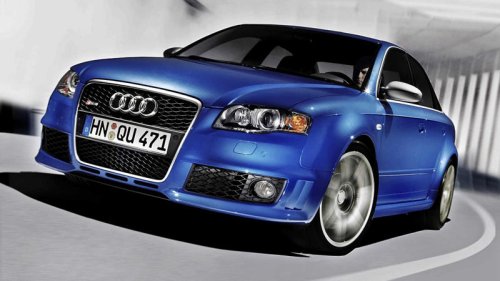
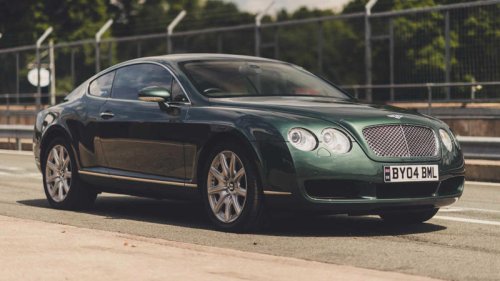
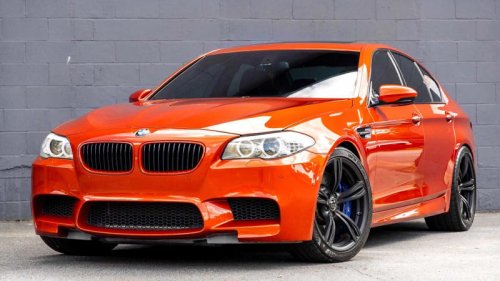
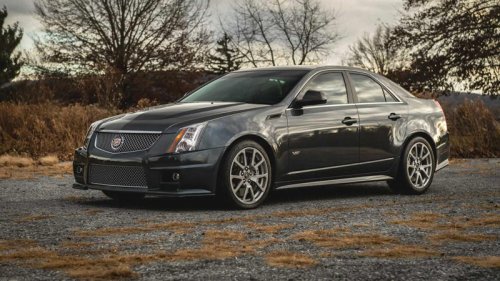
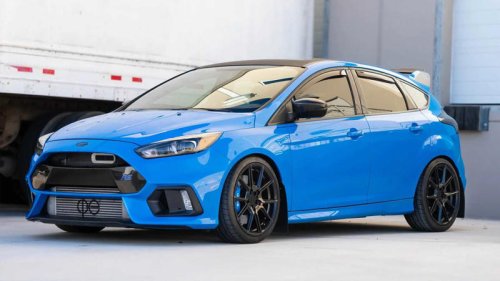
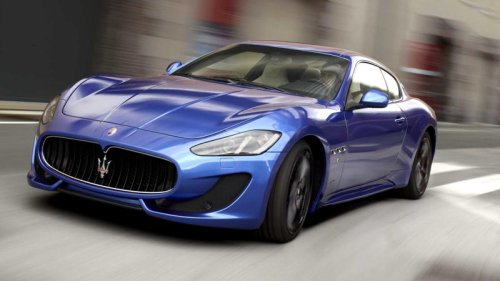
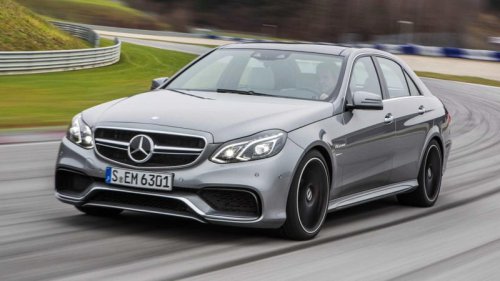
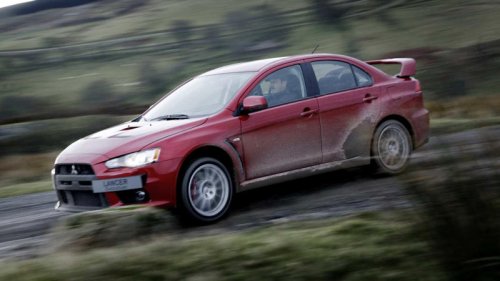
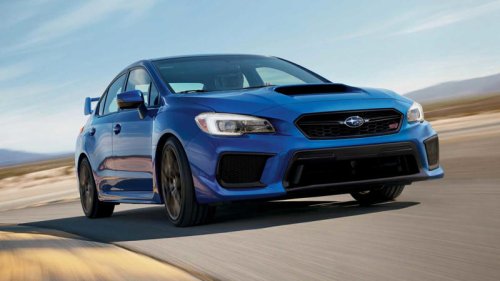
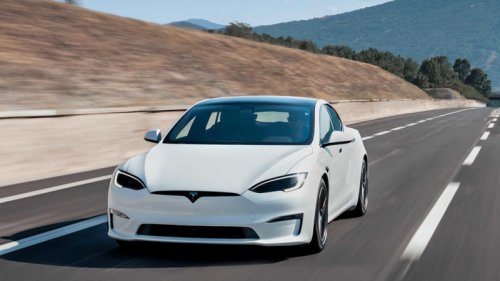



















Supercars are expensive—that's kind of the point. Going fast may be their number one priority, but arguably coming in at number two is making a statement about the people who drive them—and that statement is 'I have lots of money.'Happily, even as used cars get more expensive, there are still ways of getting near supercar levels of performance without having to spend anything like supercar money, especially if you're willing to take a bit of a risk on running costs. While the 10 cars below might not be able to hang with the very latest exotica, they'll still provide performance on a par with older supercars for under $25,000, proving that you don't have to spend six figures and have a horse or a bull on the hood to go seriously fast. Audi RS4 0-60 mph in 4.2 seconds Audi RS4 B7 blue frontWidely regarded as one of the greatest fast Audis of all, 2006's second-generation RS4—and the only one to officially make it to the US—may look like a slightly pumped-up version of a German sales rep's sedan, but it can lay claim to a bona fide supercar powertrain: its rip-roaring 4.2-liter naturally aspirated V8 was the same engine that went on to be fitted to the original Audi R8.As in the R8, that engine made 414 hp, and produced one of the all-time great V8 soundtracks. The car only came with a six-speed manual, too, cementing its status as one of the most serious driver's sedans of all time. Although top speed was limited to 155 mph in typically German fashion, all-wheel drive helped the RS4 rocket to 60 mph in 4.2 seconds, figures that put it on a par with far more exotic cars of the era. Bentley Continental GT 0-60 mph in 4.4 seconds Bentley Continental GT front 1Although it sounds like a prime engine to drop into a slice of blue-blooded exotica, Volkswagen's unusual 6.0-liter W12 was only ever fitted to leather-clad luxo-barges during its 21-year production run, aside from a few concepts. That didn't mean the cars it did feature in couldn't seriously get a move on, though, especially in twin-turbocharged, 552-hp form, as fitted to the original Bentley Continental GT.Though this grand tourer prioritized luxury and comfort over sheer performance, the raw numbers don't lie: 0-60 mph in around 4.4 seconds, and a 198 mph top speed. It may not have been so suited to canyon carving, but for covering big distances at high speed, not much else on sale came close. Heck, not much else does now. BMW M5 (F10) 0-60 mph in 3.7 seconds BaTThe BMW M5's mission statement has always been to package supercar-bothering performance into an understated sedan package (although calling the latest plug-in hybrid version 'understated' might be a bit of a stretch), and it's been doing that for over 40 years now. At the center of the value/performance Venn diagram, though, is undoubtedly the fifth-generation F10 model.Launched in 2011, it may have lost the howling but troublesome V10 of its predecessor, but the 4.4-liter twin-turbo V8 that replaced it was no less effective an engine. 553 hp meant that various publications clocked the F10 hitting 60 mph in around 3.7 seconds, and that was despite it being the final M5 to channel all its power through the rear wheels alone (it was the last to come with a manual, too) To top everything off, buyers who ticked the box for the M Driver's Package lost the 155-mph limiter and had access to a sedate-looking four-door sedan with a 190-mph top speed. Cadillac CTS-V (second generation) 0-60 mph in 3.9 seconds Via: Bring a TrailerIf the original Cadillac CTS-V was the car that made the German establishment realize that America could build a seriously capable super-sedan, then the second-gen model that followed it up in 2009 was the car that, arguably, dethroned them. With GM's 556-hp, 6.2-liter supercharged LSA V8 under the hood, it had straight lines covered with a 3.9-second 0-60 mph run and a 191-mph top speed, but the CTS-V could more than hold its own in the corners too, dispelling any myths once and for all that they were the domain of the Europeans.Best of all, the Caddy came in a range of body styles—a sedan, a coupe, and an almost painfully cool wagon. The last of those, sadly, is now a certified modern classic with values to match, but the sedan and coupe versions can still just about be had for our $25,000 budget. They'll be carrying some miles at that price, but there's a reason the LS engine family has such a reputation for reliability. Ford Focus RS 0-60 mph in 4.7 seconds Via: Bring A TrailerYes, it's a Ford Focus, and yes, it has a four-cylinder engine, but to take those facts at face value would be to do the Focus RS a huge injustice. That engine, Ford's 2.3-liter EcoBoost turbo mill, produces an astonishing 350 hp, to this day one of the highest-output four-cylinder engines ever to find its way into a road car.It put that power down well, too, thanks to a torque-splitting all-wheel drive system that introduced the world to the slightly naughty idea of a production car with a drift mode. Launched properly, the Focus RS would hit 60 mph in 4.7 seconds and max out at a limited 165 mph, and all-wheel drive stability and its compact, agile footprint meant that on twisty roads, it could easily embarrass cars with considerably more power and badge credibility. Maserati GranTurismo Sport 0-60 mph in 4.6 seconds Maserati GranTurismo Sport front dynamicIn true Maserati fashion, the original GranTurismo was always a bit of a mixed bag throughout its long life. Gorgeous to behold and deeply cool to be seen in, it never quite had the drive to match its looks. What was never in any doubt, though, was the excellence of its engine. Mercedes-Benz E63 AMG S 4Matic 0-60 mph in 2.5 seconds Mercedes-Benz E63 S AMG 4Matic frontThe 2014 introduction of Mercedes' 4Matic all-wheel drive system to the E63 AMG may have seemed like sacrilege to die-hard AMG fans used to rear-wheel drive tire-smoking antics, but it helped elevate the performance of AMG's M5 rival to another level.It arrived with the launch of an uprated 'S' model, which bumped the output of the 5.5-liter twin-turbo V8 from 550 to 577 hp, allowing the new all-wheel drive car to hit 60 mph in a mere 3.5 seconds. The S version did away with the 155 mph limiter, too, lifting top speed to 186 mph. They'd be respectable numbers for a super sedan that launched today, let alone one that turned up 12 years ago and can now just about be bought used for less than a base-model VW Jetta. Good luck finding the even cooler Wagon for that sort of money, though. Mitsubishi Lancer Evolution X 0-60 mph in 4.7 seconds Mitsubishi Lancer Evolution X frontIt's been a little over a decade since Mitsubishi killed the Lancer Evolution, and the company's offered nothing like it since. The tenth and final version (although only the third to officially come to the US), the Evolution X, was never the most beloved of its bloodline, but as a performance-per-dollar prospect, it's hard to overlook today.It squeezed an impressive 291 hp from its 2.0-liter turbocharged four-cylinder, and naturally put that power down through all four wheels, helping achieve a 4.7-second 0-60 mph run. As with previous Evos, though, it was the model's clever rally-bred all-wheel drive system, incorporating tech like an active center differential torque-vectoring yaw control, that elevated the performance of this humble compact sedan to supercar-slaying status. Subaru WRX STI 0-60 mph in 4.6 seconds Subaru WRX STI frontThe Lancer Evolution's arch rival, the Subaru WRX STI, may have lived on a little longer, and some of its spirit may remain in the present-day WRX, but the world is undoubtedly a duller place with these two streetfighters no longer in it.Like the last Lancer, the final WRX STI made power figures that could best be described as 'respectable' – 310 hp from a 2.5-liter turbo four in Subaru's trademark boxer configuration – but it was the all-wheel drive that helped it really punch above its weight. On the right road, in the right hands, it could comfortably outdrive cars three or four times its price, and that remains true now that it's available solely as a used model. Tesla Model S P100D 0-60 mph in 2.5 seconds TeslaYes, yes, it's an electric car, and a Tesla at that. Those two facts alone will be enough for plenty of people dismiss the Tesla Model S P100D right off the bat, but dismiss it at your peril. This is a car that can be bought second hand for considerably less than the cheapest new car in the US right now, the Hyundai Venue, and yet hit 60 mph in a manufacturer-quoted 2.5 seconds. That's on a par with the original Bugatti Veyron.Sure, mind-bending acceleration figures like this are much more attainable in a big-power EV thanks to all the powertrain's potential being available at once and the car not having to worry about shifting gears, but factor in how much the Model S has been hit by depreciation, and we don't think there's much else that gets close to offering this much performance per dollar.