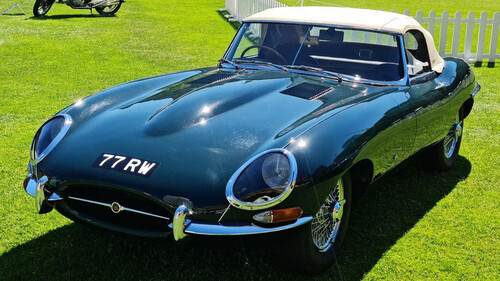
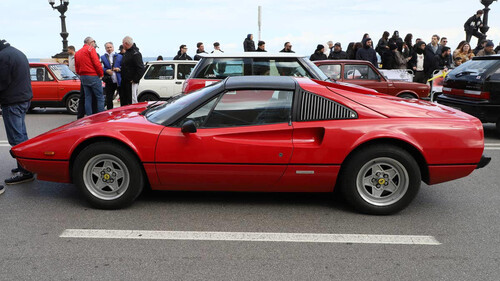
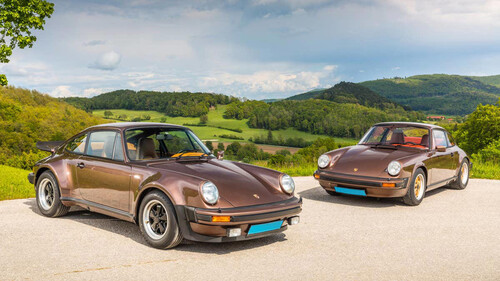
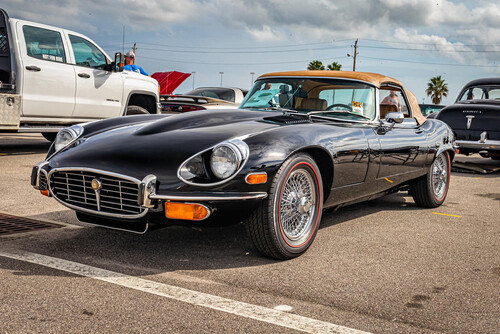
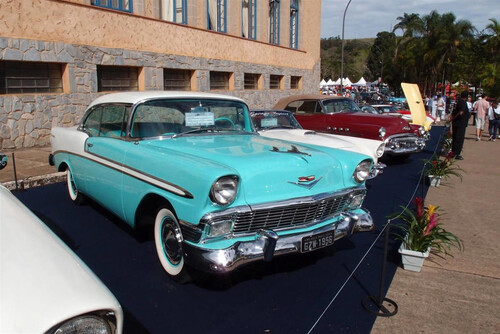
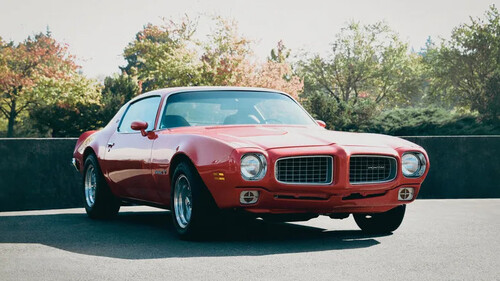
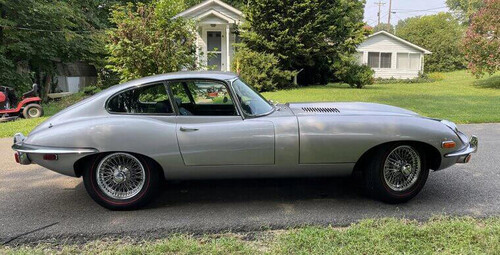
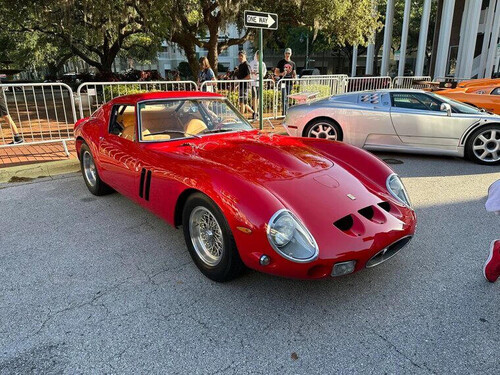
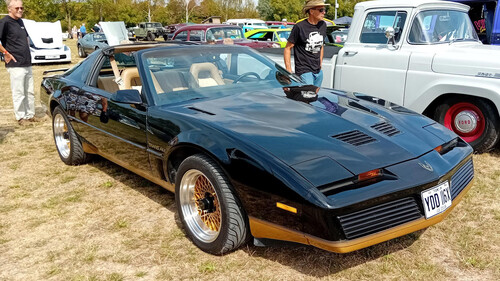
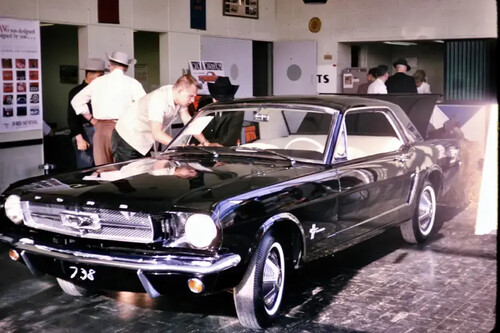
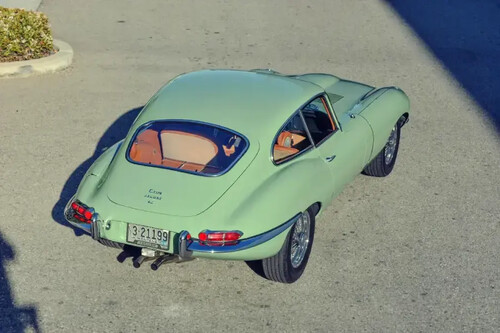
Jaguar E-Type Series III (1972)Enzo Ferrari allegedly called the E-Type “the most beautiful car ever made,” and with a 5.3L V12 engine it’s more than just a pretty face. Its maintenance costs are not for the faint of heart (or wallet) though, and its earlier models tend to get more glory.Plymouth Road Runner Superbird (1970 )The Superbird is a muscle car that lived up to its name with its deadly-looking nose cone and rear wings. Since it was designed for NASCAR it moves like greased lightning too! It’s very unique though, and its design doesn’t appeal to everyone - hence its price depreciation.Maserati Sebring (1963–68)How could a suave Italian grand tourer with a roaring V8 engine lose value? Well, it might be as elegant as heck but its reliability was a real obstacle, and not many owners could keep up with its crazy-expensive maintenance bills.Ford Thunderbird (1972–76)The Thunderbird’s a luxury cruiser that looked the part and came loaded down with cool tech (for its day, of course). Despite having a classic aesthetic, the Thunderbird’s genre lost popularity and its large, heavy build got it earmarked as a “gas guzzler” along with similar luxury cars.Chevrolet Corvette L88 (1967)The fact that the L88 comes with a 427 V8 engine should indicate its true purpose: it was designed as a track champion, and in theory that checks out. However, it’s not practical for everyday use and it’s super rare so replicas flooded the market, damaging the original’s value.Pontiac Trans Am (1976–1981)The Trans Am ran high on its “Smokey and the Bandit” fame, but it was also an aggressive beast famous for its screaming chicken hood decal. Millions of units were made so it’s not super rare, and emissions regs crushed the performance of later models.Chevrolet Chevelle (1968–1972)If you wanted affordable muscle in the late ’60s and early ’70s, you went with the Chevelle - especially the SS 454 model with its 450 horsepower flex. The Market’s shifted more towards rare muscle cars now, and there’s loads of Chevelles around (plus, non-resto-mod originals are hard to find).Dodge Charger (1968–1970)Famous for its spotlight in “Bullitt” and “The Dukes of Hazzard,” Chargers packed growling V8s and big block engines in the R/T models. Earlier Chargers are a hot property, while the later ones suffer from rust and various copies that hit their price tags hard.Oldsmobile Cutlass (1968–1972)The Cutlass combined luxury and muscle with a powerful V8 engine, and at one point was among the best-selling cars in America. As a result, there’s a lot of them, and since many were driven hard and repaired, there’s now less parts for restorations.Ford RS200 (1985)Turbo-powered, mid-engined, and AWD-capable, the RS200 only had 200 units made, and while it was so feral it scared everyday drivers, it wasn’t wild enough for thrillseekers. Hardcore collectors love it, but the average buyer’s lost interest - especially now new rally-style cars are on the market.Ferrari Dino 308 GT4 (1979)The Dino badge was a tribute to Enzo Ferrari’s son, and while it should be a cherished sentiment, purists see it as confusing and un-Ferrari. Even though its wedge shape divided opinions, the Dino had a lot of attention until focus shifted to more iconic models.Alfa Romeo Spider (1983–1990)It’s clear that the Spider was of Italian design - its iconic look included a long nose, short tail and elegant vibes. It’s pretty, but there were so many around that they’re not exactly rare… and its infamous unreliability has cost it popularity.Acura/Honda Integra Type-R (1995–2001)The Integra’s sharp handling, B18C engine and front-wheel drive performance made it a Japanese domestic market (JDM) legend and prices skyrocketed for a while. Since then the market’s shifted; it doesn’t help that many are heavily modded, so unless the vehicle’s original and untouched, values have tanked.Mercedes-Benz W126 (1979–1992)The W126 was built with its era’s cutting-edge tech and engineered to be pretty much bulletproof… which in the long run has actually worked against it! They survive for so long, there’s plenty on the roads, and modern buyers are after something with more advanced tech.Ford Thunderbird Sport Roadster (1962–63)Stylish curves, sporty two-seater configuration and a rumbling V8 engine were all Thunderbird hallmarks, yet even a car as beautiful as this one gets overshadowed by more famous muscle cars. They’re expensive to restore and repair too, so purchasing one is a cash sink.Pontiac Grand Am (1973–75)The Grand Am aimed to combine luxury and muscle with refined handling, and then the worst happened: the oil crisis hit and suddenly its V8 selling point became a negative. This early model became forgotten among later Grand Ams, and it failed to live up to the glam of its siblings.Saab 99 (1968–84)Its turbocharged engine and front-wheel drive made the Saab 99 ahead of its time, but the quirky Swedish style - though practical - isn’t everyone’s bag. Also bear in mind its turbo tech is old-school; reliability’s quite hit-and-miss, and that’s reflected in its value.Mini Cooper S (2002–06)The Mini Cooper S was all British charm - a turbocharged hot hatch with the handling of a go-kart and sporty vibes. They boomed big at the time and loads flooded the market - so many that now their values are normalized, especially since modern minis have more to offer.Audi TT Mk1 (1999–2005)When it came out, the TT Mk1 was stunning, though arguably, it hasn’t aged well. While some enjoy its retro charm, many find it looks dated. The later Mk2 and Mk3 models have since stolen the show with more advanced features, leaving the Mk1 behind the times.Ferrari 308 GTB/GTS (1974–1989)Any fans of this period will recognize the Ferrari from “Magnum, P.I.” - a mid-engine V8 with classic Ferrari styling. Since it was so popular, over 12,000 flooded the market; now buyers are looking for either rarer Ferraris or more modern examples.Austin Healey 3000 (1959–1967)The raspy exhaust and beautiful curves mark the Healey 3000 as a charming British scoundrel; it has old-school heart, though that’s not always a good thing! The market’s been muddied by mods galore, plus it lacks the tech and comfort that modern buyers want.MG TC (1945–1950)The MG TC introduced post-war America to sports cars in style, and they were super popular with G.I.s. They hold an important place in automotive history, no doubt, but by today’s standards? They’re slow as snails, and their collector base is shrinking quickly.Alfa Romeo Giulietta (1954–1965)If the Giulietta were a person it would be an opera-singing Italian heartbreaker, but since the original’s debut more advanced models have stolen its spotlight. Combine that with its susceptibility to rust and parts rarity, and you can see why demand for the vehicle is drying up.Ford Mustang V8 (1965–1973)Big-engine power with optional V8s, the Mustang defined the pony car genre and became a cultural icon, so while its a classic piece of Americana, there’s so many of them! Between modding dilution, high restoration costs and a resale value that didn’t keep up, the Mustang’s value has dropped significantly.Daimler V8 250 (1962–1969)The 2.5L V8 engine in the 250 gave it more juice than some Jaguars, but the Daimler’s reputation didn’t go very far outside the UK. Part rarity and confused branding between this and the Jag Mk2 have led to a leaking value.Fiat 124 Spider (1966–1985)Budget-friendly Italian flair with rally history? Yes, please! Or so you’d think; lots were made and are still available, but they’re rather prone to rust - buyers would rather opt for the 2016 revival Fiat and Mazda, which have less oxidized flake plagues.Morris Minor 1000 Convertible (1956–1971)Post-war Britain saw the 1000 convertible screech into hearts across the UK, earning it the title of the first British car to sell one million units! It’s humble and endearing, but underpowered and plentiful, so not exactly what you’d call a rare find.Sunbeam Alpine (1953–1955 / 1959–1968)Finding fame as James Bond’s brief ride in “Dr. No,” the Alpine quickly lost street cred when the later models came out and improved on it in virtually every respect. It also found opposition close to home in the V8-engined Sunbeam Tiger, so it had a lot of sibling rivalry.Volkswagen Karmann Ghia (1955–1974)This vehicle’s a VW Beetle chassis decorated with a Ghia body and hand-built by Karmann, and for a while its popularity spiked. Since then buyers have lost interest; it doesn’t have impressive performance or unique selling points, but it does provide expensive bodywork restorations!Ferrari 365 California Spider (1966–1967)With only 14 California Spiders made, this vehicle’s a great example of how super rare doesn’t always equal super valuable. While it’s sleek and has Pininfarina styling, collectors don’t dig its large size as much as leaner ’60s cars or other iconic Ferraris.Ferrari 250 California SWB Spider Alloy (1960–1962)Losing value doesn’t always mean cheap, as is the case with the Spider Alloy. Sure, it’s not as valuable as it once was, but it’s still super expensive, and no wonder - it’s a beautiful car with V12 pedigree. However, its buyer base is still very exclusive.Ferrari 250 GT California LWB Alloy Spider (1957–1959)For the same reasons as the Spider Alloy, its LWB (Long Wheelbase) alternative is suffering from market fatigue, and the top-tier buyers just aren’t looking to purchase right now - hence its price tag drop. Over-restoration has also killed interest to some degree.Ferrari 250 GT TdF Coupe (1956–1959)The 250 earned its TdF (Tour de France) badge by winning races, and while that makes it a great display piece for a collector’s garage, current trends are for usable cars. And this one? It’s just not practical for day-to-day use.